Kate Webster reflects on her Difference Engine Stories Commission
I saw Talking Birds’ call-out for ‘Difference Engine Stories‘ and was immediately excited – it’s SO rare to see a commission that’s explicitly an invitation to experiment!
As a writer and theatre-maker, I’m passionate about sharing live experiences and bringing theatre to non-theatre spaces, so using the Difference Engine to make a socially-distanced piece seemed like a great fit. It was also a chance to work with an access tool that was new to me, that could not only make the performance accessible for D/deaf audiences, but enable us to play with distance and potentially have audiences watching from inside their homes.
I connected with Coventry performer/director/local legend Paul O’Donnell, whose work aims to expose the ‘ordinary’ in a ‘spectacular’ fashion, which was perfect for this project exploring masculinity. Paul also had previous experience of working with the Difference Engine.
The inspiration for ‘Car Wash’ came from walking round my neighbourhood during lockdown and seeing the weekly ritual of men washing their cars on the street. A car can be much more than four wheels and a chassis, and some get not just a quick slosh with a bucket, but washing, vacuuming, waxing – a lavishing of time and attention that’s an expression of pride, even love.

‘Car Wash’ transforms Dave washing his car on the street into theatre, as the Difference Engine reveals the inner monologue behind his silent action, exploring masculinity and how that’s manifested/performed. As Dave’s confidence and apparent “normality” is undercut by reading his worries and doubts, the audience gets to know someone they might not have looked twice at, experiencing the gap between being seen and understood. At the climax of the piece (car perfectly polished and gleaming), Dave dances his heart out to Rose Royce’s ‘Car Wash’, acknowledging the audience and inviting them to join in: “Come on y’all and sing it with me!”.
The process of making the work was really fun and straightforward, partly because Talking Birds were so willing to let us create it in a very free way, scheduling regular check-ins to see how it was going and what we needed, but without putting any restrictions on how the piece should turn out. Essentially, Paul and I had a chat about how we saw ‘Car Wash’ working and some of the things we wanted to do, then based on that I went away and wrote a first draft. From there, we developed the script further through several more drafts, really focussing on the role of audio – Paul had the idea of using the car stereo not just for music, but as almost another character: ‘Radio Dave’.
The goal was to do several ‘test’ performances in different Coventry locations, trialling the idea and getting feedback from a range of audiences. So we chose a date (a Saturday, to maximise the potential audience) and promoted it through social media to people across Coventry, with a selection of time slots they could book by email. Talking Birds shared our posts and we had really good support from local people and organisations, through using specific hashtags like #LoveCov and the promotional Coventry Hour set up by Cov businesses. We set up a ‘What to expect’ document to send to all bookers, with practical details like letting audience members know they would need a smartphone or tablet to get the full effect of the show and asking them to download the Difference Engine in advance.
With the final version of the script in hand, Paul started rehearsing with our brilliant performer, Dan Walsh, and his car Clint. They worked on co-ordinating movement with the text (Dave’s inner monologue, shown on the Difference Engine, rather than than spoken) and recording the ‘Radio Dave’ audio track, including some pop classics that reflected Dave’s state of mind.
On show day, we had a timetable for each performance and its location, with three different Coventry streets expecting us (and saving us a parking space!). Because we were performing outside and moving around rather than being in a fixed venue, we used the mobile Raspberry Pi version of the Difference Engine, which fits into a rucksack. We’d originally planned to hire a tech operator, but realised that – because it was important to time the cues precisely with the music track and Dan’s moves – it needed someone who knew the piece very well. So with his past experience of the Difference Engine, our director also operated the “desk” for each performance, while I was on hand to liaise with the audience. That included trouble-shooting anyone having difficulty connecting to the app, encouraging people to share a phone or tablet if theirs wasn’t working (or lending them a device) and handing out leaflets explaining the show.
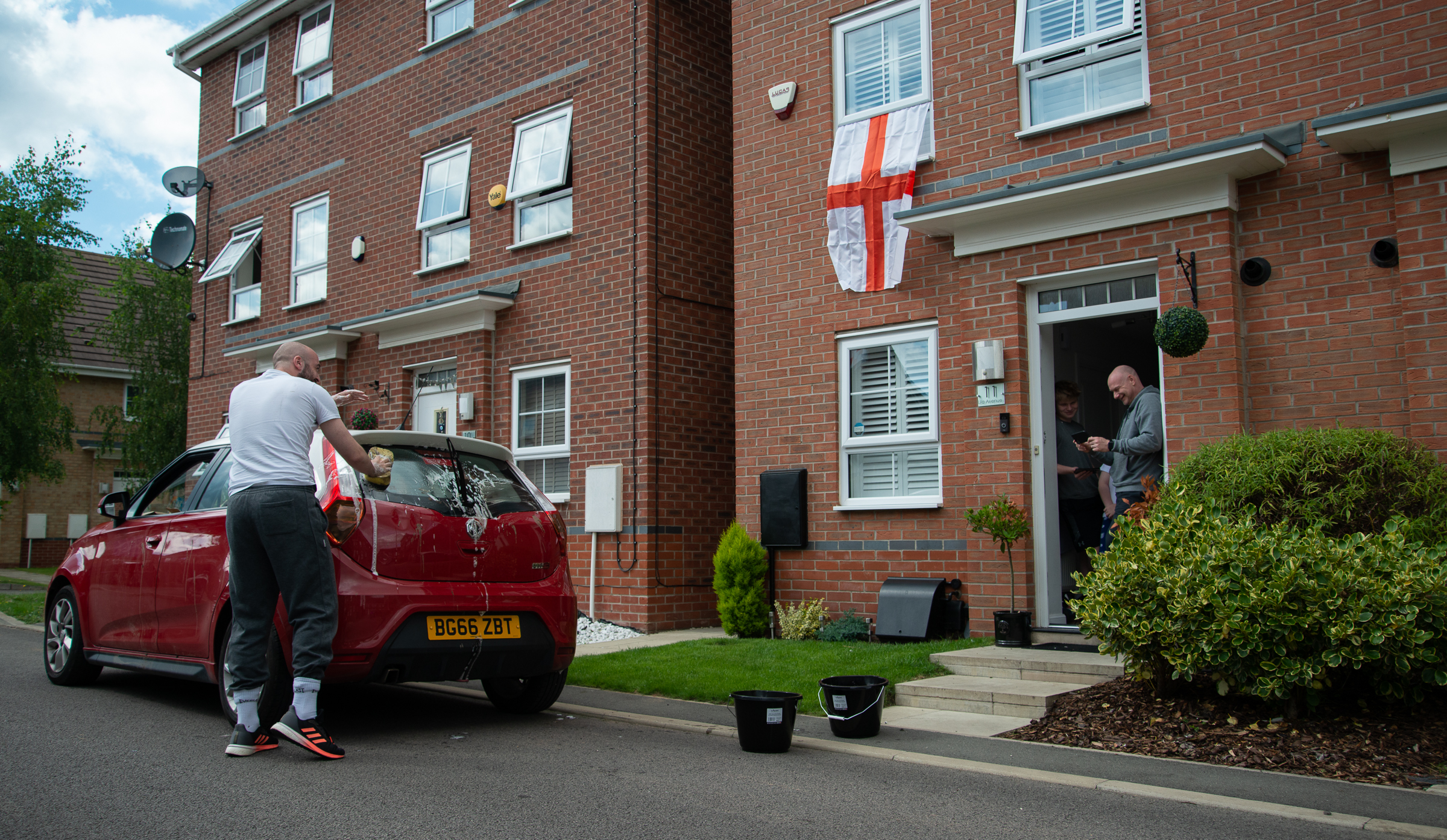
What was brilliant and we hadn’t anticipated was that the households who’d booked the show had then told their neighbours about it/put the details on a street WhatsApp group. So we often ended up with multiple households as an audience, with more neighbours coming out to watch when they saw people gathering. It added another layer that – because the show’s dialogue was almost entirely on the Difference Engine – people walking/biking down the street during the performance could tell something was happening, but weren’t sure what. Some people didn’t have their glasses or found the text moved too fast for them, so decided to watch without using the app. While that meant they weren’t reading Dave’s inner thoughts, they could see the performer and hear the audio track, so still saw the progression from a man straightforwardly washing his car in the street to an impromptu karaoke performance and ultimately, Dave letting his inner sparkle out.
So although some elements were unexpected, those were all positive developments that added layers to the performance or allowed for people to experience it in different ways. From what audience members told us on the day and from feedback through our survey, people who came out to watch then stayed to talk to each other after the show. On one street, the household who’d booked us had recently moved in and the performance introduced them to their neighbours. That’s exactly what we’d hoped for, that ‘Car Wash’ could bring theatre to communities and maybe start a conversation.

This commission was a great experience and I’ve become quite evangelical about the Difference Engine and sharing that with other theatre-makers. It’s an incredibly useful access tool, but can also be much more than that; I’d also really encourage makers to think about how they might integrate the Difference Engine into their work, not only use it to provide captions. I’m hopeful that ‘Car Wash’ has a future life with other communities and have had some really positive conversations about this model of theatre outside a theatre building.

These photographs were taken by much-missed local photographer John Whitmore.
 Words from the Birds