Mandip Seehra reflects on his Talking Birds Nest Residency
When I heard that I was selected for a Nesting Residency by Talking Birds, it filled me with excitement and anticipation. The residency offer was given to me to help me focus and explore projects which I have been trying to find a route to creating. These projects are personal to me and are intertwined with each other.
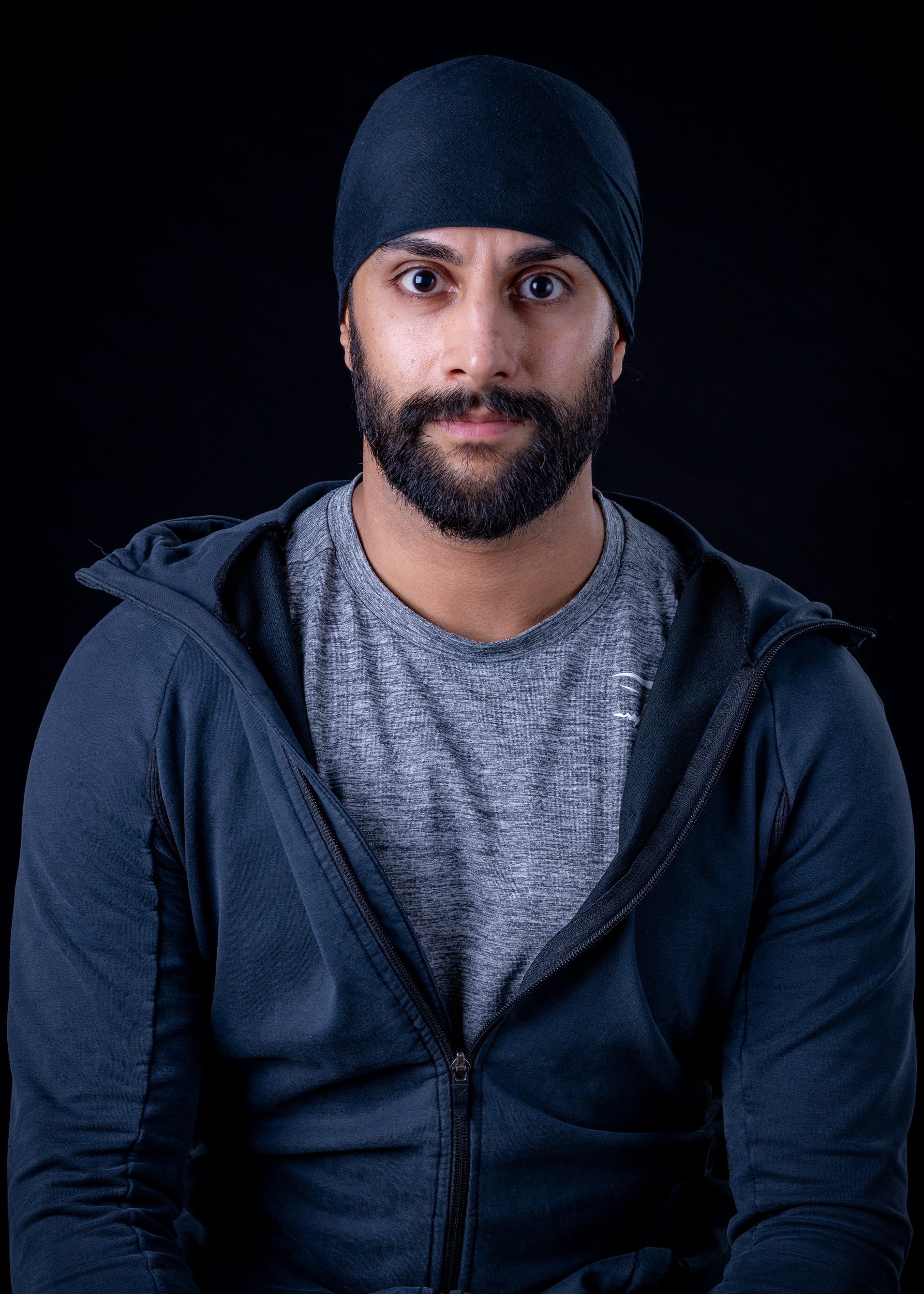
The projects are to explore the Sikh community of Coventry, specifically looking at two aspects. The first is to create a set of portraits looking at the turban, a core element of Sikh identity. The second is capturing the daily life of the Gurdwara kitchens and how they operate in feeding the wider communities and providing food to people of all walks of life. These are both intrinsic to being Sikh, and it is important to me that I highlight this as it is part of my heritage.
The expectation I had was that it would be a positive and relaxed space to help me to explore my ideas to develop a positive path for the desired outcome. The wonderful creatives at the Nest have developed a space which encourages imaginative thinking. This seemed to give me the permission to engage in creative development of my projects and practice, which I felt has not been available to me before.
When arriving in the Nest facilities, I immediately realised that I may have brought too much equipment. I received a warm welcome and a friendly induction from Charlie, which was useful in feeling at home in the facilities and knowing where to find what. Also, in the end it turned out that I could try out and use all the equipment I had planned to use.
I set up my photographic studio at the Nest and started to take test shots, test the light of the room and the setting of the equipment required. It is important to understand the environment in which the photographs are to be taken so to be able to capture the portraits efficiently, so that the participants do not have to wait long before and during the shoots. I have selected a black backdrop to help better defined colours and shapes; this will also provide the effect of light coming from the darkness.

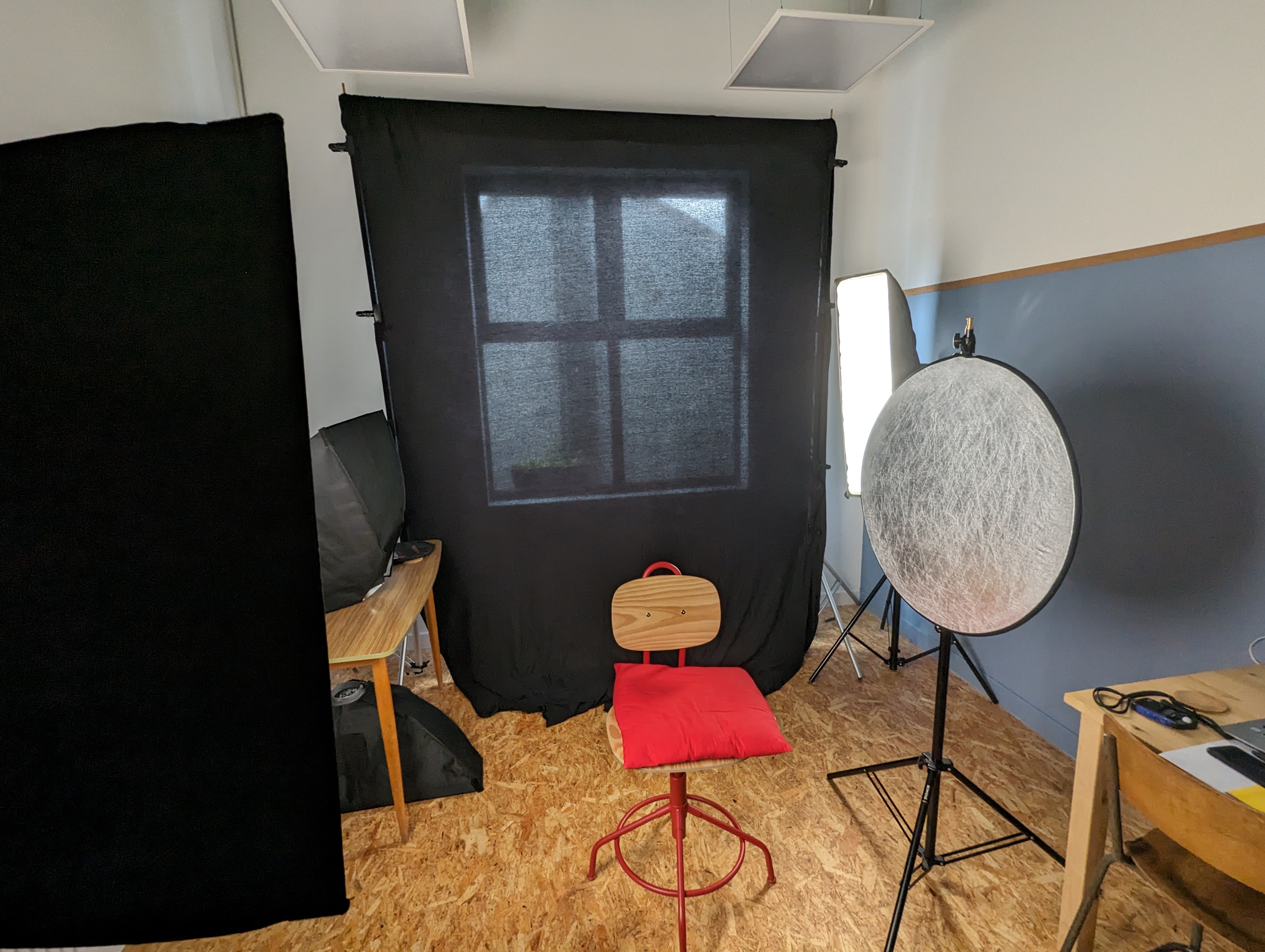
Getting the lighting correct in any photo shoot takes time and experimentation. With the guidance and advice of my mentor, Simon Derry, I have been able to find the right set for the lighting. Then I needed participants to try these out. Fortunately, there has been a very helpful community within the Nest who supported me with the setup and the lighting. It was lovely to meet representatives of other art forms, such as Lily Smith, guitar player and songwriter. I have the impression that bringing together our different specialities has created an inspiring and sustaining atmosphere.
I hoped to do at least a few shoots with participants for my projects, and I was delighted to settle an appointment already during the time of the residency, and several more for the near future. On my last day of my residency, I took photos of a participant which kicked off the long series of photos taken for my project in the future.
Another delightful experience was to receive a commission from the Lord Mayor of Coventry to do his and his wife’s portrait before the end of his term. These photos will ultimately also be part of my projects.
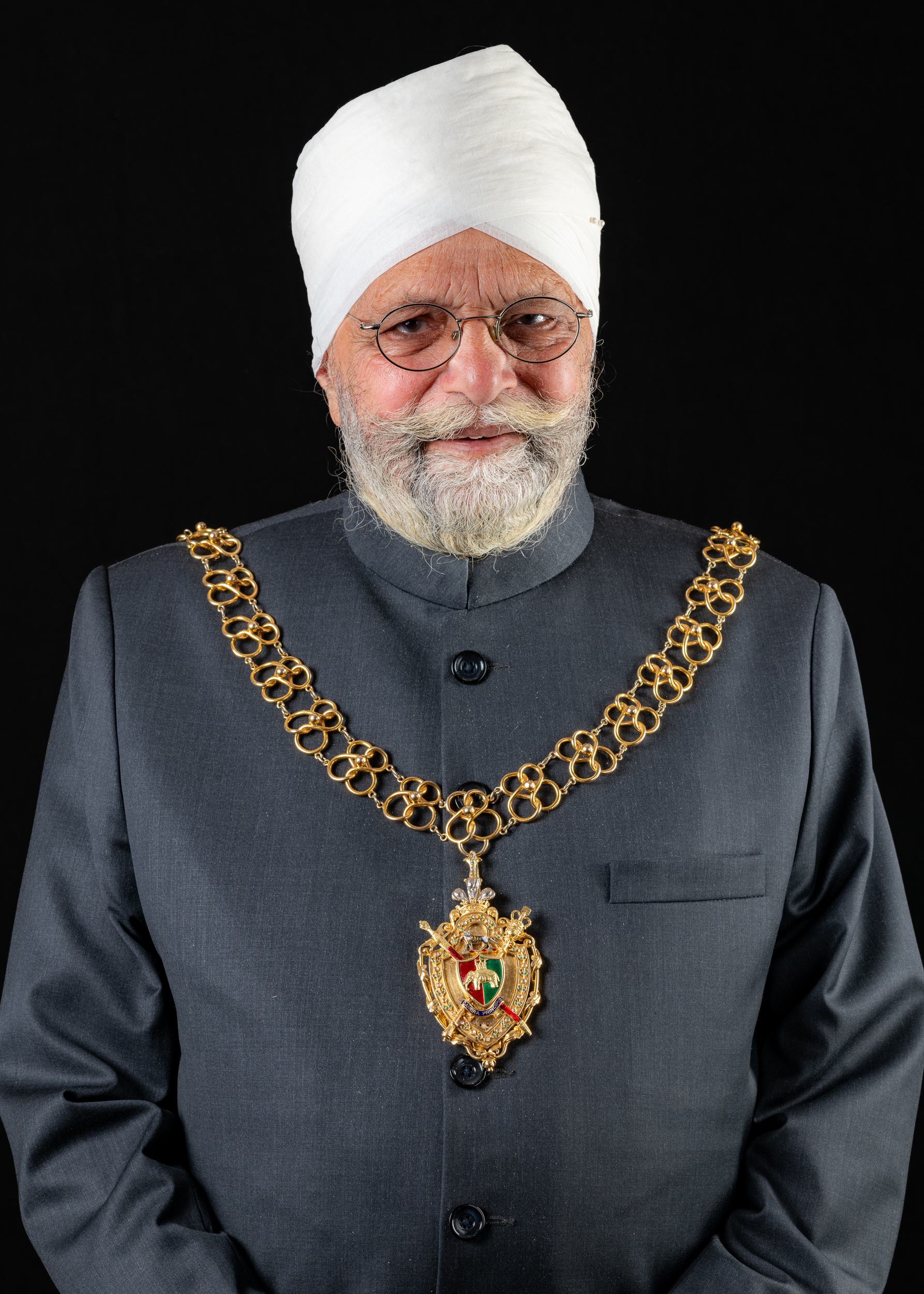
What I also enjoyed in the Nest was to invite volunteer guinea pigs (such as friends and family) to support the experimentation process in the studio. With the help of all those participants, either related to the projects or my photographic journey in general, I was able to learn a lot about photography within these few days.
All of my expectations regarding the Nest were met during my stay. The environment was very inspiring, and the support of the people was invaluable. It was a surprising but very delightful experience how everyone volunteered to help me figure out what the portraits should look like. I think that this community is one of the biggest strengths of the Nest and it has to be sustained for future artists taking the residency.
My most important learning within photography, apart from the technical knowledge, was to slow down, enjoy the process of creation and learning by doing, and continue to experiment with lighting and styles. I realised that in order my projects to be successful, I have to understand the messages that need to be created from the images.
Alongside the visual side, I also did a fair bit of research around the British Sikh community, looking at how Sikh identity is becoming part of British identity. Similar processes can be observed with other Asian communities as well. It is a huge issue, however, that these communities and their identities still do not get enough visibility, especially in showing them in their richness and complexity. Photographic projects like mine are therefore crucial in giving that visibility and perspective that the communities deserve.
But how can this all be captured in a visual way? I learned during my residency that portraits playing around with light, shapes, and stories can be a powerful tool to explore the impact of the local Sikh community, both its members and the work done by the Gurdwaras.
I am also very grateful that I was given the opportunity to work and reconnect with my photography tutor Simon Derry. As my mentor he has helped to focus to on the creation of the project and to experiment more with my artwork.

I am therefore very thankful for this opportunity and will commemorate my Nest residency in further stages of the development of my projects.
 Words from the Birds