Hannah Adereti reflects on their Talking Birds Residency, organised in partnership with MAIA
Do I know how to be with myself?
Honour all forms of creativity that emerge?
Should I always hone in or should I see what plains of the wild west of my imagination has to offer?
I grew up in London, accompanied by my Grandma, attended Saturday hip-hop dance classes at my local church from age 8 to 11. In year 7, I learnt the different techniques of ceramics, making a terracotta vase and engraving patterns. I can still recall the connection I felt to the clay – what an introduction; the coolness is still vivid in my body. Moving to Jamaica in year 8, I lost access to so much resources the British Education system offered.
Design and Technology class was replaced with cosmetology, acrylic for shampoo. In year 9, I convinced my form teacher that the sexism was deafening and I should be able to join the woodwork class the boys alone were allowed to attend. That year I made a table and a box. In year 10, I moved to a different school and art was not a part of the curriculum. Microsoft Word became my muse. I would spend hours writing poetry and scripts for theatre. Constructing whole worlds and plot lines for television that felt reflective of what I was experiencing and what I wanted to see.
When I turned 16, I went on holiday to London. Following the digital resurrecting of my friendship with Mojere, we linked up. Spent the summer listening to poetry, going to galleries and taking photos on her camera. Mojere gave me her DSLR the end of that summer, she got a new one and knew how much I enjoyed being behind the lens. Photography became a medium I fell in love with. I would spend hours in my garden taking pictures of plants, fruits and my Grandparents. Expanding into documentary and honing in on portraiture, I got braver. Started to take my camera to school, taking pictures of my friends at university. Even taking my camera for portraits when I visited Notting Hill Carnival one year. Then I upgraded my phone. HTC One – what a camera! I began to film, take in all of the nuances and try and depict the moments that make my brain exuberantly tingly. This feeling is the foundation of every visual I make. Eventually, I wanted to honour the process of observation I was experiencing that inspired me to document in the first place. My editing started to reflect my neurodivergent processing, utilising overlays and multiple visuals in scenes to demonstrate the multiple stimulations and associations.
Having a medium that feels so expansive and reflective of my experience made me inattentive to the other ways my body is called to create. Through my career as a curator in a gallery, I managed to engage with other mediums as an appreciator. Never attempting to utilise the mediums we exhibited. Thankfully, passion and opportunity collided and I began my producing role at Yard Art House. One of my first tasks was to create a nap installation, inspired by the Nap Ministry. This was a rebirth. Creating space, personifying the cause and demonstrating the solutions through metaphors is truly an embodying practice. I want more of this feeling. Then there was Art School, which basically was a 10 day experience of love. It was created to engage with community and collectively reimagine abolitionist frameworks for our society. Freedom & Balance and MAIA Group designed a framework that honours art, collective world building and play. My role was aiding in curation and facilitating the space, meaning I decide how we approach the topic and what medium we should use to explore. This was an opportunity to be in community, remember and discover the ways we affirm our experiences as marginalised people. All possible because of access to resources. So yes, I ensured there was at least one question where one of the responsive art mediums was sculpture.
…
When I contemplated what I wanted to do for my residency with Talking Birds, I instantly wanted to make a film. I had 10 days to be creative and get paid for it. Isn’t that the life? I am given a room with two tables and chairs, some pens, sticky notes and a high square window engulfing the room with light. I spent day one mapping out a visual I wanted to capture. I wanted to portray anxiety from my perspective and like any good idea there is a motif or a tool that grounds the work. For me, that was a fisheye lens. When I approached Talking Birds to get it purchased, I was reminded that the price would come out of the fee I received. I instantly scrapped that idea. It had been a long time since the question of resource overcasted my creativity and the way my overdraft was set up, I was not trying to encroach on the expected payment. I tried to write and like an old friend, a concept I always entertain came to visit. Yet the words of the script was not ready to make an appearance. Now it’s day three and I ask myself, ‘when will I have this opportunity again?” Then I check my account.
How to invest in yourself on a budget?
I ordered some plaster cast and crafting wire. Less than £20. A lot cheaper than a fish eye lens. I tape newspapers over the glass panel on the door. Take off my trousers and stand on giant sheets of plastic provided by Talking Birds. I spent the next seven days of the residency perfecting a sculpture of my legs and pubic bone; obsessed with the idea that this could spawn a workshop where we collectively cast our bodies and discuss topics informing body dysmorphia. A few months ago I attended the MAIA Black Frequency workshop, Making Mas(k) with Amaru Chatawa. I learned the rudimental skills and hoped it would serve me for this project. Day after day, I found so much reverence in the process. Water and plaster meeting the pumpkin seed butter covering my body. Alone in a room, the music booming, revelling in the feeling of taking off the two prototypes off of my thighs; creating body memories. I found myself reminiscing about the MAIA Accounting In The Black Imagination residency that happened at the beginning of 2023. All of the team showed up as artists, whilst having four artists and a dramaturg-in-residence also in the space. The best way for me to describe that experience was that we became mycelium – all connected. Words didn’t finish some thoughts because we were all on the same wavelength, there was no need. We collaborated and experimented. I also was the artist liaison for the residency, navigating my administrative tasks, care responsibilities and my creativity. Then I contemplated what would this experience look like if my Black imagination had company, to bounce off and redirect what will be created. In the Talking Birds Residency, I only had to think about myself. Contrastingly, I asked myself what it meant to honour and platform the creativity in my being. And earnestly, I thought about what the blending of these two styles will look like. More space for solitude and ushering the creativity that comes with that, alongside moments of collective creation.

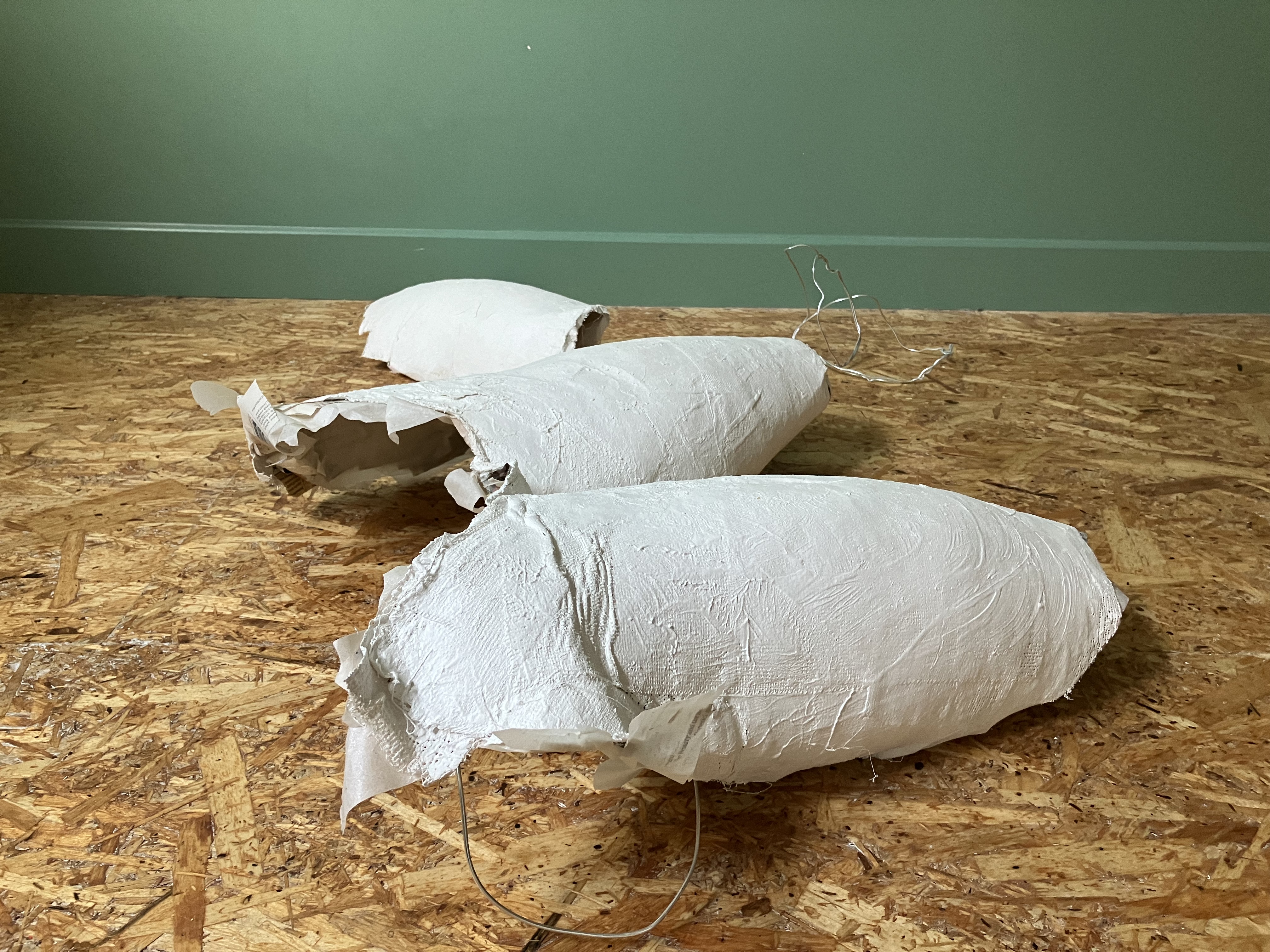

I am grateful for this space for my Black imagination to roam free. Additionally, I wish they weren’t few and far between – that more people could experience this.
What would the world be like if we all had this opportunity to dream?


 Words from the Birds