Adele Mary Reed reflects on her recent Hatching residency at The Nest.
There is nowhere like a nest to knuckle down and nourish yourself. Contained, safe, with wise guardians popping in and out. A trail of breadcrumbs lead me there, meandering path through years, motherhood, lockdowns, urban redevelopment, relationships, travel, wildflowers.
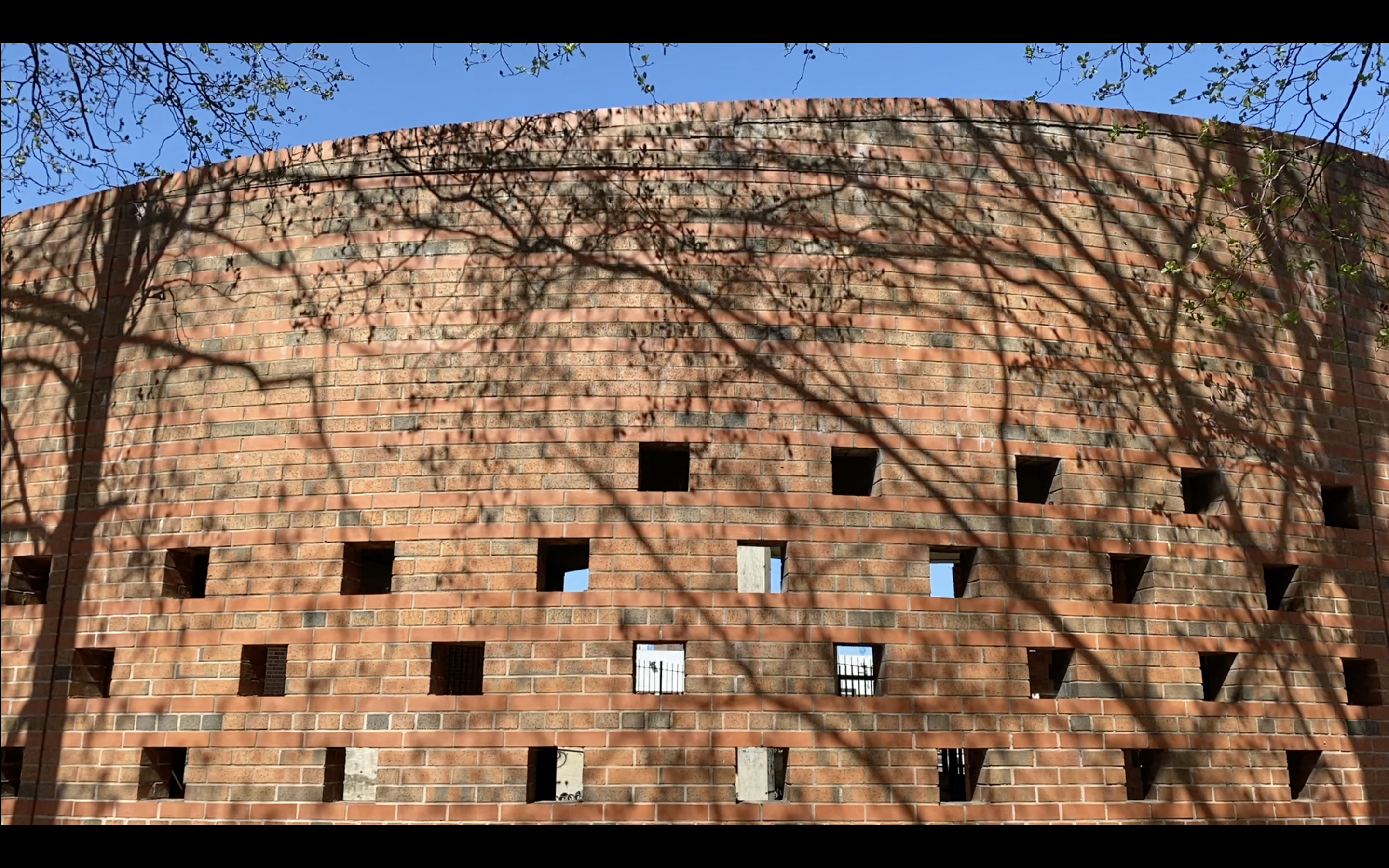
In seven years you might accumulate a fair few experiences, and these days, as part of that, a fair few additions to your phone’s camera library. What do you do with those collected moments, those histories preserved but so often ignored. What’s useful about an archive, especially a personal, domestic archive, an archive that see-saws between public and private realm, the kitchen worktop and the local demolition site? “A film exploring notions to do with the city and the self” was my strap-line for a 2016 film, and I’ve questioned ever since what I meant by that. What notions were these? What even is a notion? Was the notion a devotion to art, self-expression and visual language within a confusing and fluctuating environment.
We all have our inner worlds jarring with our outward presence. They tend to be kept separate – how many of your art friends have been to your house, have seen the art on your walls? We see one side of a three-part moving vanity mirror, shifting too fast to grasp the reality of any given sphere. Is that what the movie does, grasp at a wider picture, blend each frame? The filmmaker Andrea Arnold said that film is a universe:
“I try and make it feel like it’s a real world, and when I see the first cut, I cannot believe that we put all these images together and this whole universe exists. To me it’s a miracle. I can’t believe you can do that. To me, when you’ve finished a film you’ve created your own universe.”
As I set out to make something moving, visual, out of seven years, out of 474 pieces of footage, out of a residency room and a pile of books, out of the grief of loosing a large archive of personal writing kept with the intention of bringing into a piece of work one day – as I started, got distracted by other moving image works, by interviews and new minutiae diary entries about cycling up the hill towards Radford, long conversational lunches and contextualising my arrival, I listened to whispers. I wanted to tune in. I really crave those subtle gestures life makes, the spider in the corner, the pigeon splashing outside, the plastic tape hanging and flapping in the wind late at night on platform 3. The film evolved from 2016’s Notebook, to 2025’s intersection of whispers. Life is too loud, life is too fast, we run out of space to listen quietly.

Although the film is part-way to being made, this blog post celebrates less the entity in creation, more the nature of getting there, and the quality of being in residence at, and or but with, Talking Birds. Like a nest, what you’re creating is kept warm until ready to (let’s hope) fly free. Hatching the idea is the very deep and unusual joy the residency offers – when were you last told to stop and indulge in a buried wish, a daydream shrinking underneath the everyday? Inside this safe-space, the daydream explodes! Expands. Takes precedence and priority. Speaking with Derek, his approach to creating sounds around visuals is to ‘paint it in’ – the residency, similarly, has afforded time to paint in the artistic depth lacking, coming in second place to the rest of life’s demands.
There is the word ‘theme’ that artists mention very commonly, there must be themes. I think I freeze when I hear that word for themes suggest something solid and often something quite academic. I also think themes change constantly with new readings, new realisations. To affix a theme is to close the work down, and one day the theme may seem huge, another day another theme has spoken up. Art breathes, in that way, and themes don’t need to dominate. Nothing needs to be anything in art, in my understanding. It’s why I like it. It’s a rare open sky in a locked down dull deranged capitalist doom.
Nevertheless I’d feel awful to leave without providing a theme. One theme or an essay of themes? That’s a thematic choice. The work travelled, with a film we go from A to B, it’s not very far, it’s young, it’s growing. I begin by watching my daughter learn to walk. Then she learns to talk. We’re alone a lot. I go back to work. There’s traffic. She walks more. Talks more. She starts to understand relationships and the way we ebb and flow between other beings and species. I start understanding that more, too. We ask, via Leslie Kern’s book The Feminist City: “is the flâneuse ever pregnant or pushing a stroller?”
At some point, we establish ourselves as separate and go in different directions. From here, there’s a repetition of wilderness, of insect life, and the city has been left behind. In contrast to 2016’s Notebook, the city is no longer everything, we found a way out. With a stroller, the city is our kingdom when really it should’ve been our queendom. Soon we are out in open landscapes. The wind is always rustling, water moves in the sea, the glasshouse pond, the pavements filling with rainwater. There are stories communing between people, animals, grasslands, trash. It all feeds into the assemblage of everyday, we’re all in it together, some of us just speak louder than others, some images are collected and others aren’t.
“The image of a wild animal becomes the starting-point of a daydream: a point from which the day-dreamer departs with his back turned” beautifully wrote John Berger in the essay ‘Why Look At Animals?’ as I reflect on how often I’ve filmed other creatures and species, and for what reason.
Eventually, we return to the city, and after six days it’s time for The Nest and I to establish ourselves as separate and go in different directions, but, of course, we never do fly far from the flock. The beauty being that The Nest soon welcomes a new set of priority daydreams in residence, ready set to grow as slow and quietly, loud or fiercely as art permits itself to.

13th October 2025
 Words from the Birds