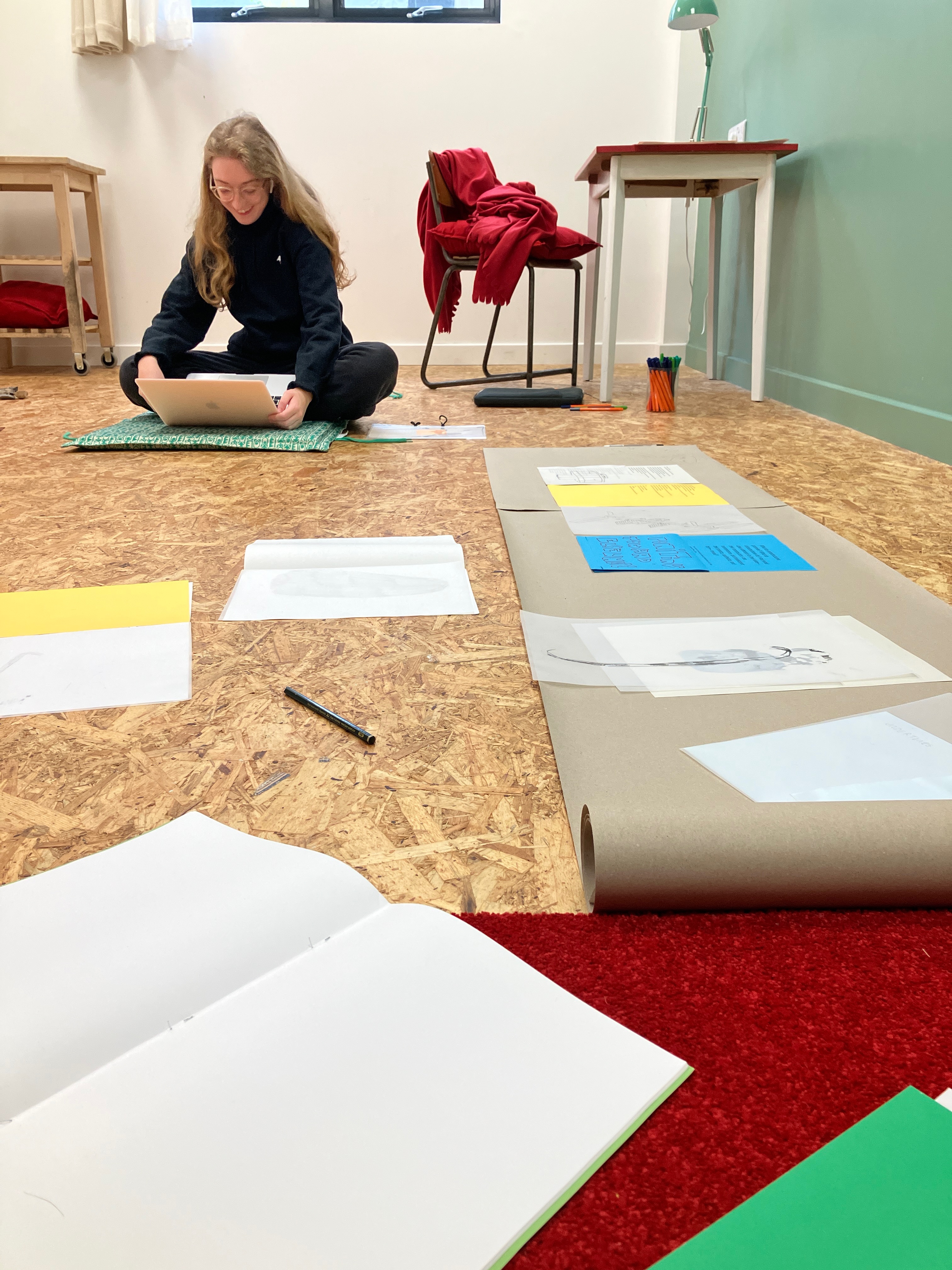
Lucy Grubb reflects on her recent Hatching Residency at The Nest.
The Moon is a Satellite,
and this city itself feels like my own private constellation.


The Moon is a Satellite,
and this city itself feels like my own private constellation.
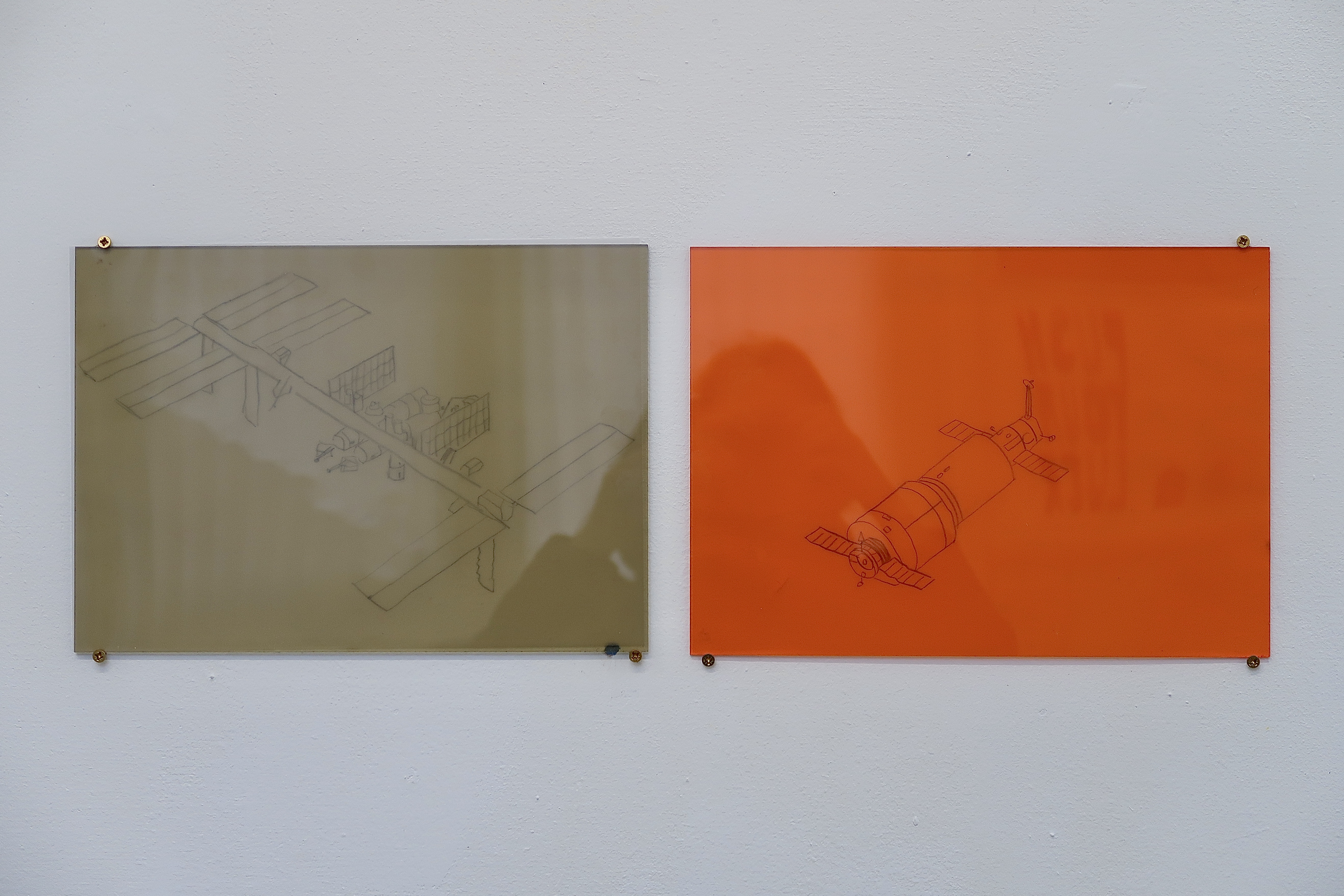
In Saturnia (1929), Viktor Kalmykov drew a ring around the Earth
a perfect geometry both functional and terrestrial,
its orbit is as much an organisational form as a cosmic ornament.
An architecture not meant to be built but to propose:
that space – civic or planetary – might be organised without being occupied,
might be inhabited without being enclosed.
Curating in this city is not so different from (re)arranging the supernovas remenants:
buildings and planets alike have gravity,
invisible fields of pull that dictate how other forms assemble around them.
Grassroot organisations become micro-moons;
some are captured, others drift free.
Routes replace roots;
policy becomes the primary material.
Claude Cahun’s stones could just as easily be asteroids
edges without facades,
nodes without foundations.
Housing, in this light, is a form of orbital docking:
temporary moorings on the edge of liberation.
Space-making, whether in the vacuum of space or the dislocated high street,
is increasingly nomadic.
It’s no longer structural in the conventional sense
it can be a series of edges, bolts,
the quiet choreography of thresholds.
Moveable walls orbiting within larger gateways;
chairs shifting like satellites.
Loose-fit, long-life structures reduce demolition,
lower emissions,
and extend the lifecycle of me, my, our, I i i i i i —
here, sustainability is not a policy but an orbital law.
If I fold myself in, if I stay, I risk gravitational collapse
but sweat wanders further than the body. My body.
It flows into drains,
into sewers that spiral beneath the city like underground rings,
joining other currents,
other atmospheres,
eventually dissolving into the ocean’s planetary waters.
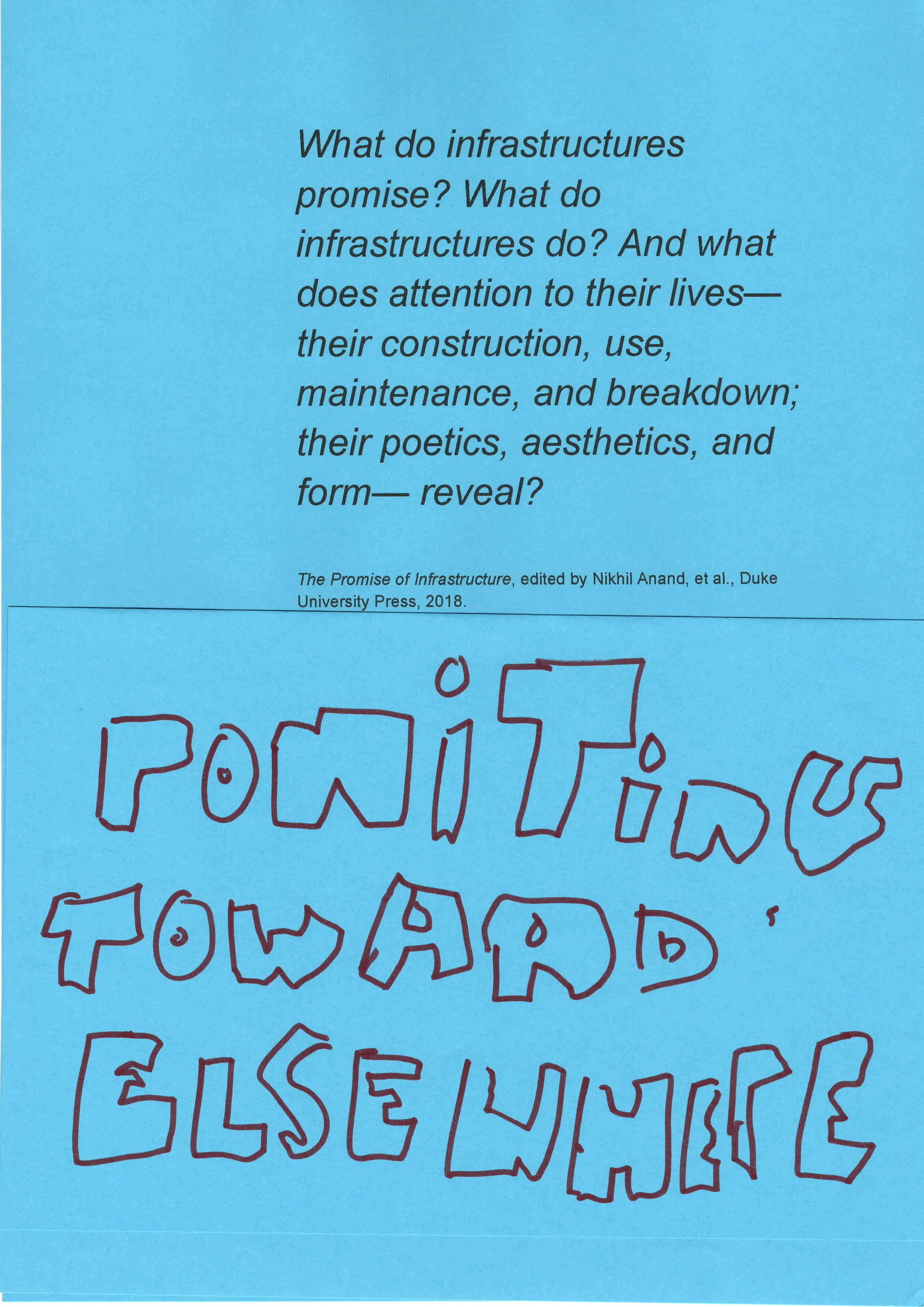
Plans and drawings operate like star charts:
they locate possibilities without touching them.
Like Luc Tuymans’ veiled surfaces,
they hold space in suspension,
refusing completion so that time can alter their meaning.
To build less is to orbit longer—
to give form without capture.
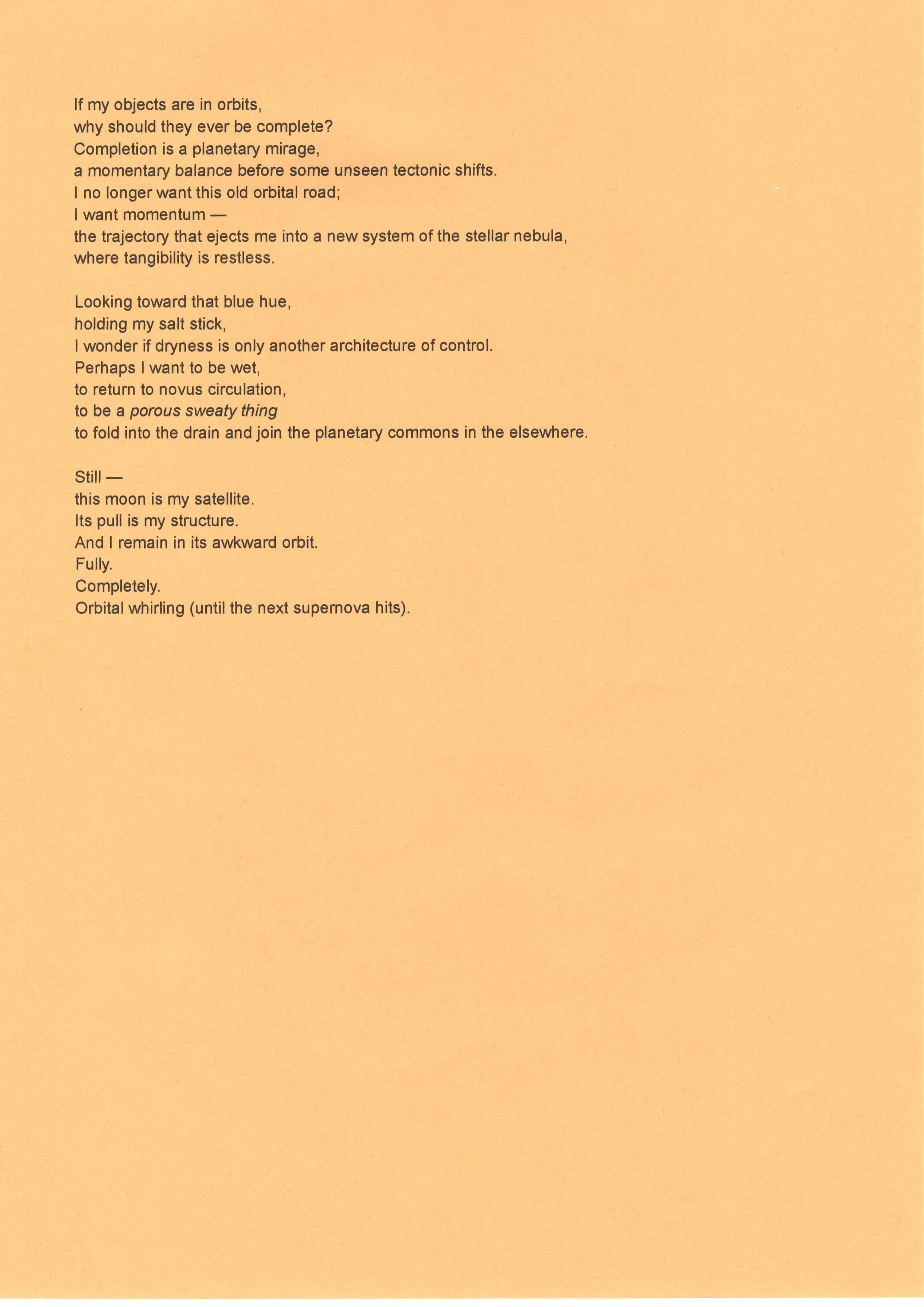
If my objects are in orbits,
why should they ever be complete?
Completion is a planetary mirage,
a momentary balance before some unseen tectonic shifts.
I no longer want this old orbital road;
I want momentum —
the trajectory that ejects me into a new system of the stellar nebula,
where tangibility is restless.
Looking toward that blue hue,
holding my salt stick,
I wonder if dryness is only another architecture of control.
Perhaps I want to be wet,
to return to novus circulation,
to be a porous sweaty thing
to fold into the drain and join the planetary commons in the elsewhere.
Still —
this moon is my satellite.
Its pull is my structure.
And I remain in its awkward orbit.
Fully.
Completely.
Orbital whirling (until the next supernova hits).
 Words from the Birds