Julie Joannides reflects on her recent Hatching Residency at The Nest
At the end of February 2026 I was about to start my Nest residency I had such mixed feelings of excitement and nervousness with the dreaded imposter creeping in. I submitted an application in the Autumn supported by Charlie in one of her surgeries where I offloaded my head full of a myriad of ideas that I wanted to explore. I was excited and nervous and wanted to make the most of the experience ahead.
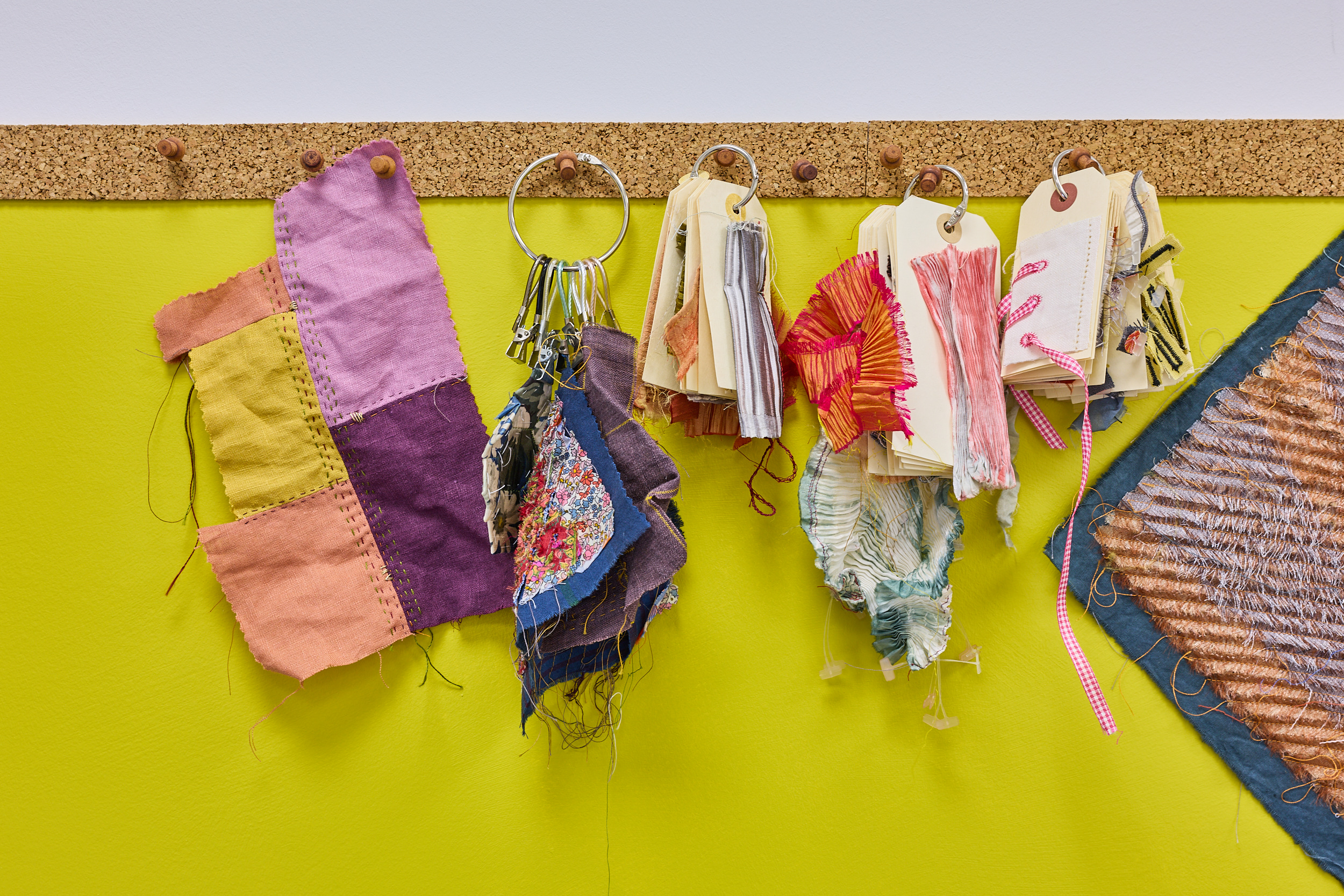
The six-day residency at The Nest offered me something I rarely allow myself: time to reflect on my practice in a protected space.
I arrived at a moment when physical restrictions were beginning to limit and frustrate my creative work. The Nest’s accessibility manifesto immediately created a sense of ease. It meant I could plan my work around treatments, rest days for fatigue, and health appointments. Rather than pushing through limitations, I could acknowledge them and adapt.
That freedom shaped the residency from the beginning.
Permission to Play
Having the privilege of time to play and explore can also bring pressure. When most of your work is guided by project briefs, deadlines, and expected outcomes, it takes conscious self-talk to grant yourself permission to experiment without knowing exactly where the work will lead.
During this residency I reminded myself repeatedly that exploration was the point.
This became an opportunity to rethink my creative practice and make adaptations that respond to my changing physical limitations. Instead of resisting change, I began to see it as an invitation to do things differently.
Textiles and States of Mind
My work often explores the relationship between textiles and emotional states — the idea of resilient stitch, and how textile processes can support wellbeing and connection.
Language around cloth often mirrors our emotional lives:
- The threads are coming together
- Frayed at the edges
- Woven stories
These metaphors became touchstones during the residency.
I found myself thinking about the resilience of fabric — how it can be torn, repaired, reconstructed, and strengthened through process. Ideas of tying, binding, and joining began to emerge as both physical and conceptual actions.
Working with What I Already Have
Every piece of fabric in my collection carries a story and a history. This may be why I find it difficult to let some pieces go — they are physical fragments of my life.
With the intention of condensing my collection, I set myself a simple rule for the residency: no buying new fabric.
Partly this was an environmental choice, but it was also a way of reconnecting with the fragments already in my possession — remnants from previous projects, dye tests, print samples, and unfinished textile explorations.
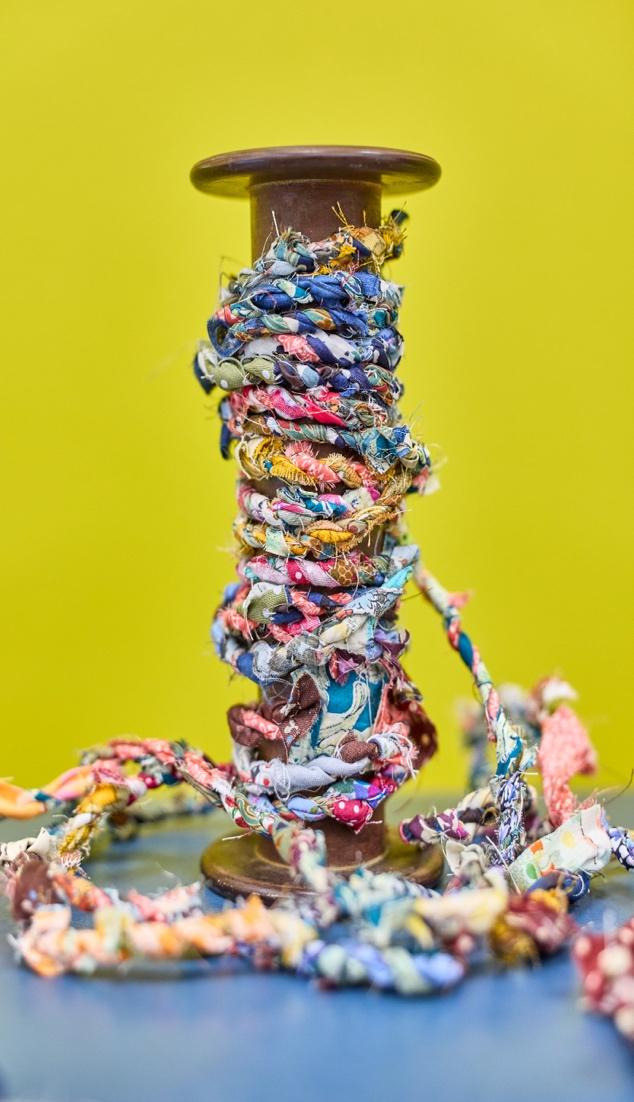
I became interested in processes that bring together old stories and relationships, where joining separate fragments creates something stronger.
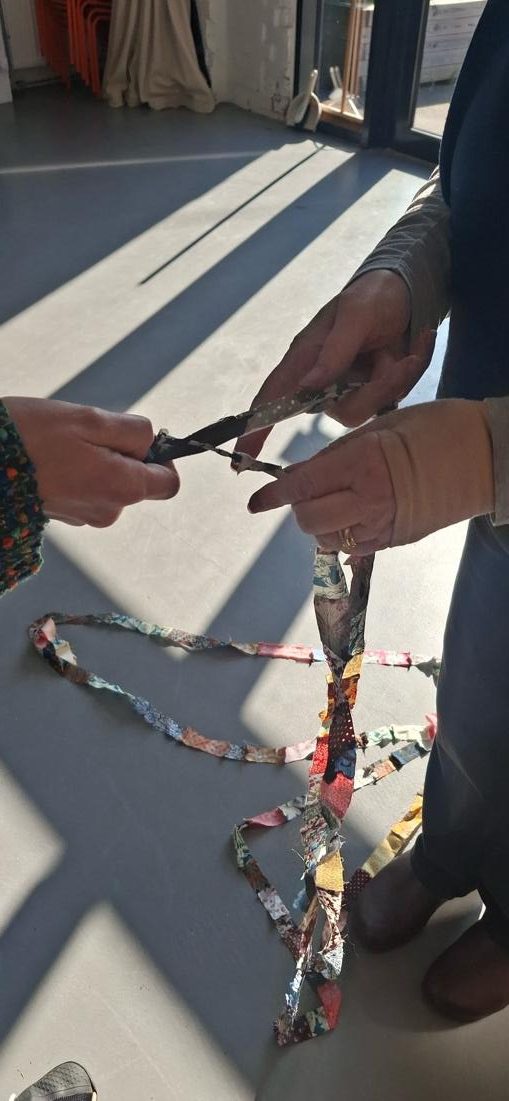
Using the sewing machine to connect pieces and tying them together by hand became an important part of this process. The movements of binding and stitching engaged both my hands and body in ways that also supported daily therapy and hand exercises.
The act of joining felt collaborative — between past and present work, between machine and hand, and between different ways of making.
Revisiting Interrupted Work
Before starting the residency I revisited my archive of older work.
Among these were many pieces that felt interrupted or unresolved. Some were the beginnings of projects that stopped because of time pressures. Others stalled when I became unsure how to develop them further.
I also rediscovered semi-finished textiles that were never intended for exhibition — dye tests, print samples, stitched fragments — pieces that had remained quietly in storage for years.
Returning to them now, with fresh eyes and older hands, has been revealing.
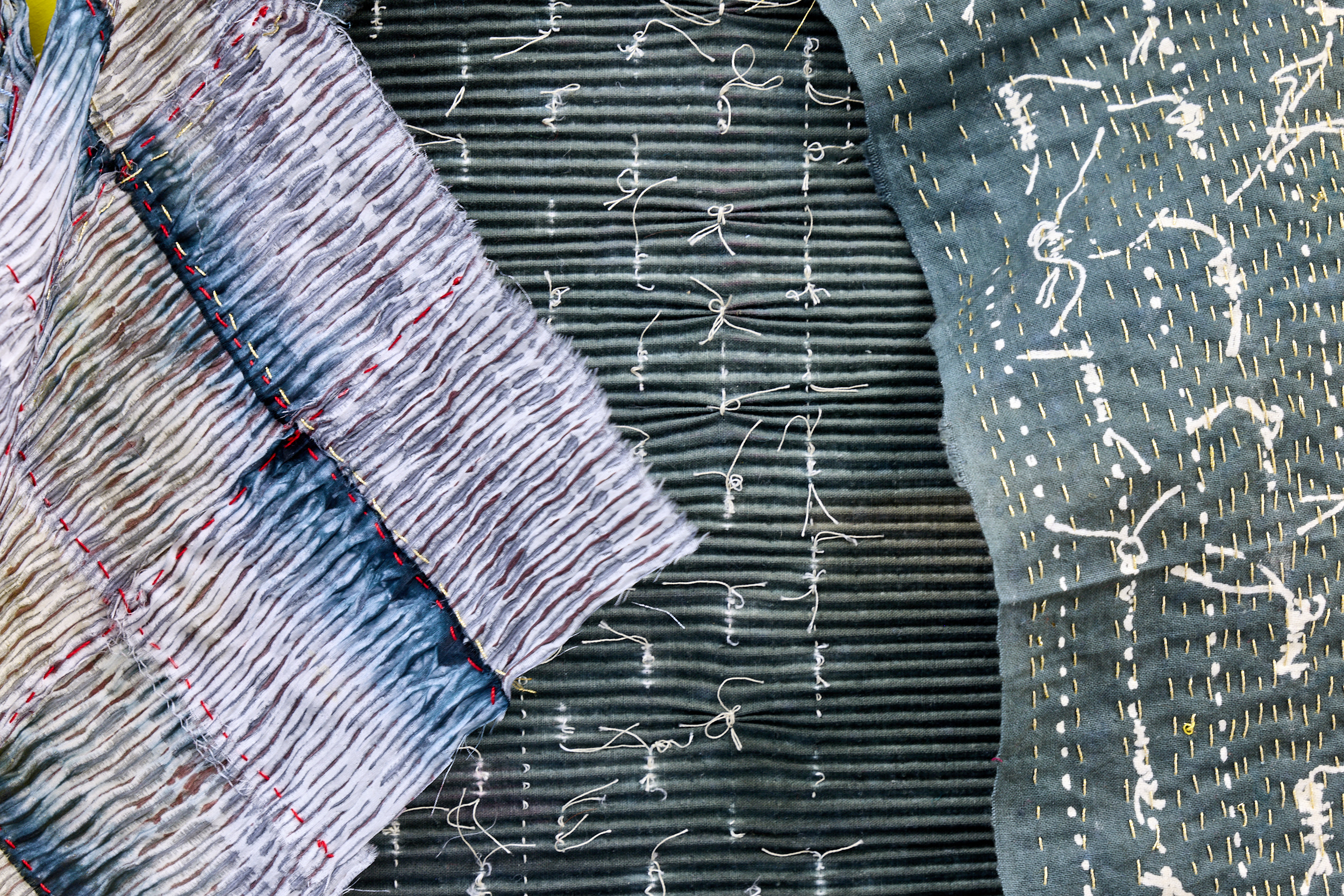
Working differently, with adapted methods, allowed me to see possibilities that weren’t visible when the work was first made.
Looking again offered choices:
- Do I still like the piece as it is?
- Does it need to remain unfinished?
- Or is there an impulse to add another layer of narrative? Palimpsest ??and layering od stories
Frayed, Knotted, Contained
Throughout the residency, the processes of fraying, knotting, binding, and containing began to form a quiet visual language.
These actions mirror experiences of resilience — how we hold things together, how we mend, how we adapt.
Slow stitch became central to this exploration. The rhythm of repeated hand and machine movements offers a methodical and calming process, one that allows thoughts to settle.
There is growing understanding that repetitive handwork can support wellbeing. The meditative nature of slow stitching can help regulate breathing, encourage focus, and lower stress responses.
In this sense, the process becomes as important as the finished piece.
Threads Coming Together
By the end of the six days, it felt as though several threads — conceptual, practical, and personal — had begun to come together.
The residency reminded me that adaptation is not a limitation but a form of creative evolution. Working more slowly, listening to my body, and allowing unfinished work to re-enter the conversation opened new directions within my practice.
The fragments of cloth I brought with me were not simply materials. They were woven stories — pieces of past work, past selves, and past moments.
Through stitching, binding, and reconstruction, those stories are continuing to evolve. It was a great support to have Andy Moore to photograph and document my work at the end of my residency
Thank you to all at the Nest. To Charlie for helping to get ideas out of my head onto paper and giving value to my thoughts. To Janet, Derek and Melissa for creating a truly accessible environment to create and explore possibilities and my fellow Hatchers who offered inspiring conversations and peer support. I was reminded that connections with shared values are of great importance to me and are the golden threads that have connected my practice and work throughout varied aspects of my career and will always inform what I do.
 Words from the Birds