Lucy Denton reflects on her recent Hatching Residency at The Nest
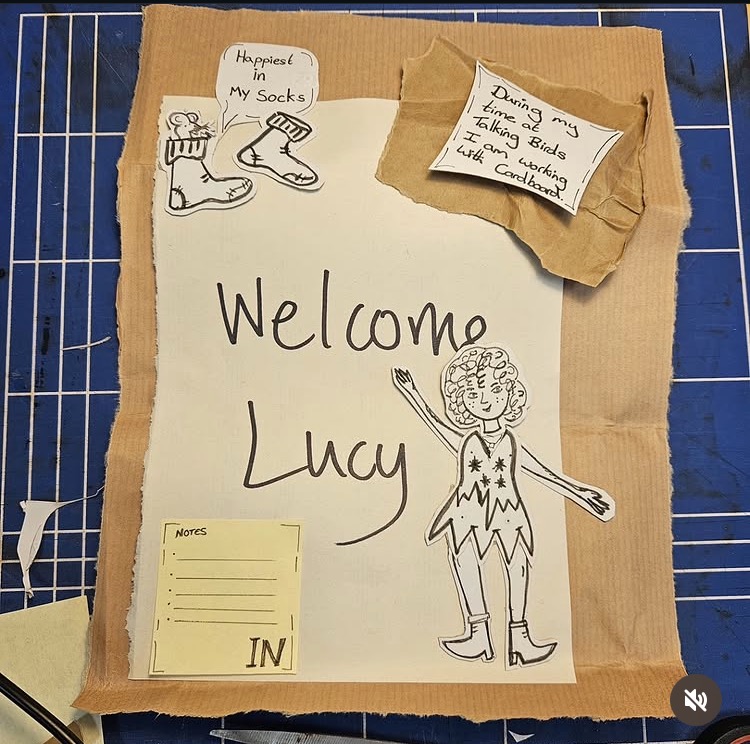
I recently had the opportunity to spend four days over two weeks as part of the Nest Residency with the team at Talking Birds in Coventry. I felt comfortable in the space and was treated like a professional. During that time, the experience opened up far more ideas than I expected.
From the start, the team was incredibly welcoming. They took the time to understand how I work and what I needed to feel comfortable in a new environment. Because of my health, I sometimes have good days and sometimes days where things take a little longer or need a bit more planning. Simple things like making sure there were clear walkways and easy access to toilets made a big difference. It was the first environment where I felt listened to and was asked how they could help me feel most comfortable.
They also understood that I arrive each day with what can only be described as a bag of personal survival equipment – the items that help me settle into a space. Rather than it feeling strange, it was simply accepted as part of how I work. That kind of understanding creates a very different atmosphere from a typical studio environment.
Working with Cardboard Again
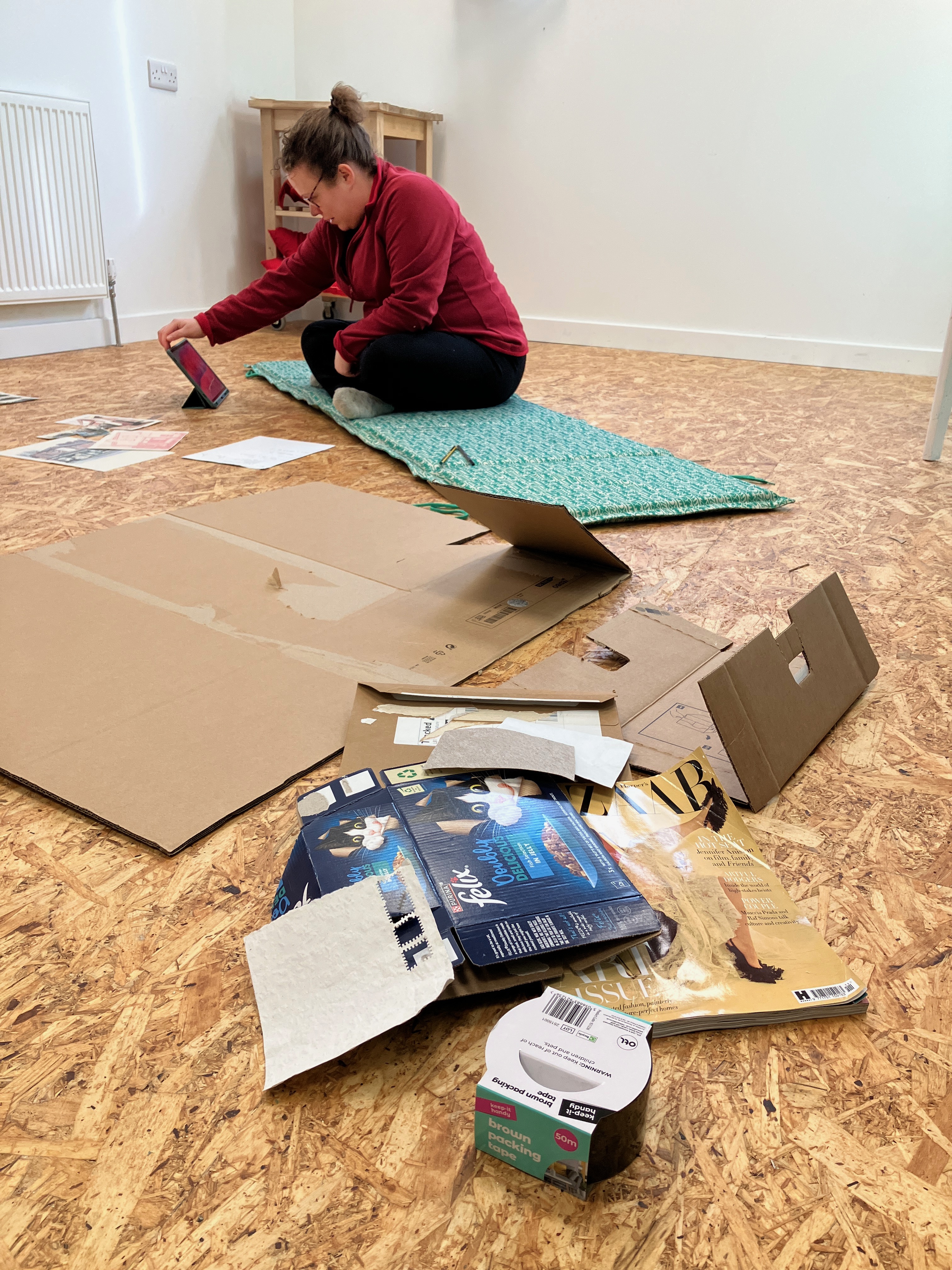
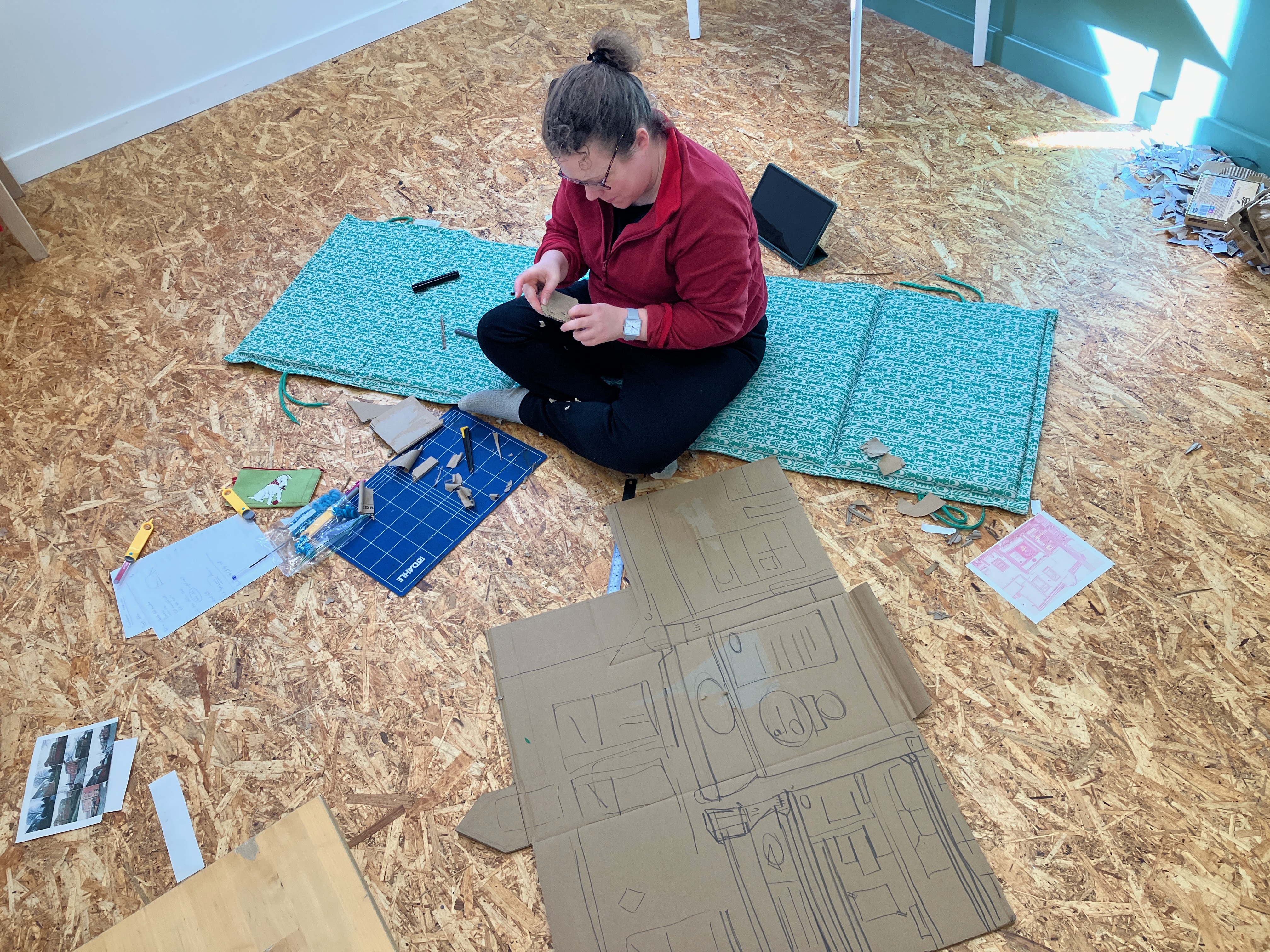
One of the biggest things Talking Birds helped me do was return to working with cardboard.
This might sound simple, but for me it carried quite a lot of hesitation. A few years ago I began struggling with cutting fine detail because of problems with my hands. That experience knocked my confidence and made me avoid materials that required precision.
The residency gave me a chance to try again in a space that felt safe to experiment in.
The studio itself helped enormously. It was open, well lit, and importantly had proper non-flickering lights (something that matters more than people realise). Unlike working alone, I also knew that if things became overwhelming there were people downstairs to talk to, have a cup of tea with, or simply have a friendly chat. That quiet support made it easier to try.
Over the four days, I began experimenting with how different types of cardboard and paper layer together. Rather than relying on colour, I focused on how depth, shadow, and texture could create visual interest.
Simple materials, but surprisingly complex results.
Taking Time to Think
One of the most valuable parts of the residency was something that doesn’t always happen when life is busy: time to think.
I started building mind maps around what I actually care about making work about. During the second week, I realised something quite important. The stop-motion stage world I had started building was taking far longer than I had imagined. If I was going to invest that amount of time and energy, it needed to be something I genuinely cared about living with creatively.
That question — what world do I actually want to build? — became central.
The World That Appeared
What began to emerge surprised me a little.
Instead of fantasy worlds or historical settings, I kept returning to places that feel familiar: real high streets, libraries, canal paths, shop windows, and small community spaces.
Gradually, an idea started forming.
A gently nostalgic but firmly modern children’s series set around a library and post office.
Not nostalgic in the sense of being set in the past, but nostalgic in feeling.
Small community problems that are solved gently rather than dramatically, through puppetry in static, bold sets.
Why This Matters to My Practice
Working for many years with autistic students and young people in alternative education settings has shown me something important: predictable environments create safety.
Places where:
• roles are clear
• spaces are familiar
• problems are manageable
• adults cooperate
Those environments allow people to regulate.
That realisation connects strongly with the type of world I seem to be building through my work: one that is slightly softened but still recognisably real.
What Happens Next
The experience opened a lot of doors creatively, which is both exciting and slightly overwhelming.
The next step is working out how to develop these ideas properly.
One thing I realised during the residency is that I need to keep up my monthly photography walks. Those walks are often where the raw material for my ideas appears.
I’m interested in creating work that sits somewhere between reality and something slightly magical — but firmly rooted in the world I actually live in.
I would recomend applying for a Nest Residency to see what you can create with the time, space and understanding.
Lucy Denton – @Lucydeeprints
 Words from the Birds