Taszyn Bailey‘s Hatching Residency reflections.
Before starting my residency, I tried to figure out what I’m actually visually drawn to. I looked through old photos, saved images, and my past illustrations and paintings. There were two themes I consistently revisit: architecture and nature, often intertwined.
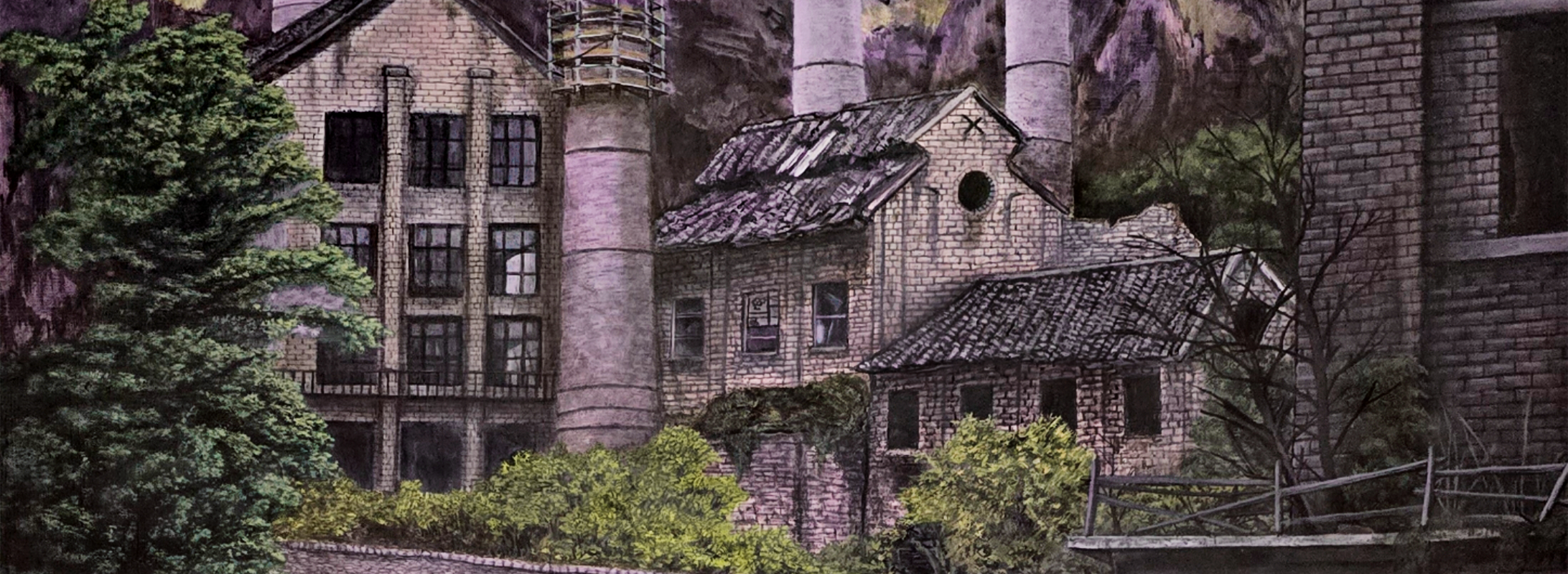
I could narrow it down further to a particular affinity for abandoned industrial spaces that, once had a very specific purpose and now sit quietly being reclaimed by the landscape. I’m interested in that shift. In what happens after humans are done with a place.
I had my starting point. It’s a short residency so day one was mostly researching and a little sketching. I came across footage of the Danzhai Mercury and Gold Mine in Danzhai County, Guizhou Province, China. I knew almost immediately that this would be the foundation for my painting, but not an exercise in realism.
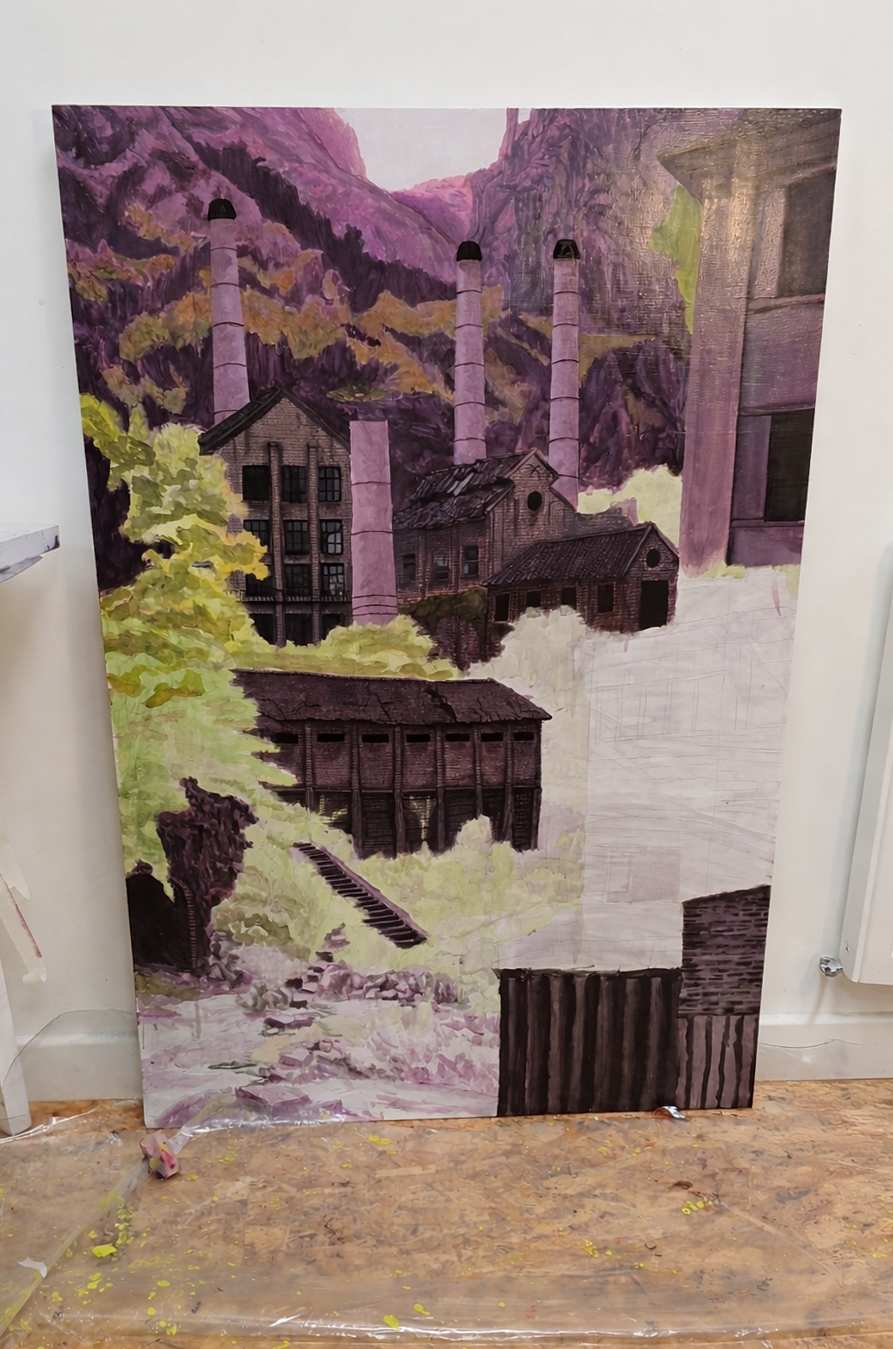
As I was developing the painting, understanding the context Danzhai mine, became central to the work. Researching the site wasn’t just background reading, it shaped the atmosphere, the texture, the way I approached the composition. I cannot claim to have a “good” understanding of the place or culture, but here is what I learned.
Danzhai County itself is known for its rural villages set among rice terraces that climb rolling hills. The Miao people make up most people of the population of Danzhai, they are an ethnic minority in China who have worked hard to preserve their heritage and traditions. The Miao people generally live at a slower pace than those who live in cities. Many Miao are very self-sufficient, farming rice and silk, sourcing locally, and foraging is part of daily life. While historically agriculture (and then mining) has been the central Danzhai economy, many locals have transitioned to generating income through crafts and tourism, reducing the need for people to leave for city jobs.
Unfortunately, Danzhai is part of the “Mercury Belt”, a vast area across Southwestern China, known for its vast amounts of geological mercury and manmade pollution from its extraction. The Mercury Belt is scattered with disused mines like this one that are a stark industrial contrast to the surrounding landscape.
Established in the 1950s as a mercury mine, it later expanded when gold was discovered intertwined with mercury and other toxic elements. At its peak, it employed around 20,000 people and functioned almost as a self-contained town, complete with a cinema, school, department store and hospital. By the 1980s, gold reserves were nearly depleted, and growing environmental concerns led to its closure.
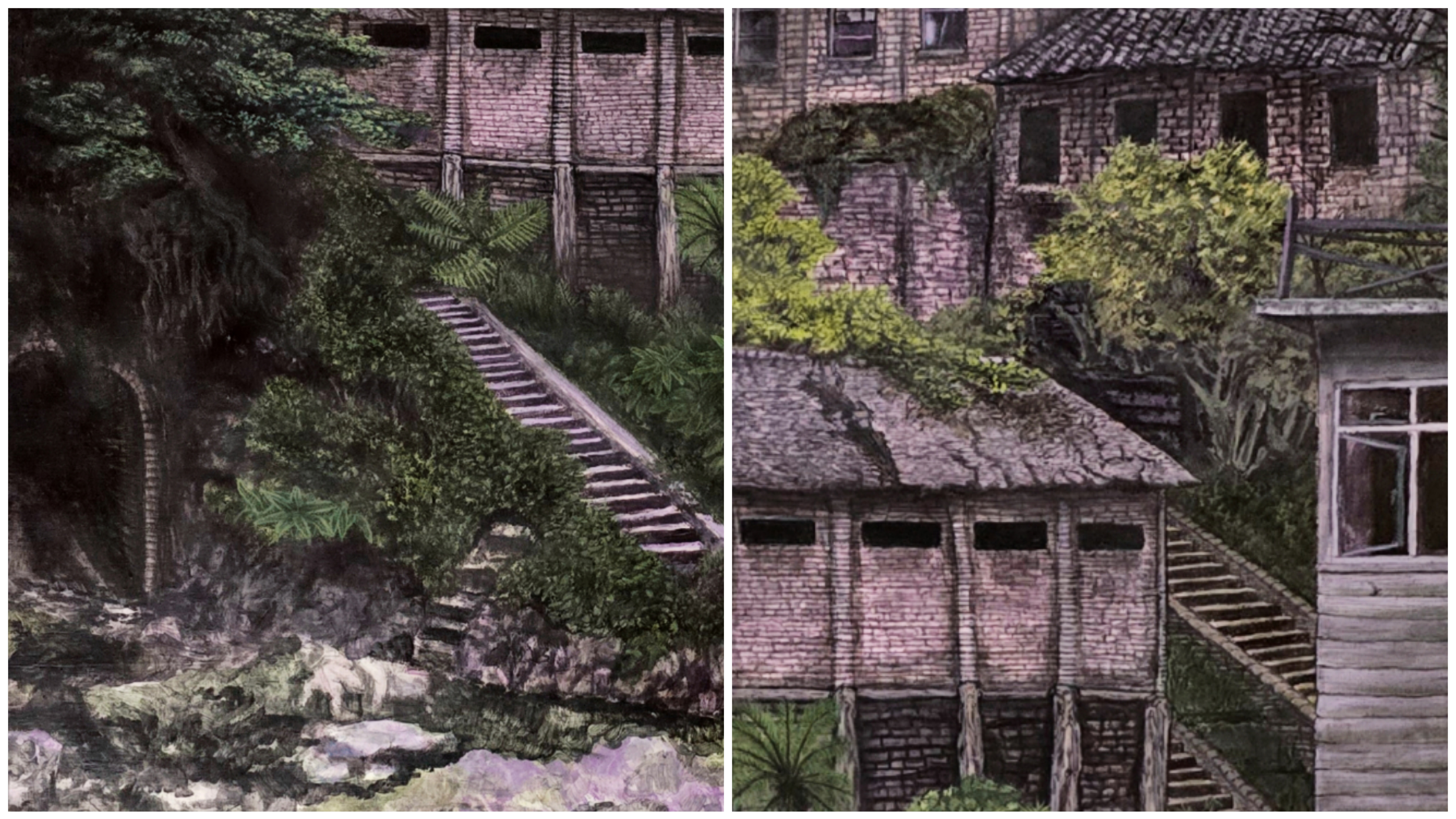
The resulting waste from extracting gold from toxic metals was immense. Toxic vapours and dust spread across the region. Contaminated water run into soil and waterways. Tailings were left piled near the site for decades, slowly leaching harmful compounds into the ground. As with most human industrial endeavours there was a great human cost, the ramifications to health continue to this day. Mercury is still being found in staple foods such as rice and fish. While detailed historical data on the full environmental and human impact is limited, the wider Mercury Belt has become an area of scientific concern. Cleanup is slow, underfunded and very difficult.
Today, most mines in the Mercury Belt are abandoned like Danzhai mine. Buildings are crumbling, vines climb concrete walls, and trees push through old foundations. A river cuts through the empty factory buildings and workers’ housing, mountains rising behind it all. It’s visually extraordinary, but sombre. The quietness of an abandoned space. The way nature softens hard edges. The fact that landscapes remember what we do to them.
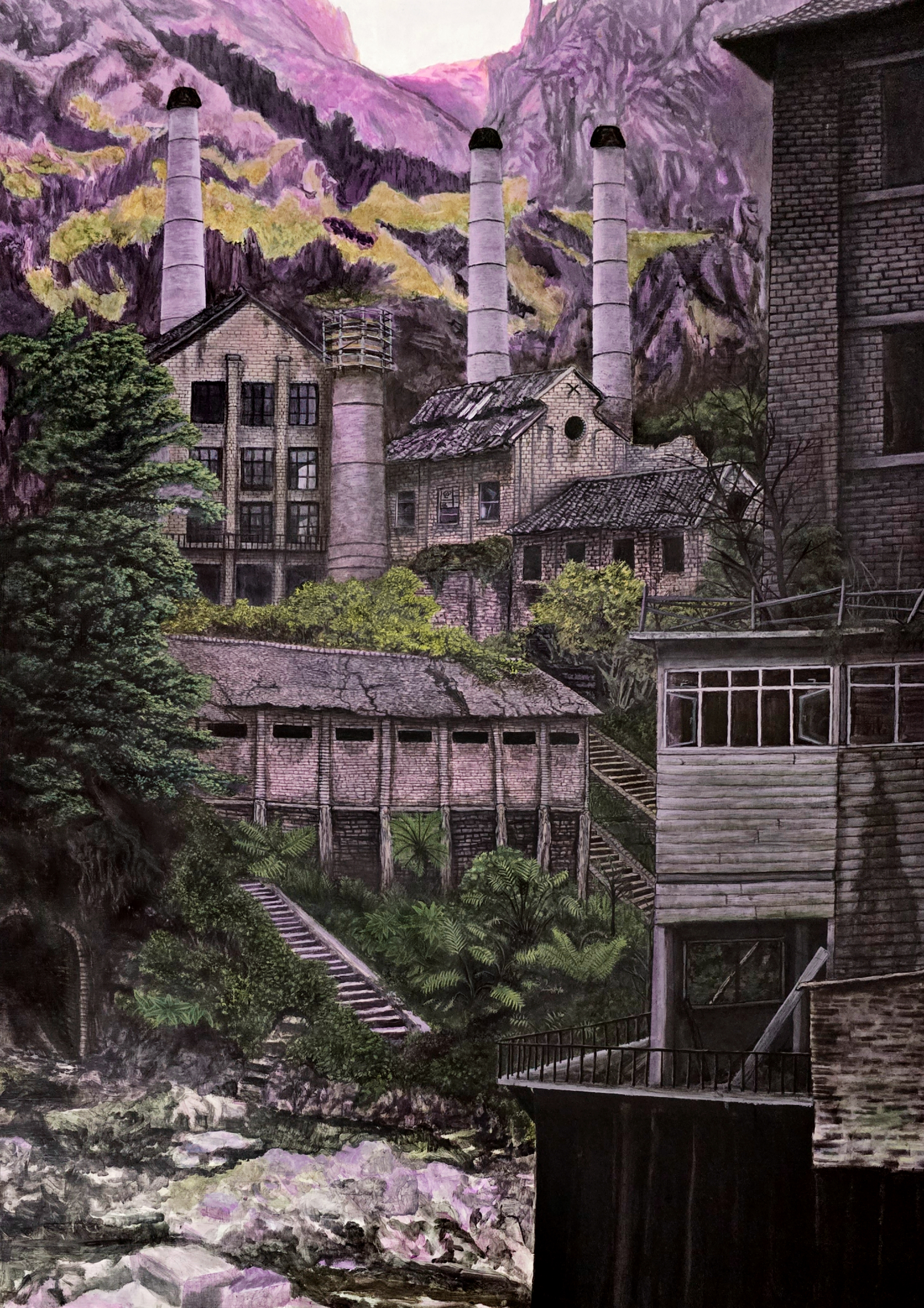
At the Nest I had the time to develop ideas and organise my thoughts and materials, as well as a perfect studio space to create something without the distractions I usually have. Everyone I met made me feel welcome and inspired. If I could recreate this environment easily, this painting would be finished. My Nest Residency made me realise the importance of dedicated and organised studio space for my artistic practice.
@taszyn
 Words from the Birds