Cinematica: Artist Rosa Francesca reflects on her Nest Residency visualising brain data.

Artist Rosa Francesca reflects on her Nest Residency:

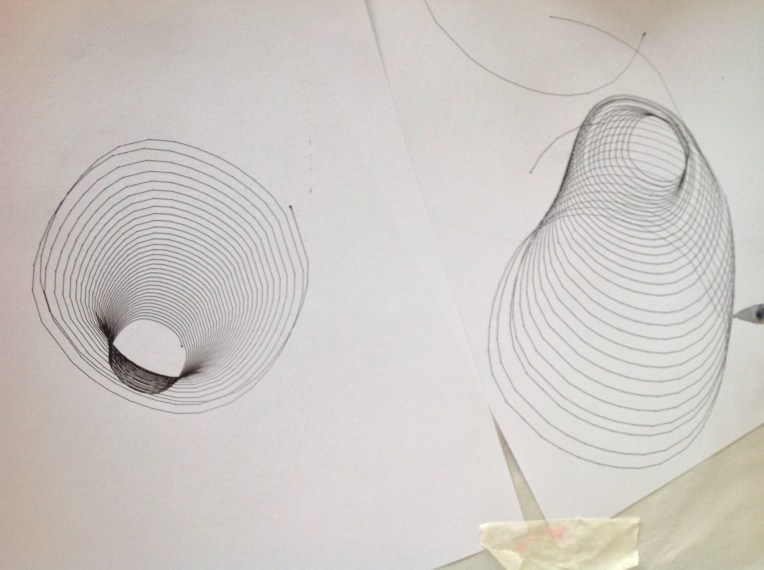
Cinematica is a digital art project using an EEG monitor in conjunction with an XY pen plotter to create visual art. The participant is invited to wear the EEG headset and their brain data will then be sent to the plotter giving it directions in which to draw, producing in the end a ‘mind-controlled’ drawing. This project was developed during a Nest Residency supported by Talking Birds.

I began my residency at the start of June 2019, and I had applied to Talking Birds in particular after hearing about them through the Coventry Biennial open call. I was particularly impressed with their commitment to accessibility, working with disabled artists, and creating environmentally conscious work. I felt that their views aligned with my own, and in particular related to the aims of my work.

3Dspirals

I first had the idea for Cinematica after being diagnosed with Tourette Syndrome at the start of 2018. I had suffered from motor tics and a few vocal tics for most of my life, and waited until adulthood to seek diagnosis. Although it no longer affects me as harshly as it did during my teenage years, I am a member of an online community for adults with Tourette Syndrome and can see the debilitating effects on others less fortunate than myself. One man described how he was no longer able to make art because of his motor tics which rendered his hands to unsteady to hold a pen or a paintbrush. Other members suggested that he tried digital art, but he wanted the ability to create a physical drawing. I decided then and there to create a means of physical art creation without the necessity of fine motor skills.

I had recently purchased an EEG monitor for artistic purposes anyway, and thought it might be good to put it to good use alongside a plotter, which is a robot arm that draws with a pen and paper moving along an XY axis. Through my Nest Residency, I was able to get support to purchase a plotter and to learn to manually code it and figure out how to send data from the brain monitor to the plotter to create real life brain drawings.

hellocov_4

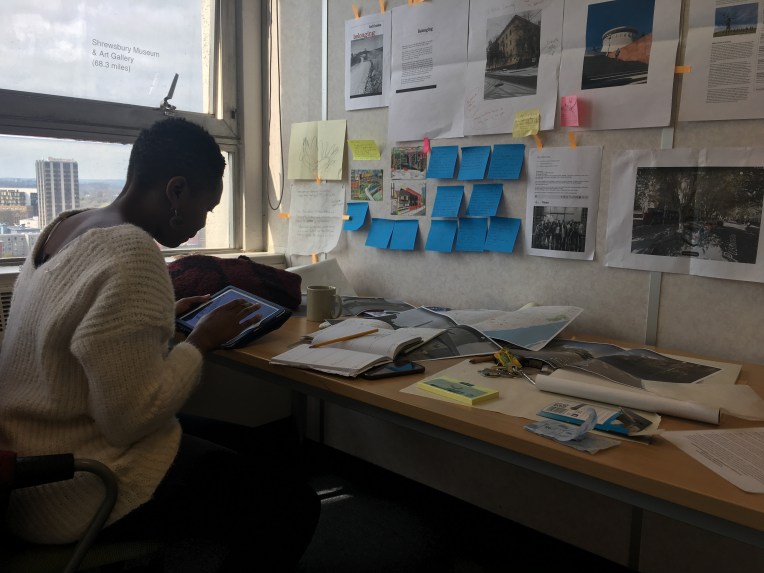
The residency was invaluable in that it provided me with the physical space to contain the machinery, but also gave me a space away from home where I was able to focus all of my attention on this project. Without time constraints and deadlines I was able to work freely without pressure, but the space still allowed me to stay motivated. Janet provided an incredibly useful sounding board, as did other studio holders in Eaton House where my residency was based. It was a wonderful opportunity to meet other local artists and connect with like-minded individuals, and I hope to stay in touch with some of them through the regular Artspace networking events.

hellocov_1

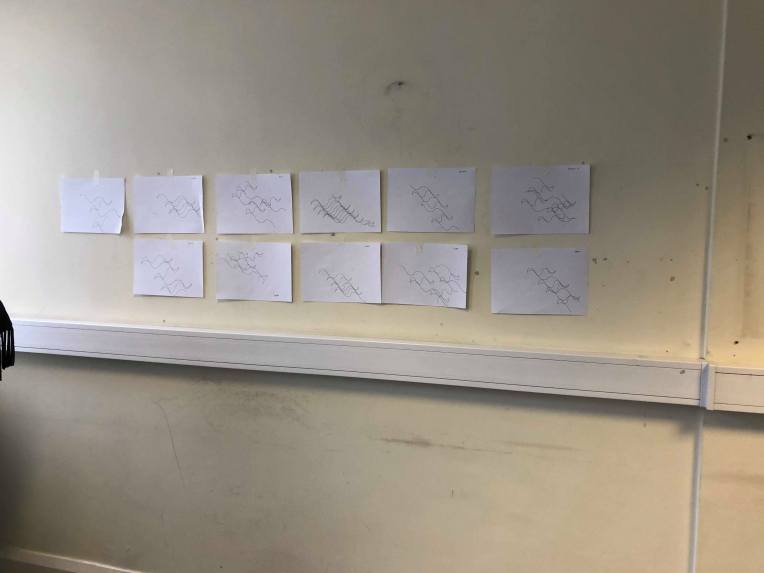
I was able to present a first draft of my project at the Hello Cov exhibition for Artspace studio holders at The Row in Coventry, and the response was overwhelmingly positive. Although at that point the drawings did not look particularly ‘pretty’, it was still fascinating to see how different people’s brains produced different drawings, and allowed me to build a portfolio to compare how the technology worked for different people in different states of mind.

Overall I am incredibly grateful for this residency. I feel that I have achieved more than expected in this project, and can now build on that knowledge even further.

IMG_7963

You can follow Rosa on Instagram @rosafrancesca.art

The importance of Space and Place: from Coventry to Volgograd

Guest Blog by Nest Resident Artist Sylvia Theuri, reflecting on her Nest Residency.

I began this residency with the aim of further developing my artwork, in particular a project which focused on engaging with Coventry’s twin cities. The twin city that I was concentrating on during the residency was Coventry’s first twin city; Volgograd. I wanted to create new work outside of my home environment and discuss ideas with other artists. I was especially interested in having discussions with Talking Birds as they had previously created a project around twin cities with their “Twin Story” project.

The residency gave me space to think, which is so vital in being able to create interesting and insightful artwork. I was also able to spread out in the studio space, rather than be confined to the dining room table, which often happened when I worked from home. It is interesting that my work is all about spaces, yet I often have limited space to actually create the work. 

IMG_6268The residency also gave me the opportunity to talk. I talked with both Janet and Derek about the city of Volgograd, and because they had both been there, they were able to help me to understand the city better. I talked to other artists based at Coventry Artspace, my temporary neighbours. The residency became somewhat of a “third place” for me, somewhere away from my home environment where I could come and feel connected.

At the end of the 9 weeks, I felt like my work had developed, but more importantly I felt that the way in which I thought about my work had developed more. This was because I had focused time to read, and question myself and my work. Looking back on this residency what I am most thankful for is the “space” I was given to come and think about and engage with ideas about space, ironically.

Photo credits: Volgograd Photos by Nastya Tol; Studio photos by TBs; Postcard washing line and works-in-progress by Sylvia Theuri.

Link to Sylvia’s project site

For more about Sylvia and her work, see her website [link to external site].

Welcome to our first Nest Residents!

One day, (funding pending…) The Nest will be a real place. Until then, The Nest is wherever we can find a space to support our Nest Artists’ Residency Programme – and we’re really thrilled to announce that our first two artists have now taken up residence in studios at Eaton House (big thanks to Coventry Artspace for their help with this!).

Andy Sargent started last week and has already practically filled his studio with sketches, paintings and sculptures which are adding to his ‘Hidden Monster’ series exploring “the issues of loneliness, isolation, abandonment, negative reaction, pain, depression, physical instability, poverty, all created by sudden physical disability due to spinal injury.”

IMG_5220

Digital artist Sylvia Theuri started yesterday. She will be using the residency to continue her dialogue with Volgograd (begun through her postcards project) and to make some pieces that respond to the photographs and messages from the individual in Volgograd that received and responded to Sylvia’s Coventry postcard.

IMG_5357

We’re really looking forward to seeing how both artists’ works develop – and to the many interesting creative conversations we hope to have with them (without interrupting them *too* much!)

>> If you are a D/deaf or disabled and/or Midlands-based artist and are interested in applying for a Nest Residency, you can find all the details here.

Come & work with us!

We’re after someone friendly, sparky, practical & well-organised to join us in Coventry – to help support our theatre, access, community-building & green projects! Deadline Feb 12th. Could it be you?
Talking Birds is looking for a highly motivated part-time Administrator/Projects Assistant
to support its programme of work in the run up to Coventry’s tenure as UK City of Culture.
We’re looking for someone with excellent organisational and administrative skills and an interest in supporting artistic work.
We describe our work as Theatre of Place as it is often concerned with the connection between people and place, and it happens in unexpected locations, whether on the high street or in unusual sites. We are dedicated to making our work universally accessible and we have recently been recognised in The Stage Awards as a finalist in the Innovation category for our digital access tool The Difference Engine. We also strive to be green theatre-makers. We aim to make work that is environmentally sustainable, as well as being both inventive and accessible.
Talking Birds is a National Portfolio Organisation funded by Arts Council, England, and a not-for-profit organisation.
For full details of the job and the sort of person we think we are looking for, please download the full job pack here.
Screenshot 2019-01-24 12.53.11.png
To apply for this position, please complete the online application form at
We are committed to making our work as accessible as possible to everyone: if you have any specific access requirements or concerns, please let us know and we will do our best to meet your needs, including enabling alternative application methods.
Deadline for applications: 12th February 2019
Interviews: 25th/26th February 2019
Please spread the word!

Difference Engine up for national award!

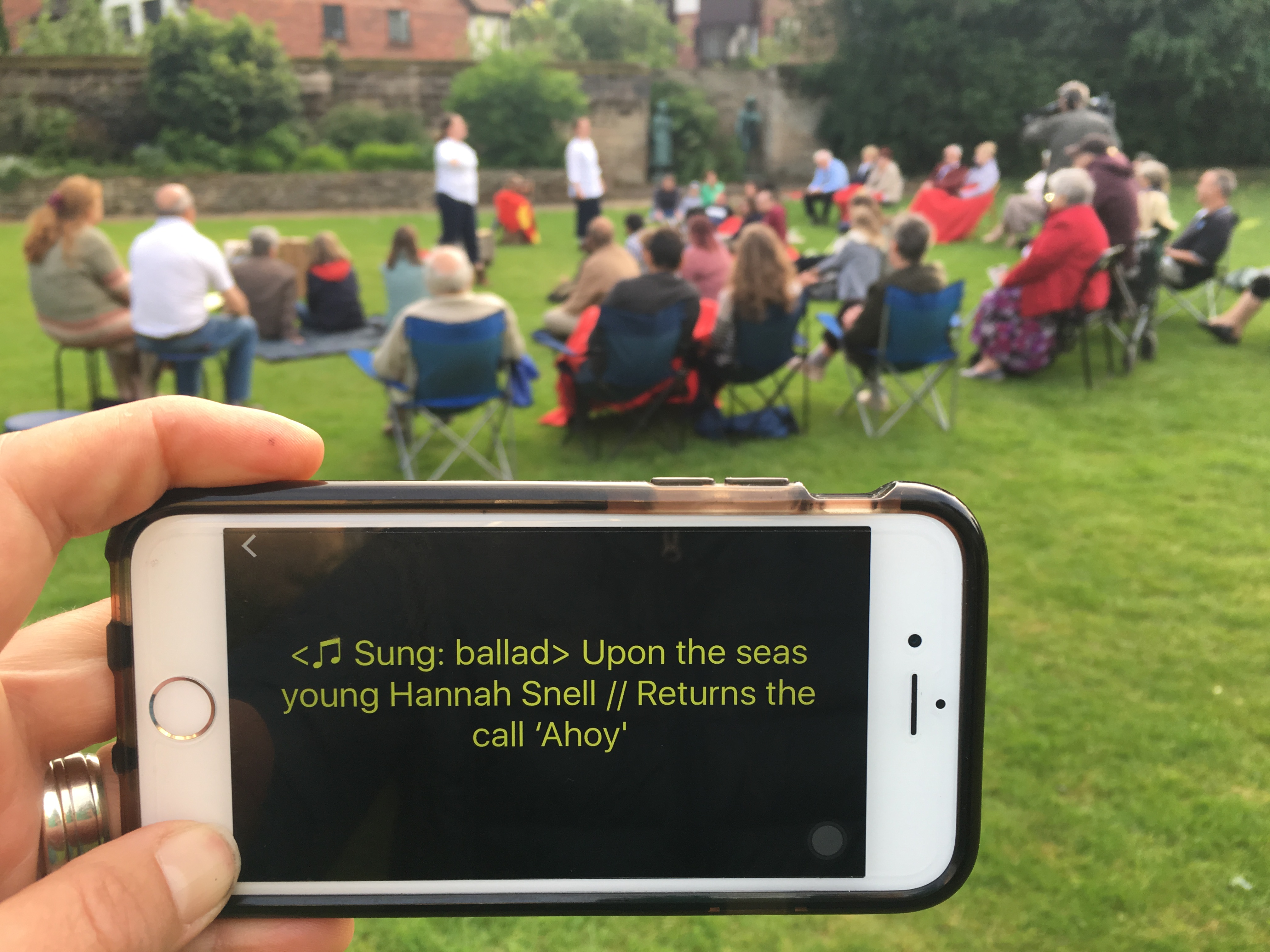
[PRESS RELEASE] Coventry theatre company Talking Birds has been shortlisted in the prestigious Stage Awards 2019. The company is a finalist in the Innovation category for its mobile access tool, The Difference Engine, which allows D/deaf and hard of hearing audiences to access captions/subtitles, via their mobile devices, for performances that would otherwise be inaccessible to them.

Continue reading

Could you help us fly? Board Members and Special Advisors wanted [find out more at our TBs social]…

Talking Birds is looking to expand its dynamic Board, to help steer the company’s exciting flight towards Coventry’s tenure as UK City of Culture 2021; to support the development of new premises The Nest; and help take our digital access tool The Difference Engine to the next level.

Hannah_DE_IMG_2049
The Difference Engine in action in the field…

We are looking for people who are passionate about the things we are: audiences and accessibility, environmental sustainability, artist development – and Coventry. We are particularly looking for people with expertise in property law and building development, finance, fierce advocates for D/deaf and disabled artists and audiences [particularly in relation to The Nest], and people with experience of business modeling for software/Apps/digital distribution [in relation to The Difference Engine]. We want our board to be as diverse as the city we live and work in.
The role is voluntary and involves 4 meetings PA (usually a weekday 12-2pm or thereabouts; we can Skype you in if that’s easier!) plus an Away Day and individual consultation where appropriate.
We are also looking for Special Advisors who have some of the specific skills above, who may not be able to commit to Board membership but who are willing to offer advice/support on a more informal basis.

IMG_5042
Genevieve Say as Hannah Snell in The Female Warrior

If you would like to find out more, please come to our Meet Talking Birds Social on Thursday 22 November anytime between 12-2pm (short presentation about the company’s work at 12.15 & 1.15) Floor 4, Eaton House, 1 Eaton Road, Coventry CV1 2FJ (vegan/veggie buffet lunch provided)
Please RSVP to access@talkingbirds.co.uk or via Facebook
If you can’t make that date/time but would like to know more, please e-mail or call 07708 262 182 to arrange an informal conversation.
Twitter/Instagram: @birdmail

Wednesday Recommendations: Wilding, Doughnuts & Eating with Strangers

It’s been a while since there’s been a moment or two free to write a #WednesdayRecommendations post but, it’s Wednesday and I’ve got 10 minutes so here goes:

READ: ‘Doughnut Economics’ by Kate Raworth. I got hold of this after listening to the author on the ‘Reasons to be Cheerful‘ podcast, and I’m so glad I did! This is one of those books that totally changes the way you see the world – causing you to totally re-examine everything you think you know about the way things are done, or have been done – and why. It challenges our modern understanding of ‘growth’ and how we measure value – and is therefore much wider ranging than just economics. Laying out a compelling vision of how things could be (and need to be) done differently – the book is full of hope and practical steps for how humanity can re-organise to truly prosper, whilst re-generating our ravaged planet.

READ: ‘Wilding’ by Isabella Tree tells the story of her family’s decision to end the loss-making intensive agriculture farming business they inherited at Knepp on the South Weald. The book charts their incredible 20 year journey of discovery as they stopped ‘conventional’ farming, and gradually allowed (and prompted) nature to re-colonise and essentially heal the land. In common with ‘Doughnut Economics’, this book turns accepted views, and ways of doing things, upside down. I’m particularly struck by the way that this has been written as a summation of 20 years of quiet observation, and how that observation leads to a far deeper understanding, which in turn leads to (eg) the radical suggestions that the early British ‘wildwood’ must have been closer to wood pasture than forest; and that our understanding about the preferred habitats of many wild species are based on where they were able to survive when their really preferred habitats had been denied them by human activity.

LISTEN: The Food Programme ‘Eating With Strangers‘ which was broadcast last year, explores various examples of where strangers get together to eat – from Supper Clubs to Sikh Temples. It’s a fascinating programme on a number of levels, but particularly resonant for me, having recently enjoyed the Curating Coventry Supper Club at The Pod, the Stories on our Plate supper, and having linked up with the amazing Langar Aid during Spon Spun Festival. There’s lots of discussion about the connective potential of food but the clincher is probably “You can’t really hate someone you eat with.” Definitely worth a listen!

As always, let us know if you take us up on any of the recommendations – and what you make of them – and let us have your recommendations for reading and listening too. Cheers!

IMG_2251


Wednesday Recommendations – it’s all about Volgograd…

This time, the Wednesday Recommendations (a day early!) are all about Volgograd – you may have heard the name – we understand there was a football match there last night…

Coventry and Volgograd (formerly Stalingrad, it was renamed in 1961) have a lot of history – being the first twin cities in the world and effectively inventing the idea of twinning after WW2. Talking Birds has had a connection with Volgograd for a while now, beginning when we found about the tablecloth in 2004. To mark the 60th anniversary of the twinning, Talking Birds created the ‘Twin 60’ project to explore what the twinning had achieved and what it meant to citizens in the two cities after 60 years, through the creation of a “Virtual Tablecloth“, which you can still find and explore online here.

As we wrote in 2004: Coventry and Volgograd’s…is a friendship that persisted even during the darkest days of the Cold War, and has led to many exchanges between the two cities – whether civic, cultural, educational or personal. It is interesting to ask whether the twinning has made any permanent difference to the thinking and actions of its citizens. And if so, what are they? What do we have in common?

There are issues of regeneration and image that might be explored, as well as the issue of a city’s relationship with its past. We should be careful not to try to make too many direct comparisons between the experiences of the two cities during the war; but we might be inspired by a concept of twinning which cannot be controlled by national governments, and might not even reflect national relations, yet persists and flourishes and has the potential to encourage change on a national level.

What does it mean to be a city of peace and reconciliation?

What does it mean to be a twin?

So, after that bit of background, this week’s Wednesday Recommendations are:

READ (in English or Russian!): About the origin of the link between the two cities, which began in 1943, when Emily Smith, Coventry’s Mayor, and 830 other Coventry women (and some men) signed their names onto a tablecloth. Each one paid sixpence to sign and the money raised went towards medical aid for Stalingrad (now Volgograd). The names were embroidered by Mrs May Adams over the course of the next two years. In 1944 the relationship between Coventry and Volgograd was cemented and the cities became the first to twin.

LOOK: at the 1943 tablecloth itself – the online version – the real cloth is displayed in the Panorama Museum in Volgograd, although it did visit Coventry in 2004, and was displayed at The Herbert.

EXPLORE: Our 2006 exhibition Other Coventry <> Other Volgograd, including this sonic collaboration by Slava Mishin and Derek Nisbet, recorded at Herbert Media.

WATCH: The video of the world premiere of Twin Song, a symphonic poem created by Talking Birds to mark the 70th anniversary of the twinning and performed at Coventry Cathedral.

BROWSE: The Twin Story blog, an umbrella for our Volgograd projects, including Coventry-Volgograd Pecha Kucha talks, children’s art exhibition and more!

FURTHER COVENTRY-VOLGOGRAD READING FROM OTHER SOURCES:

Article in The Guardian from 2016 by Trevor Baker “The issue of how to create links between communities and individuals without endorsing political regimes remains problematic. Even so, there are those who still think that twinning agreements can make a difference to life in our cities. This could be even more true in the case of countries that don’t agree on a political level. In 2014, to celebrate the original bond of friendship, Volgograd Children’s Orchestra visited Coventry and performed a piece of music, Twin Song, written by Nisbet. It could have been disastrous timing, as relations between Russia and the west were at the lowest they’d been since the cold war. The orchestra travelled soon after Russia annexed Crimea. “I was a little bit worried about hearing some questions from people about politics. But luckily there was nothing like that,” says orchestra leader Yuri Ilynov. “We only heard nice things about the orchestra.””

Article in The Conversation “I love Volgograd” by Catherine Danks, Senior Lecturer in Russian and Soviet History and Politics, Manchester Metropolitan University (which also mentions our projects!)

dsc_0009-scaled1000

Wednesday Recommendations: things to read & listen to.

Things we’ve been reading and listening to this week that you might enjoy too:

READ: No More Plastic by Martin Dorey – a short and very readable collection of achievable quick-win actions every single one of us can take to reduce the plastic in our lives (and therefore in the world), this book is also full of gently provocative prompts to consider lots of bigger ethical, social justice and sustainability issues. One of the great new-to-me examples of positive actions to join in with is Morsbags (a kind of craftivism billed as ‘Sociable Guerilla Bagging’) which involves keeping fabric out of landfill by making it into shopping bags which you gift to strangers, thus helping cut down the number of plastic bags needed. Genius.

LISTEN: There’s only 2 days left to listen to Meeting the Man I Killed, a Seriously podcast from Radio 4. This is a remarkable piece of radio telling the story of a man who killed someone in a road traffic accident that wasn’t his fault. Through meeting people who knew the man that died, the driver tries to get to know the man he killed – in order to come to terms with both the accident and the far-reaching effects it has had on his life and sense of who he is. It’s thoughtful, moving (you will need tissues) and provocative – and says so much about humanity. (40 minute listen)

LISTEN: Another great podcast is Reasons to be Cheerful (by the way, anyone in Hull or Coventry might also be interested in Episode 26 which is about The Power of Culture) and this week I listened to a special bonus episode from a couple of weeks back, called “Reasons to be Pirate“. Here Ed Milliband and Geoff Lloyd are talking to Sam Conniff Allende about his new book Be More Pirate, discussing the positive (and accidentally rather progressive) rule-rewriting done by ‘Golden Age’ pirates organising in opposition to the status quo (slightly surprisingly this involves fair pay, cooperatives, social insurance and equal marriage). The book suggests what we can learn from pirates, and how we can apply some of their methods (but probably not the psychotic ones…) to make the modern world a better place. (37 minute listen)

Well, that’s it. I’d be interested to know if anyone read or listened to any of these (before or after the recommendation!) and, if so, what you made of them – leave a comment…?

JV


F13 – where it came from…

Armed with a massive pile of homemade pizza and a collection of Ikea’s kids’ cups and plates, Talking Birds convened the first meeting of what was to become the Friday 13th (or F13) network in December 2013 (Friday 13th December 2013 to be exact!). At that point, as the notes reveal*, Coventry City Council had a new leader and there was the first mention of City of Culture in the air – presumably because Hull’s win must have just been announced.

Continue reading

Engaging the Future Changemakers

IMG_6095In April this year, I gave a talk about Talking Birds’ socially engaged mobile project space, The Cart, at the University of Warwick. The Cart is essentially a project about conversation, about making a temporary space for people to get together and have a conversation they would not otherwise have had. As a result of the talk I gave, I subsequently had quite a few conversations I would not otherwise have had! One of these was with Alastair Smith, who convenes the Local Sustainable Development module, which is part of the new B.A.Sc. degree in Global Sustainable Development course at the university and, to cut a long story short, we agreed that I would conduct a walking tour around Coventry for his students, to give them a flavour of the city’s rich social/economic and cultural history.

For me, the drive to do this comes from living on a street full of students and seeing how little they are equipped to engage with this city, because less of the things that make a particular place unique are obvious nowadays. I need to unpack this, as I know it’s a little woolly so here goes…

The way most of us live now is less locally focused and, while global connection brings many benefits, there are also significant downsides. I think one’s sense of place, and consequently of self, is developed by making meaningful connections. Physically, through connecting with the geography, nature and weather of a place, and socially, through connecting with different groups of people – neighbours, work/study fellows, people who partake of the same leisure pursuits as you (in other words, the various communities you are a part of, which are generally geographically or interest based – in my case the arts scene, the school gates etc).

When we can live and work literally anywhere: when the same chain stores, restaurants and takeaways are on every high street and we can get our shopping delivered to our door, maybe we lose the drive to develop a sense of place: insofar as we understand the world, everywhere is basically the same, give or take a few minor variations. In some ways perhaps this doesn’t matter, but I think that actually it does. It *really* does.

I know that I am someone who understands the place where I am by walking it, by looking, by finding out, by listening to its stories – and I’ve observed that, when others perform these actions, they also gain a deeper understanding of the place and of themselves in relation to it. And I think this understanding is a key influencer of behaviour and belonging. When we feel that we belong somewhere (geographically and/or socially), we feel an obligation to take a part in the things that go on there, and to make behavioural choices that support these: on a local level this may mean that we don’t want our street to look a mess and so we make sure we put our bins out on the correct day; or on a global level, we may want to minimise our personal contribution to climate change and cycle instead of using a car.

For students moving to a new city, all these relationships are to be negotiated – and often a particular relationship with the place (I mean the city here, rather than the institution) is not cultivated. I don’t think there is any one reason for this, but I suspect that a perfect storm of factors (social, geographic, economic, emotional) conspire and if there is no stand-out reason to understand the distinctive character of the place, the city, where you study – then the sense of place, the sense of belonging to somewhere wider than the institution, doesn’t develop and there is no real reason why you would want to make that (time, economic, emotional) investment and commit to that place, that city, after graduation. I know that Universities across the UK are waking up to this and examining the civic responsibility of the institution now, but what about the civic responsibility of the arts? And of artists? And of artists who are also residents? What part do we have to play in helping students to develop and understand their connection to the place and where they belong in the wider society?

As many have pointed out before, Coventry – arguably more than anywhere else – doesn’t offer itself up on a plate. You need a little persistence. You need to dig around a bit and find things out. And the city has a graduate retention problem. These two things are probably not unrelated.

It’s this line of thought that led me to offer the walking tour to the students, as something small, but potentially impactful that I could do. A way to impart some of my 25 years worth of interesting gobbets of information – the stuff that got me hooked on this city – to a cohort of young and enthusiastic people coming to study Global Sustainable Development at the University of Warwick. Give them a sense of place and get them hooked on Coventry. My reasoning is that, in choosing that course, they are surely people who want to make a difference, who see themselves as changemakers, who have an interest in social justice – and these are the people Coventry needs to impress and beguile. These are the people we want to remain in the city, to make their lives here.

I wanted to inspire these young people with the stories that inspire me – stories of Coventry’s proud tradition of social justice and innovation, its commitment to youth, its progressive attitude, its innovation, its creativity, its quiet and dogged pursuit of what’s right, its modesty, its possibility…

So I showed them the place the river peeks from beneath the concrete, and the backs of the medieval houses; I told them about the paths of bones across the marsh to support those making the city wall; I told them about Gibson and Tennant’s dash to Cumbria for Westmorland slate and about the phoenix sketched on the back of a envelope; I told them about the city model ultimatum to government; about the City Architects Department being the place all the bright young things wanted to be post-war; about how the ideas inspired by Europe and developed in Coventry spread across the country as people moved on; I told them about pedestrianisation in the city of the car; about a freed slave managing a theatre; about double-doored powder rooms in the ballroom proving handy for losing an unwanted date; about the democracy of classless restaurants in theatres and above swimming pools; about how bankruptcy and commercial pressures can devastate well-designed public spaces and about how important it is to understand why something is as it is before you change it; I told them about a city founded on the belief that everyone deserves beauty, modernity and cleanliness; about a daring and spectacular tightrope walk; about electronic music pioneers; about measures to tackle health and food injustices; about an edible campus, a Marmot city, vegan cafes, arts, culture, mental health, wellbeing; about an Olympic Pool with sunbathing decks and sand-filtered water so clean you can see from one end to the other; about a courtyard of experimental brickwork; a guildhall with a tapestry that inspired a certain Warwickshire playwright; about a tiled mural map with dinosaurs; about twin cities and gifts of timber; about the first civic post-war theatre, and about inventing a way for young people to ask philosophical questions and come to understand the world through acting it for themselves; about a mini stately home on the top of a newspaper building; about criminals buried vertically headfirst; about the hopes for a City of Culture; and I told them lots about the amazing energy and creativity of this city’s people – particularly its independent artists and producers who continually explore this city, and question it, challenging audiences to interrogate, understand and, ultimately perhaps, love it.

I know I opened some eyes and altered some opinions with this walking tour, but only time will tell whether it truly had its desired effect.


  • If you want to get a flavour of the sorts of places I was recommending, try this article.
  • There is also an engagement page for the Local Sustainable Development module, with a bibliography of sources about the city and student work will be posted there.