How can work be both spacious and space-making?

Alex Hilton reflects on their Remote Nest Residency:

For my nest residency, I wanted to explore reimagining work, using a framework of mutual space

So many inequalities exist in access to work, and so few people feel they have the space to be themselves at work. At the same time, so much work is extractive – creating pollution, contributing to climate change, contributing to inequalities, reducing the space for other beings to flourish in the world. What would it mean for work to be spacious for the people doing the work, and space-creating for wider society and the ecosystems around us?

I’d been thinking about these issues for a while, related to my own jobsearch as an autistic person and my concerns about environmental issues. My housemate suggested that art would be a good format for exploring these issues in a broader way.

As a new artist, it was wonderful to have the space to explore my ideas which the Nest residency provided. Initially, I really noticed how nervous I was about the project. Would I write the ‘wrong’ thing? Would what I made ‘count’ as art? This felt the opposite of spacious. But once I got into the flow of working, I found it easier.

I thought about how art could be used to communicate that elusive sense of how mutual spaciousness would feel when you haven’t experienced it. It can often be easier to see what’s wrong than to see how it could be right. So I thought of the role of art in imagining and inspiring the best of what society could be. This feels especially relevant in the year of the pandemic and the need to reimagine what a better future could look like.

Janet was really supportive and it was really helpful to talk through how the work could be developed. We settled on creating a postcard prompt to get contributions for a future zine/ exhibition. Janet introduced me to Andrew Moore, who helped to create a design for the postcards which really got my ideas across and was eye catching.

I’m hoping to get contributions and include a wider range of voices in a zine/exhibition later this year exploring reimagining the best of how work could be.

Imagine Spacious Work is an art project to make a zine and exhibition on the topic of re-imagining work. This will happen in Coventry in Summer 2021. We’re looking for creative contributions on the theme of re-imagining work. This includes paid and unpaid work, childcare, homemaking etc. If you’d like to contribute writing, drawing, audio or video on this topic please get in touch via ImagineSpaciousWork@gmail.com

I needed to make a difference

Mahendra Patel reflects on his Nest Residency

Being a musician for many years, I’ve often witnessed Discrimination on many levels, and I thought if I could turn this into a play, theatre piece this could be good.  For me it had to be done very differently to what I had seen on stage in the past, it would need to grab people’s attention, make them sit up, be involved somehow – and then of course go tell their friends, post on social media to get more people to come and see.

So the idea came and a few days later a friend posted online about ‘Talking Birds Nest Residency’ I had an idea that needed exploring, researching, bouncing around, talking through with a few theatre professionals. I grabbed my tablet made a few videos, picked the one I thought described what I wanted to do best and I applied for the scheme.

Tick tock time went by and one day I see a reply from them, my heart starts beating faster, getting anxious, scared of opening the email I put the kettle on and made a coffee.  Grabbed one of my drums to feel calm again and 2 hrs later I slowly took my mouse, clicked on the email . . … Nearly fell out of my chair with the biggest grin, I got it!  No Match Funding needed! I was going to be a Nest Resident, and so it started with a meeting with Janet and Derek.  To be honest I couldn’t believe it, but they believed in me to get this started.  

‘When Instruments come to Jam’ has at its heart the idea of using instruments as a metaphor to show discrimination on many levels.  So I started to focus on the conversations instruments would have if they communicated with each other, (as humans would) the fun, laughter, judgemental, good/bad thoughts, gossiping, sarcasm, joking around and then of course discriminating!

I’ve not written a play before, so Talking Birds they got me a meeting with Ola Animashawun to help me start to sketch out the story I wanted to tell – this was a chance for me to start sounding out my ideas with a theatre professional/dramaturg, and for me this was again all new territory.  Within a short time I’d realised there was a lot of work to be done by myself – he left me with provocations regards my idea which going forward would help me structure my idea/my play. I had conversations about my idea with musicians and animators and they all helped influence the way the idea shaped up.

About a month later my partner and I were off on a short break to Bulgaria (sadly not part of the residency!), the weather was great and I found this wonderful beach bar.  The laptop came out and for the first time I was inspired to start writing the beginnings of ‘When Instruments come to Jam’, for some reason the beach bar provided the perfect conditions, the sea, sand and gentle breeze.  

How do you write about ‘discrimination’?  It’s simple, you draw on your very own experiences from the first day at school to today!  Remarks about colour/size/abilities/being too good/being too bad/ethnic background/standing up for yourself/for your friends/not being white! And to be honest not all was that bad – especially because most remarks/insults around ethnic background were wrong (for some reason very few people could actually truly insult me about this since they never take the time find out what my ethnic background actually is!)

Transferring this to instruments at first was difficult but then surprising enough started to become easier as even instruments have a make-up.  Colour/size/background/abilities/the sound they produce/presence and they too have feelings.  It’s hard to explain that although music has no barriers, the musicians choose to put up barriers.  

As the title says, the story starts ‘When instruments come to Jam’ – although I have an idea of how the story plays out, I want to develop it collaboratively over time, maybe once a week with an open call to musicians to attend; building up a group producing great music regardless of knowing or ever having played alongside each other…. that’s where the trouble starts!

Without this Nest Residency, I would not have been able to get started  on this project – the funds and support allowed me to schedule time in to my work specifically for this project/idea, think about why I wanted to tell this story, and who it was for.  Being a full time musician means I have to generate my own income and anytime spent on ideas, looking at new projects in my own time would mean I’m not earning.  The Nest Residency meant I could afford to spend time on this and explore this idea of mine: contacting artists, writers, audience development specialists. I wanted to see if, firstly, this kind of delivery has been done in theatre, have instruments been used as a metaphor and the main point was would audiences be open to a play without spoken words and just music? I’ve spent a lot of time wondering, experimenting, and being ‘brave’ in order to develop the idea further.

The next step for this project has been to apply to (and be shortlisted for) the We are Unlimited/City of Culture Trust commissions, taking this to the next level of applying for an Emerging Artist Award in theatre. My time as a Nest Resident exploring this idea needs to end to move forward.  I’d like to thank Talking Birds for their time, guidance so far and hope that we’ll continue this on the next step as it starts to take flight . . .

condition of co-creation: a ‘process that went wrong’

condition of co-creation:

a ‘process that went wrong’

by melissandre varin

From November 2020 i collaborated with T, this experimentation did not go as planned because of external factors (pandemic, family challenges, uncaring processes, race, gender, ableist dynamics…) and internal mechanisms within our exchange on which i am about to expand audio-visually and verbally in this performative sharing.

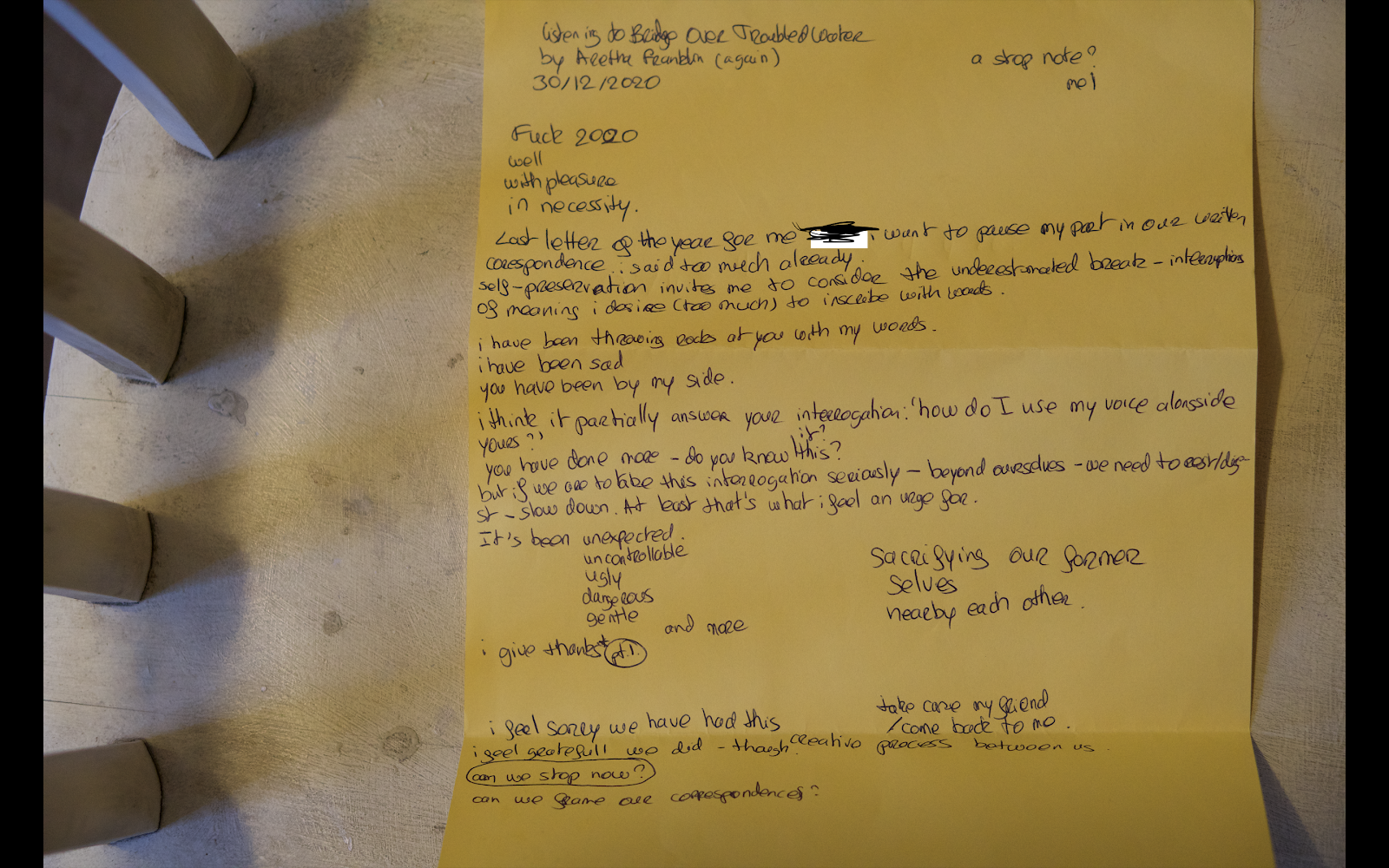
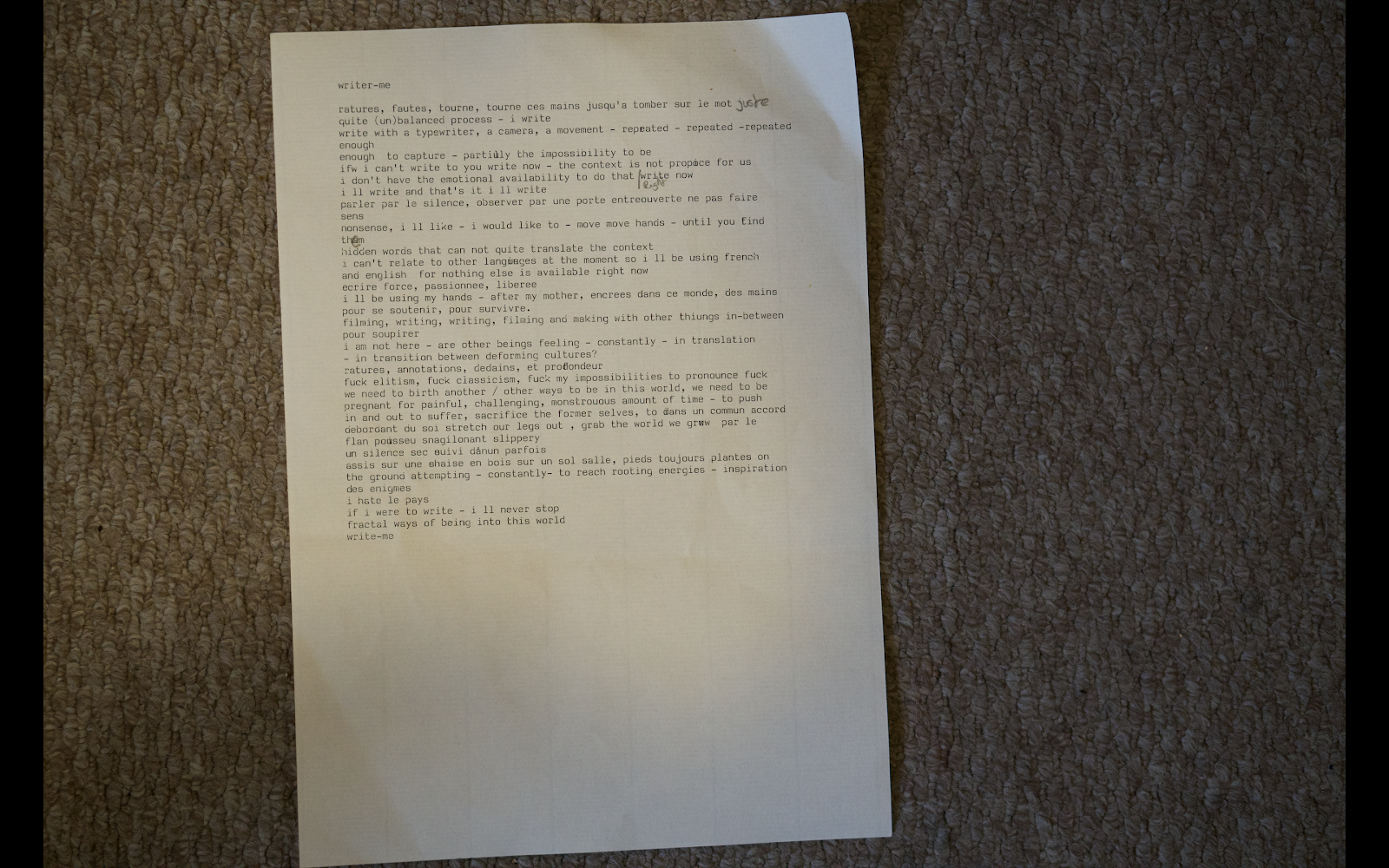
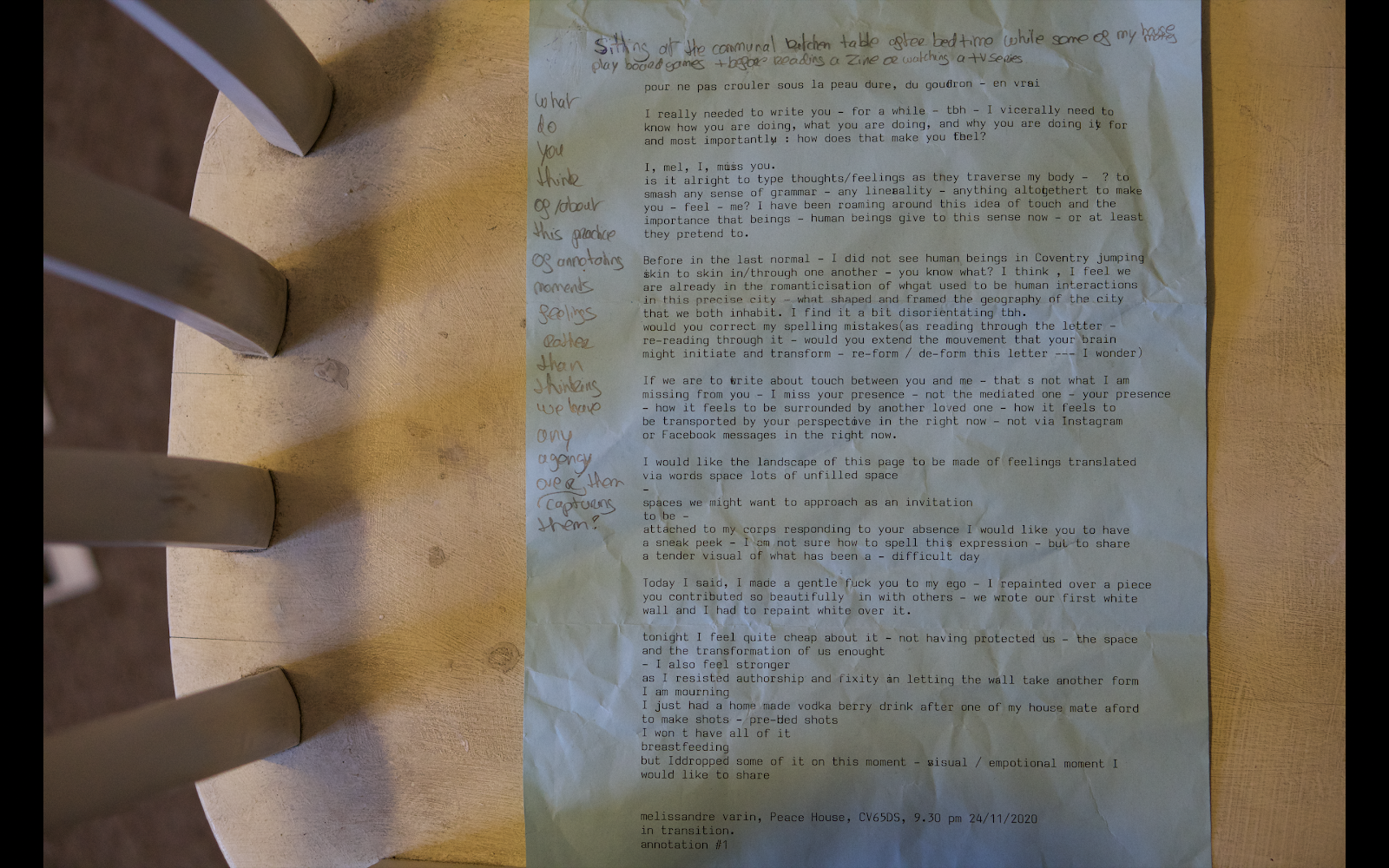
i am including some of the correspondence emanating from me in the blogpost as a sort of a mixed modal and fragmented essay. You are invited to take as much and as little as you wish from this buffet. The video shows me reading the letters i delivered to T for the first time. There is an audio version of it as well that i recorded on my phone simultaneously for those who have had enough screen for the day. The tone of this entry is self-reflexive but it is not only a sharing of feelings and post-collaboration analysis but also just a sharing space. Only unedited documents are shared, because i believe in the force of self-exposure, i believe it tells a lot about the context and the re-contextualisation of creative processes and about oneself. Welcome in the bits and pieces of a ‘process that went wrong’ and made me grow on multiple levels. 

As i am solely elaborating from my proudly subjective perspective my last Nest residency has been a much needed grounding work on collaboration. It literally brought me down, and pushed me to my limits. Reflecting on it i am grateful it happened                      yes                 if i were to choose,            i would do it in similar ways                                            again.

i have tried to collaborate outside of my political practice and it ended up in exhaustion. i wrote to my collaborator in one of my correspondence: ‘i was exhausted before (anyway)’.

In the context of a global pandemic and under lockdown restrictions adding up extra difficulties to a state of things already hard to navigate in was a doubtful choice that guided me to learning more about my limits. 

This collaboration beyond the initial excitement quickly turned out no longer serving me but rather weakened a friendship, my mental health and future possibilities to collaborate as a free spirit. In one of the letter i regretted that i did not : ‘appreciating the distance between us. Same city, different contexts, different bodies.’ prior to this experimental process.

i got trapped in the process:’there is no start nor ends just complexity’

Can setting up new collaborations be taken lightly or ahistorically? My current self would reply with the negative to this question. Power forces have been neglected in this experimentation. My only desire was to stop worrying, stop caring about my collaborator, stop the guilt of not caring as i should, just stop. Stop, observe, and learn from the unfertile ground from which we started and from which we did not manage to grow a healthy exchange.

That went wrong because that was wrong from the beginning. Consent checklist, management of expectations, and regular checking that the other part does understand your struggles, needs, and claims are essential for me                                     even more so now.

This experience has furthered my understanding of myself, reasserted the importance of informed consent when collaborating and highlighted my limited capacity to expand emotional labour here and now. Which is a shame but it is also the ugly truth of what it is. Reflecting on the process and gathering some thoughts has proved to be helpful to start to repair and look at this scar right in the flesh so far. i take away my need to say no without solely pondering the validity of my need on consensus to be able to stand still. i use my practice as a liberating force, i understand better that there are deviations that i should not take if they do not bring joy.

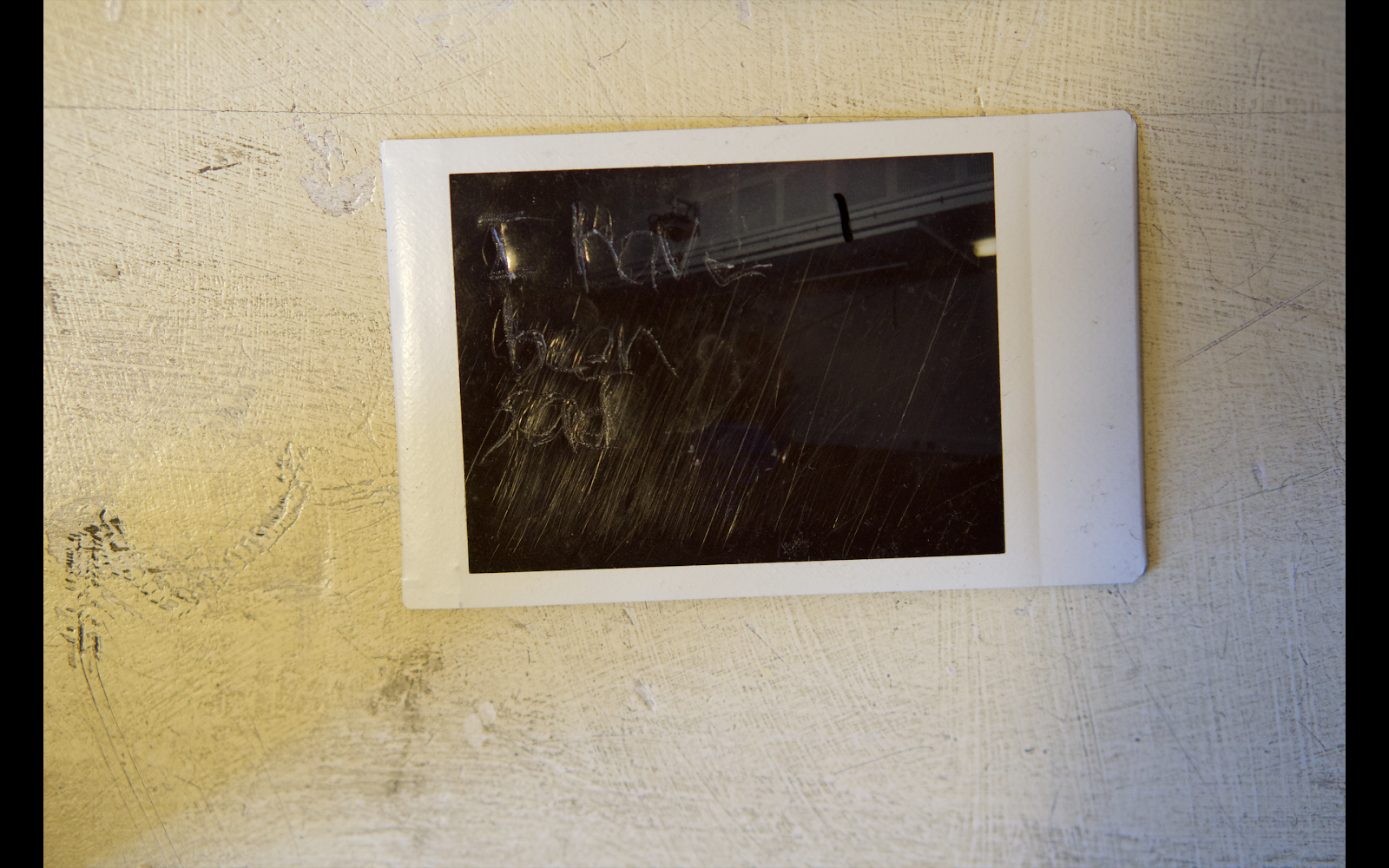
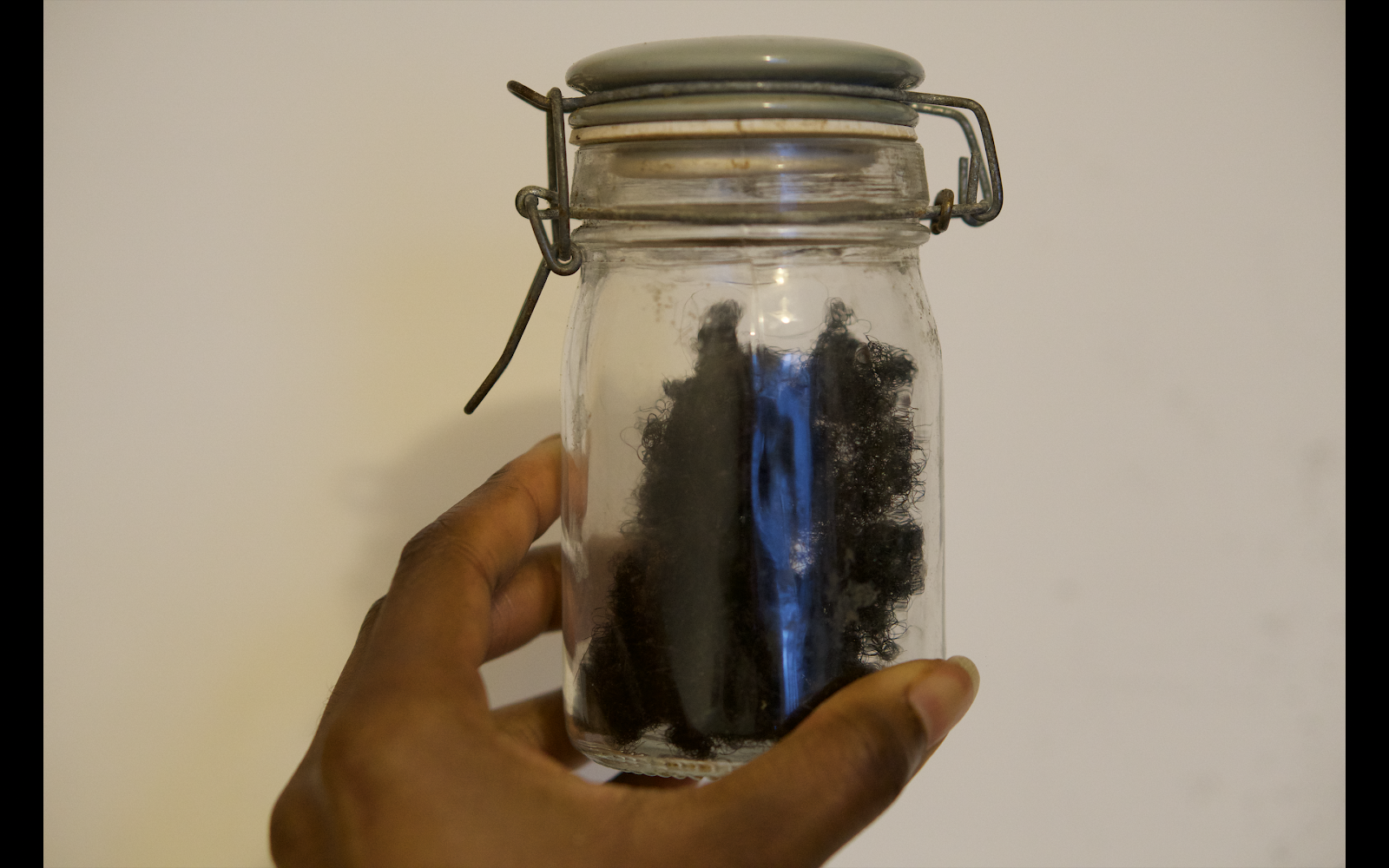
i dis-placed one of my hair jar at T’s home during the creative process. When it came back i started to gather my strength back. 

on my ears while putting this together: 

Aretha Franklin
Bridge over troubled water
ENNY, Jorja Smith Peng
Black Girls Remix
Raveena
stronger
https://www.youtube.com/watch?v=_9-yfeA2JZshttps://www.youtube.com/watch?v=VW_UHYs3giUhttps://www.youtube.com/watch?v=wx44WvDcyXs

sending love

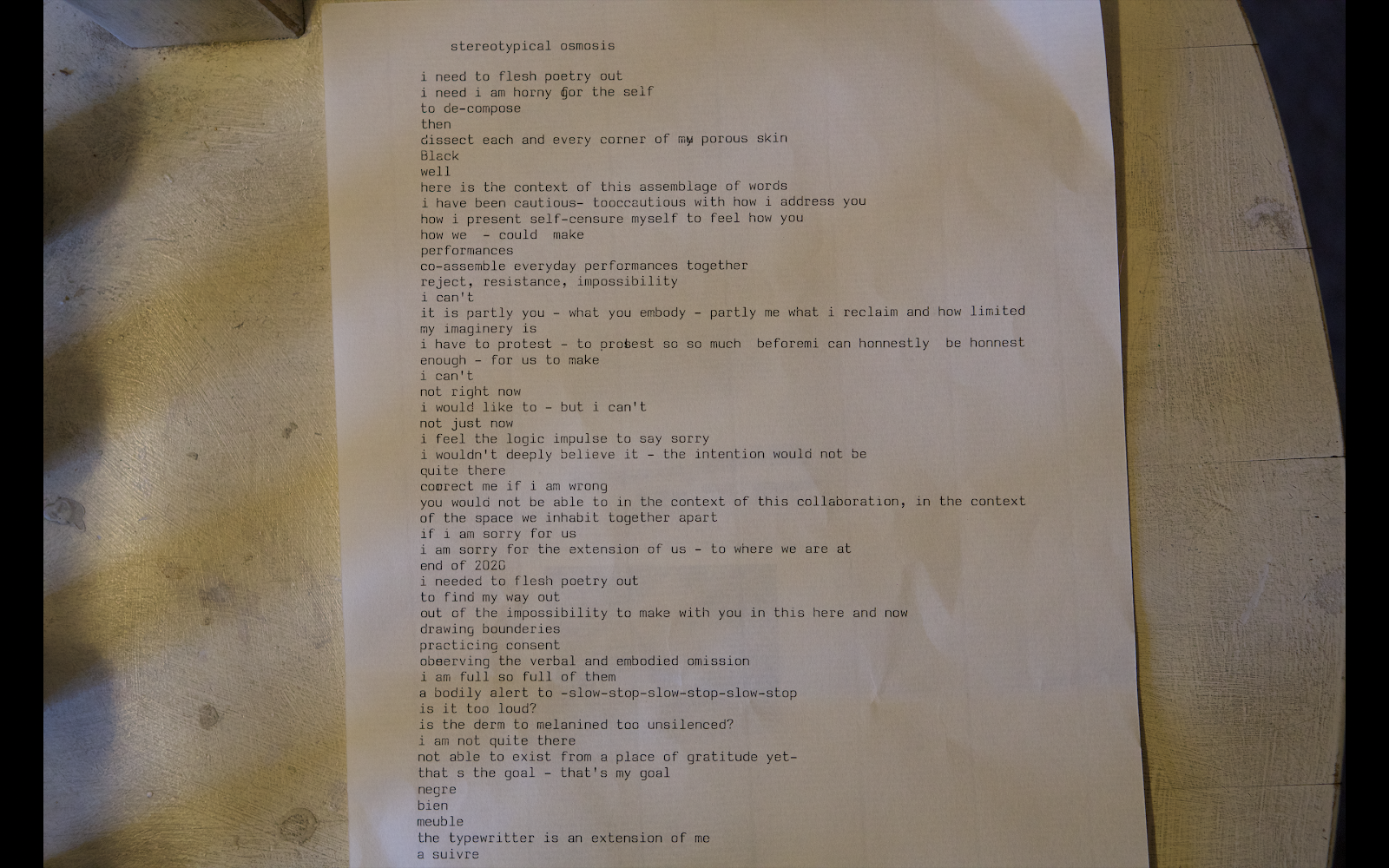
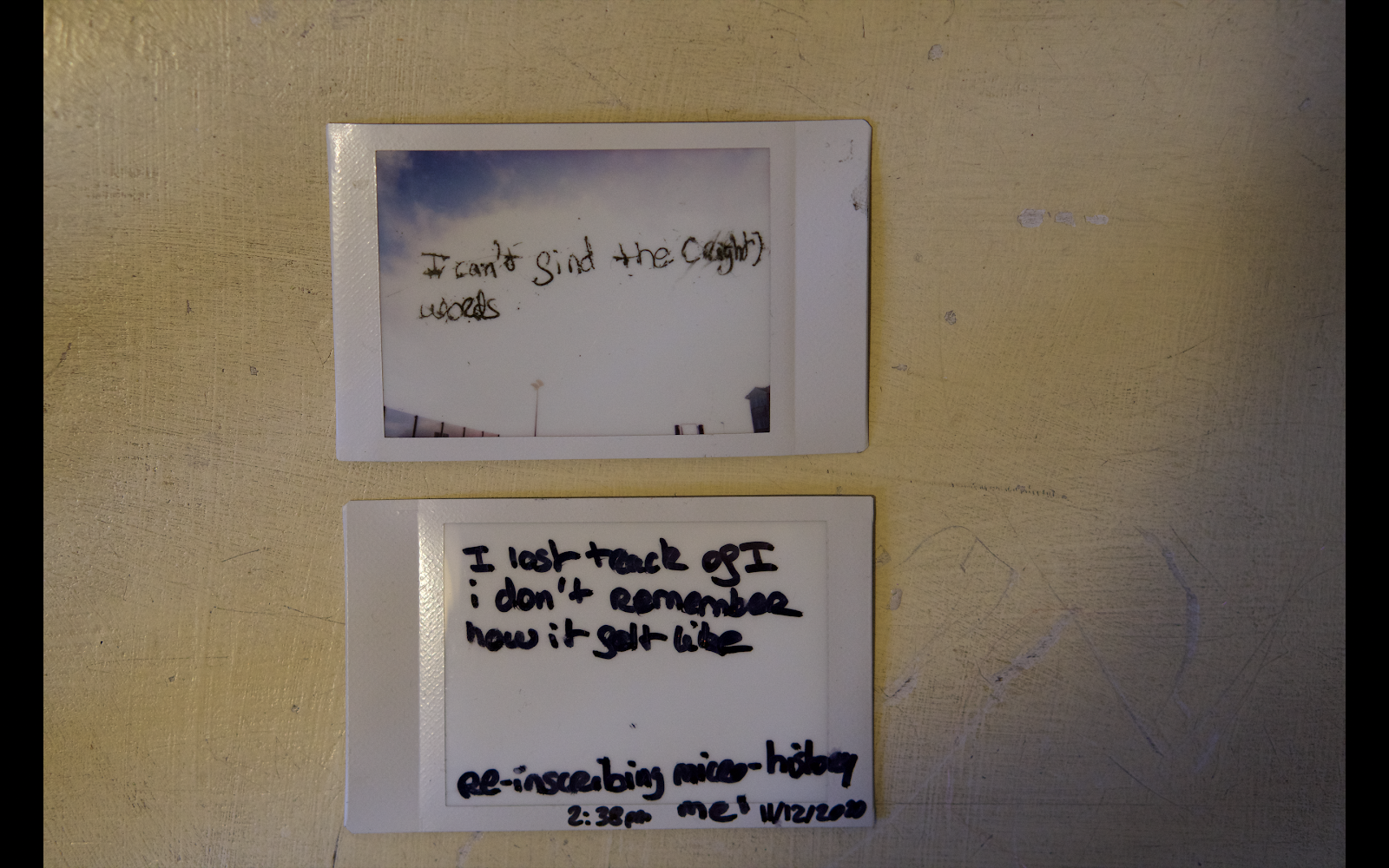
During this period of investigation we have sent threads of thought and element of practice to one another that ended up in a nonsense collection of letters and things that mismatched with each other but did narrate our impossibility to collaborate. i had extreme difficulties making peace with the imbalanced exchanges, and my refusal to self-censor. The issue was that refusing to self-censor did not help the other half of the research to feel welcome nor to find ways to play in the process. 

it is messy                         i am going to be alright                  ok

audio letter reading https://soundcloud.com/melissandre-varin-752685844/can-we-stop-now-talking-birds-nest-residency-melissandre-varin

audio-visual letter reading

My love goes to Talking Birds to Janet and Philippa for their kindness and never failing support and to Dr. Bharti Parmar and Janet again for gentle and transforming mentoring sessions. i am sending love to my collaborator towards whom i directed a spectrum of feelings and thanks to whom i learnt to appreciate failure and found joy and contentment in unexpected spaces and challenging times.

PostPartum – Patsy Browne-Hope reflects on her Remote Nest Residency.

About me
My name is Patsy Browne-Hope and I am a Birmingham based choreographer, rehearsal director and freelance lecturer. I am currently researching and developing a short dance film based on the postpartum experience.

Transition
I am an ex-professional dancer who toured nationally and internationally with UK based companies and decided to step away from the profession in 2015 to start a family. Having my children and a break from the industry was like pressing a huge reset button. There wasn’t much time to really think about dance at depth during this time but to be honest, this was welcomed. We started a family knowing I wasn’t entirely certain where I would end up work wise on the other side and I found this an exciting prospect.

As it turned out (2 children later) my passion for movement and dance had not dimmed – I had just felt stifled creatively and needed a bit of time to lead a life not so consumed by dance after 12 years of constant training and working. Before my children I was feeling exhausted by the industry, a bit lost with direction and a bit low on self-esteem. After having my sons I gained perspective, cared less about what people thought and once sleep became a ‘thing’ again I felt ready to start trying to make sense of the world through my craft… I decided my first stop with this would be ‘Postpartum ‘…..

‘PostPartum’ is a short dance and movement film with original music that intends to highlight, celebrate and normalise the postpartum experience which sadly can be tainted by huge societal pressures. Both pregnancy and early motherhood had unexpected surprises for me. Strangers shared unwanted opinions on my body shape and I regularly heard ‘Mom shaming’. Comments on how a woman was raising her baby, when they chose to start a family, opinions on how much she works or doesn’t work, how they fed, how they slept. Nothing seemed to be off limits.

As new mothers we can find ourselves spending hours on end with a screaming baby, a body that doesn’t feel like our own and, thanks to raging hormones, a mind we don’t recognise. We should probably ask ourselves if the intense scrutiny of mothers is really all that necessary…

Why
My desire is to create some compassion through film; at a time when a woman feels most vulnerable, we hit her hardest with our attitudes and judgements.

I want to create something where new mothers feel a little less alone and a little more understood. How do so many first time Moms not know about all the bleeding, the colic, the mastitis, the intense sleep deprivation and the detriment this can have to her mental health, the loss of self and the knowing that eventually, you somehow manage to work it out.

Perhaps if they were armed with some knowledge, championing and solidarity they would cope a little better and be a little kinder towards themselves?

Talking Birds
Due to the sensitive nature of the topic and my desire to work with women from the community to help research this I was looking for an opportunity to test these ideas out on a small and intimate scale.

I was thrilled to be selected for a Fledgling Residency to help explore this. As a result I was able to develop a private research group on social media and run an online community workshop led by Lindsay Jane Hunter (Therapeutic Art Practitioner). I undertook deeper research into the ideas and themes found here and was then able to collaborate with Katy Rose Bennett (Composer) and Oliver Whitehouse (Filmmaker). Dancer, Lucie Labadie, came on board to help me test and explore movement language specifically for film.

Reflections
This is the first time I have been able to so closely communicate with collaborators on my own project idea. It has opened up many more questions for me and the vision I have for the work going forward which is incredibly exciting. I recently secured Arts Council funding for a larger phase of R&D into PostPartum and this development opportunity with Talking Birds has been the perfect precursor.

I am going into my ACE activity more informed about how we develop this work, how I successfully communicate my ideas to the collaborators involved, what works, what doesn’t and just how far I hope to push the visuals for the final film.

Mentoring
The final part of my Talking Birds support was concluded with mentoring from Janet Vaughan. I was able to spend time discussing the process, the outcome, what I would like to do differently and most excitingly, potential life for the final film. We discussed, at length, various venue ideas including unusual and outdoor spaces as well as partners to be considered and approached for the film development. This will be hugely informative to my next planning stages and I very much look forward to updating Janet on the project life!

Follow Patsy on Instagram

Tipping Point

Angela Mhlanga reflects on her Nest Residency.

Have you ever thought about the concept of ‘throwing away’? Neither had I, until I had a very interesting Google chat with Dominic of Ludic Rooms (a company based right here in Coventry). The gist of the conversation came from this concept of ‘throwing away’? What does this even mean? Where does all this stuff go? Stuff just moving from one to place to another. To quote Jerry Seinfeld, ‘all things on earth only exist in different stages of becoming garbage’. I pondered this on one of my now regular walks along Coventry’s Canal path. I had not long discovered the small minority in the city who ‘magnet fish’ in the murky waters. What on earth is that, you may ask? I indeed had the same question. The man made canal, built for the purpose of transporting/exchanging goods from county to county and once functioning as an additional life line to the city, has now become somewhat of a dumping ground of antiques and lost treasures but for the most part, a passing place of plastic and takeaway boxes. This bothers, but the silver lining is Coventry’s up and coming rise and it’ll be interesting to witness the Canal’s placement in all these developments.

Having these interesting and dynamic conversations with Dominic about Coventry’s relationship with water formed a unique focal point to explore – as for the most part Coventry is pretty much land locked.

On a not so particular day, I walked out of my front door and realized that I just about walked every direction out from my front door. I then remembered the entry to the canal – bridge number five to be specific. Off I went and set off for a new adventure. It was around about midday that I realized everybody and their mother was outside using their government issued hour – so it was not so much of the solitary walk I’d envisioned, but on that given day that’s exactly what I needed. Like a radio frequency all the bars within me had gone from red then slowly orange/yellow and just like that, green. The spring in my step restored as I gazed upon the boats, whistling with birds, dodging fast paced cyclists in balletic pirouettes as if living some sort of alternate musical reality.

The feeling didn’t last too long as I approached the long and dimly lit tunnel towards Gallagher – did I mention it was long? The solitude I’d initially hoped for somehow became very apparent. Then I saw the light at the end of the tunnel and kept moving. I began to think back about how I discovered the Canal, it was about two years after we’d moved to the city. It’s an easy miss but there’s a life force of its own that runs underneath the city. Back then the waters were clean-ish (well there wasn’t as much rubbish everywhere). Though this first walk was initially relaxing but the rubbish was always drifting in the corner of my mind.

A few months later, my sister and I took a walk in the opposite direction on a sunny day. The clear blue sky reflecting in the man-made waters, ducks in a row flowing in a steady stream and somehow coinciding with the piles of takeaway boxes, plastic bottles, foil paper and blue off licence bags.

One object in particular called out to me the most and I thought it’d be really interesting to explore the Canal for my Talking Birds residency. Particularly the scattered blue bags from off licence shops and Coventry market that have somehow found their way to waters. Blue in association with water usually represents serenity but the murky waters of the Canal were anything but, as the blue drifting around posed a looming threat for all the natural creatures trying to cohabit with the trash in this space.

Walking along and also noticing the reflections and shadows cast in the water inspired me to further explore the Canal’s essence.

Though scenic for the most part and providing a sense of ease and solace with a gentle movement of current, every so often that is disturbed by litter. Beer bottles, takeaway boxes and strikingly blue off- licence plastic bags (which I found particularly interesting as blue is Coventry’s color and often associated with water.) I explored this further – particularly in how the nature of the canal has adapted to this.

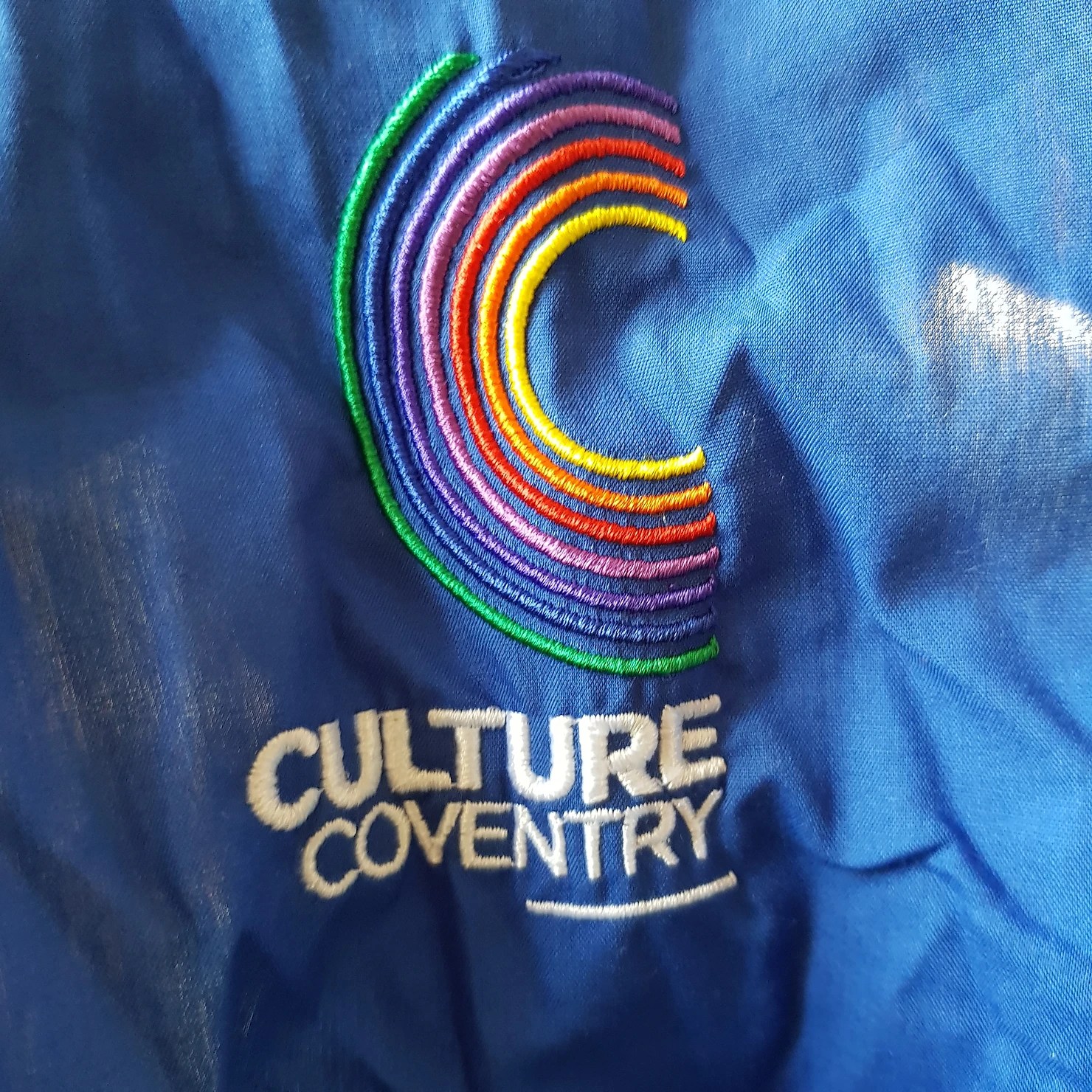
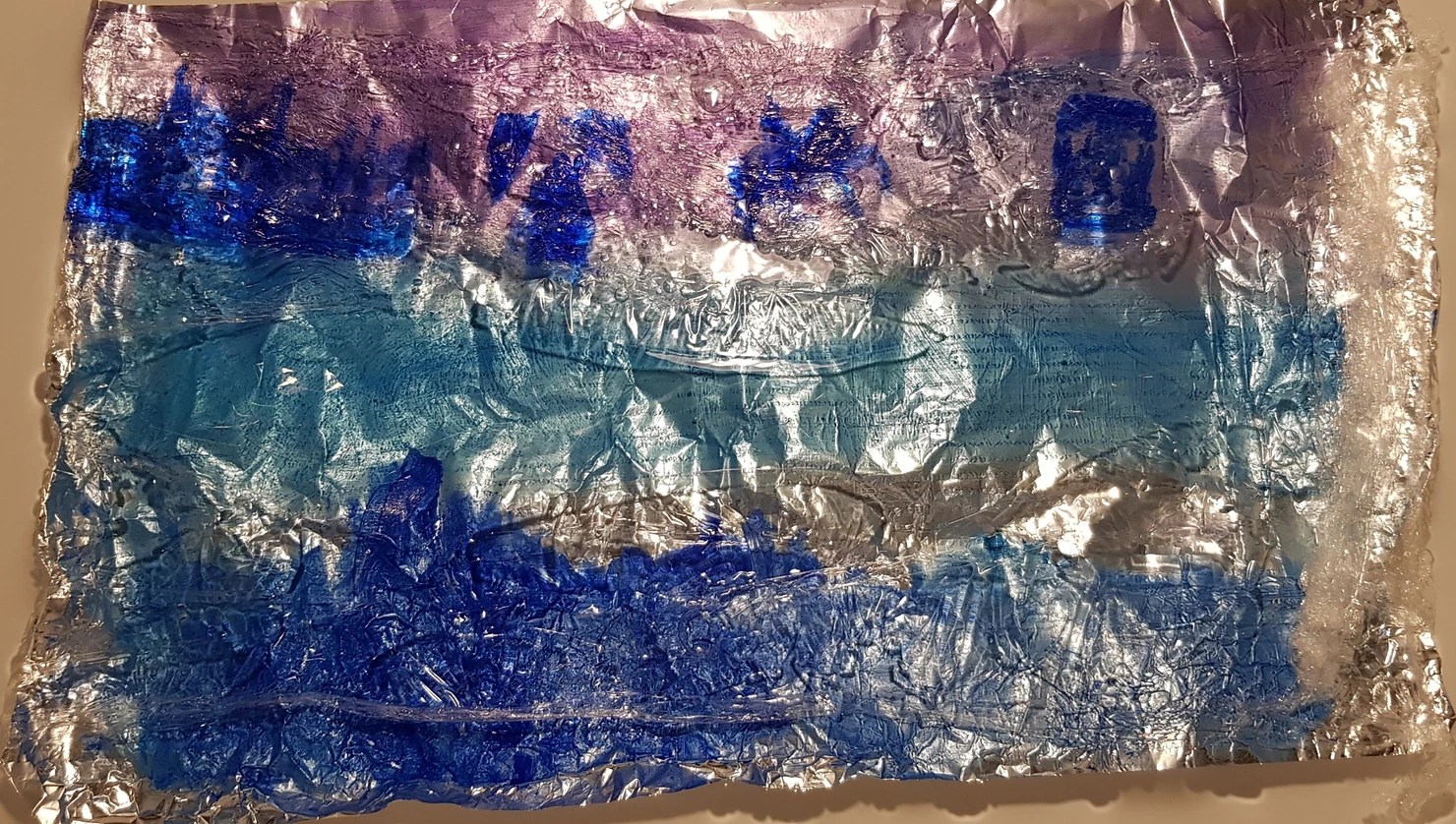
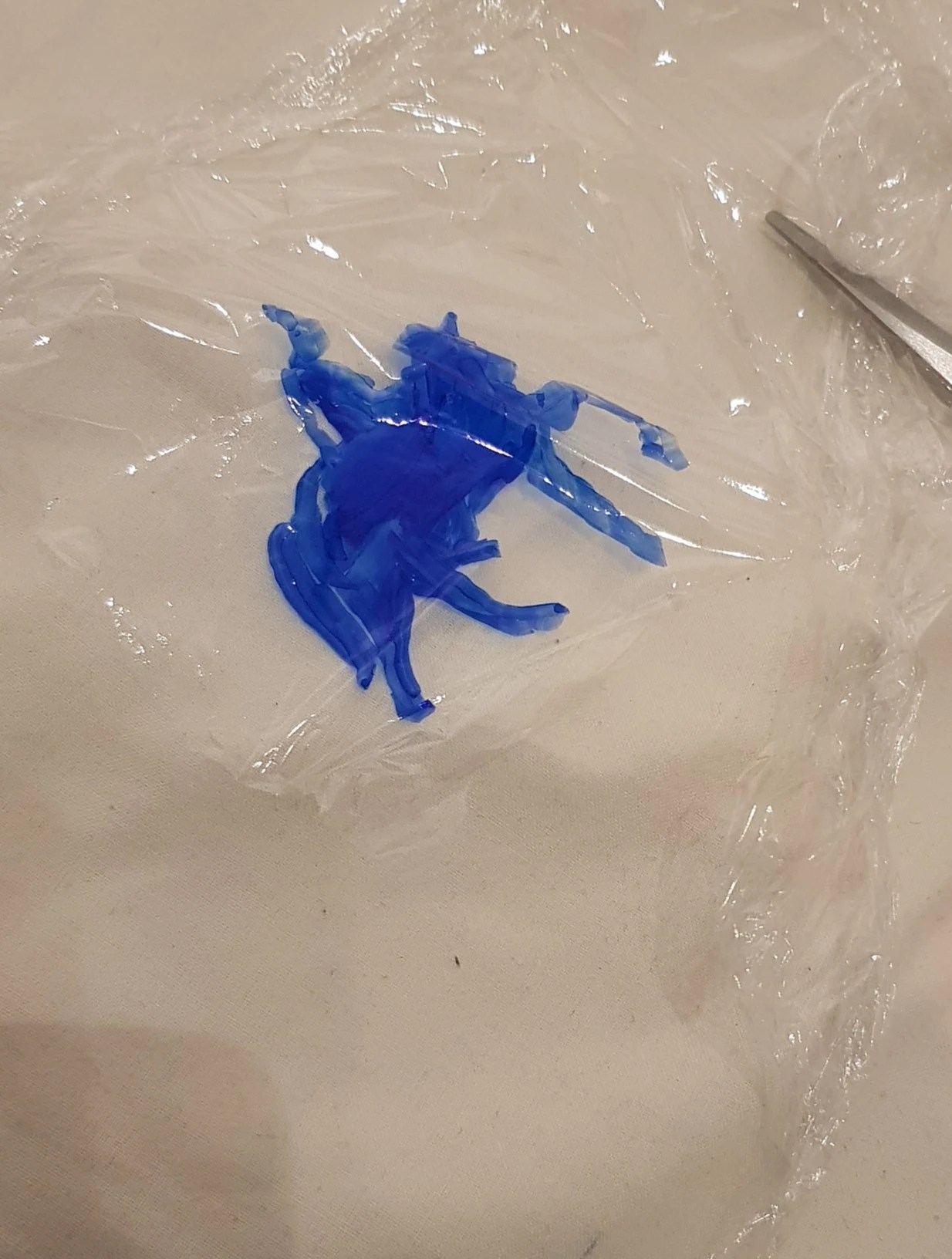
The materials used to create the puppet were a blue off licence bags with a plastic water bottle (magnet) fished from the water to create the bodice, synched in with the cuff of a Culture Coventry uniform.

I then painted a background of hues on foil paper that feature a silhouetted crowd representative of the people of Coventry.

To add to the final layer of the piece- I used a blue marker to draw some of what Coventry is best known for, for example-: the statue of Frank Whittle, the logo for Coventry FC, Lady Godiva’s statue and an Outline of the Coventry Cathedral.

It was crucial to use materials that would cope with being submerged and not affected by the water- much like the litter found in the Canal.

Final projections

Filmed with a highlighted plastic bottle lens cap to create a filtered effect whilst in a way symbolically filtering Canal waters and revealing the beauty of the city. I hope to further explore this project with the help of the amazing Talking Birds company with the first flight residency and collaborating with Ludic Rooms. My aim is to help clean the canal, magnet fish and create sculptures from what I find in the water and rebuild the art trail. Time to to unclog our cities vessel and clean up the Canal!

“There is just wonder right in front of us, and we don’t spend enough time thinking about it.” — Michael Pollan

My artistic practice heavily involves the exploration of shadows, reflections and silhouettes. I’ve always been draw to these elements because that is the only way we can physically view ourselves. On a bright sunny day your shadowed figure mirrors your movements in synchronicity and is always right behind you. When you look at yourself in the mirror it is merely a reflection of you but somehow we’ve become accustomed to how we view ourselves this way.

As Coventry is formed of different energies, cultures and communities – I began to view the city more like a body and how the canal is a vessel. I began to value its importance and need for it. Spending a lot time around the canal has made me become consciously aware of its unconscious clogging. The level of plastic is suffocating to the environment. To detail my process: I knew I was searching for a solution and there were all these pieces of the puzzle hovering in the air, waiting to be put together. The canal is forgotten. The Art trail is abandoned. Almost as if the pieces of it were drowned in the water.

On a now regular walk along the canal path- I took my scooper and reusable bag and began my first round of magnet fishing. I picked up a lot of treasure – a blue off license bag, a plastic water bottle, foil paper, cling film and many other items but these in particular are the ones I decided to use.

Initially I had aimed to show reflections of the canal on iconic structures in Coventry (and I still might) in hopes of commenting on how, as ‘the body’ of Coventry, we view the city. I then came up with the idea of drawing iconic landmarks and statues of Coventry on cling film as I’d seen a lot of its scrunched presence surrounding the waters. I took a liking to the transparency of it but when I tested the sketches in the water, I realized that it was mainly the base of my tub that was bringing out these images. The practicality of it became unfeasible at this stage because one wouldn’t be able to see the projected images.

It was around about this time the foil paper stuck out to me, I began to think about how this would provide a perfect foreshadowing to the sketches of cling film. I thought about just having the sketches on foil paper and decided against it as the floating, threatening motion of the plastic in water differed from any other material I had found.

What can we do to make the city more ‘green’? In Coventry’s case, it’s more like, what can we do to make the city more ‘blue’? Blue like the sky or water. Blue represents clarity, stability and tranquility. In a city full of wheels and fast motion, the canal represents a break away for its residents or a moment of pause for the locals.

The lens I created from blue and pink highlighters and the bottom of a water bottle helped create the filter used in the final projection. The video itself metaphorically symbolizes the filtration of the waters whilst the sculpture, sketches and foil papered backgrounds represent the sources of materials that can be used to recreate the art trail.

When I first started this projected I’d hoped to run a lot of the tests by the canal but the sun set way late as it was still summertime then. My only other choice was to test these images in my tub – which in a sense follows suit with the man-made essence of the canal. Granted I didn’t have to adjust myself as I would have, testing outdoors but I rather enjoyed the solitary experience of forming my findings of what I had discovered from Coventry’s vessel.

For more detail about Angela’s work, visit her blog.

Home: people, objects, rituals and delineations of space

[Sinead Brady reflects on her remote Nest Residency]

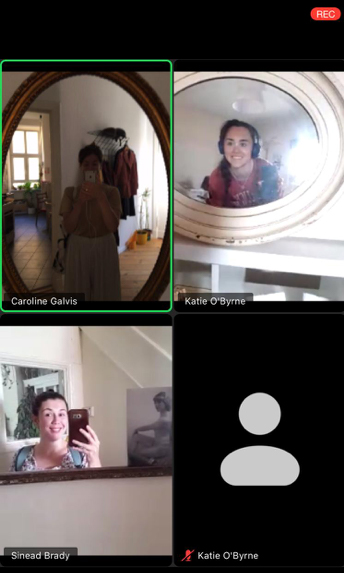
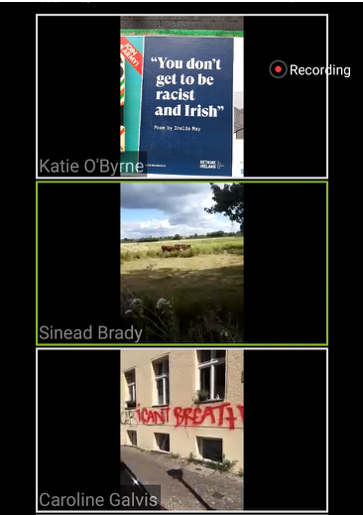
From my home in the UK, I recently collaborated with Berlin based theatre maker Caroline Galvis and Dublin based theatre maker Katie O’Byrne in a ‘Hatching’ Remote Nest Residency to explore the theme of home.
Caro, Katie and I met while studying an MA in Barcelona. We found a common interest in reshaping and reframing our collective history and formed international Rule of Three Collective to create theatre that celebrates togetherness.

Before the pandemic, whilst Katie and I were visiting Caro in Berlin, we began questioning what home means to us. Since then we have had lots of time to think about our surroundings in lockdown in three different cities.
Whilst working from home, we have each been adapting to physical and political changes on a private, local and global level. This has led us to pay more attention to our own rituals and routines and question our delineations of space: What do we consider home? Why does home exist within these parameters? What is our relationship to our home, the planet?
Having started previous creative processes by writing together, we decided that this time we wanted to try to begin from a visual perspective.

At the start of the residency we had an incredibly stimulating mentoring session with Janet from Talking Birds, which helped us consider how to approach the process visually. We were inspired to draw floor plans of our houses and maps of our local areas with places which were important to us. We took each other on virtual tours of our homes and neighbourhoods. Along our routes, alternating who would lead the way, we found similarities but also many differences.

We then began to explore our ‘home rituals’ through movement and were interrupted by all of the unpredictable things that can happen when working from home such as wardrobe doors flying open when jumping on old, creaky floorboards and little neighbours determined to finish their beginner’s level recorder practice.

We ended up paying a lot of attention to the sounds in and around our houses, comparing the different bird song we wake up to… do seagulls fighting outside your bedroom window count as bird song?
Another theme which emerged in our mentoring session was the idea of building and destroying a home or the contents of a home. Experimenting with this idea fascinated us – it was tricky to explore from a distance, but it is something we plan to look at when we are physically together.

The Remote Nest Residency helped us carve out space and time and provided us with the support to come together to experiment and create. The fact that we were given no specific deadline or end product goal was invaluable and really encouraged us to keep on exploring, sharing thoughts and working in ways we would not have felt as free to do otherwise.
The residency has enabled us to reconnect and refocus. We have found new ways of working together at a distance, which will have a great impact on our creative process when we are able to be physically together again.

**If you are an artist based in or near Coventry and you have an idea you’d like to explore, please consider applying to our Nest Residency Programme.**

On instability, change and remembering.

Guest Blog from Artist & Writer Dan Thompson, Board Member at Talking Birds.

Here on the Kent coast, we’re well aware that the British Isles are – well, unstable. The White Cliffs of Dover stay white because they crumble, and the old chalk falls into the sea to reveal a fresh white face. Over the time we’ve been locked down, a couple of homes on the edge of the Isle of Sheppey have fallen into the sea. From the Brutalist towerblock I live in, on the front at Margate, Sheppey sits on the horizon, looking like a mysterious island from a Famous Five adventure. It’s inspired me to imagine how far coronavirus might take us, with a monologue about a country emptying out.

When you live on the coast, surrounded by crumbling cliffs, changing tides, and where a storm can reshape the beach in a few hours, collapse and change are just part of everyday life. But when I have worked in Coventry, Stoke-on-Trent, or Leeds, there’s a more permanent landscape. Occasionally it throws up a surprise, like the Victorian tiled doorstep found in the precincts, but it’s fairly stable.

The coronavirus, though, has made it really clear that in the UK, 75 years since the end of Empire and after 10 years of government cuts, everything is unstable.  Not just the ground, but history itself – statues can tumble – and so can many of the assumptions we have built our country and our economy on. In Margate, an economy built on tourism was always precarious, but cities like Coventry thought a student economy was sound (just as the car industry once seemed unstoppable). It turns out, with a decline in foreign students started by Brexit and accelerated by Covid 19, and with UK students unsure about their options, it might not be.

Meanwhile, the death of the clone town – the end of big chains of shops, of every High Street looking the same – seems inevitable. I sat in on a briefing from Coventry’s city centre manager recently, while she explained that ‘The New Normal’ will be pretty much the old normal, but with bigger spaces in the queue, and more tables and chairs outside. Having worked around town centres and empty shops for 20 years now, I don’t think it is. I think this is a more radical collapse, although it may take a few more months to happen (remember that house, on the edge of Sheppey’s cliff, was there for a long time with the ground underneath being washed away with each tide, the house hanging on, the moment it fell always inevitable…).

A few months ago, on 16th March, my tough, athletic, dancer daughter was taken ill. With all the symptoms of Covid 19, she developed a fever, and delirious, was out of it for about 10 days. In that time, while she had no idea what was going on, shops boarded, schools closed, lockdown began – and when she came round she couldn’t comprehend how the world had changed. Change comes quickly.

Like her, we’re so caught up in the moment that we’re not really aware of what’s changing. So far 64,000 people have died who would, under normal circumstances, still be with us, and many – like my friend’s mum, Kathleen – have had unattended cremations. We haven’t had time to mourn yet, but with a death rate roughly equivalent to the civilian deaths in the UK during the Second World War, we will need to.

Unemployment is up, and will accelerate once the government’s Job Retention Scheme ends. While we saw queues at Primark this week, the truth is our towns and our city centres are about to fall apart. The tides are battering the bottom of the cliffs. Our education system is close to breaking too, because while teachers have tried their best, coronavirus has exposed the underlying inequalities of a system that needs families to provide textbooks, laptops, and a quiet study space. And while the government, like Jim Hacker at his Churchillian worst, say they’ve strained every sinew to save the NHS, the truth is, after years of underinvestment, it is close to collapse. A brutal Brexit would be hard in good times: but when we are, as a nation, already down it is going to have huge consequences.

And somewhere in this, we have to find a way for an organisation like Talking Birds to work. We are agile so can respond to shifting circumstances, and in good financial health: in fact, we have been able to help others during the crisis. But theatres will close, museums will shut, and galleries won’t reopen. Around three in ten of the artists, performers and small artist-led organisations that went to Arts Council England asking for help were declined.

During lockdown, people have consumed more culture than ever before. It’s often said that people don’t like ‘the arts’, but it’s the arts that writes the narrative, designs the characters and creates the settings in computer games. It’s the arts that writes the scripts and creates the characters and designs the sets for television. The arts is the music that is downloaded, the books that are read, the films watched, the dances on TikTok and the Instagram poetry.

And all that has a huge impact on the UK’s economy. The arts generate £306 million every day. They’re a bigger economic sector than the car industry, aerospace, gas, and oil – combined. The arts is jobs, is our power in the world, is our national character. Even in shifting times, the arts provide not just employment and enjoyment, but meaning. They help us explore and understand the world. The give us different perspectives, new ways of seeing. They teach empathy and kindness.

Talking Birds has been part of Coventry for nearly 30 years. As a company, it knows and loves and understands this place. With the number of the dead too big to understand, with coronavirus still spreading while other countries have halted it, with the worst recession since the 1930s ahead, and when nothing is stable, we’re going to need the arts more than ever, and Talking Birds is here for Coventry.

Wednesday Recommendations: educating ourselves to be better allies.

“Because of the power dynamics in the world, she will grow up seeing images of white beauty, white ability and white achievement, no matter where she is in the world. It will be in the TV shows she watches, in the popular culture she consumes, in the books she reads. She will also probably grow up seeing many negative images of blackness and of Africans. Teach her to take pride in the history of Africans and the black diaspora. Find black heroes, men and women, in history….Teach her about privilege and inequality and the importance of giving dignity to everyone who does not mean her harm” (from Dear Ijeawele, or a Feminist Manifesto in Fifteen Suggestions by Chimamanda Ngozi Adichie)

In response to a couple of requests, this #WednesdayRecommendations post shares some of the resources that we’ve found particularly instructive in our continued efforts to educate ourselves to be both better allies, and pro-actively anti-racist. (If you are in Coventry & F13 and would like to borrow one of the books in the pic, please email us)

> TO READ (listed in photo order from the top of the pic):

What is Race? by Claire Heuchan & Nikesh Shukla

Dear Ijeawele by Chimamanda Ngozi Adichie

The Hate U Give by Angie Thomas

White Fragility by Robin DiAngelo

Americanah by Chimamanda Ngozi Adichie

Why I’m No Longer Talking to White People About Race by Reni Eddo-Lodge

Brit(ish) by Afua Hirsch

Me and White Supremacy by Layla F Saad

The Good Immigrant edited by Nikesh Shukla

Black and British by David Olusoga

IMG_4251

> TO LISTEN/WATCH:

Seeing White (Scene On Radio series) hosted by John Biewen

The Colour Green by Julie’s Bicycle, hosted by Baroness Lola Young

About Race Podcast by Reni Eddo-Lodge

Trevor Noah on George Floyd, Amy Cooper & Racism in Society on The Daily Social Distancing Show

If you are an artist based in or near Coventry and you have an idea you’d like to explore, please consider applying to our Nest Residency Programme.

Aliens, Autism, and Napping on the Floor

Katie Walters’ Nest Residency reflections:

For as long as I can remember, I have been obsessed with space! Although not so much in the way that you might expect from an autistic person; I have very little interest in the science of it all. I don’t know much about nebulae (I had to google for the plural), or space travel, or the names of any stars beyond our own. But my artist’s brain has always loved the *idea* of space. I like how big it is. The incredible potential of infinite planets! The possibility of aliens! And how very small and insignificant that makes our Earth.

When I was 15, my interest in space was thrown into starker clarity when I received a diagnosis of Autism Spectrum Disorder. The diagnosis itself was unsurprising. I’d always moved through the world in my own strange way, and by the time I was referred for diagnostic assessment, I was thoroughly alienated from my peer group. I already knew that I was different, and, more problematically, all the other kids knew too. But what did surprise me was how my diagnosis made me feel. Suddenly I was able to understand myself. It was like someone had turned on the lights. When I looked back over my life, for the first time, everything made sense. One of the many things I came to learn about myself was why I was so obsessed with the idea of other worlds. I wanted to believe in a world where I could make myself understood.

This is where Planet Alex came from. Planet Alex is a terrible novel that I wrote as a teenager in the aftermath of my diagnosis. And, thanks to my Nest Residency, it’s now a (hopefully less terrible) play!

Mainstream stories about autistic people usually have a few things in common: they’re about boys or men, they’re written by people who are not autistic themselves, and they address autism as a problem to be overcome. That’s a problem, because autism is not a monolith – the autistic community is vibrant, diverse, and thriving. I wanted to tell a story that was true to my experience of autism, which is strange and difficult, but ultimately very positive. As I grew older and moved on to other projects, I never stopped believing in the idea at the core of my terrible novel. I kept trying to find the right way to tell Alex’s story. My Nest Residency was the perfect opportunity to bring her to life.

I found out about Nest Residencies through a digital flyer on twitter, and knew right away that I wanted to apply. There was no pressure to produce anything, and the time was intended for experimentation. I didn’t need to worry about getting things wrong, so I was free to write something strange and new, and the opportunity was intended for disabled artists, so I knew that my access needs would be met.

As well as autism, I have a chronic illness called Myalgic Encephalomyelitis (ME). It’s a complicated condition, and how it impacts me can vary day to day. Because it’s so variable, it’s very important for me to be able to work flexibly, take regular breaks, and take time off if I need to. Talking Birds provided me with a private space to work in, where I was able to set up a makeshift bed so I could work lying down if I needed to, or even take a nap! They were also very understanding of my strange work hours, which I keep because my ME seriously disrupts my sleep and makes it very difficult for me to maintain a regular sleep pattern.

Because of the support that my Nest Residency offered, I was able to make a really solid start to Planet Alex as a play, and I have a great foundation to build on moving forward with the project. I’m really excited to find out what’s next for Alex and her alien friend, and I hope that I’m able to bring her story to as many people as possible.

If you are interested in applying for a Nest Residency, you can find more details here.

“There are many ways of communicating…”

Emily Woodruff reflects on her Work From Home Nest Residency:

My artistic practice had always been somewhat loosely defined, dabbling in acting, performance art, spoken word and music. After receiving an ASD diagnosis in my late-20s I found new ways of working. I developed a better understanding of how I process information, allowing me to start the transition from bedroom-headspace-artist, brimming with ideas but lacking the navigation system to see any through to completion, to an early career artist with an active practice.

When I saw Talking Bird’s Nest Residency programme it seemed like the perfect first step into a more professional practice. The knowledge that the Talking Birds team regularly work with and offer mentorship to disabled artists gave me a sense of freedom and confidence in approaching them. Not only would it give me the opportunity to work alongside a team well versed in the arts sector and local arts community, but I would be given the space and time to develop ideas in an environment where I knew I’d be able to communicate any additional needs I might have.

By the time the residency rolled around the world was operating in a significantly different landscape. I was given the option to postpone my residency or continue as planned on a work-from-home basis. I decided to focus on an alternative project I had been developing in order to allow me to get the most out of my time with Talking Birds, whilst working at a distance and in the smaller space of my spare room, and pushed on.

I’ve always been intrigued by biology and how our anatomy plays a role in how people see their own role in the world. This has developed into bigger and more cohesive ideas about the dance between corporeal reality and our inner narratives. How do our bodies inform our sense of self and shape our identity? With neurodivergence salient in my mind I began to think about how experiencing the world through a ‘different’ neurotype might also hold its own geography for how an individual experiences their identity and how the world reacts to their bodily (neurological) configuration. It had become increasingly clear to me that there was a phenomenon to be further explored in relation to receiving a late-in-life diagnosis of neurodevelopmental disorders and shifts in an individual’s identity. I wanted to explore people’s experiences of this and identify key patterns or changes that seemed consistent throughout these experiences. In doing so I hoped to gather the qualitative and emotional data required to produce an artistic response.

The mentorship I received was invaluable. The advice encouraged me to approach my time management with a view for longevity. This is something I’ve often struggled with, so to have someone to check in with now and then really helped me to stay on course. I started to think about how to incorporate a dialogue that extends beyond the final display of a piece of artwork into the development phase of a project.

With this in mind (and having found that questionnaires often don’t translate well for neurodiverse individuals), I started to have conversations! I put out a call online and directed it towards the neurodivergent community. Fortunately I already had a few contacts who were happy to have a discussion with me and explore their own experiences of late-diagnosis of autism. I dipped into artist Rees Finlay’s book ‘Reaffirmation: Coming to terms with an autism diagnosis’, (title says it all really) and had a great extensive call with Rees to really dig into these experiences. I also discovered the video performance by artist Kimberly Gerry-Tucker (with credit to her son Silas for filming and producing the work), Mime Project: Masking. The piece deals with autistic masking and finding acceptance, and one line really stood out to me, a thread that runs through many of the conversations I’ve been having; “I paint the squelch of Broken Sounds and TRIBE, upon my face”.

TRIBE! A word that kept seeming to float to the top of these conversations, along with a sense of transformation in finally ‘finding your tribe’. I started to further explore these patterns.

I found L.A Paul’s book ‘Transformative Experience’ and started to delve into the nature of significant shifts in identity, or, transformation. In one passage Paul discusses how some members of the Deaf community do not support the use of cochlear implants in young children. Some feel the implants alter the sensory landscape that the child was born with and prevent the child from truly experiencing the world as a Deaf individual, a unique way of being in the world that allows shared knowledge and experience as a member of the Deaf community. I considered how this distinct sensory configuration for perceiving the world, and the value that is found in knowing others have this experience too, is akin to being neurodiverse. Just as “a deaf child constructs her world in a different way, perhaps radically so”, so do ASD individuals. Therefore, just as “participating in this unique and valuable community and culture gives a deaf person a unique and intrinsically valuable experience and fosters a community that provides support for a historically oppressed segment of society”, being able to access the knowledge that you are neurodiverse may provide similar experiences to such individuals. TRIBE!

After reading of published works that deal with the subject matter and some rich conversations about first-hand experiences I began to see several phrases/key concepts arising: tribe, grief, transformation, self-acceptance, revelatory experience and vindication.

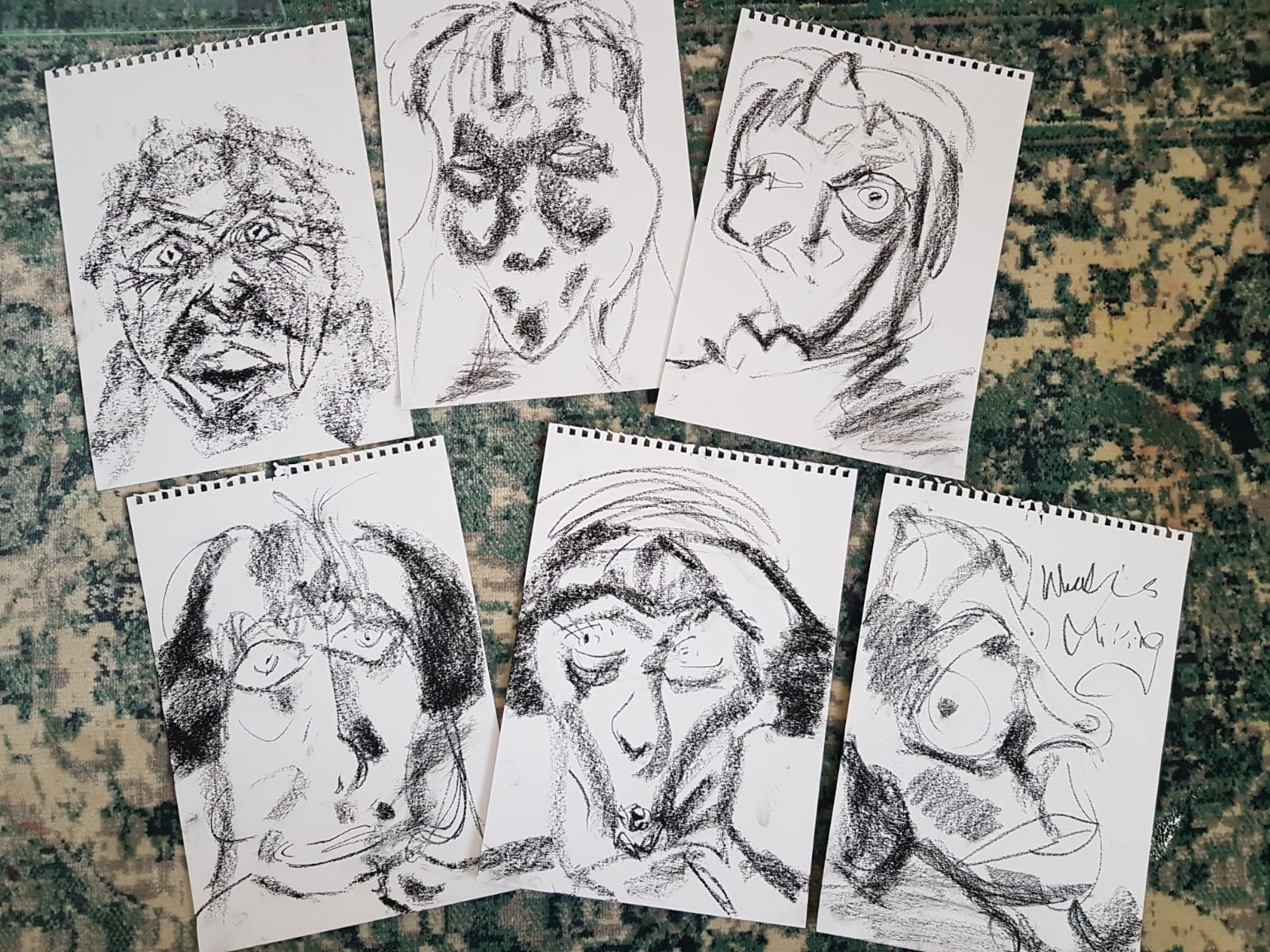
I knew I wanted to capture these ideas in a visual way – neurodiverse individuals are often very visual thinkers and communicators, sometimes better able to capture emotionally complex responses in swashes of colour than structured sentences. I also wanted my depictions of these key concepts to both connect to the real-life human experiences I’d been exploring, whilst being relatively ‘faceless’. These are almost archetypal journeys that can be accessed through a wide array of human experiences, and I wanted a wide array of experiences to be able to be brought to the table by the viewer.

As such I started to experiment with abstract portraiture, capturing gesture and emotion, not ‘pinning down’ too many distinct facial features:

IMG-20200421-WA0000

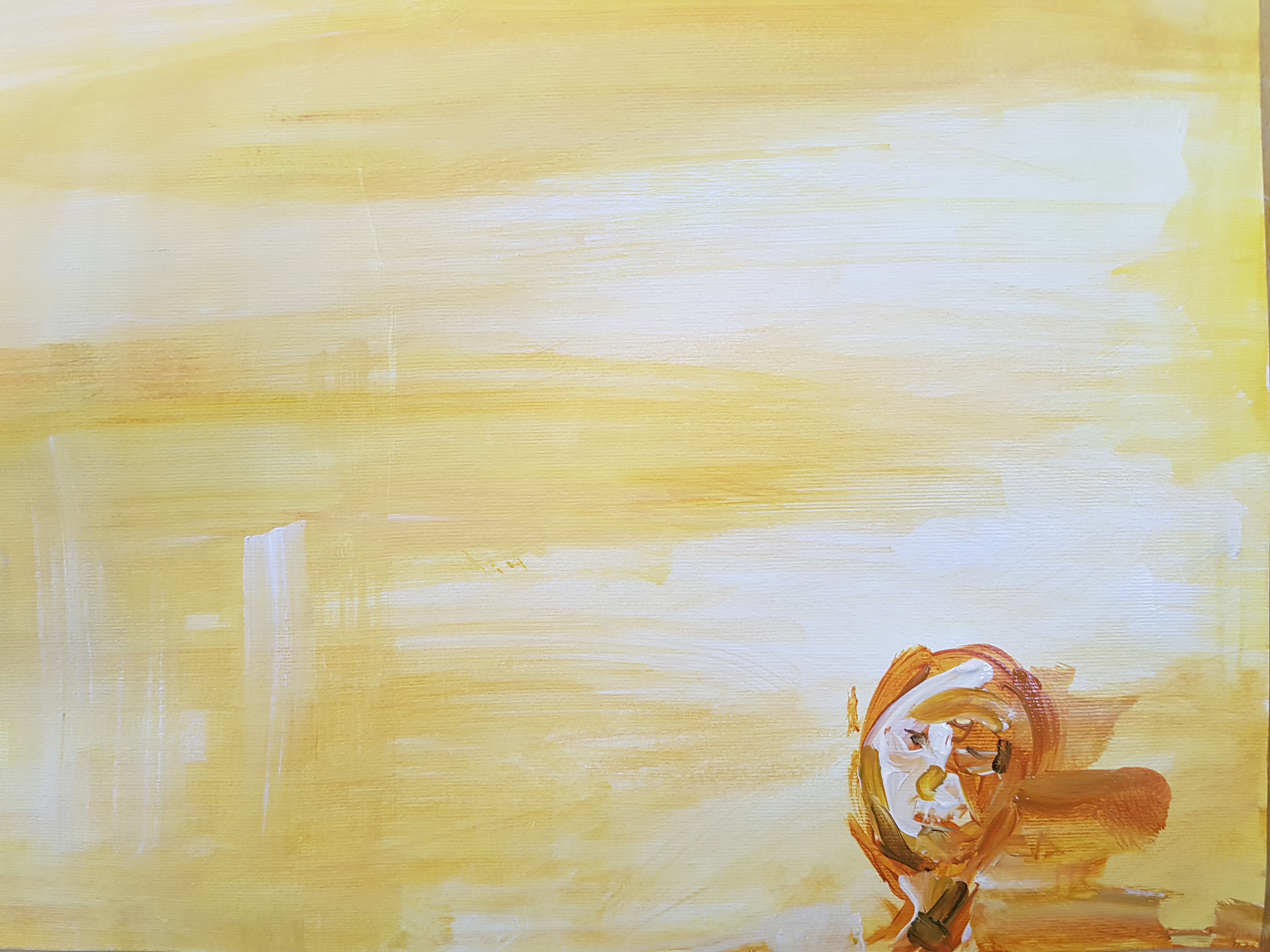
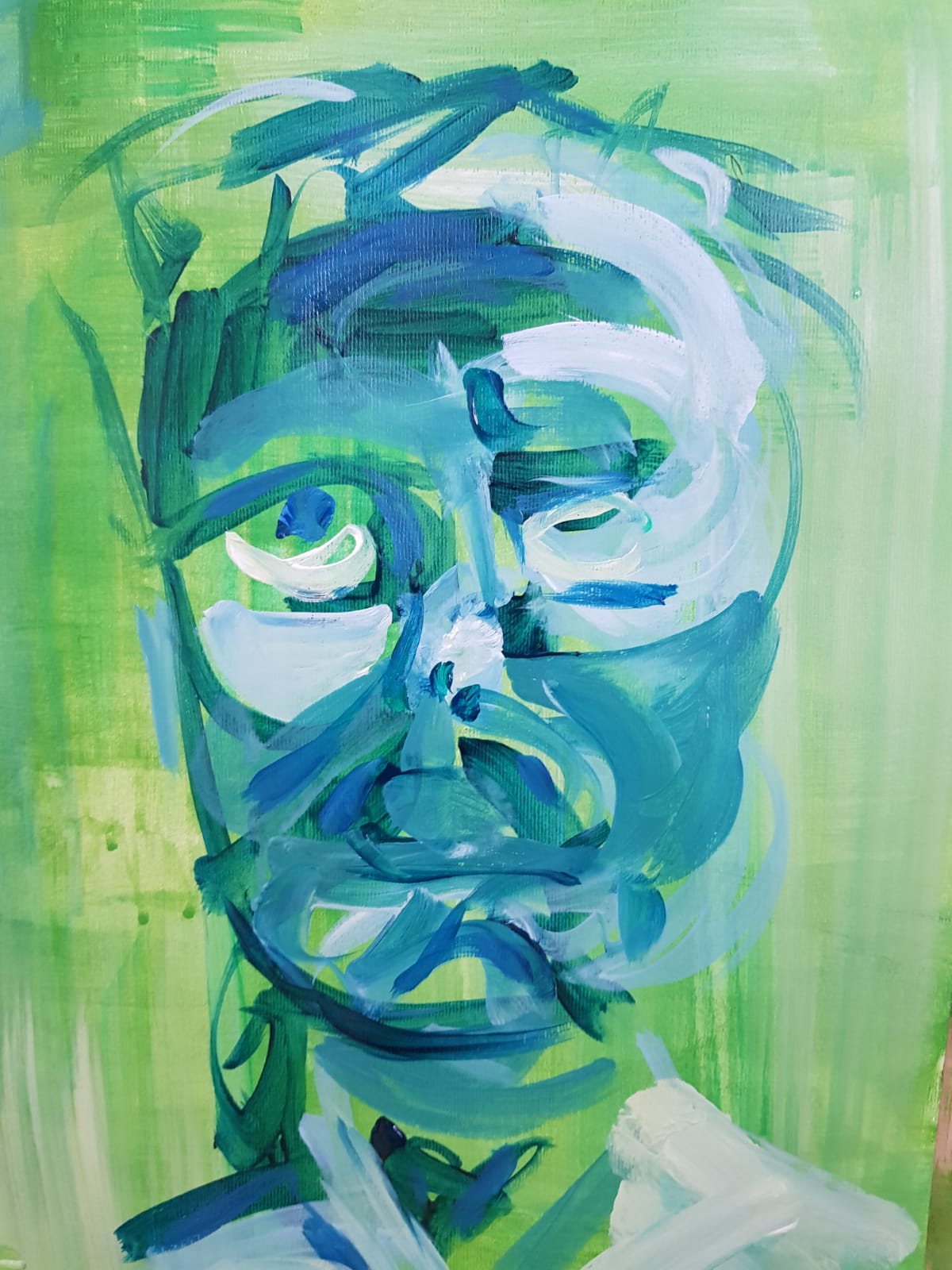
I also spent some time researching colour psychology. I drew inspiration from scientific data on the effects different wavelengths can have on the brain, historical artistic uses and regional/cultural associations to play with colour to create different sensations. For example, an overabundance of yellow can give a sense of sparseness, isolation and distance from society; it’s often been used to depict outcast figures. Green is often

20200410_164039(0)

considered to imbue a sense of peace and a higher preference for it is seen in ASD boys compared to ‘typically developing’ boys, it’s speculated for its calming wavelength.

IMG-20200410-WA0009

With my mentor’s advice about thinking ahead ringing in my ears I put together a preliminary plan as to how I could produce the response, including potential funding sources and how the work might eventually be displayed.

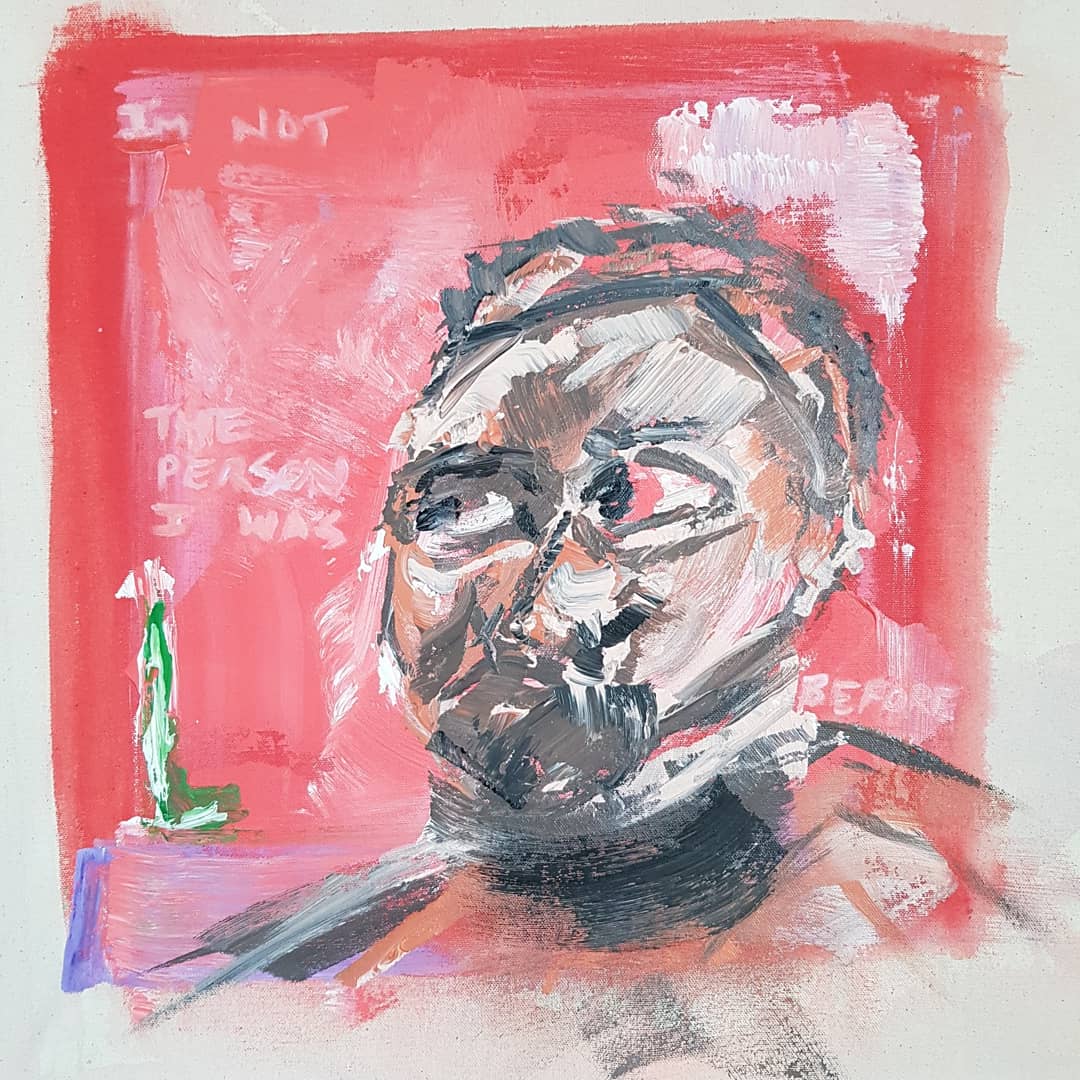
After playing with some quotes I’d selected from my research by adding breaks in the sentence to create alternative or multiple interpretations, I produced a ‘sample’ that incorporated the abstract portraiture and colour techniques I’d been developing.

IMG-20200421-WA0001

I spent a lot of time during my residency contemplating my own artistic practice, how I operate, what works well and what changes could benefit me. I had time and ‘space’ to explore and play with techniques I may otherwise have struggled to carve out the time for. Through this reflection and my mentor’s guidance I am also taking away a very clear understanding. Dialogue with the world and potential viewer is an inherent part of the making process, not a final event.

However, I’m also taking away a sense that there is still a hegemonic narrative, a script, for how these conversations should be conducted. These scripts won’t work for everyone. Some may deal with cognitive overload in face-to-face coffee mornings that doesn’t allow for authentic expression to take place. Some may be non-verbal. Some may not be able to physically access the designated space. There are many ways of communicating that are as rich and ‘on par’ as a spoken engagement that may not be accurately translated into language. When thinking about the experience of distinct neurological configurations, L.A Paul suggests it may “…give them a unique and untranslatable, hypervisual cognitive style…”

As access to the ‘art world’ is changing, we need to reconsider alternative modes of being, processing information and constructing dialogues to provide that access.

I’d like to thank Talking Birds for the opportunity and support, and my mentor for crucial and enlightening conversations!

Rees Finlay’s ‘Reaffirmation: Coming to terms with an autism diagnosis’:
https://www.amazon.co.uk/Reaffirmation-Coming-terms-autism-diagnosis/dp/1527251128

Kimberly & Silas Gerry-Tucker’s ‘Mime Project: Masking’:
https://www.youtube.com/watch?v=C1BYBxInZUg

L.A Paul’s Transformative Experience
https://www.amazon.co.uk/Transformative-Experience-L-Paul/dp/0198717954

“a demonstration of the importance of human connection”

Luisa Freitas reflects on her Work From Home Nest Residency:

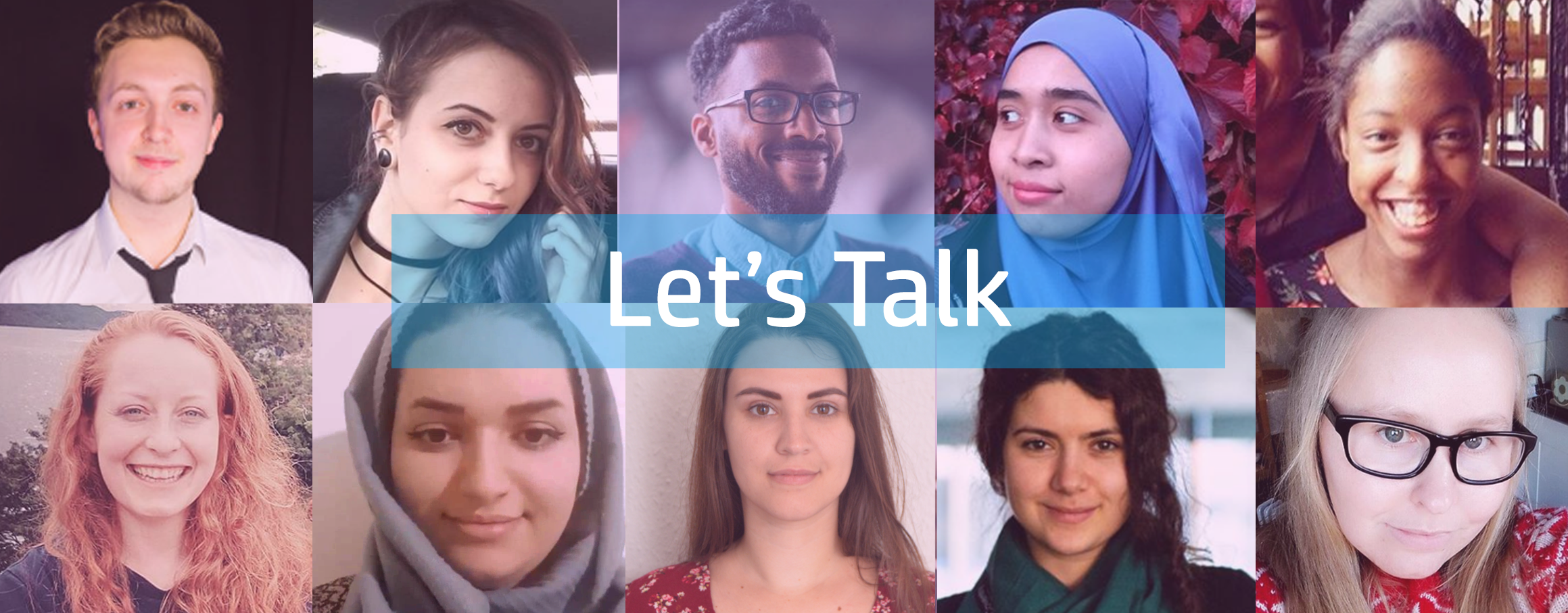
“Let’s Talk” is a social art project focusing on human connectivity shaped in the form of a platform where the audience can express themselves in an honest way, joining together groups of people from different backgrounds and therefore allowing strangers to get to know each other and their stories, in a way that otherwise wouldn’t be possible. The final product consist of a series of audio visual work through individual interviews, where each person is asked a question that reflects their personal experiences. This project was developed during a Fledgling artist residency supported by The Talking birds Theatre company. I got to know of the Talking Birds during one of the “Artist drop-In” meetings at Coventry Artspace and was immediately captivated by their principles in accessibility, social and environmental concerns and particularly searching for new ways to aid emerging artists from all practices to have a space to create their art. Since I’ve only created work about individual interests and inside my house, I felt that this was a unique opportunity to expand outside my comfort zone and create with the audience in a public environment.

LetsTalkLogo

Initially the production was supposed to take place in the Talking Birds head office but due to the initial virus Covid-19 outbreak (uh-oh) I was relocated to an art studio The Row in Coventry, but then after the official quarantine all art studios closed and I was (literally) sent to my room. I was so close to having my “real” first art-residency and now I was isolated in my small space once again, which was precisely what I was trying to change by placing myself in the outside world and work with the public for once. But I didn’t let that discourage me and I continued the project by focusing on what I believed in and what I was trying to prove: Art connects! So I altered the live interviews into online call interviews, and proceeded with the project. This drastic change in production meant that the visual quality of my work deteriorated significantly but on the other hand my reach of interviewees expanded considerably, and I managed to interview not only people in the city of Coventry but also in other areas of the UK and even internationally. I want to give them all a special thanks for having given their time to make this work possible, despite the limitations and concerns of the virus and its impact in their lives.

Despite the fact that there are few – but good – interviewees, the result was a success, there are not only three but four videos exploring questions ranging from very personal matters to abstract concepts such as “inspiration”. Naturally, being an art-residency, this platform also touches on the art discourse, now debated not only by artists themselves but also by members of the general audience outside the field of Arts. This union between the “outside world” and art practice has always been a passion of mine and thanks to this project I managed to bring the arts to the non-artistic audience together and allow them to talk about their experiences and thoughts about art.

This Fledgling residency really helped me organise my thoughts on this project and understand how far I can take this subject within my possibilities, and made me realise that what I actually intend to do is create an online platform about the art discourse itself made for the public with the public, in an accessible way and in this manner break the existing barriers between the general audience and Arts. This new platform will take its identity as a YouTube channel, under the name “Art Chat”.

LetsTalkbanner
In many ways this residency was crucial for my development in thinking outside the box, exploring themes I never have before, finding solutions to the obstacles presented during unprecedented times and meeting so many amazing people, who inspire me to try new things and meeting many more strangers to come. The Talking Birds was also incredibly generous and patient in allowing an extension of my work due to the situation with the quarantine, and so my residency which started at the end of March 2020, ended almost at the end of April 2020. But perhaps precisely due to the difficulties presented by the virus this project was more effective in its function as bridge between various peoples and the demonstration of the importance of human connection.

You can watch the videos on Luisa’s website, by following this link.