Corinne and Daisy reflect on their Remote Nest Residency.
I’m Corinne a disabled artist. This year marks my sixth year of spending almost every day confined to this same 2 by 1.5 metre space, my bed.
Continue reading
Corinne and Daisy reflect on their Remote Nest Residency.
I’m Corinne a disabled artist. This year marks my sixth year of spending almost every day confined to this same 2 by 1.5 metre space, my bed.
Continue reading
Rachel Bunce reflects on her Hatching residency
After spending 10 days on a relaxed retreat-style Swedish residency, I almost had some ideas. I was given space to play with the tools that I normally use to earn money and create with others. It was brilliant, fun and terrifying (in equal measure) to have total creative freedom without a brief! Chatting with Janet and realising I wanted to take one of my almost-ideas further gave me the impetus to apply for a Nest Residency. I’m so glad I did, and not just for my creativity and idea-forming but for my sense of community, my physical and my mental health.
Continue reading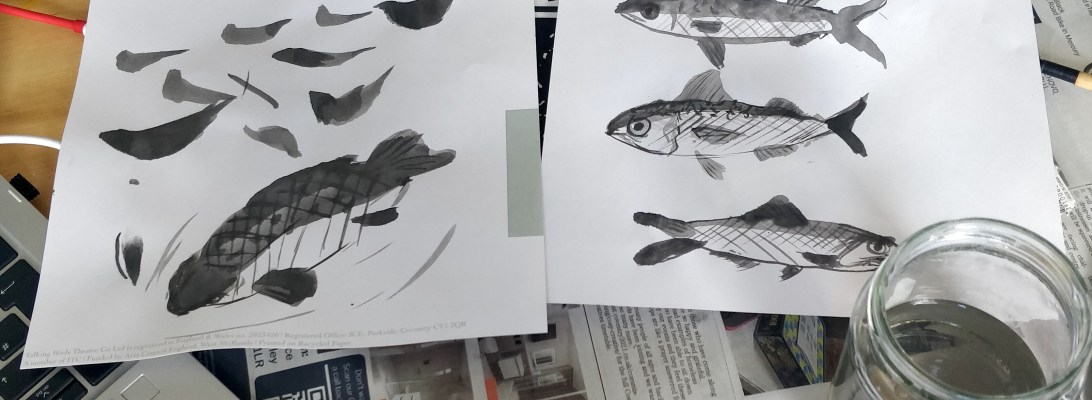
Po-Shin Chao reflects on her Hatching Residency
As an artist, for my residency my project focussed heavily on exploring and experimenting with ways I could reflect and display my own identity and internal struggles through the world of fish and marine life. An aspect I wanted to include was my cultural heritage; with the use of fish surrounding Taiwan included in my artwork, art styles and choosing fish that symbolized particular meanings. Many of the fish I wanted to paint were heavily inspired by hierarchies and societal roles in everyday life. I worked primarily in paints and inks related to traditional artworks such as gouache and calligraphy ink and spent the full ten days at the nest, popping in and out over the course of two months.
Continue reading
Craig Clarke reflects on his Hatching Residency
I had known about the Nest Residency for a while after attending creative co-working several times. It had been on my to-do list for a while however an email stating that they were about to close applications promoted me to stop procrastinating and finally sort out my application. A few weeks later I got the good news of being accepted and an exchange of messages found some suitable dates.
Continue reading
Communities would be engaged and empowered and arts policies would be invigorated, says Janet Vaughan, co-artistic director of Coventry-based artists company Talking Birds, whose work focuses on the relationship between people and place.
Attempting to banish the consultation fatigue of four years’ involvement in the preparation for Coventry’s time as UK City of Culture in 2021, and desperate to understand what value ‘ordinary people’ placed on arts and culture, Talking Birds called a Citizens’ Assembly in the city on arts, culture and creativity.
Continue reading
This post details a draft action plan entitled ‘Creating the Conditions for Creation’ which has its genesis in a F13 (network of independent and small scale arts organisations, freelance artists and creative practitioners) workshop. This workshop asked the question: “Where do we want to be in five years time?” – as a way of talking about, and moving collectively forwards from, the collapse of Coventry City of Culture Trust.
Continue reading
Michael Snodgrass reflects on his Hatching Residency
My hatching residency raised a few areas to reflect on as a visual artist; a place and a studio space to go each day and create, a time to explore techniques, a chance to talk to other people about my work (and theirs), the opportunity to discuss work as it happens, respond to people’s thoughts and receive mentoring around social media and sharing work publicly.
Continue reading
Cody Maycock reflects on his Nestival Residency
I recently finished two weeks in my temporary studio space and it was exactly what my creatively blocked brain needed.
Continue reading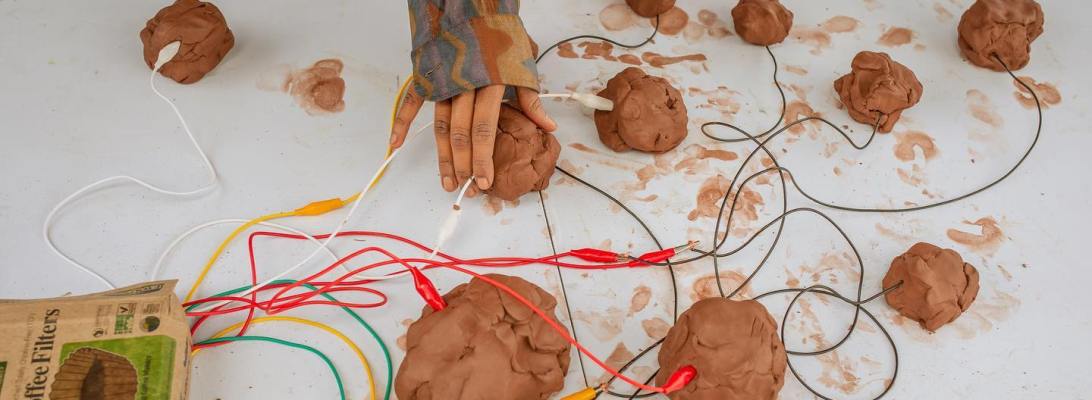
Indira Lakshmi reflects on her Nestival Residency
It’s always a pleasure to be at the Nest!
I spent the last two weeks on June in the Helloland studio. I had been working on building midi instruments with Arduino and Pure Data for some time, having made a rudimentary teddy-bear with potentiometers that control an FM Synth I’d programmed with Pure Data.
Continue reading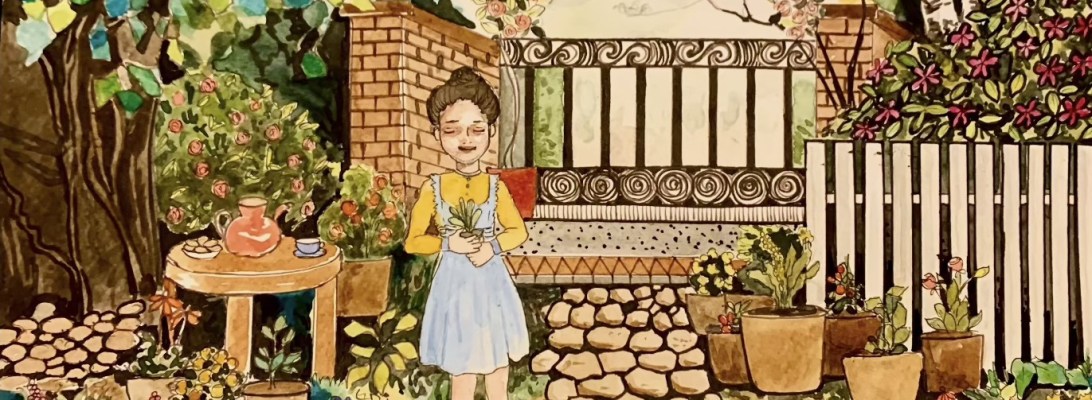
Shorna reflects on her Hatching Residency
“Talking Birds is a Coventry based company of artists, known for their gently provocative projects which explore, and seek to illuminate, the profound and complex relationships between people and place.” These lines from their website says a lot about this astonishing company. I have recently completed my two weeks residency there and feel very lucky to get this opportunity. I was placed in a beautiful studio, “Helloland”. I must say the name of the studio made me so happy because I was planning to illustrate a children’s book that will have illustrations of gardens. My studio gave me a perfect start.
Continue reading
Nicky Bellenger reflects on her Nest Residency
This morning, in the fresh field,
I came upon a hidden nest.
It held four warm, speckled eggs.
I touched them.
Then went away softly,
having felt something more wonderful
than all the electricity of New York City.

Colour to Colour Theatre Company reflect on their Remix Residency at Talking Birds
The plan: Start the R&D phase of creating a show that can be toured. Play with all the resources that The Nest have provided us, and look for texts to adapt and work from. By the end of the residency we plan to have a few scenes ready to perform. We also plan to be ready to provide workshops for students at Coventry University.
Continue reading Words from the Birds