Ashleigh Aston & Gareth Price-Baghurst reflect on their Nest residency
We had an amazing 10 days with Talking Birds at The Nest in Coventry. Here’s a little vlog about our time with them!
Continue reading
Ashleigh Aston & Gareth Price-Baghurst reflect on their Nest residency
We had an amazing 10 days with Talking Birds at The Nest in Coventry. Here’s a little vlog about our time with them!
Continue reading
Amanda Randall reflects on her Nest Residency
I had a great time in Helloland experimenting with making and photographing large paintings and drawings on the floor using natural pigments and mark making tools gathered from woodlands.
Continue reading
Sym Mendez reflects on their recent Nest Residency
STEP 1: You have absolutely nothing to prove to anyone. Here is your formal written permission to just exist within your lived experience.
These were the words I wrote to myself on the very first day of my Hatching residency at The Nest. Choosing to explore something so intimate as chronic pain as a performer and movement artist is relatively new to me. So used to over or under explaining myself – I could never unpack this layered experience in a way that best suited me until having a studio, space, time and freedom to do so here at The Nest, within my Space Odyssey. Being at The Nest – a place with access rooted within its infrastructure – was the first time I didn’t have to think about doing anything other than simply exploring. When I removed the imposter syndrome, fear and guards around my artistry, pain and practise- there was suddenly enough space to stretch into the fullness of my creative potential.


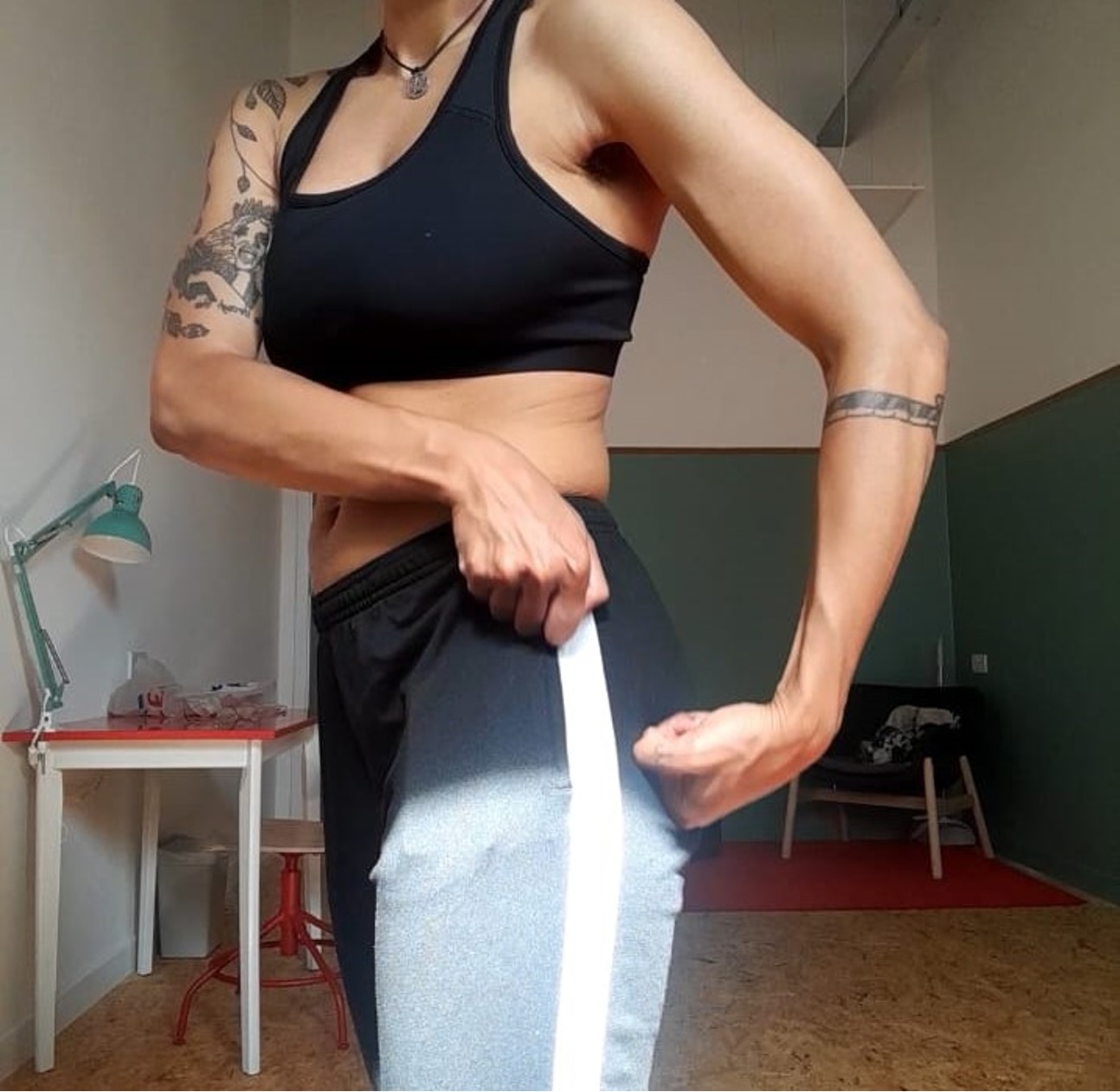
My first step within this journey was to ask where my pain lies – what does it say? I worked my way through and down – slowly – acquainting myself with deep knots and aches, conversing with dormant corners of myself. I held my body with a level of compassion that I didn’t have the space to do previously.
I was accompanied by two books throughout my 10 days of residency: The Body Keeps The Score by Bessel A. van der Kolk and Sacred Pain by Ariel Glucklich. I used these texts to unearth a deeper understanding of my own pain, where it comes from and how I also use pain for transcendence. Do these things contradict one another – and have I internalised beliefs around my pain that exacerbate suffering? Once I could gauge for myself the different avenues of pain that make up my embodied existence – I was curious to speak with other artists and movers about their chronic pain too (which Talking Birds happily financed so that the conversations wouldn’t become extractive or exploitative).
Knowing where to start with questions, thoughts and prompts to present to other artists proved more difficult than expected – does speaking about my own spiritual beliefs and thoughts on transgenerational pain undermine the experiences of others? How do we speak honestly without re-traumatising each other? How do I speak without assuming our experiences are universal? – and it wasn’t until the end of my first week that I finally had some semblance of a structure.
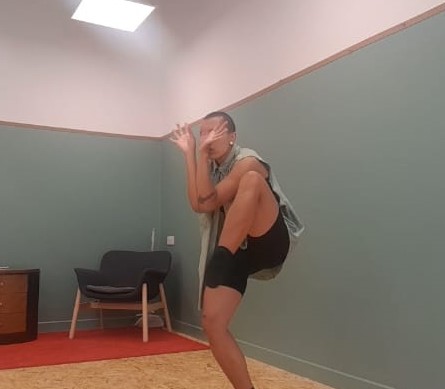


Conversations with other artists really enabled me to formulate my own thoughts, and from thoughts into potential performance. Topics such as crip time, grief, shame, internalised belief systems and movement/ motion beyond the physical body helped me to simplify all of the questions buzzing around my mind and begin to create something that speaks to the depth of my experience.
Having the safety and support of Talking Birds and The Nest gave me the ‘permission’ to create without rigid expectations, to dive in whilst knowing I won’t drown, to hold a gentle and nurturing space where it is impossible to do anything other than play and create without restriction. Who knows when this piece will fully come to fruition. What I do know is that I can leave my residency with the understanding that I have the capacity to create something enriching. I have ideas I can persevere with when I’m afforded the privilege of resource.

Emily Tyler reflects on her Nest Residency earlier this year
Since I heard that Coventry was to hold the accolade of UK city of culture for 2022 I’ve been excited. I’ve found that other creatives have felt that it hasn’t been as positive as it could be. With the main events heavily weighted towards artists from the rest of the country, creatives have been feeling ignored. They have spoken loudly about this being a missed opportunity. I’m inclined to disagree on this subject, mainly because I haven’t stopped all year, and have not directly been employed by the official channels.


I have been a photographer longer then I’ve been a painter. And my dreadful film photographs did little to document my life or even be in focus. But with the invention of the digital camera, and later the camera phone, like many people I take photos of everything from food, to my child to times out with friends. But mostly I have found that it is a brilliant tool in which to share a unique view through your eyes that is easy to understand.
I created a map of Coventry to root this project to its geological routes. I used colour and texture to transport this image from a tool into a feeling and mood enhancer which reflects the cultural tapestry which I feel represents our city.
This project has been about how the general public are the important audience this year, those people who might not attend a gallery, events or a performance normally. For those that think arts are elitist and unrelated to their life. During these times where our current government is cutting arts funding left, right and centre, it shows that not only is it an important part of everyday life, but a way to build communities, bring money into the city, but something that can enhance your life.

As an artist I always start out taking my own photos, and editing them into the image that I want before I start to draw it paint. With this in mind, I decided I wanted to do a project which showed the peoples view of the City of Culture 2021 by collecting other peoples photos of events.
We are living in an age where language is becoming more visual then ever. People abbreviate words, use a sentence or two to describe a picture, and although I’m a bibliophile, I am first and foremost a visual learner and sharer.


What I thought I needed to support the project when I began at my Talking Birds Nest Residency was space to work, and advice on how to reach the general population within the city.
But I quickly found that although a studio space is useful for creating a large canvas, as a part-time extrovert and general clutterbug, I didn’t actually enjoy being in an empty space on my own. I found that the loneliness was not something that worked well for me. This is possibly because of my dyslexia and my mental health problems.

As part of the residency deal, a mentor was found for me to help me with my social media coverage. Tara Rutledge is an artist and social media guru who currently works for Imagineers within the same building as Talking Birds (Daimler) and is currently working on a “up my street “ project with ArtSpace and embarking on her own art residency with Talking Birds.

The two issues are complicated. Firstly, I need to share more of my work in progress posts, and make it more personal so that people relate to me better. Next I need to post stories more often, to keep my work in peoples’ awareness. Also I need to make my posts more chatty so that they are more understandable and people get what I’m trying to do, and how easy it is to take part!
As part of the career progression part of my social media, the above will generally help, but using the right tags and hashtags will also pull in people who are looking for the type of work I offer. Simple planning of posts and posting at the right times also can help.
All this said, social media is not the only thing I needed to do to be able to promote myself and my project. Media coverage, including digital newsletters was recommended, as well as focusing on certain publications and media outlets locally.
Fingers crossed that all this will help me to complete this project and increase the positive view of the City of Culture. And I hope to get this project displayed in the City Centre in the next few months!
With my mental health problems, I find that I lack physical and mental energy most days, and that being around people and bouncing ideas often helps to lift my mood and productivity.
Once I had my large canvas painted, I decided the best use of my residency time was to pick the brains of the team at Talking Birds on how to get the word out about my project, and how to market myself as an artist.
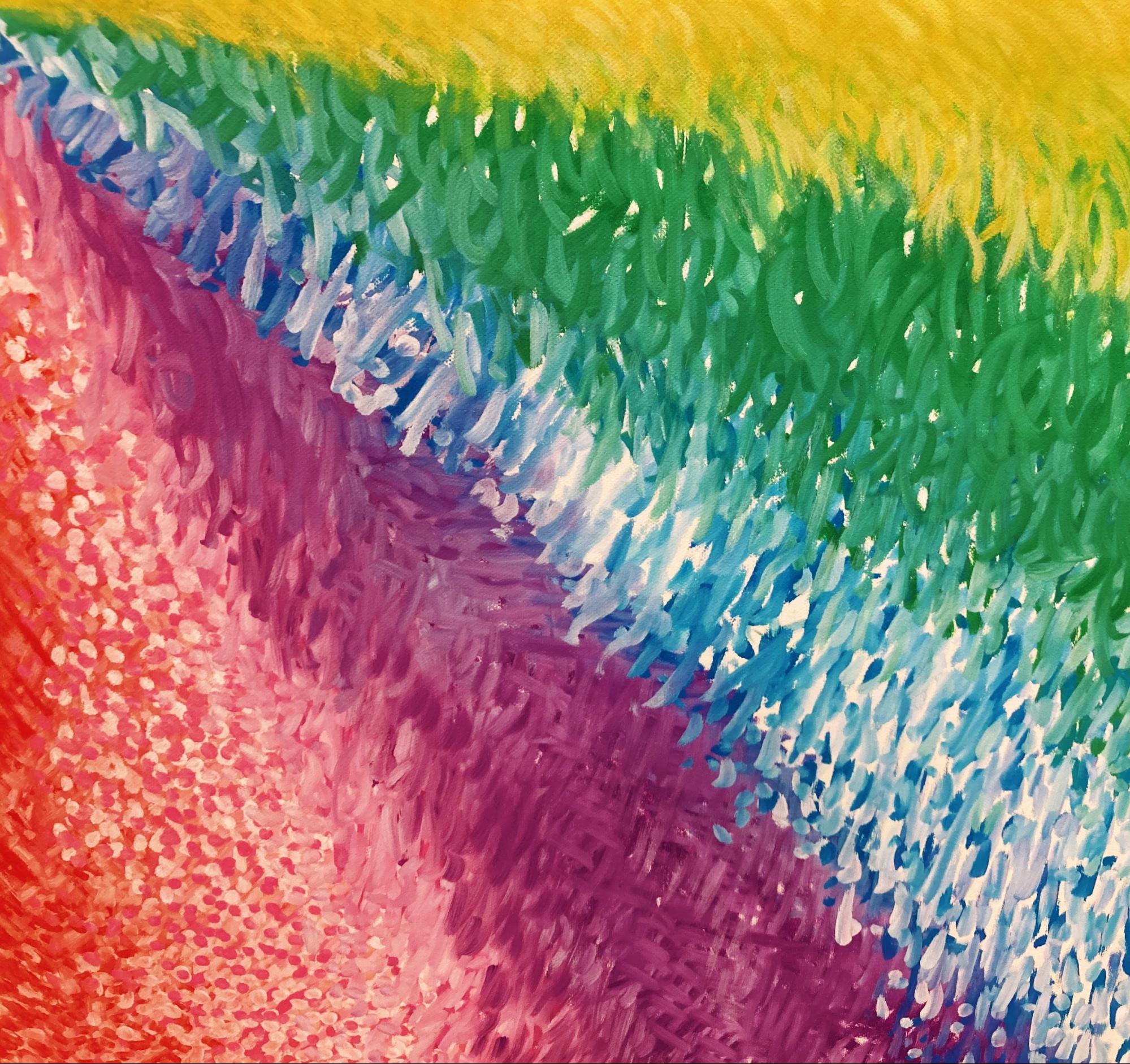
For my social media, I needed to appeal to two different demographics. The places that might want to commission me and my work, and those people who will share their pictures with me to show the city as a cultural place open to everyone.
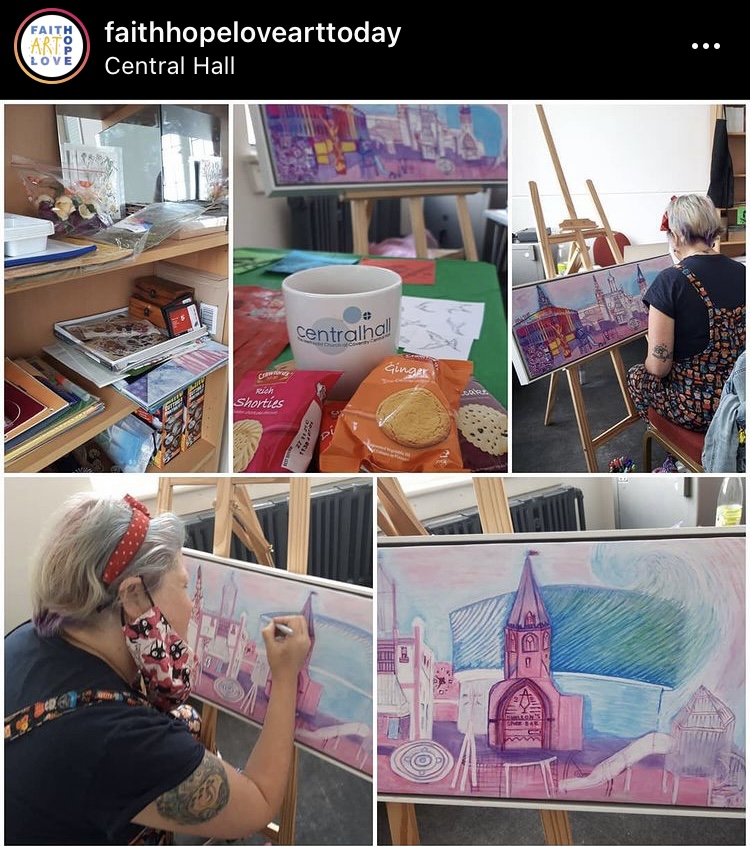

Keep an eye on my social media @emilytylerartist for updates and further projects!
Thanks for reading!

Today marks 2 years since the death of George Floyd. And today the More Than A Moment working group has put out this statement asking organisations that have signed up to the Pledge to publish our action plans so that we can (rightly) be held accountable.
Continue reading
Kate Webster reflects on her Difference Engine Stories Commission
I saw Talking Birds’ call-out for ‘Difference Engine Stories‘ and was immediately excited – it’s SO rare to see a commission that’s explicitly an invitation to experiment!
As a writer and theatre-maker, I’m passionate about sharing live experiences and bringing theatre to non-theatre spaces, so using the Difference Engine to make a socially-distanced piece seemed like a great fit. It was also a chance to work with an access tool that was new to me, that could not only make the performance accessible for D/deaf audiences, but enable us to play with distance and potentially have audiences watching from inside their homes.
I connected with Coventry performer/director/local legend Paul O’Donnell, whose work aims to expose the ‘ordinary’ in a ‘spectacular’ fashion, which was perfect for this project exploring masculinity. Paul also had previous experience of working with the Difference Engine.
The inspiration for ‘Car Wash’ came from walking round my neighbourhood during lockdown and seeing the weekly ritual of men washing their cars on the street. A car can be much more than four wheels and a chassis, and some get not just a quick slosh with a bucket, but washing, vacuuming, waxing – a lavishing of time and attention that’s an expression of pride, even love.

‘Car Wash’ transforms Dave washing his car on the street into theatre, as the Difference Engine reveals the inner monologue behind his silent action, exploring masculinity and how that’s manifested/performed. As Dave’s confidence and apparent “normality” is undercut by reading his worries and doubts, the audience gets to know someone they might not have looked twice at, experiencing the gap between being seen and understood. At the climax of the piece (car perfectly polished and gleaming), Dave dances his heart out to Rose Royce’s ‘Car Wash’, acknowledging the audience and inviting them to join in: “Come on y’all and sing it with me!”.
The process of making the work was really fun and straightforward, partly because Talking Birds were so willing to let us create it in a very free way, scheduling regular check-ins to see how it was going and what we needed, but without putting any restrictions on how the piece should turn out. Essentially, Paul and I had a chat about how we saw ‘Car Wash’ working and some of the things we wanted to do, then based on that I went away and wrote a first draft. From there, we developed the script further through several more drafts, really focussing on the role of audio – Paul had the idea of using the car stereo not just for music, but as almost another character: ‘Radio Dave’.
The goal was to do several ‘test’ performances in different Coventry locations, trialling the idea and getting feedback from a range of audiences. So we chose a date (a Saturday, to maximise the potential audience) and promoted it through social media to people across Coventry, with a selection of time slots they could book by email. Talking Birds shared our posts and we had really good support from local people and organisations, through using specific hashtags like #LoveCov and the promotional Coventry Hour set up by Cov businesses. We set up a ‘What to expect’ document to send to all bookers, with practical details like letting audience members know they would need a smartphone or tablet to get the full effect of the show and asking them to download the Difference Engine in advance.
With the final version of the script in hand, Paul started rehearsing with our brilliant performer, Dan Walsh, and his car Clint. They worked on co-ordinating movement with the text (Dave’s inner monologue, shown on the Difference Engine, rather than than spoken) and recording the ‘Radio Dave’ audio track, including some pop classics that reflected Dave’s state of mind.
On show day, we had a timetable for each performance and its location, with three different Coventry streets expecting us (and saving us a parking space!). Because we were performing outside and moving around rather than being in a fixed venue, we used the mobile Raspberry Pi version of the Difference Engine, which fits into a rucksack. We’d originally planned to hire a tech operator, but realised that – because it was important to time the cues precisely with the music track and Dan’s moves – it needed someone who knew the piece very well. So with his past experience of the Difference Engine, our director also operated the “desk” for each performance, while I was on hand to liaise with the audience. That included trouble-shooting anyone having difficulty connecting to the app, encouraging people to share a phone or tablet if theirs wasn’t working (or lending them a device) and handing out leaflets explaining the show.
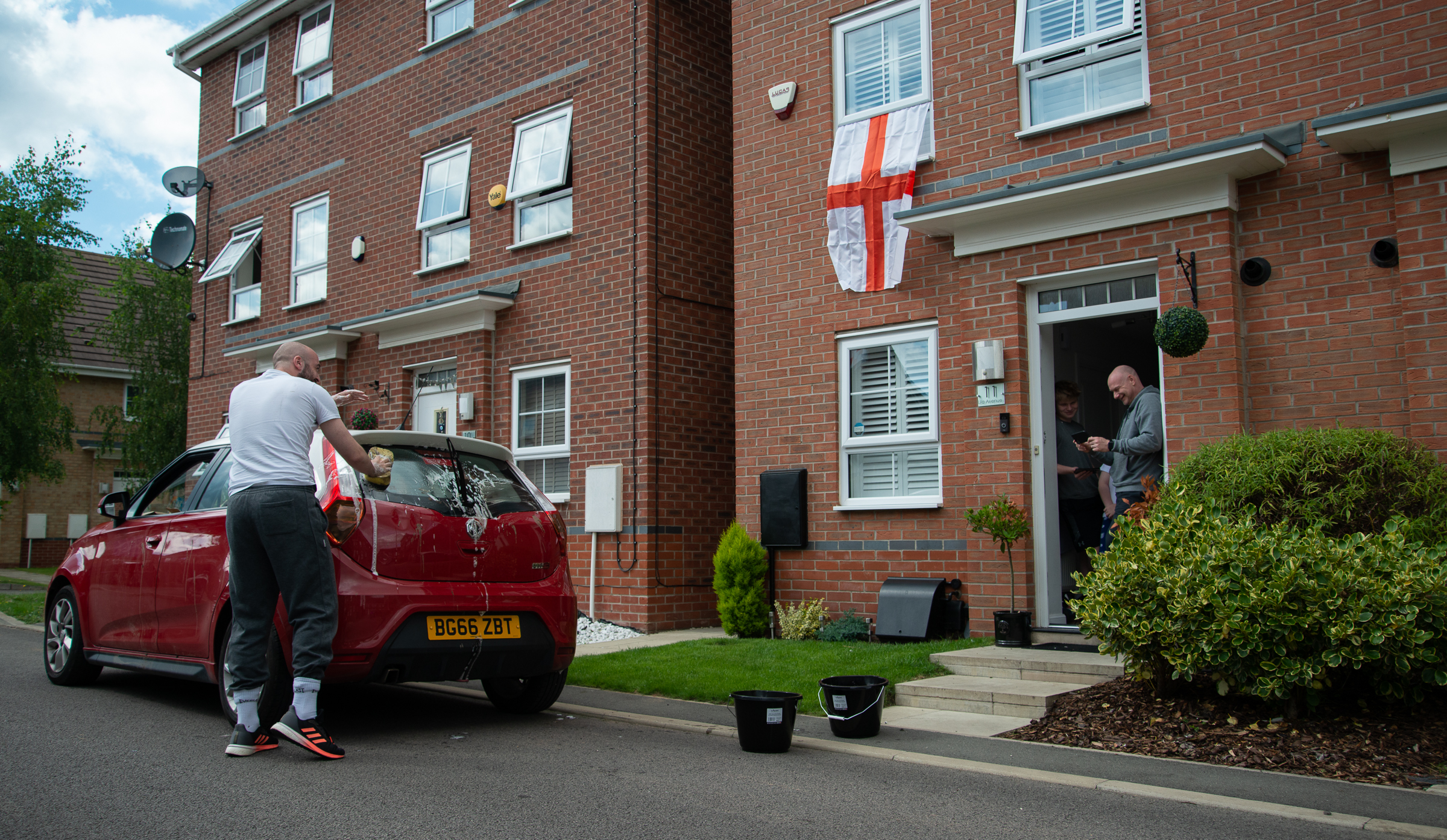
What was brilliant and we hadn’t anticipated was that the households who’d booked the show had then told their neighbours about it/put the details on a street WhatsApp group. So we often ended up with multiple households as an audience, with more neighbours coming out to watch when they saw people gathering. It added another layer that – because the show’s dialogue was almost entirely on the Difference Engine – people walking/biking down the street during the performance could tell something was happening, but weren’t sure what. Some people didn’t have their glasses or found the text moved too fast for them, so decided to watch without using the app. While that meant they weren’t reading Dave’s inner thoughts, they could see the performer and hear the audio track, so still saw the progression from a man straightforwardly washing his car in the street to an impromptu karaoke performance and ultimately, Dave letting his inner sparkle out.
So although some elements were unexpected, those were all positive developments that added layers to the performance or allowed for people to experience it in different ways. From what audience members told us on the day and from feedback through our survey, people who came out to watch then stayed to talk to each other after the show. On one street, the household who’d booked us had recently moved in and the performance introduced them to their neighbours. That’s exactly what we’d hoped for, that ‘Car Wash’ could bring theatre to communities and maybe start a conversation.

This commission was a great experience and I’ve become quite evangelical about the Difference Engine and sharing that with other theatre-makers. It’s an incredibly useful access tool, but can also be much more than that; I’d also really encourage makers to think about how they might integrate the Difference Engine into their work, not only use it to provide captions. I’m hopeful that ‘Car Wash’ has a future life with other communities and have had some really positive conversations about this model of theatre outside a theatre building.

These photographs were taken by much-missed local photographer John Whitmore.
Vimal reflects on his recent Remote Nest Residency, creating a walking tour documented via a diary.

Diary
This is my remit
Highlighting the culture and diversity of Coventry enabling people to see, taste, smell and hear stories of the people in the area via a walking tour.
Aim
To create a walking tour with real stories celebrating the culture and diversity of the area
Day 1
OMG where do I start what do I need to do???!!!!
Thoughts of places to explore:
Day 2
Cinemas Ritz/Palladium – historically Indian cinemas – lots of information on forums.
Lots of history regarding Asian communities buying cinemas via self funding, hindi movies and Sundays became a day out to the cinema for the Asian community. Decades later there were disputes regarding ownership.
Possible to investigate further but currently too far from the Foleshill rd
Temples/gurdwaras near Foleshill Road:
First gurdwara built in Coventry is nearer the town centre – could be too far. Need something closer
Mosque being built on the Foleshill rd, the oldest one is on Eagle street built in 1962 Jaima Mosque
Thoughts
I need to physically explore Foleshill Road and the main road which serves Fargo Village and see which stores could possibly be up for interviews and use their locations to tell the stories
Day 3
Found a video on the internet about Foleshill which is a good reference point.
Foleshill the people’s hill
Thoughts
what do people want to know about Foleshill road or roads near Fargo village?
what would people like to experience?
visiting several places of worship – could it be boring?
Maybe I should just go into one place of worship and highlight the others?
It’s stories people enjoy
Need to celebrate diversity
Day 4
It’s raining – cancelled visit to Foleshill Rd
Thought – do I still want to do Foleshill Road or the road near Fargo village?
Day 5
It’s Foleshill Rd
General Wolfe has played a big role in Foleshill rd, Irish communities, Afro Caribbean
Music – Specials, Selecta
Interesting fact
First ‘coloured’ Licencee 1962 Mr Frances – The Wheatsheaf pub. A fact to share and terminology used at that time.
Day 6
Research internet – Coventry facts – historical forums
Lady Godiva – reenacted down Foleshill rd
Watch manufacturers
Blue Ribbon
Cashs lane – the building and significance – known as Topshops
I don’t want to go into too much historical facts
Day 7
Went to Foleshill Road to interview a few retailers
Interview with Tahims – Clothing retailor
Interview with Shan Paan – Indian fancy goods
Interview with Standard Indian sweets
Interview with Iranian fish Mongers

Day 8
Spoke to Mehru Fitter who worked at Coventry library – for some possible leads
Day 9
Spoke to Anita P whose grandfather arrived from India and settled in Coventry in the 1950s
He was a cotton farmer in India with a thriving business but had to leave everything after the partition – he ended up working in Courtaulds in Coventry. Story collated.
Thought
Joshi’s Story needs to be told outside Courtaulds
Day 10
I do the walk on the Foleshill Road and find
there is a big gap from Courtaulds to Shaan Paan.
Thoughts
Need to find out what most of the businesses were before they became hairdressers
Currently 8 hairdressers all next to one another
Maybe interview a hairdresser?
Day 11
I listen to the recorded interviews and turn them into script
Day 12
I Go through the Coventry history archives and find some interesting facts
Prince Charles visited Foleshill Road and also opened the Bangladeshi community centre on George Eliot Rd.
Clint Eastwood had a role in the film Lady Godiva
Phillip Larkin was born in Coventry
Thought
Little snippets of info that can be shared during walk without going into too much information
Day 13
Visit Talking Birds Nest (Phillippa, Dez, Janet) and share ideas/stories about the walk.
They give their views as to what stories they’ve enjoyed
I go onto Foleshill Road and note through chatting with owners of businesses in the hairdressing area that most of the retail stores are operated by Kurds
Thought
This is Little Kurdistan
I will refer this area as Little Kurdistan during the walk and talk about how vital the Kurd community has been in the development of this area of the Foleshill Rd
I Interview Lookman who owns a hairdresser – he was sent to Coventry!
Day 14
I transcribe Lookman’s interview

Day 15
I do research on temples, some are too far away from Foleshill Road, however I find there is one on George Eliot Road. A Hindu temple that serves mainly the Tamil community, with people originating from South India, Sri Lanka and Malaysia. I speak to the president about the idea of a walking tour, and he would be delighted if we brought people from other communities to pay the temple a visit.
President of temple explains any rules that need to be observed. Photography and filming is fine.
Thought
The temple has a wow factor
I have knowledge of Hinduism so can share stories about gods and goddesses
Significance of Ganesh
This will be the starting point of the tour
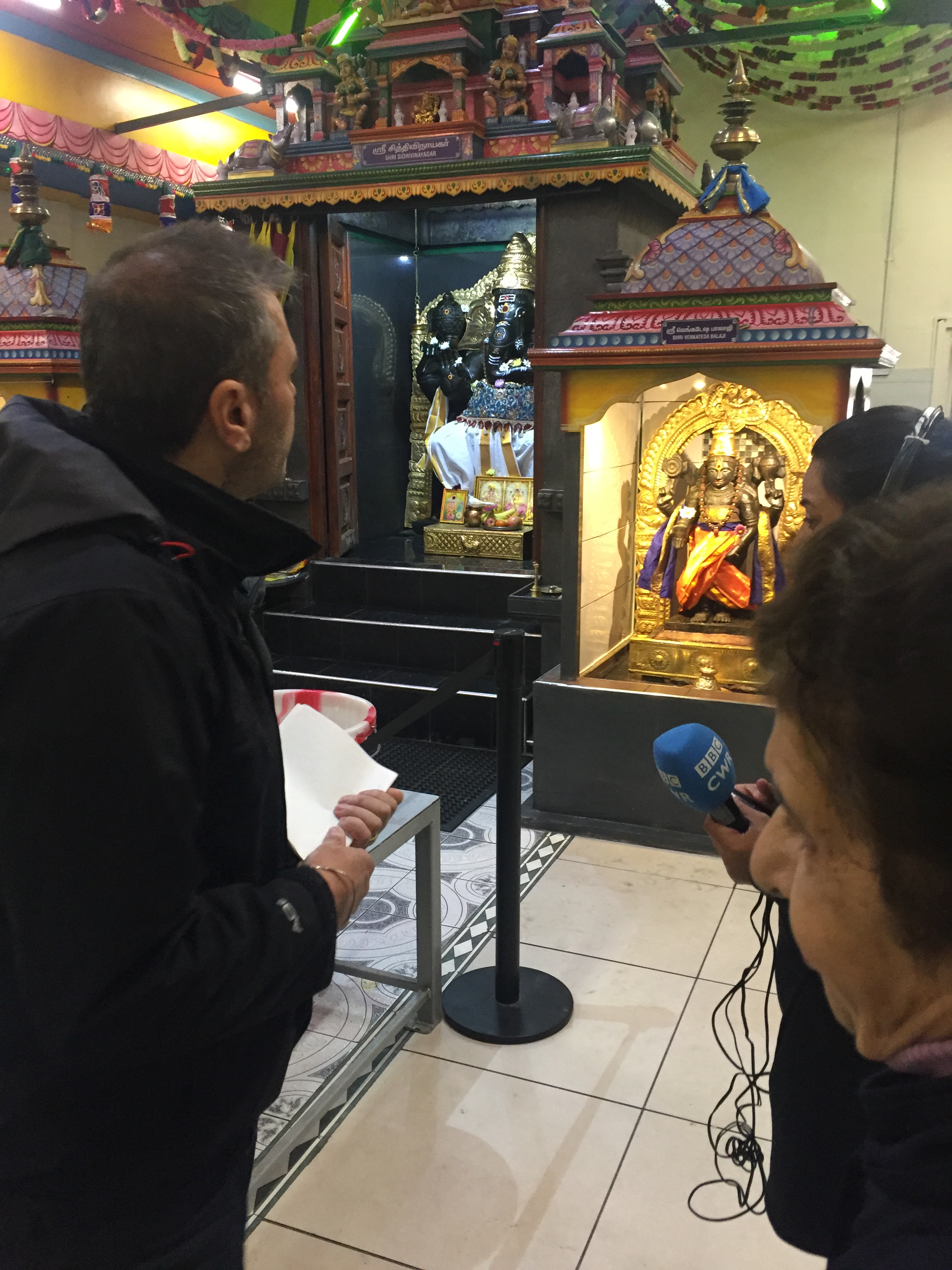
I visit the Gurdwara on Foleshill Road, speak to one of the trustees who gives us permission to bring guests into Gurdwara as long as people respect the rules
No cigarettes, no alcohol at any time. Filming and photography is fine
Thoughts
Share tenets of Sikhism
5 ks

Day 16
Speak to Haroon from Active Inclusion regarding floating library on canal
Thoughts
To include walk along canal side and share anecdote of Cash’s weavers
NP Aerospace is also on Foleshill Road
Bespoke bomb disposal suits made – predominately by Asian community
Next to NP is a Gurdwara – different section of Sikh community – previously George Wilson gas meters
Interesting fact
4 air raid shelters on the Challenge cycles building on Foleshill Road
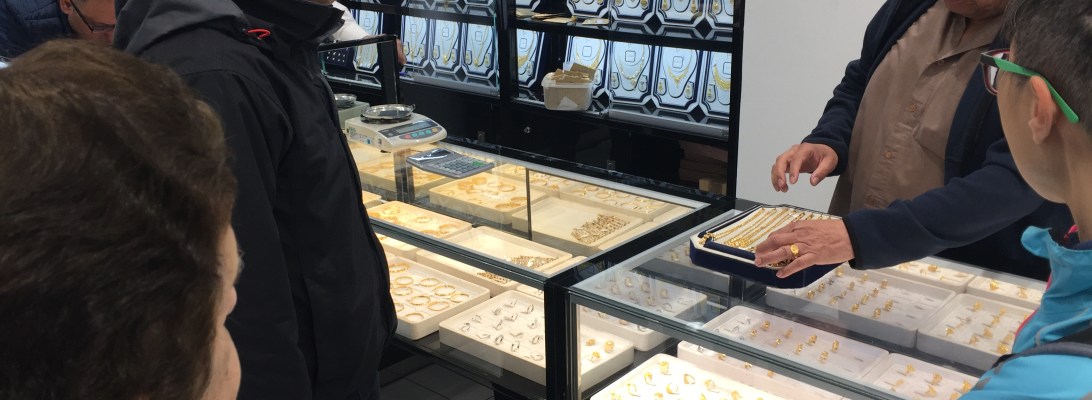
I visit Gem jewellers who have a wow factor with the Indian jewellery they sell. I explain walking tour and they will allow a visit.
Thoughts
Stories regarding importance of gold in Asian community – dowry
Mangle sutra – Given to wife by husband and significance of black beads in the gold chain
A short interview with Shanaz who has a material and clothing shop. Selling lengha, Salwar Kameez, dothis etc

Day 17
The walking tour is taking shape.
I decide on a route
Hindu Temple
George Eliot rd,
Gurdwara
Canal side
Joshi’s story outside Courthaulds
Walk to Little Kurdistan
Lookmans story hairdressers – settlement
Fishmongers – Aras story – Masgouf cooking
NP Aeronautical – hand made bomb disposal
Gem jewellers
Shaan Paan – leaving Uganda
Standard sweet centre – food stories with potato chapatti and mango lassi
Day 18
I take Dez to test walk
A success!!!!!!
Market walk on social media
Day 19
I write a blurb and decide on a name for the Foleshill walking tour
Vimal’s Walks: Join Vimal for a multi-sensory walk celebrating the diverse and vibrant heritage of the Foleshill Road. Visiting temples and hearing the sacred stories of gods and goddesses, with a stroll along the canal side, a stop at an Indian fabric shop, a Kurdistani hairdresser, an Iraqi Fishmonger, A Ugandan fancy goods shop with anecdotes of settlement, food and success, finishing with a glass of cold mango lassi and a hot aloo porata. All experienced in a fun and relaxed way.
More bookings via Waterways weekend for the walking tour, interest from BBC Sounds
The walking tour over the two days is SOLD OUT!!
Big thanks to Talking Birds, Derek Nisbet, Janet Vaughan, Philippa Cross, Dom Watson, Frances Yeung
Developed during a Nest Residency with Talking Birds. Performances supported by Coventry 2021 Green Futures programme.

Paul Daly and Adele M Reed reflect on their recent Nest Residency.
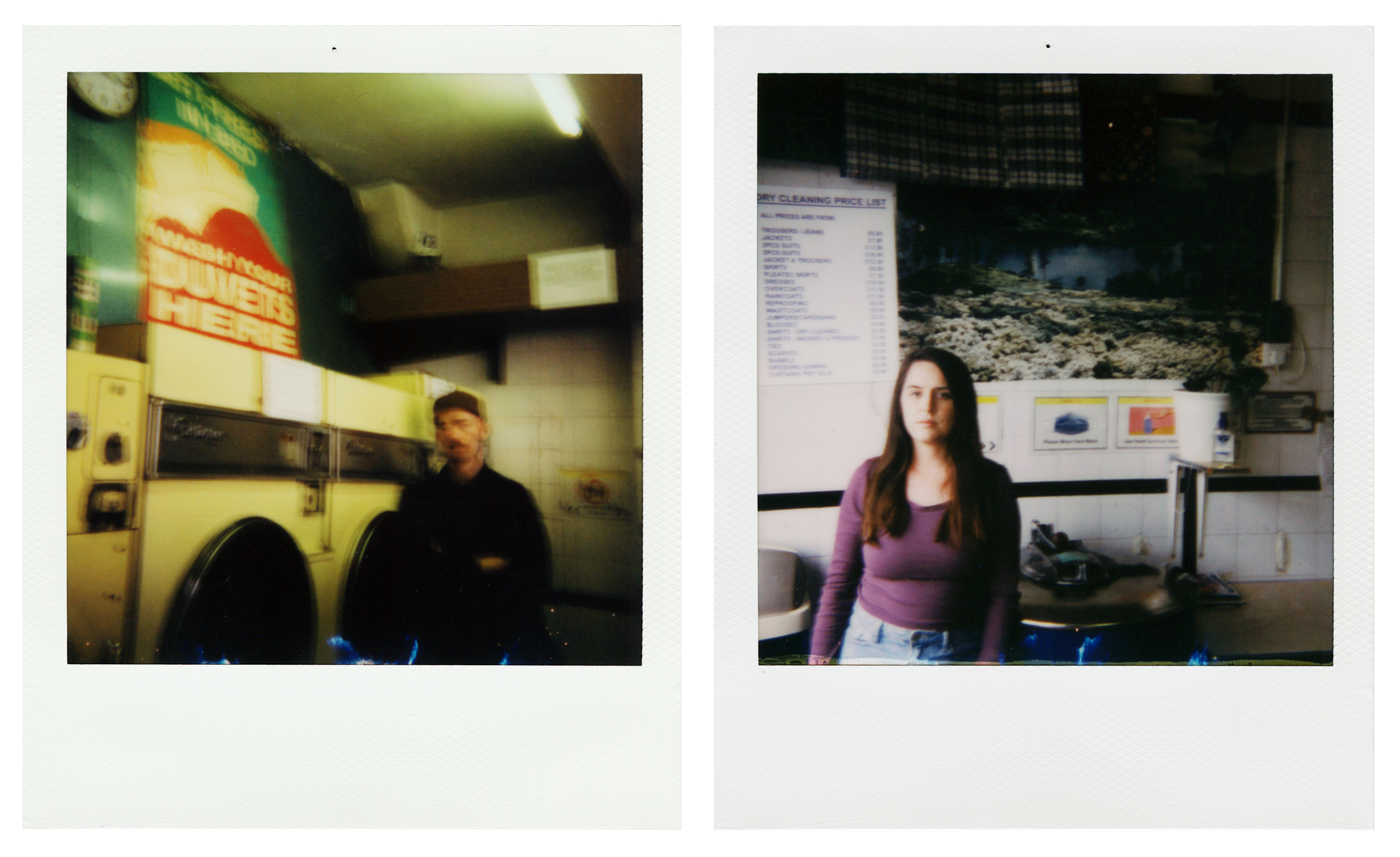
For me, the sense of liberty that TB’s residency offers is the foundation to why it deserves most of its plaudits. It’s been so refreshing to focus on practice without expectations and time pressure, I gained so much from exploring without any sense of anxiety or stress.
Sharing the space with Adele elevated the experience tenfold, allowing for a constant dialogue and reflection on both our practices. We staggered our days at the space, on reflection this actually benefitted us with further mental prep and insight before fully sharing our thoughts and aspirations to one another. Adele brought a playful impulsive energy to proceedings, something I have lost to a degree with my own work, this is likely one of the main things I wish to reintroduce to my practice in some form. Just revelling in a fully rewarding experience with our Adele, especially considering how each of our compulsions and obsessions are delicately interwoven into our work. So pleased we had this opportunity to dive in together.
Other main takeaways are a refreshed confidence with my main creative focuses, a plan of action following the completion of a 7 year project, more undying love for analogue, and some of that bountiful optimism which is to be cultivated and injected into the next career phase.
To top it all off, we were seen off with an in-kind chippy tea. This should speak volumes of the generosity and earthly nature of the Talking Birds team, a constant calm presence that made the experience that much more enjoyable. This is a golden opportunity for local artists.
By Paul Daly

Dear readers, apply for a Talking Birds residency! Rare is this kind of supported opportunity, a deep level of trust is gifted to you with respect for the artist, at its core. This treasured period of time affirmed many things – the cruciality of open space and time, the importance of dialogue with like minded souls, the joy of art in its myriad forms, the necessity to rest between heartening, powerful moments of revelation.
I went into the residency with Paul with one particular commitment in mind – to chronicle our eclectic shared interests and fast-moving insightful conversations. We play off each other in a very organic, uncontrived and playful way, and therefore decided to name our documentary blog ‘Rapide 40 Slideout’ – the title of a drain we walked over on the way to Daimler Powerhouse on our first day. Rapide 40 Slideout evolved into a collaborative, thriving breathing beast (in other words it became an obsessive tendency for me) of 122 posts in 10 days. Please explore it, if you’d like to delve inside the flying sparks of our minds, via emailing us to request link – adelemreed@yahoo.co.uk or pdalyphoto@gmail.com
Polaroid making and manipulating became a notable focus, each day of the residency creating one new image each to either tamper with or keep as is. Audio play featured heavily also and Derek lent us Janet’s father’s condenser pencil microphone which taught me that my cheap cassette player is capable of far more satisfying analogue recording than I knew possible. I read gothic art literature and local historical crime and watched a plethora of international films on Mubi. And we spoke about the key themes within our work. I found these sessions particularly fascinating, unearthing parts of our motives that perhaps go far too often unexplored, unprobed. Many motives lie in politics, religion, upbringing, and so forth. The question was: why do we do this? What are the roots of our respective compulsions?
I was surprised by the residency, for just how much it supported me, and as I first proclaimed: will be shouting about it and Talking Birds ongoing!
By Adele M Reed


Wes Finch reflects on his recent Nest Residency
I am taking two weeks, one either side of chocolate-gorging at Easter, to spend time immersed in fairy stories, folk tales, legends, and fables and work out how I might write something in response, along those lines that reach so far back into our collective past and persists into our messy and fragmented present. Maybe I can even jump into the future and look back at where we are now? Maybe that’s a little ambitious for a two-week period but it’s good to aim high, even if I just read some great stories and get a few ideas.

There are certain characters, ideas, formulas, and progressions of events that repeat themselves, in different contexts and wearing different clothes, in the stories that we share and enjoy that have been present from the beginning of storytelling and are still with us today. There are a whole set of ideas, circumstances and narratives that come to mind when someone says the name ‘Cinderella’, ‘Snow White’ or the phrases Let There Be Light! or The Chosen One. Stories are how we make sense of the world and inform how we navigate and interact with it. I’ve found thinkers and writers like Johnathan Pageua and Jordan Peterson fascinating in their unpacking of biblical stories in that regard – well what portion of it I can keep up with, anyway!
It’s a real privilege to have a room, a quiet space with wi-fi and books, with none of the distractions and obligations that come with trying to do this at home. I love being at home (which is a good thing, considering that last two years) but there are other people and animals that come in and out of rooms, people that knock the front door, guitars to be picked up, paint and pens, records, incomplete DIY jobs, things to tidy, laundry and washing up to distract and interrupt me. Here I have the luxury of time to dedicate thought and energy to something I hope I can form into a bigger project in the future.
At the moment I’m still trying to absorb stories and ideas, but I’ve written a little piece about a dragon that attacks Coventry and something about a metal detectorist finding a Golden Key…
The Nest is a fantastic place to be, amongst other creative people working in all kinds of disciplines. I’ve already bumped into a photographer and a dancer I know, passing between my room and the communal area downstairs. Now, I just need to find someone who might want to do some illustrations….
It’s now the end of the second week in my little office. I’ve met some more interesting folks working here and shared some of my writing with some, and as my time here comes to an end, I know I’m going to miss what such an environment has given me.
I’ve read more but nowhere near everything I’d want to (so many books, so little time!) and I’ve written a few more pieces. I worried I might not be able to get back into the rhythm of it after a break, but ideas have obviously been percolating and then insisting on being put on the page just as I’m trying to read another story.
The stories of Kurt Schwitter are bizarre, funny and brilliant, Katherine M Briggs’ British Folk Tales and Legends – A Sampler has been really useful, as have Lisa Schneidau’s Botanical Folk Tales along with Chainey & Winsham’s Treasury of Folklore.
It doesn’t help that Talking Birds’ small library downstairs is full of incredibly interesting and distracting titles too (I borrowed Octavia Butler’s Bloodchild and Other Stories over Easter and didn’t regret it, although I’m not sure it tied into my practice here other than highlighting some useful stuff about the practice of writing with a short contextual essay after each piece.)
There’s been some positive responses to whatever I’ve shared which has been encouraging. I wrote a retelling of an old French tale where a young lord marries a water sprite and I’ve started a retelling of the early life of Lady Godiva, when she was just called Evie.
I’ve struggled to get a foothold on something truly from the future perspective. After finding a map of the predicted flooding and redrawn coastline of the UK in 100 years’ time I really wanted to respond to that, setting a story on the Isle of Rasen where the market town of Middle Rasen now lies in Lincolnshire but that’ll have to wait to solidify a bit more.
I’ve been drawn to Fairies, or as I now know to call them The Gentry or The Good People and have a couple of pieces concerning encountering them in a more modern context.
As an over-arching theme I’ve been mulling over the idea of the ‘other’ or the ‘magical’ that features in so many stories and drawn to considering it all in a revised way; I think there is a lot to be gained from understanding and appreciating the symbolic reality of things and what they represent and manifest for us in the stories we tell and enjoy. We live in an age so dominated by scientific practice that to even deal with things like spirits and spells is at once dismissed as childish. Fantasy as a genre isn’t considered as worthy or important as say historical fiction because it involves things that have no basis in physical, manifest reality. If something can’t be observed, recorded, and quantified does it even exist?! Well, what does that say about your very own consciousness, eh…?
I think it’s probably important to remember the following, and it’s something that has been known eons before and is being slowly remembered and reconfirmed in physics labs today; what you observe to be real is very dependent on what and who is observing. Therefore, what is true might well depend a lot on you. So, just bear that in mind next time you turn the corner into your street and come face to face with a fox in the moonlight.


Co-AD Janet on why we have decided to pause a recruitment process part way through.
Last week we held interviews for the role of Nest Community Connector. We met five really interesting, amazing and unique humans, all of whom would have brought something really interesting to the role and to Talking Birds.
Continue readingAlan Van Wijgerden reflects on his Covid-interrupted Nest Residency
Plagues of locusts, biblical floods, it all seems to have happened to my Nest Residency!
It started over a year ago now when Covid was a rumour and happening mostly in China. Things went well for me and my able assistant: set, costume and camera person Jazz. But Covid spread and, with two days to go to finish the production phase of the project, it had to be halted due to the first Covid lockdown. And so the little room in Eaton House became a distant memory.
Over a year later, with Talking Birds’ move to Radford – and Covid (which as everyone knows was only going to last a few months) finally receding – we restarted. I re-learned a forgotten script, It’s relevance around dementia brought into much sharper focus by family events. Personally I’m scared stiff of dementia and my sister says she doesn’t want to get old. Dementia is slow, insidious and cruel.
But Plastic Is My Home also re-visits some of the issues of a now archive film of mine called The All Electric Home which, if I may say, predicted the impact of the likes of Facebook. And Facebook feels like it’s been with us forever now. But in reality it’s so recent.
Talking Birds were grand throughout, providing us with facilities. And special thanks must go to Janet, who held the faith through troubled times and enabled a production I wouldn’t ordinarily have had the resources to do. Jazz was a real trooper too. These residencies are well worth applying for. With a little bit of dosh which is always useful.
Our set came courtesy of that cornucopia of all things cheap and cheerful CROW. (Community Recycling Of Waste) Perhaps for me the hardest part, paradoxically, was memorizing my own script. Such lines as “AMERICA IS ON LINE!!!” and a short ode to the old red phone box.
There look to be opportunities with City Of Culture to show the piece now, which didn’t exist pre-pandemic. Just waiting to do the edit now…

Future Ecologies – Talking Birds/Ludic Rooms Collaborative Nest Residencies
Ludic Rooms has teamed up with Talking Birds to create two Nest Residency opportunities for artists who live in the CV1-6 postcode to take time to explore ‘Future Ecologies’ around Coventry Canal. Nest Residencies have been running since 2019 and prioritise D/deaf, disabled, neurodivergent and/or locally-based artists, supporting them to experiment with one of those ‘What if…?’ ideas.
This call out is intended to identify artists living within the CV1-6 postcode who are interested in:
– exploring the themes of Future Ecologies along the Coventry Canal;
– engaging with digital technologies (whether or not this is already part of their practice);
– collaborating with Ludic Rooms and Talking Birds;
– exploring sustainable or regenerative working practices;
and who would benefit from a supported studio residency within the creative community at The Nest.
The Nest Future Ecologies residencies are supported by by Arts Council England Project Grants, Coventry City Council Project Grants and the City of Culture Green Futures Programme.
Ludic Rooms is based at Coventry Canal Basin and is currently focussing on life by water (in the most landlocked city in the country) and ideas for folk traditions of the future. These are being developed through its major arts and technology programme called Random String, as well as an associated project, Landlocked, where Juneau Projects are working with local residents that overlook the water to imagine future wildlife in the canal.
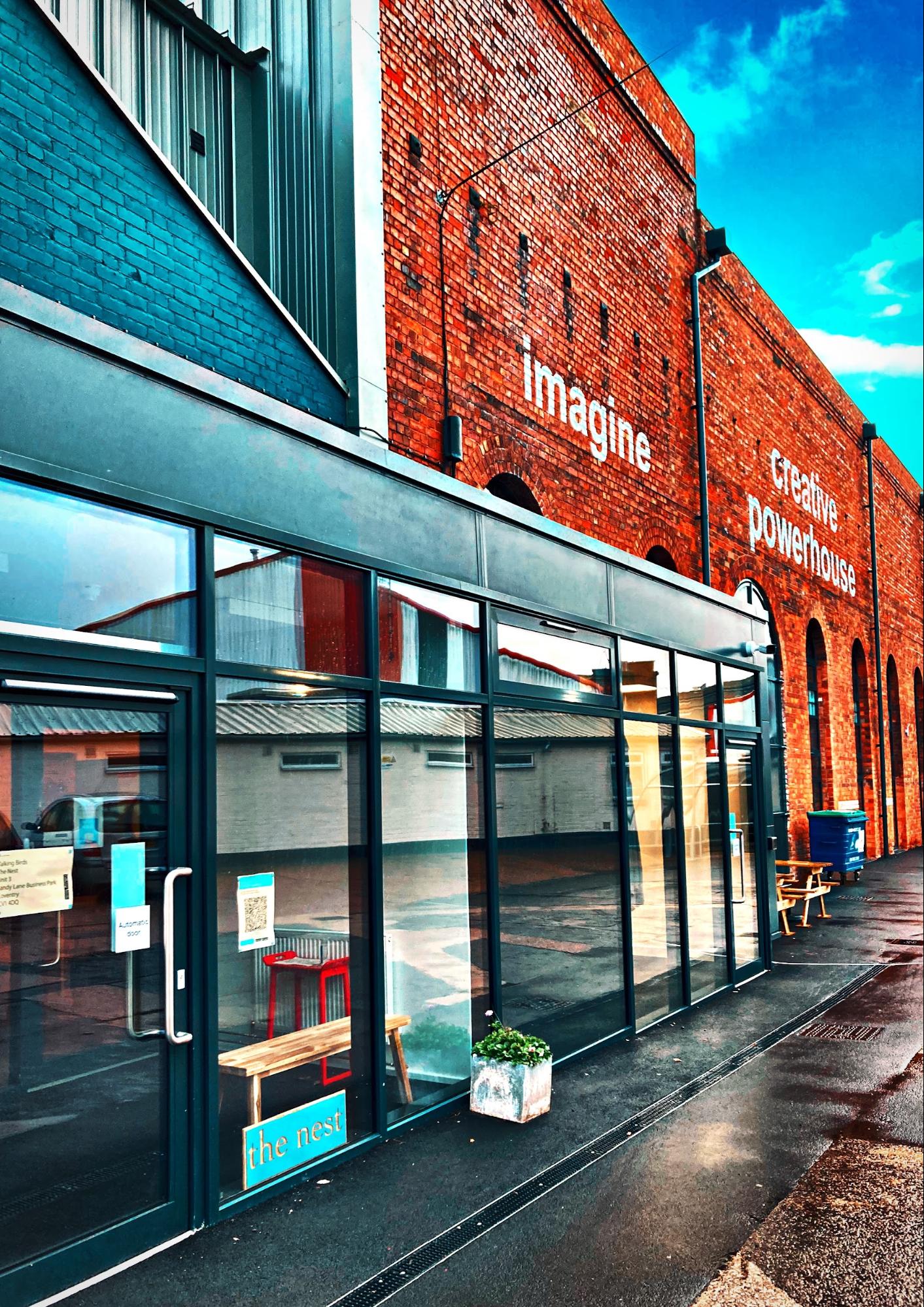
The Nest is a brand new shared making space created by Talking Birds as a place to grow an inclusive, climate-conscious creative community which supports and enables disabled and local artists, giving them space to explore ideas and create new work. The Nest is on the Coventry Canal, adjacent to the Daimler Powerhouse, and is a 5 minute walk up the towpath from Ludic Rooms.
These Ludic Rooms/Talking Birds Nest Residency opportunities aim to play with the ideas and connections of the waterway and an artistic support structure – through the idea of ‘Future Ecologies’. The residencies are available across disciplines but should in some way engage with digital technologies. Ludic Rooms can support this, if you have ideas but limited know how.
The successful artist will be provided with an accessible work space at The Nest where they will benefit from mentoring, constructive critical input and production support from the two partner organisations. The successful artist will also receive:
Schedule
For these Future Ecologies Nest Residencies, the deadline for applications is 22nd July 2021. We would ideally like the first residency to start as soon as possible. Nest Residencies aim to be responsive to the needs of the artist and the idea they are exploring, so the exact timing of the residency will be arranged with, and to suit, the artist.
There are two opportunities:
It would be useful if you could indicate in your application if you have a preference on timescale.
Sharing the Work and/or community engagement opportunities
There are a number of potential sharing, testing and presenting opportunities between July and November (see below) which is why we have structured the opportunities in this way.
Nest artists can potentially present works in progress or engage with the public in developing their work during Friday sessions at Ludic Rooms’ Roam + Dwell public events (every Friday through July and August); August Bank Holiday weekend (27-29 August); and finally at Random String Festival 11-14 November.
Who can apply for the Nest Future Ecologies residency programme?
Any Coventry-based artist or small company with a CV1-6 postcode, with priority given to d/Deaf or disabled or neurodivergent artists.
How to apply
Either complete the online application form here
Or you can submit your application in video or audio format to cover the questions below
You can include links to your website, Youtube, Vimeo or Instagram accounts
You can upload up to three images of your work with the form if you have a google account, or email them to anne@ludicrooms.com
An easy read version of this information is available here.

 Words from the Birds