melissandre varin reflects on their recent Nest Residency
i had my third residency with Talking Birds between the 7th and 18th of March – in-between spaces.
i had access to “Odyssey” studio space at the Nest, received £1000 financial support, and found comfort (once again) in a warm hug, a half-pronounced joke, an overdue catch up and a permission to be – me.
i ended up inhabiting the studio offered to me about 4-5 days across a 2 weeks residency, i never felt like i was feeling the space as i needed to. Was i avoiding the spaces i intended to investigate with this project? i guess that this question will stay in suspension. It is only at the last moment, last day of residency that i started to connect threads, bits and pieces of me in regards to this inavouée (undisclosed) feeling.
Where i needed to be was at linoleum dreams parked on the parking of the Nest.
But – i did not feel ready, in all the complexity of what being ready to re-visit an artwork i sweated in, dreamt in, loved in – could (have) mean(t).
i felt like avoiding, and accepting the fact that i came to this residency depleted for multiple reasons that i will keep silent in typed words but could expand on if you ever see me in the detour of a street, gallery, theatre.
– depleted – it is when i am most vulnerable to external forces. i felt the pressure to produce for the first time in a while at the beginning of the residency. But – returned to myself spiritually guided by (non)living ancestors. i paused on the fact, the need to have such pockets, portals, moments to come depleted, stay depleted – feel its wind of change and its static corners – without pressure to ‘sort it/myself out’. As an artist with mood swings, chronic depression, and care responsibilities – i never paused on the thought that maybe feeling whatever i am feeling, including depleted, did not have to be a feeling, space i needed to unknot but could – be – with/in.
Without performing Black joy, without performing Black queer trauma, without performing but being and trusting the fact that what was (not) happening was ok.
Sym and mel inside linoleum dreams, parked on the parking of the Daimler Power House, kindly supported by Talking Birds
i had pleasure though! Surrounded by beings i love and did not see in a while, taking time to share a cuppa, nurturing friendships learning about how/where Black queer artist friends grew up in in Dakar, Birmingham, Nairobi… working at Odyssey studio with a friend part of B.O.O.K (Building Our Own Knoweldge) working group, inspired by friend and collaborator Samiir Saunders i wrote the first version of my access rider (happy to share with anyone interested) – i got to know about myself and share it to the world.
Ok now that i am starting to list things it actually sounds like it was 2 full wholesome weeks. But i want to highlight the reality that these were interrupted with times when i had to cancel my days as i felt the need to stay still – i must admit that i spent a whole day watching Love Is Blind season 1 and 2 as well (learnt so much!)… . Also learnt a lot navigating the British Arts Show in Wolverhampton as part of a day trip investigating this aching research question: how do we create loving environments? (perspectives from Black queer artworkers who grew up on the African continent and in the EU/UK-based diaspora) –
this residency has been transformative – quite in line with most of Talking Birds’ work. as i am ending this annotation on the residency, i would like to share my love for the being making this organisation – a warm womb i (re)turn to while excited, on a high, depleted, lost ….-
Talking Birds, and its residencies programme is an essential example of what mothering could mean when it comes to the arts sector.
More on this slow-birth-ing creature i am working on or that is working within me in due course.
here is a snippet of a tentacle of this thingy that works and mixes my within for almost a year:
i would like to have conversations with members of my chosen family (mainly (Black) queer artworkers) this time and compile the transcripts of them – both work will inform a multi-language performance and multi-sensory installation i feel the impulse to make. With this project that lives in my heart i have the desire to investigate how senses of aesthetics, of what is art and what is not – are formed and informed by the built environment/ interior design/ furniture/ type of flooring / wall-paper and so on – we grew up in? How can this inform the creation of loving environments in the arts (too)? How can we create loving environments? Dissecting these questions by looking back at our immediate roots and acknowledging the power of ‘things’ in contributing in making us who we are now – i am currently thinking of expanding my understanding of my vibrant materialist approach.
As a dear being sent me on a low a couple of months ago: Octavia E Butler’s assertion in Parable of the Talents, “To survive let the past teach us”
These words will definitely find home on my skin through ink asap.
Indira Lakshmi reflects on her recent Nest Residency
Y E A H ! So Excited!
I was in Delhi, sitting next to my husband in a bar called ‘Dr Zombie’ decorated in neon green and black with plastic skeletons hanging from the celling. We decided to go out, things are opening up again in the city after the second dreadful wave of Covid, which seems to be rapidly fading from collective memory. I opened my emails and found out that I’d been selected for the Future Ecologies Nest residency. I was totally ecstatic to be able to have been offered space and time to develop my practice, and was eager to get started.
—-
September 5th. Back in England. Mixed feelings about being back. L o n e l y … u n c e r t a i n t y lovely weather 🙂 w=i=l=d=p=r=i=m=r=o=s=e sittiNGoN**thegrass
—-
15th September – 10am – canal trip – Dom Breadmore’s boat.
It takes a few minutes to get used to the motions of the boat, the sensation of buoyancy is something I’ve not felt in years. The last time I was on a boat was in Orissa, December 2017, Chilika lake, looking at gangetic dolphins. Being on the canal felt like Coventry’s secret mirror world, where everything moves in slow motion, watching the flora of the banks drift by, and the soft motions of the water felt surreal and healing.
C O C O N U T S –
There’s objects in the water that look like coconuts. I think of when offerings are given to the river Ganges, to show gratitude for sustaining life. I start remembering my grandma and the ritual when we immersed her ashes in Stratford upon Avon, because the river Avon eventually reaches the sea, just like the Ganges.
Dom explained that there’s a Hindu temple which backs onto the canal, and the coconuts are indeed ritual offerings. Something about the coconuts stuck in my mind. I feel they’re poignant metaphors for cultural displacement. I started to think about the diverse histories of migration to the city. My own family migrated to Coventry from Punjab in 1958 following the post-war call out for workers from the commonwealth.
The canal has a rich history. It was once lined with numerous factories and the homes of workers. A fascinating range of objects have been found in there including old machinery parts and even a grenade! Then there are these seemingly random, floating coconuts. They’re such loaded objects. They contain the energy of hopes, dreams, pleas, hundreds of prayers… They make me think of cultural displacement, not only within the Indian diaspora community I grew up in, but also within myself as I’ve navigated through both England and India. I’m a floating person, not truly belonging to either culture, that’s also a gift.
I started thinking about interactivity, as I knew my work would be potentially displayed physically at Random String Festival. I’d been thinking about passive participation in art spaces vs active participation, where the viewer considers the traces they leave behind in a space as well as what they take away. I’m also interested in technology bringing people together, physically rather than remotely in a metaverse dystopia, and how we create environments where physical exploration and movement can take place.
I constantly think about the body in space. How does the body inhabit the environment, how does the way we move/ position ourselves effect perception and vice versa.
I had been experimenting with the software Pure Data for a while, an open source visual programming environment. In Delhi I’d visited an exhibition where an artist had used Reactivision, an open source, cross-platform computer vision framework, to track markers to the effect of the viewer moving around and triggering a print command. I instinctively knew this was something I had to delve into, though initially I wasn’t sure how I’d use it.
R E A C T I V I S I O N == :s ….. 🙂 …… ❤
There was some refurbishment going on upstairs at The Nest, so I couldn’t access the studio. Frances helped me to print out sheets of fiducial markers, and I sat in the downstairs communal space and got to work.
I learnt the initial basics of programming during my MA in Visual Arts Practice at Ambedkar University in New Delhi, then carried on teaching myself. I figured out the basics with Reactivision fairly quickly, but getting beyond the basics took hours of sitting transfixed at my laptop.
One use of Reactivision is to track movement of fiducial markers. You move a fiducial marker – Reactivision tracks the coordinates and position – events are triggered depending on how you write the program. My process was – Reactivision feeds the X and Y coordinates into Pure Data, with that data you can assign certain events to certain markers, or to the X and Y coordinates of the markers. Initially I routed out the data to a digital synthesizer and started experimenting.
I wanted to find out what life was like living on the canal, in a boat. I remember when I lived in Leicester, my ex’s dad worked on a marina, I had some friends that lived in a boat too. I remembered bits of conversations from back then about what it was like to live on the water, the reasons why people wanted to get away from city life.
Frances, the community connector at Talking Birds, connected me with a friend of her husband named Marc Denny. Marc lives on a boat moored up in Trinity Marina, Hinkley. We drove up to meet Marc, who had gathered some of his friends together who also lived on boats there. We sat in a pub nearby and I recorded a conversation between us.
It was brilliant to speak to them, I wish I could have gone back and had individual recorded chats with them all but there wasn’t enough time. The main things I took away were that there was a greater sense of community, the pace of life was different away from the city/life on land, you had to be more mindful about your resources i.e water and heat…
I caught up with some friends who had lived on canal boats. They said life was hard in the winter but equally beautiful. Sensorially it’s a totally different way of life.
O C T O B E R 7th </3
Bad News… </3… S-l-o-w-f-u-n-c-t-i-o-n-i-n-g | h-y-p-e-r-p-r-o-d-u-c-t-i-v-i-t-y — Taking breaks to cry in all the video installations at Coventry Biennial.
S4DN3*ss s l o w l y thenfast ( ͡❛ ﹏ ͡❛) l a g
C A N A L sOng
I joined Dom and Anne from Ludic rooms for a trip down the canal, to record using a hydrophone (underwater microphone). The results were interesting but not what I expected. All the hydrophone recordings sounded like a motorbike…
I applied some reverb and added layers of guitar and vocals over the top.
I fragmented the song into separate tracks and inserted them into the Pure Data patch I was working on. I developed the patch enough to be able to use it for a table-top interactive soundscape.
T A B L E – T O P (( OMG Kill me now :’) )) C R E A T I O N H U R D L E LONGTIME
I researched different ways that people had used Reactivision and marker tracking with interactivity, and decided I was going to make a rear-projected table-top interface where the markers could be read from underneath. This was the plan:
Here’s an example of the moveable objects with fiducial markers underneath. I decided to use objects found in the canal which are anomalies; coconuts, litter, empty beer cans…
I borrowed a large piece of perspex from Ludic Rooms and initially began working with the perspex balanced on two tables. I began working with rear projection, which is one of the most frustrating things I’ve ever done…
s l o w l y thenfast ( ͡❛ ﹏ ͡❛) l a g
The code was now working well, but getting the hardware and physical elements to work was much more challenging. This is really what took up the most of my time, but I’m really, really glad to have had this time of trial and error. It’s been an invaluable learning process. I eventually figured things out, and moving forward I have this know-how in my artistic tool kit – I’m already planning the next development of this work.
My friend Tom Edwards helped me with making a wooden structure for the perspex, which we assembled at Random String Festival.
I wish I had more time to make things more polished. I think I utilised the time as well as I could, and ended up with a working prototype for the future. If I could do this again I’d do it with floating objects on water, in a shallow tank…
I realise that when you finally get over the technical hurdles your mind opens up to more possibilities, rather than being obsessed with overcoming tech difficulties. I heard a phrase in November that sticks with me ‘rationally working with what you have reveals hidden treasures’. I’m trying to do that. I’m not a software engineer or a trained musician, until now I’ve intuitively worked with the skills I’ve picked up at different points in life, and this residency has given me the time and space to develop my skills with programming. A new window has opened for me. Though I used found objects for the work at Random String, I know that now I can integrate my skills as a sculptor into a touch interactive framework, and I’m thinking along new lines with interactivity, games and experiences.
14th November, 2021, Random String Festival 😀
The display at Random String Festival was a really valuable experience. The work was interacted with a lot by people of all ages, it was a really positive atmosphere. The rear projection wasn’t perfect, my positioning of the mirrors is something I need to work on in the future, as well as refining the code and other hardware/physical elements.
One of the great things about the display was the constant interaction with the work, people were engaging and actively participating in the experience – people were having fun with it, having a laugh with their friends, children were fascinated with it…
I’m thinking about the balance between something which is a spectacle and still looks inviting enough to physically engage with.
I’m working on the next rendition of this table top interface for a gig my friend George and I are organising in March with our project Human Oils. I’m trying to create a game, where there are more obvious rules, more clearly defined ways of moving things around. I’m thinking noughts and crosses with different objects, just as an experiment.
(Coventry City of Culture video, me talking about the work)
I want to sincerely thank everyone at Talking Birds and Ludic Rooms for their support and for the invaluable work they do. This has been an incredible and valuable experience which I feel has really propelled me forward with my practice. ❤ 🙂
Let me take you back through time – to the evening of 31st October, 2020. Picture the scene: I’m working night shift, and the news comes through on the radio. The country is, once again, going into lockdown, which means I won’t be able to come into work for the next month or so. This was obviously not a good thing for many reasons, and yet I couldn’t help but be relieved at the idea of having several weeks of time at home to do whatever I wanted. Because an idea I’d been playing with had latched onto my brain, and it wasn’t going to let me go until I got it out.
That idea? An electronic concept album called Once Upon Two Times, which I did end up completing over the November lockdown. However, the idea did not let me go. In fact, if anything, it only grew after I completed the album, gradually getting wildly out of hand. Within a few months, I decided that the story had outgrown the original album, and that the format was actually constricting it – it needed to be something bigger, something different.
So, naturally, I decided that I needed to rewrite the entire thing as a stage musical.
This is no simple feat, as I’m sure you can imagine. I’ve never written a script before, but I do have a lot of determination, and once an idea has latched onto me, I find it very difficult to shake. In addition to that, this project very quickly became something that was important to me – as it grew, I realised that the story wasn’t just about what it seemed on the surface – about Time itself – but also something much more personal. It had become a story that wanted to be told. And even though I was very aware I was in well over my head, I was going to do something about telling it.
The most difficult thing, ironically, was time. Or, rather, finding the time to actually sit down and write. As a creative, I can struggle to settle sometimes, flitting around between projects, unless I have a dedicated time and space to focus my attention entirely on one thing. And so, when a good friend of mine suggested applying for an artist residency with Talking Birds, I was immediately excited. A designated time and space to work on this project? And be able to talk to people who are more experienced in performing arts and get advice? It sounded like just what I needed, the first step towards turning this idea into something tangible and real – and so, when my application was successful, I was absolutely ecstatic.
The residency was definitely a first for me – I’ve never experienced anything quite like it. For so long, I’ve been used to working on creative projects in between the things I’m supposed to be doing – keeping these things I enjoy contained within moments of procrastination or snatched seconds of free time. And so, to have my own dedicated space – and a lovely one, at that – where I was not only allowed to work on this project the whole time, but in fact that was what I was specifically there to do…it was almost overwhelming! I was extremely worried I was going to end up floundering or hitting a brick wall, and ending up wasting the whole two weeks. For my very first day, I came up with a plan to try and stave this off – I was going to map out the entire musical, on the wall, with post-it notes. If I was going to have access to a blank wall that was big enough, then I was going to use it! But it was also something visual and practical, which meant that I could step back and see the bigger picture and spot the gaps that needed to be filled. This ended up being incredibly helpful for letting the project solidify into something tangible – because suddenly this wasn’t just something in my head. It was something I could see and touch. That other people could see and touch.
I was off to a good start – and for the first few days, I spent hours poring over the basic elements of the musical. I took the story apart at a base level, figuring out what it was trying to say. It was like archaeology – this thing already existed, and it was up to me to unearth it. I’d just needed the time to scrape away at it until it became clear, and this residency was finally giving me that time. From there, I was able to build on it. I discovered I could break down the main message of the story into four key themes – Identity, Scars, Stories and Choices – which was a really valuable step to take, because then it made me focus on those themes in pretty much everything I did from that point, weaving it into the songs and the dialogue, and even the characterisation. It gave the story a much more solid grounding and made it feel a lot more structured, as well as really helping me flesh it out. The gaps that I had seen on my post-it wall were starting to be disappear. New ideas were coming easily – the whole thing just kept growing. Now that I had defined its edges, the rest was starting to fill itself in.
But then, about part way through the first week, I hit a snag. I wasn’t sure where to go next. I knew I needed to start on the script, but I didn’t know how to start, or whether I was ready. And there was also this strange pressure that I was putting on myself – a sense that because I was here to work on this project, I needed to be working all the time. Each day, I felt, I needed to produce something. To have evidence of the project moving forward, to prove that I was constantly creating. That I couldn’t just sit and ponder things – even though, on some level, I knew that I needed to allow things to settle in my mind.
Luckily, something came to my aid – one of the lovely things about working at Talking Birds is that everyone is encouraged to have lunch at around about the same time, in a shared communal space. It’s a lovely opportunity to talk about what people are working on and express creative woes. In particular, it was great for me since another artist had begun her residency at the same time as me – another autistic artist who, funnily enough, was also working on a project relating to time. We ended up talking a lot over lunch, and poking our heads into each other’s studio spaces to chat for a little while and get a sense of what the other was doing, even though our art forms were very different. We discovered that we were both feeling that same pressure on ourselves – that we constantly had to be creating, constantly working. That there was a sense of time running out, and that if we weren’t using every second of it, then we were doing something wrong. Together, we came to realise that maybe we needed to think about it differently – that this residency, this time, was for us to use as we needed to, how we liked. And if we needed to pause, to stop, to let things figure themselves out for a little while…then that was completely fine. It was part of the process. And once I’d realised that – once I let myself take my foot off the gas, and didn’t pressure myself in the same way – everything began to flow again.
Chatting with more experienced artists over lunch also helped a lot in figuring out how to approach the thing I was most worried about – the script itself. It was frustrating, because by this point, I knew exactly what the story needed to do, and what needed to happen – I had all the post-it notes to prove it! – and I just needed to get it written down. But I didn’t know where to start. I got to the point where I knew I needed to begin working on it, or I never would. I expressed this over lunch, and got a lot of encouragement to start in a place where I felt more confident – that I didn’t need to do anything in a logical or sensible order, just do something that would get me started, and go from there. I ended up deciding to try writing a key scene in prose first, before converting it into a script. This ended up working really well to get me started, and then as I transferred the scene over, I realised that I was changing things as I worked, making it fit the style of a script better. From there, I was able to continue the rest of the scene writing it straight into a script, and the whole thing began to come into its own. I realised what I needed and how I needed to approach it, which enabled me to go all the way back to the beginning and start from the top. I ended up writing out little notes of all the key points of the story – a tip from the composer next door, who was doing the same to work out his new piece – and started working through them one by one. This really helped focus myself because it allowed me to see where I was going – but, at the same time, it was flexible too, because I could switch the order of the key points around as and when I needed.
The residency was also such a brilliant source of inspiration – I suddenly found myself having to explain this strange and weird project to other people! And it was so fascinating to see other people’s responses to it, especially as other artists, which inspired me in turn. I started asking myself questions I hadn’t thought about before – thinking about how the story might look on a stage, and how you could be creative with that in ways I hadn’t considered. It made me think about how costumes and set could be used to tell the story and show the central themes just as much as the words and the music. I knew that, at this point, I didn’t need to know all the fine details about how this thing might eventually look – all those decisions will be made by directors and designers one day, I hope! But it did affect how I approached writing the scenes, changing how I thought about how the story could be told. And, as a result, it made the work I did all the richer.
By the end of the residency, I had completed the first half of Act One – about a quarter of the entire thing. I consider this a huge achievement, much better than I had dared to hope when starting. I’d been so worried that I would be too scared to actually sit down and write – that I would end up wasting time or staring at the walls. But, after learning that sometimes you need to stare at those walls a little while, I managed to put pen to paper (or, rather, fingertips to keys) and start to bring this story to life. To begin the process of turning it into something that, hopefully, will mean as much to other people as it does to me.
A dedicated studio space is a truly wonderful thing, perilously so … demanding inordinate ounceage of self-discipline, for wont of losing all sense of time, space and ‘other’. Fortunately there is a clock on the wall in Helloland with a fully operational acid battery. Life exudes paradox; compromises, contradictions, imperfections … there’s always room for error, improvement, mistake-making, potential for allowance of some slack. Everything remains where you left it in the dedicated studio space, pretty much just as your yesterdaySelf thought you left it. I’d forgotten this was even possible. The turnover on our dining room table revolves around the minute and second hand.
Like the of confines of A1 cartridge, facing-off the resistant bounce of board and easel, brittle charcoal, graphite, chalk stick and Stop-Clock of the lifedrawing room; anything is possible within certain parameters. Parameters to push against, adhere to, depend upon, agree, disagree, debate, request, contest, accept or change. The potential to perform, under pressure, against the clock, in the moment. Sometimes, nothing worth keeping. Always something to build on – to take forward. A dedicated studio space offers back-to-back moments (a full packet, the whole cake …). How to set one’s own internal parameters when you’re adrift, casting off ‘in the space’ ?
Thankfully, there is always someone elsewhere, ready to pull you out (ready or not) – School Run usually (“time at the bar”).
What an utterly joyous opportunity.
The last time I experienced creative practice within a dedicated studio space was as Fine Art undergraduate sharing messy spaces last millennium, in the early nineteen nineties (before the rise of Edit/Undo). The liberation of free construction in a wide open space had been a distant memory. A Room of One’s Own, indeed, even for the short term, resonates deeply within the psyche; worthy becomes the practice, practitioner and the work.
Now changed with responsibilities, technologies and disabilities involving long term mobility issues, hearing issues and more recently, permanent loss of central vision in what was a dominant eye. Initially truly debilitating for a lifetime photographer and visual artist. Not so for the lifelong experiential learner and stubborn optimist experiencing first-hand the wonders of neuro-plasticity, renegotiating spatial depth and relational proximity.
For the Nest Future Ecologies residency I set out to explore something of the psychology of behaviour … through the medium of interactive art; the potential for change [within ever-pressing Climate Change]. I planned to develop a tug, push-pull mechanism that might demonstrate modes of action; lone, collective and sustained interaction with audio-visual triggers and responses. I wanted all of this to be powered by dynamo, demonstrably off-grid (turns out Coldplay had the same idea, recruiting cyclists to power ostentatious gigs). I had it all mapped out. I knew what I wanted to achieve. I needed to gather a team of skilled engineers and soldering experts. All I had to do was bring them onboard and start experimenting as fast as possible, in this dedicated space. I could work on certain parts myself in the meantime, and start bringing it all together.
Things do indeed take longer than you first think, even though you already know that. I set about ‘cutting back’, editing; the process of removal, decluttering, identifying achievable chunks … reducing on a slow simmer, getting closer to the essence of it. Equally, within a day I started achieving more than even I could have listed on both sides of one envelope. There were also days of unprecedented setbacks, including opening an errant email by mistake and consequently losing access to a decade of emails and having to spend several days on the phone troubleshooting to get back to near ground zero. How many steps, which way?
I decided to slow down. As method in itself. I slowed down.
I looked, observing what I had, what was going on … and I listened to the work (I could see it, spread about me, pinned aloft, reshuffled, handwritten notes, building/ collating narratives, pegged to a line, rearranged, reviewed, removed decisively – having lived with it a while, having stood back – a change of perspective, being able to return to it after a break). That is when I started to play (and really enjoy discovering) – when I caught myself chastising myself for not keeping to what I’d set out to do on today’s Studio Diary entry – and realised over the following weeks, that those side-tracks were the deeper explorations of what was stirring within these ideas – they were already present, within – they are the sketches that stuck – the new dawnings of connection-making – that freely flowed when I ‘let go’ – that I presented – that formed significant particles in the unfolding narrative told.
I continue to observe how I operate and look forward to returning to the dedicated space.
One more thing … I am overwhelmed by the breadth and depth of public engagement with the work in progress that I shared for Random String; 2021. I thought I had printed (sustainably) a surplus of short, open questions;
What do you think might be happening in each of the 3 parts of the video? What do they mean to you?
How does the video make you feel? What feelings or thoughts does it bring to mind?
What do you think should or might happen to get from one part to the next (to move from one phase or state to the next)?
What else could happen?
Every sheet returned, spilling with glorious handwriting; the creative imagination of so many different people who each stayed the full 5 minutes and absorbed the 3 parts – some longer, engaging in the repeat, the loop, the cycle – the spoken and unspoken shared conversation.
The work takes on a life of its own when others see meaning and make their own connections; it begins to make ripples. Moving beyond the self of artist practitioner, if successful, art resonates with others. My task now is to harness what resonates and steer with integrity, more clearly able to actively listen to the work itself, in relation, with others.
A genuine, humble “thank you” to Talking Birds, Ludic Rooms, Arts Council England, the City of Culture Trust and all supporting partnerships in providing generous opportunity for artists in Coventry to develop creative practice in a dedicated studio space with opportunities for conversation, professional development, social connection as well as paid opportunity to exhibit work in progress, without pressure.
Talking Birds’ Nest Residencies are open to any Midlands-based solo or small company of artists (in pretty much any artistic discipline) and will prioritise d/Deaf, disabled and/or neurodivergent artists that apply. – find out more, including how to apply, here.
I came to the Nest residency with an artistic practice that has been through a lot to find its current medium. I feel my art has always been harnessed around a need to decode and observe, flip and reflect back a version of life’s archetypal pains through my own lens in an attempt to reckon with it. However, it wasn’t until I ‘found’ more abstract visual forms that I felt I had the means to express the experiences that I couldn’t translate into a linear narrative.
I was no longer aiming for a recognisable form to anyone but myself. Sensory | Emotional | Abstraction. I was starting to sit with the pain and joys of a late-in-life diagnosis of ASD and slowly unpacking the years of seemingly anomalous perception now rooted in a context that made sense. It was around this time I became acutely aware of how disconnected from nature I had become during my landlocked years in Coventry, and began to make a concerted effort to return to what had been my home from home in my childhood of the great outdoors.
I was finding a lot of peace and therapeutic benefits in nature bathing and beginning to form loose notions of taking natural pigments found during such moments in nature, as sort of talismans, and using them to process some of the emotions I’m trying to put on canvas. Alongside this I was becoming increasingly concerned by the sustainability of my painting process and began to toy with incorporating waste such as canvas offcuts and old paint scrapings from my palette into textures on new works.
As a result I craved time and space to really play with those ideas free from the usual financial restraints that come with maintaining an artistic practice that is still developing. I applied for a Nest residency proposing to experiment with recycling painting waste into new works and using these textures to really explore mark making and layering. Talking Birds were kind enough to provide me some time, space and conversation.
Initially I hit the residency raring, with all the substanceless gusto a naive artist has when entering a new realm. Here I was, with all this time and space to make my own, everything I had dreamed of. I dragged my wares into the studio I’d been provided and marvelled at the rich bright yellow feature wall that would surely act as creative sunshine and nourish my journey from seedling to fully bloomed sunflower.
Time to paint, time to take the 30-odd years of energy that has built up and do something with it. Time to embody the whirlwind of executive functioning that rules my life and bend it to my will.
I could certainly feel the whirlwind. And I was there to paint it. So why couldn’t I tap into it? The wind is an unsettled home from home that I’m all too used to by now, it should be so easy to just open the door. But the door only gave me brief glimpses and hints of the homely scents that wafted through its crack.
So I kept moving. For that is what I’ve always done. Just keep moving. In fact I moved so much during those first few days I don’t think I even realised what I was doing, that I had slipped back into this autopilot, desperately trying to convince myself I was busy, productive, and therefore worthy of this time.
Cognitively I had grasped that this was ‘free time’, mine to use as I wished, but the body remembers. And mine remembered watchful eyes of corporate cultures checking I was on-task. So what to do when the task was to de-task, to move away from blindly running towards an end point and see what I found along the way?
At home, in my spare-room-turned-studio, I had created a little sanctuary in which I could stop, unmask, perfectly cut off from the world and any interaction. The whirlwind and I were a lone duo, conversing back and forth on perfectly squared canvas. With no other bodies to consider in our cosmos all I could do was feel that feeling.
How was I going to do that here? In a new space, that initially seemed so novel to me that it had its own time too. Faster than I’ve experienced. How was I going to work a shared environment back into my practice after having shied away from it for so long? In an attempt to give myself time and space, perhaps I had created a little too much of it.
Two weeks seemed to pass in a singular cycle, one big dawning and sundown. Yet there were pockets of pools in the sandstorm.
I realised I was still aiming for some final image, concept, a palatable and presentable piece.
I was starting to find the patience and tenderness to let myself sit in these pools, striking a balance between thinking about my next move and not thinking too much.
IT WAS OKAY TO STOP.
THE MOST PRODUCTIVE THING I DID WAS ‘NOTHING’.
I actually looked at the work. Not to take photos, not to decide what my next mark would be. To see and hear what happened in the spaces I didn’t try to fill. I allowed myself time to be non-verbal. If a response came I may note it down in mark form, but no pressure.
Sometimes the work was best done in my head, rather than on the canvas.
I’d expected to really spend my time mark making, layering washes and immersed in the painting process like I do when I’m working from home.
I found some cool new ways to make use of canvas offcuts and old dried paint that would otherwise go to waste. I had some great conversations with my peers about inviting others to explore non-verbal and diverse communication in publicly engaged performances. But I found that those activities just facilitated the real lesson, which was in being able to come to my practice from a place of experimentation and play, responding to changes as they occur, organic improvisation, a willingness and readiness to fail, and deal with the sensations should that happen.
Taking my eye away from a final focal point and realigning it to what is in front of me, is when I will see most clearly.
Unfettered Time | 66 x 86 cm | Mixed media, acrylic, watercolour pen, canvas offcuts, waste paint, Coventry earth pigment
I want to develop this time and space further, and perhaps one day invite others to share that time and space with me, creating a ‘conversation’ around finding other ways of being, sitting and sharing our inner experiences together.
Jazz Moreton and Alan Van Wijgerden reflect on their Green Futures supported Nest Residency for Random String
Alan Van Wijgerden and I embarked upon our Nest Residency in partnership with LudicRooms with ambitions to make better work than we have seen shown in the city.
Quickly learning that a relatively small grant couldn’t buy us the time required to take over the world, we focussed instead on experimentation with Ludic Rooms’ 360 degree camera. Due to the fact that our residency considered the Coventry Canal’s ecosphere in relation to the concrete and cars of the city, we intrepidly created opportunities to explore the canal and its environs on foot and on water, through the dual lenses of the above camera. Taking aural readings of the surrounding habitat’s soundscape, we created a plethora of footage, from seagulls that have flown all this way inland to feast on thrown-away takeaways and general detritus to a narrowboater and his squeezebox.
Our palatial studio in Talking Birds’ Nest was the scene of much heated discussion. Alan spent much time being told to “shush” by Jazz and retreating to the “naughty chair” (which was very comfortable). We thought that we had wasted the first week, after which we refocussed with an introduction to the 360 degree camera, but thankfully, Astrid Gilberto on Alan’s old HiFi- recovered from the corner of his garage- was very soothing and enabled us to rekindle our friendship and productivity.
Alan cheekily blagged our way onto the RV Scribendi for a boat trip all the way from the basin to bridge 4 in Foleshill: an hour’s cruise. We then walked back to the Canal Basin in all of ten minutes, thus proving Jazz’s experience of having lived and cruised on canals for almost twenty years as being extremely slow.
In another cheeky move, Alan shamelessly hailed the great Alan Dyer, who graciously allowed us into the historic Canal Basin warehouse in order to take photographs and record more 360 degree footage. These experiences were seminal in our bid for auteur cinematic status and we were extremely grateful for everyone’s help. Someone that we are particularly grateful to is the redoubtable Philippa Cross, who supported us in each one of our hours of need. Our biggest issue within the residency was the fact that we were using hardware designed for Mac users.
Both being Windows PC users, we feel- after the experience of transferring data from a Mac to Jazz’s trusty PC laptop- that apples should only be used in strudels, and possibly pies. Talking of pies, Alan came close to cooking seagull pie because Jazz forced him to go on numerous trips to try to record inner-city seagulls. The final successful recording is so deeply engraved in Alan’s memory that he knows for certain that it’s track fifty on his trusty recorder.
Like Donald Trump (and this is the only way that we are remotely comparable), we failed in our planned takeover of the world (also known as a finished production) but we are planning to use the material that resulted from the residency in a further application, after Alan has recovered from Jazz dragging him out of retirement to work on an Art project of momentous ambition.
In moments of contemplation, the view from our window of the futuristic canal crossing inspired us to greater experimentation, which we are going to use as part of an Arts Council or BFI funding bid.
Seriously though, we greatly enjoyed the residency and the opportunities and inspiration that it offered us.
Katie Walters reflects on their Remote Nest Residency in early 2021
Last year was a very difficult time to be a performer. Because of the pandemic, my world quickly became a sea of cancelled gigs and indefinitely postponed plans. As someone whose life revolves around the energy of crowds, it was really disorienting to find them abruptly and unceremoniously outlawed. Last year was also a very difficult time to be a disabled person. As someone who is very vulnerable to COVID, I have been stuck indoors far longer than most people, unable to take advantage of the brief gaps between national lockdowns. From care rationing policies that would deny me ICU admission, to the difficulty I’ve faced in accessing the vaccine, it’s become very clear how little the government value my life, and the lives of the people I hold dear. All in all, it’s been a profoundly alienating experience.
But if there’s one thing the pandemic has been good for, it’s writing. Vast stretches of unfillable time, for me, at least, were a great opportunity to sit down and work on things I’d been far too busy and stressed to make time for. Feeling freshly alienated by the total collapse of life as I knew it, the time felt right for me to pick up Planet Alex; a play about isolation, communication, and a literal actual alien. It’s a show I’ve been working on for quite some time, and a story I’ve been wanting to tell for even longer. In 2019, Talking Birds gave me the office space and financial support I needed to write a first draft (you can read my first blog here!), and in 2020 I was fortunate enough to be awarded a second Nest Residency, which allowed me to write vastly superior second and third drafts. I spent a total of four weeks writing, spread out over several months to suit my access needs, with invaluable input from Ola Animashawun, without whom the play would not be nearly as good as it is. Once it was written, Talking Birds also arranged a rehearsed reading of the script in full [performed by Adaya Henry and directed by Tom Roden], which gave me the chance to properly see how the whole thing fit together, and get some feedback from a small and supportive audience.
My second Nest Residency was a lifeline during a very difficult time for me both as a person and in my career. It gave me work during a time when work was very scarce, and gave me purpose when I felt directionless. Writing during the pandemic afforded me a newfound appreciation for why Planet Alex is such an important story for me to tell. It’s a solo play about an autistic teenager who meets an alien living in her back garden, and a coming of age narrative that reflects the struggles and joys of life as an autistic young adult. I describe it to others as the story I wish I could have heard when I was younger, and I’ve been driven to tell it because I want to improve authentic representation for autistic audiences. But after reading news stories about DNR orders that were imposed on autistic adults without consent during the pandemic, it’s become increasingly apparent to me that this story is important for neurotypical audiences too. Autistic people are literally fighting for our lives. Of course, we shouldn’t have to make great art for people to understand that we deserve to live, but until they do, plays that show how wonderful and complex and brilliant autistic people are feel very important to create. We live vibrant, human lives. That’s something the world needs to know.
The future of Planet Alex is looking bright. Through my Nest Residency, I was able to spend some time talking with producer Pippa Frith, to figure out the best way to take the project forwards. I’ve assembled a modest all-autistic creative team, in director Sam Holley-Horseman and composer Taka Owen. I’m planning to act as assistant director, too, because I really want to learn some new skills.
A four minute proof of concept film for the show is going to be shared at China Plate’s First Bite Festival later this year, and we’re looking for opportunities to spend some time experimenting with the format of the show. Sam is really interested in finding ways to integrate a “sensory diet” into the performance. Plays for autistic audiences tend to assume that we are all sensory avoidant, and need quiet environments with simple lighting to be able to concentrate. And that’s important, but lots of us a sensory seeking too, and we need things to be really stimulating to be able to pay attention to them. So we’re looking at using lighting, music, projected images, all sorts of things to make the show properly engaging for sensory seeking autistics. It’s a really exciting area to be exploring.
Honestly the biggest takeaway from my Nest Residency (apart from the playtext I suppose!) is just confidence. Having dedicated and specialist support from such a kind group of people, and the faith that those people seem to have in me, it’s left me feeling like I’ve got something really special here. Something with a lot of potential. I don’t feel that way very often! But I’m feeling really ambitious right now. I think we have a chance to make some real change in the industry, and that’s super exciting.
Elizabeth Hudnott reflects on her recent Remote Nest Residency.
Me
Hi! I’m an artist who makes interactive digital artefacts which seek to create complexity from simple rules. I love geometric shapes, bold colours, mathematics and computer programming. I invite the reader to become an integrated component in my creations by customizing the pieces to produce your own unique renditions.
The Environment
I’ve built a software environment that contains a selection of sketches, which are at varying degrees of development. Each sketch contains two parts. Obviously there is computer code containing drawing instructions necessary to produce the artwork as I intend it to be. But when you load a sketch you only see one configuration of the artwork among many. Each sketch also creates a user interface that bestows the observer (or rather the participant) with the ability to adjust many parameters that feed into my code to extract one chosen image from a near infinite sea of possibilities. Indeed, it’s a requirement that the participant explores the parameter space because the default settings just replicate textbook images.
My creation effort is divided into two distinct parts, the sketches and the environment in which they operate. The latter provides functionality that is shared between sketches, such as video rendering.
The Sketch
Now that the larger stage has been set I can say that I took a single sketch that began simply and that this particular project mostly focussed on my journey to seek out increased complexity and variety for that chosen sketch. Truchet tilings have the property that every line that touches a tile’s perimeter does so at one of a small number of permitted points on that perimeter and furthermore rotating the tile through any multiple of 90° retains this property. For example, if we choose to allow lines that pass through any corner of a tile then rotating a tile will cause a line to point towards a different corner. Strictly speaking, the definition of Truchet tiles is limited to the particular collection of four tiles that Sébastien Truchet designed, but it’s this particular property about his designs that fascinates me. Cyril Stanley Smith developed alternative designs inspired by Truchet and my designs are an extension of Smith’s.
The sketch originally used three tile designs, two of which replicated a pair from Stanley Smith’s work and the third was a blank tile. An obvious way of extending the concept is to design more tiles. I began by sketching eight sets in a paint package, each consisting of several dozen designs. Two of those sets were taken forward to the coding step. These two sets are interoperable with one another because they only differ with respect to whether straight lines or curves are used to connect the points of interest. The new designs have lines touching the perimeter at the mid-points along the sides of the tile. This switch to different anchor points and away from the corner points which I had used previously will become significant later. The term “anchor points” is not a mathematical term but is rather a piece of linguistic innovation created by my internal monologue. Another of the eight sets of designs is an extension of the original diagonal scheme, so the prior work will be resurrected at some point in the future. Eventually I hope to have all eight schemes implemented.
Some of the new tile designs.
I decided to use my design drawings purely to collect my thoughts together and communicate them to the Talking Birds team. I could have loaded these graphics directly into my software but I want more flexibility than than fixed graphics allow. Therefore I had to add written descriptions of each tile to the program, expressly mentioning each line or curve and the coordinates of its start point and its end point. Although through judicious use of If… then… else… this was actually realized as a single giant recipe with multiple branches that can produce almost any tile design in the set. Implementing the new designs involved reorganizing the code as a whole. Previously the layout of the code was very simple, as the following pseudocode demonstrates. Pseudocode is made up language that’s more rigid than English but isn’t sufficiently detailed to be a runnable program.
r = random()
If r < threshold then
	Draw a leftward leaning line
Else
	Draw a rightward leaning line
End If
This would have become unwieldy as more designs were added and the tile selection process became more complicated. Therefore I replaced it with a model where one section of code describes the design of a tile and the drawing commands needed to produce it but isn’t aware of any details about how the tile is being incorporated into a larger design. A second section of code arranges tiles into a design but doesn’t contain any drawing commands. A third section of code sits halfway between organizing tiles without knowing what they look like and being a tile graphic without a context. That third position represents a specific tile that’s involved in the layout and it has particular colours chosen for it. The tile designs themselves are expressed as abstract lines without colours, although they can indicate suggested or prototypical colours. More on that later. The three parts have to communicate with each other in very precise ways to ask questions of one another and supply answers. For example, the layout algorithm will want to ask a tile design how many of the four possible anchor points it uses and which ones those are. This sketch expanded to become my largest sketch yet in terms of the number of lines of code needed. Therefore, developing a competent engineering design that adequately supported my artistic aspirations was definitely a piece of this project and these two sides, artistic and technical, grew and expanded together. That said, my code does mostly just flow off the tip of my tongue in whatever way I feel expressing my artistic creativity, and while there certainly are software architectural decisions involved the product is certainly not designed with the kind of robustness required for a business application or teamwork project.
Morphing
My master to-do list for this sketch has a section about incorporating different tile shapes. I’d like to add hexagon shaped tiles and even Penrose tilings into the mix. But hexagons work differently from rectangles. Grid lines are particularly easy to calculate for rectangular grids and so for now hexagons remain something for the future. Squares, rectangles, parallelograms and chevrons all share a property that makes them easy to lay out. Hexagonal and triangular tessellations aren’t excessively difficult to implement but my methodology is to build out in successive generalizations, one at a time. I was about to implement a rectangular grid but I knew the next logical generalization of that component would be extension to incorporate parallelograms and chevrons. As I sat down to write the line drawing instructions for the new tile designs I also knew that if I calculated the coordinates of all the points using an assumption of a rectangular grid then it would be particularly fiddly and cumbersome to go back and edit the code to make a parallelogram or a chevron generalization later. So I went ahead and implemented them straight away. During my meeting with Talking Birds it had been said that I shouldn’t feel constrained by my original pitch and it felt really good to be able to do what was best for my overall project vision without feeling I was going against my supervisor’s wishes, as would have been the case under a more conventional business relationship. I hate cognitive dissonance, so avoiding that was definitely a plus.
Unfortunately the parallelogram shaped tiles initially turned out to be a massive flop that failed to live up to my over inflated expectations. My reaction when I first saw them was, “Well done Elizabeth, you’ve put the whole picture into italics! What good is that?” At least, that was my initial impression when I viewed the early parallelogram based images having “Random” colouring and 100% colour flow, which are two parameter settings I’ll describe in the next section. Applying those terms to this early stage of development is anachronistic however, because all the lines were being drawn in a single colour at this point. I recently discovered that other people have the ability to see images in their mind’s eye but I do not. I’d always assumed the phrase was just a figure of speech that people say when they’re intensely concentrating on something. So aphantasia sounds like a good excuse for my minor failure and I’m going to roll with that whether or not it was truly the cause of the mishap! But it’s interesting to see how these parallel journeys that I’m on intersect, growing from a hobbyist into a “proper artist” while also developing understanding and coming to terms with my disabilities and trying to think of ways to adapt things to work better for me, but also valuing the things that do come easily for me. Early on I quickly and easily got this complex sketch mapped out, with its many desirable features and components categorized and organized hierarchically in my “Master To Do List”, and that’s a different kind of visualization.
Parallelogram shaped tiles used in an unsubtle way.
In contrast to the parallelograms, the chevrons were a spectacular hit from my perspective, which was totally unexpected as I mostly threw them into the game plan for completeness and I had felt they’d be inferior to the geometric purity of rectangles and parallelograms. Clearly I learned nothing from reading Flatland! Chevron shaped tiles gave the images a kind of non-uniformity that had been missing up until this point. And they have a pleasant flowing, calligraphic look about them. So I’m very pleased that I went on the detour to make chevron shaped tiles. I’d really like to build further on this feature in the future. Tiles will tessellate with any kind of extrusion glued onto the basic rectangular shape so long it’s created by cutting out a correspondingly shaped intrusion from the opposite side, as was done so spectacularly by Escher. The parallelogram and the chevron are just the most basic examples of this. I think a quadratic curve would be the next logical step. So far I’ve been distorting my square tile designs to fit other shapes, but specifically designing other shaped tiles could also be an option going forward.
Chevron shaped tiles.
As for the two parallelogram parameters, which may be adjusted via the controls labelled “Bottom” and “Right” on the Grid tab, which are short for, “Bottom edge x-offset”, and, “Right edge y-offset” respectively, they’re still there and they aren’t completely useless. In retrospect it’s quite useful to be able to shift a little bit away from rectangular tiles by adding a slight slant to break up the 90° angles. The same controls can be used to refine the chevron shape also. It’s just that the parallelogram isn’t the radically different alternative shape choice that I thought it was going to be, whereas chevrons are.
Flow
Previously the sketch only supported two colours, one for the leftward leaning strokes and another for the rightward leaning strokes. These colours were customizable and each “colour” could actually be a colour gradient that blended between two colours. But essentially there were two colours and wherever a particular tile design occurred in the tessellation it was always drawn in the same colour. The colours didn’t consistently follow the lines as they passed off of the edge of one tile and onto the next, twisting and changing directions.
I wanted to make the colours flow. Implementing this proved more difficult than I expected but I don’t remember why. If I’d retained the diagonal lines then the task would have been slightly more complicated still, because a line that goes to a corner can abut up against three other lines drawn on adjacent tiles in the maximal case. Using the mid-points as anchor points constrains each anchor point to have just one corresponding anchor point on one adjacent tile (or none at all at the edges of the picture). The right side of one tile connects to the left side of another, etc.
The sketch now supports both colouring modes. In the “As Designed” mode, which is the default, the layout algorithm takes the prototypical colours offered by the tile designs as uses those as the actual colours. Colours don’t flow from tile to tile, not all of the time anyway, although the specific details of the designs and particular organizations of tiles may permit some small localized flow of colour to occur occasionally. In “Random” mode the prototypical colours are ignored and the system picks a random colour and makes that colour flow onto any adjacent tiles, then their adjacent tiles, and so on.
Colours flowing seamlessly from one tile to the next.
Prior to this project I discovered it’s often a bad idea to create parameters with discrete options because they produce sharp transitions during animation, which sounds like an obvious thing but the reality is more nuanced than that. Moreover, I discovered a discipline of reimagining things that I initially thought of as discrete parameters as continua instead. This discipline led to the conception and subsequent implementation of a parameter that controls the probability of colour flow. When set to 1 then colours always flow from tile to tile. When set to 0 a new colour is always selected when a line crosses a tile boundary, which looks similar to but differs in construction from the “As Designed” mode. Then the feedback process from idea to thought to code to visualization and back to a new idea led to a refinement of this flow / no‑flow concept. Rather than selecting any new colour from the palette when a no-flow situation occurs, I instead decided to organize the colours into groups so that a yellow line can change into a blue line but not into a green line, for instance, because green is grouped with red. This involved another new parameter to decide how many colours should be in each group. I find the final result quite pleasing.
Non-deterministic colour flows with colours grouped into pairs.
The flow probability slider did not resolve my struggles with animation though, because “As Designed” versus “Random” wasn’t the only sharp contrast hanging around. Unlike my other sketches, this sketch has many aspects which involve forms of interconnectedness that produce drastic changes between successive images as a result of only small changes to the input parameters. Animations become trippy messes without narratives. Consider this change that’s easy to visualize. The “Random” colouring algorithm works by answering the question, “Which tiles are connected to each other?” As in, “Is it possible to trace a line from this tile to that tile, possibly via some other intermediate tiles?” But if I change one tile from depicting a vertical line to having a horizontal one instead then suddenly lots of tiles that were connected to each other are no longer connected and simultaneously it could be the case that many tiles that weren’t previously connected now become connected. It remains an open question as to how many of these animation issues can or could be resolved by making some adjustments to the algorithms. In the previous example we could potentially force the modified tile to incorporate a no-flow rather than always deciding randomly and that would mitigate sudden changes in colour. But then what if the two shapes which are becoming connected previously belonged to two different colour groups? The interconnectedness makes designing and implementing this sketch very tricky. Ideas that sound simple turn out not to be so.
Colour Palette
I wanted the sketch to have a retro computing feel. I really like the way that people made compelling video games in the 1980s on machines that restricted artists to 4, 8 or 16 colours. I like the bold colours of the blocks in Tetris and I remember the sixteen colours of the default EGA palette. There’s something wonderfully symmetric about powers of two and having three primary colours and three secondary colours, together with black and light grey for a total of eight colours, then having a second set consisting of eight brighter versions of the same. The plan was to permit the user to create pieces with between two and sixteen colours and to let them choose the colours because that’s an obvious way to add parametrization. And the current version does indeed permit between one and fifteen customizable colours plus a background, which can be either another colour or an image.
Even though the colours are customizable, I still wanted a default palette that I liked. My plan was to take the EGA palette and tweak each of the colours so they were somewhat displaced from their usual positions but retained their boldness without being recognizable. I experimented with tweaking the colours for a considerable amount of time without being satisfied. Until the realization suddenly clicked that it wasn’t the EGA palette that I desired but it was the colours of the London Underground map that my brain was craving.
Another consideration was how to parametrize colours. I could have gone with the three primary colour RGBA system (Red, Green, Blue and Alpha, i.e. transparency) but in the end I settled on the HSLA system (Hue, Saturation, Lightness, Alpha). I’d originally wanted to flow not just blocks of colour from tile to tile but also have fading between say lighter and darker versions of the same colour along the length of the line. I unfortunately haven’t managed to pull that one off yet, but one day it will come. I needed to make a colour chooser and I was already considering how the existence of colour fades would affect it. Unfortunately the HSLA system isn’t great for producing smooth transitions of colour because fading along the hue axis will generate rainbows. Which is great for my inner gay but sometimes one does want to be able to fade between red and blue without passing through orange, yellow, green and turquoise! Fading between opposite colours like blue and yellow in the RGBA system will produce a a bunch of muddy greys in the middle. I find the HSLA system very useful for my artwork because its concepts like saturation are pretty easy and intuitive to grasp, though the RGBA system is acceptable too. But neither is great for colour gradients. This issue affects my other sketches too. My sketch that draws Julia Set and Mandelbrot Set fractals sometimes produces weird colour gradients because it’s based on HSLA. Another colour space is needed. CIELAB (Luminosity, A* and B*) seems promising but the A* and B* dimensions are less intuitive than HSLA and at the time of writing web browsers don’t support LAB as a built-in feature (but future support is planned). If I wanted to use it today then I’d have to program the necessary calculations to convert numbers from LAB into RGBA myself.
Another issue which afflicts both RGBA and HSLA is that until recently computers have been able to display bright reds and greens but their range of blues has been more limited. It doesn’t make sense to place red and blue measurements on the scales we’ve always historically used, which is a particular problem for HSLA because hsla(0, 100%, 50%, 1) and hsla(240, 100%, 50%, 1) don’t just differ because the former has a red hue and the latter has a blue hue as should be the case because that’s what those descriptions say. But in reality they also differ in brightness because 100% saturation and 50% lightness doesn’t mean the same for red as it does for blue, because the measuring system is based upon the historical limitations of displays rather than the full range of human vision.
Probably the eventual solution to my needs in the medium term will be to continue accepting input in HSLA colour space and then convert those colour measurement into LAB space, perform my colour gradations and animations in LAB space, and finally convert into the computer’s native RGBA space to generate output. But there’s more to this sketch than the colour gradations that I didn’t end up implementing and HSLA is good enough for now. Valuable research for future work though.
There’s currently a glitchy behaviour associated with the alpha colour dimension. When you have a line meeting a curve on the same tile and the colours aren’t fully opaque then you get an effect that’s like looking through two overlapping coloured lenses and the intersection piece comes out darker than it “should”. I did regard this as a bug, though it could also be considered a feature. It warrants further investigation for creative potential.
Tile Designer
Originally the plan had been to use my initial drawings of tile designs as thumbnails and have users choose tiles from a broader catalogue of designs. But the number of designs had grown quite large and I became concerned that if I implemented the catalogue approach then the user interface could end up being cumbersome. Noting that my designs are built from simple components, I determined there would be sufficient constraints imposed on the user that creating a tile designer widget and embedding it inside the sketch would be eminently feasible and would provide a more direct way of engaging in tile construction than scanning through a list. And so I implemented the tile designer widget. You can click in any of eight areas to toggle lines on and off, convert lines into curves, or change colours. And I think it’s a great success because very quickly I was playing around and creating new designs that were not on my original list.
A design that wasn’t in my initial collection.
Initially the tile designer only supported drawing lines in a single colour. When it came to extending it to support multiple colours I hit upon a new challenge. My original designs adhered to a discipline whereby whenever two lines on a tile touched one other then those lines were either the same colour or they crossed over one another clearly at 90°. But now that I had created this open ended tile designing interface it would be arbitrary and difficult to impose the same restriction on others. So I had to go back to pen and paper and draw out every possible tile design and decide how the different coloured parts were going to mesh together. Then I went back and rewrote most of the tile drawing code so it could accommodate the necessary new additional design elements.
A multicoloured design that wasn’t in my initial collection.
The tile designer has some limitations. Sometimes it’s a bit fiddly to use. When it’s not doing what I intend then I find I need to click a little further away from the middle of the tile and a bit closer towards an edge or a corner. Sometimes creativity may lead you to attempt something that the tile designer won’t let you do. In order to work with the “Random” colouring mode every line needs to connect with one of the tile’s anchor points so that it has somewhere where colour can flow in from. Sometimes you’ll attempt to say draw a yellow line but it’ll insist on drawing a blue line instead because a blue line already exists in an adjacent position on the tile. However, there isn’t a good reason for imposing this constraint when the tile designs are being used with the “As Designed” mode. This problem also suggests that a hybrid mode would be desirable, whereby when the “Random” method is chosen then colours would flow in from the anchor points whenever possible but any inaccessible lines would be rendered “As Designed”.
Furthermore, what application of colour in the tile designer even means with a “Random” colouring mode is not explained clearly within the software, so I’ll explain it now. If you have a design with some red lines and some green lines then it means that red lines will be drawn in the same colour as one another and the green lines will also be drawn in a consistent colour. However, what those colours actually are has nothing to do with which colours were used in the tile designer were because the whole point is that the colours are chosen randomly. So red and green or blue and yellow, it doesn’t matter. All that matters is that two colours are being used. When the tile is placed into the picture “red” and “green” may even end up being the same colour! Though it might be handy if there were some way of choosing whether or not to force the system to choose two distinct colours. Enforcing additional constraints is a broad area that offers a rich tapestry that’s ripe for further innovation, as we shall see.
The tile designer permitted new designs that weren’t in my notebooks (on paper or digitally). But conversely I also had a few designs in my notebooks that didn’t fit within the simplistic expectations of the tile designer. I think the best approach going forward will be to offer a smaller catalogue of “specials” that can supplement the tile designer when needed, but I haven’t quite reached that stage yet.
Gradients
By this point I was close to reaching the suggested time commitment for this project and I’d achieved all of the objectives I set myself in my pitch except for one thing, which is that I wanted to have lines with fading transitions of colour. But when I started thinking about how I would achieve this I realized that it wasn’t very straightforward and would involve editing many different portions of the program. I didn’t want to run out of time and have the task half completed because half complete code doesn’t look half complete, it just doesn’t run. So instead I decided to look for low hanging fruit. I added a second line width parameter so that horizontal lines can have a different thickness to vertical ones, which enhances the calligraphic feel. I also wanted to address an issue that I had on my master plan as a later follow up item but which became a pressing issue now that the algorithms were close to producing images that looked a step up from where I’d started.
The biggest challenge to adding colour gradients is that lines often loop back on themselves, so getting seamless joins at every point of intersection requires some thought. Secondly, each tile doesn’t contribute an equally long piece to the total line. A horizontal segment is as long as the width of the tile, a vertical one is as long as its height. A diagonal line will follow Pythagoras’ theorem. That’s assuming rectangular tiles, but what about those parallelogram and chevron shaped tiles? Then there’s the curved segments. They look like quarter doughnuts but that characterization is an approximation because I actually draw them using cubic Bézier curves and in the future I want to give users the ability to change them into different looking curves by moving the control points, much as you would do in a program such as Photoshop.
Constraints
Introducing colour flows had started giving my images some form. But there were often instances where a tile didn’t connect with any adjacent tiles. For example, these could be curved pieces that didn’t connect to anything at either of their two ends. I named these tiles “wispy bits”. I wanted a way of ensuring each tile looked like it had a purpose, so I devised a plan whereby I would be able to configure a minimum number of connections for each type of tile. This allows me to express, for instance, that a straight piece or a curved piece should be connected to something at least one of its two ends or that a T-junction should be connected at least two of its three points.
A design with several unconnected “wispy bits”.
Implementing this proved more difficult than I’d anticipated because the layout algorithm selects tile designs to go into spaces by scanning from left to right and top to bottom, but sometimes it would get stuck in a situation where none of the tile designs in use could be placed in a space because the combination of tiles around it didn’t permit it due to the constraints. I adjusted the algorithm so that when it gets stuck it will now go back and make a fresh tile selection for the space to left of the current one. And if that strategy also fails then it’ll make a fresh selection for the space above the current one. But sometimes even these accommodations are not flexible enough, in which case my algorithm just gives up and violates the constraints. It’s intellectually dissatisfying knowing that there are cases where a valid picture exists which meets all of the stated requirements but my algorithm isn’t sophisticated enough to discover it. On the other hand these failures usually occur when it’s presented with a limited choice of tiles combined with high degrees of constraint, which isn’t the norm.
Adding constraints took a bit longer than I expected because my initial attempt contained some programming errors, as tends to happen, but ironing out the creases in this particular section of code was more difficult than usual because there was a lot of data that wasn’t easily visible concerning combinations of tiles that were being tried and which ones were being accepted and which were being rejected, and all of these decisions happen before anything gets drawn on the screen.
The result is partially satisfying. Wispy bits in the original sense can now be avoided when desired. However, it’s still possible to form very short lines that only span two tiles. More sophisticated kinds of constraint will be needed before a level of control can be attained which fully satisfies me.
Enhancing The Environment
My long term goals for the software are:
To add more sketches, and to add more parameters to existing sketches.
To add social elements that will let users can share their creations with each other.
To grow the user base and increase product recognition.
To facilitate users to create their own sketches.
To enhance the sensory experience using sound and motion.
Before the Covid-19 lockdown hit I was doing voluntary work teaching women and non-binary people from non-computing backgrounds to code. Naturally, I was wondering about building a code editor and coding tutorials into my environment. I decided to use the final hours of this project to experiment with this idea. I’ve always taught text based programming languages because they’re the ones professionals use and they permit expression of greater complexity within a smaller amount of screen space than the alternative. However, I concluded that a mouse driven graphical language would be better in this case for several reasons. Firstly, because the obvious idea would be impossible to implement securely, which would be to have users express their sketches using the same language as the software itself is written in. This conflicts with another of my long term goals. If I were to give users an ability to save their work and I also added a JavaScript code editor then it would be trivial for a user to send another user a sketch that deleted all their work. Secondly, designing and implementing some other text based language as a bespoke venture takes a lot of work and renders third party learning resources useless. Thirdly, the free flowing nature of text makes it easy to make mistakes that prevent the text from being interpreted as a valid program. Creating tutorials to illustrate geometry using a text based language is a lot of work and would duplicate what’s already been done elsewhere in the context of other programming environments. Learning a text based language takes commitment from the user to follow a course that begins with a lot of trivial examples. But this environment is a fun, entertaining thing for users to dip into, so a mouse driven programming interface that clearly presents a library of commands and prevents syntactical errors is more appropriate. I familiarized myself with the Google Blockly framework and built a basic proof of concept that demonstrated that it can be done and I have the skills to progress it further. This isn’t integrated with main environment yet.
I envisage my software will arouse interest for four purposes, which I definitely hope are not mutually exclusive. In no particular order:
To produce abstract art pieces that are shown and appreciated online or in print like other art.
To offer a space to experiment, visualize, develop intuitions, form personal theories and learn the maths behind the sketches, for those who have an interest in recreational mathematics.
To provide sensory stimulation for sensory seeking neurodivergent individuals with conditions such as autism, as a relaxing activity.
To stimulate interest in coding.
To satiate the third need I would like to add an ability to translate the evolution of musical qualities into changes to the visual parameters. I think synchronization with music along with the ability to control parameters using hand gestures would be two really fulfilling features for me to enjoy as a person with neurodivergent traits and for others like me.
I’m not currently knowledgeable on the topic, but I wonder if my music visualization aspirations could also be adapted into a useful tool for deaf and hard of hearing people. As a hearing person I remember around the turn of the millennium when products such as Microsoft Windows Media Player 7 were launched and music visualization algorithms were an exciting new way of understanding music. But the novel element wore off quickly. I’m seeking to create a much richer experience in terms of customizability and personalization but I need to research if there’s genuine potential to communicate useful information in an accessible way or not.
So far the tool has been entirely grounded in me and my needs. There’s still a considerable amount of work to be done in terms of engaging with online enthusiasts, teachers, and other disabled people.
As an artist I’ve got many ideas for new sketches that I’m eager to get stuck into. But taking the environment to the next level by making it into something special will/would be exciting too. It frustrates me that I can’t be working on both simultaneously!
Evaluation
When I began this project, the sketch had five limitations that I wanted to address.
Only one set of tiles was available and that tile set only included two tiles (plus a blank tile).
There were only four points available on each tile (the corners) to join lines between tiles.
The lines were always straight.
The colours didn’t always flow naturally from one tile into another.
The computer code was rigid because it was written to draw those two shapes only. The code didn’t contain an explicit model of the high level properties.
And now:
Eight styles of tiles have been invented and two of these are available for use. They’re now styles rather than sets of tiles because the tile designer interface doesn’t constrain the user to a small predetermined collection anymore.
There are still only four anchors in active use, though they’re different ones from previously. Internally however though the code has been rewritten in an abstract way so that it may support any number of anchor points in future, with sixteen already defined.
Lines can now be straight or curved.
Colours do flow naturally from one tile into another, though not with colour gradients yet.
The code is more flexible. New tiles can easily be coded separately and plugged into the general algorithm.
Chevron and parallelogram shaped tiles are possible. Users can design their own tiles using the built in tile designer and refine the layout by imposing constraints. An initial proof of concept for user programmed sketches has been created.
Overall, the project has been a success. The next task is to keep the momentum going and plan what comes next. Working with Talking Birds has boosted my aspirations and raised interesting questions about possible future directions for my work.
Holly Clark reflects on her 3 day remote Hatching Residency in Winter 2020
I am Holly, I am a theatre maker based in the West Midlands. I took part in a 3 day digital Nest residency. It was to explore a new solo show idea about being dyspraxic and neurodivergent. I knew I wanted to use movement in the piece (as it is known as the ‘clumsy syndrome’) to celebrate the way I move and also to highlight parts of dyspraxia and for it to be autobiographical.
My first talk with Janet about my piece, theatre, and about lockdown was so refreshing. As we know due to the pandemic, this was a rare experience to talk about art and ideas with someone new. I came away with inspiration and ideas and actually put in an Arts Council bid off the back of it. I also tried some ideas and thoughts we had created and discussed.
I then got really stuck. I found making and creating at home really uninspiring and the things I was making didn’t feel right or of any quality. I was getting in my head about it. I was regularly doing automatic writing and trying to imagine what the work could be.
The chats with Janet each time were encouraging and sparked new ideas. She gave me articles on how to reinvent the daily walks and focus on things other than the work in order to relieve the pressure. It worked. I let go and just tried to generate rather than analyse.
I actually got the Arts Council funding for an R&D for the piece. Those three days allowed me to have time and pay to do it. Even though work that was made didn’t go any further it laid the groundwork. The conversations with Janet helped spark ideas of what the piece has begun to be and helped shape it.
It was such a valuable experience to have the mentoring time and support. I encourage you to apply to be part of the programme.
Alex Hilton reflects on their Remote Nest Residency:
For my nest residency, I wanted to explore reimagining work, using a framework of mutual space
So many inequalities exist in access to work, and so few people feel they have the space to be themselves at work. At the same time, so much work is extractive – creating pollution, contributing to climate change, contributing to inequalities, reducing the space for other beings to flourish in the world. What would it mean for work to be spacious for the people doing the work, and space-creating for wider society and the ecosystems around us?
I’d been thinking about these issues for a while, related to my own jobsearch as an autistic person and my concerns about environmental issues. My housemate suggested that art would be a good format for exploring these issues in a broader way.
As a new artist, it was wonderful to have the space to explore my ideas which the Nest residency provided. Initially, I really noticed how nervous I was about the project. Would I write the ‘wrong’ thing? Would what I made ‘count’ as art? This felt the opposite of spacious. But once I got into the flow of working, I found it easier.
I thought about how art could be used to communicate that elusive sense of how mutual spaciousness would feel when you haven’t experienced it. It can often be easier to see what’s wrong than to see how it could be right. So I thought of the role of art in imagining and inspiring the best of what society could be. This feels especially relevant in the year of the pandemic and the need to reimagine what a better future could look like.
Janet was really supportive and it was really helpful to talk through how the work could be developed. We settled on creating a postcard prompt to get contributions for a future zine/ exhibition. Janet introduced me to Andrew Moore, who helped to create a design for the postcards which really got my ideas across and was eye catching.
I’m hoping to get contributions and include a wider range of voices in a zine/exhibition later this year exploring reimagining the best of how work could be.
Imagine Spacious Work is an art project to make a zine and exhibition on the topic of re-imagining work. This will happen in Coventry in Summer 2021. We’re looking for creative contributions on the theme of re-imagining work. This includes paid and unpaid work, childcare, homemaking etc. If you’d like to contribute writing, drawing, audio or video on this topic please get in touch via ImagineSpaciousWork@gmail.com
Being a musician for many years, I’ve often witnessed Discrimination on many levels, and I thought if I could turn this into a play, theatre piece this could be good. For me it had to be done very differently to what I had seen on stage in the past, it would need to grab people’s attention, make them sit up, be involved somehow – and then of course go tell their friends, post on social media to get more people to come and see.
So the idea came and a few days later a friend posted online about ‘Talking Birds Nest Residency’ I had an idea that needed exploring, researching, bouncing around, talking through with a few theatre professionals. I grabbed my tablet made a few videos, picked the one I thought described what I wanted to do best and I applied for the scheme.
Tick tock time went by and one day I see a reply from them, my heart starts beating faster, getting anxious, scared of opening the email I put the kettle on and made a coffee. Grabbed one of my drums to feel calm again and 2 hrs later I slowly took my mouse, clicked on the email . . … Nearly fell out of my chair with the biggest grin, I got it! No Match Funding needed! I was going to be a Nest Resident, and so it started with a meeting with Janet and Derek. To be honest I couldn’t believe it, but they believed in me to get this started.
‘When Instruments come to Jam’ has at its heart the idea of using instruments as a metaphor to show discrimination on many levels. So I started to focus on the conversations instruments would have if they communicated with each other, (as humans would) the fun, laughter, judgemental, good/bad thoughts, gossiping, sarcasm, joking around and then of course discriminating!
I’ve not written a play before, so Talking Birds they got me a meeting with Ola Animashawun to help me start to sketch out the story I wanted to tell – this was a chance for me to start sounding out my ideas with a theatre professional/dramaturg, and for me this was again all new territory. Within a short time I’d realised there was a lot of work to be done by myself – he left me with provocations regards my idea which going forward would help me structure my idea/my play. I had conversations about my idea with musicians and animators and they all helped influence the way the idea shaped up.
About a month later my partner and I were off on a short break to Bulgaria (sadly not part of the residency!), the weather was great and I found this wonderful beach bar. The laptop came out and for the first time I was inspired to start writing the beginnings of ‘When Instruments come to Jam’, for some reason the beach bar provided the perfect conditions, the sea, sand and gentle breeze.
How do you write about ‘discrimination’? It’s simple, you draw on your very own experiences from the first day at school to today! Remarks about colour/size/abilities/being too good/being too bad/ethnic background/standing up for yourself/for your friends/not being white! And to be honest not all was that bad – especially because most remarks/insults around ethnic background were wrong (for some reason very few people could actually truly insult me about this since they never take the time find out what my ethnic background actually is!)
Transferring this to instruments at first was difficult but then surprising enough started to become easier as even instruments have a make-up. Colour/size/background/abilities/the sound they produce/presence and they too have feelings. It’s hard to explain that although music has no barriers, the musicians choose to put up barriers.
As the title says, the story starts ‘When instruments come to Jam’ – although I have an idea of how the story plays out, I want to develop it collaboratively over time, maybe once a week with an open call to musicians to attend; building up a group producing great music regardless of knowing or ever having played alongside each other…. that’s where the trouble starts!
Without this Nest Residency, I would not have been able to get started on this project – the funds and support allowed me to schedule time in to my work specifically for this project/idea, think about why I wanted to tell this story, and who it was for. Being a full time musician means I have to generate my own income and anytime spent on ideas, looking at new projects in my own time would mean I’m not earning. The Nest Residency meant I could afford to spend time on this and explore this idea of mine: contacting artists, writers, audience development specialists. I wanted to see if, firstly, this kind of delivery has been done in theatre, have instruments been used as a metaphor and the main point was would audiences be open to a play without spoken words and just music? I’ve spent a lot of time wondering, experimenting, and being ‘brave’ in order to develop the idea further.
The next step for this project has been to apply to (and be shortlisted for) the We are Unlimited/City of Culture Trust commissions, taking this to the next level of applying for an Emerging Artist Award in theatre. My time as a Nest Resident exploring this idea needs to end to move forward. I’d like to thank Talking Birds for their time, guidance so far and hope that we’ll continue this on the next step as it starts to take flight . . .
From November 2020 i collaborated with T, this experimentation did not go as planned because of external factors (pandemic, family challenges, uncaring processes, race, gender, ableist dynamics…) and internal mechanisms within our exchange on which i am about to expand audio-visually and verbally in this performative sharing.
i am including some of the correspondence emanating from me in the blogpost as a sort of a mixed modal and fragmented essay. You are invited to take as much and as little as you wish from this buffet. The video shows me reading the letters i delivered to T for the first time. There is an audio version of it as well that i recorded on my phone simultaneously for those who have had enough screen for the day. The tone of this entry is self-reflexive but it is not only a sharing of feelings and post-collaboration analysis but also just a sharing space. Only unedited documents are shared, because i believe in the force of self-exposure, i believe it tells a lot about the context and the re-contextualisation of creative processes and about oneself. Welcome in the bits and pieces of a ‘process that went wrong’ and made me grow on multiple levels.
As i am solely elaborating from my proudly subjective perspective my last Nest residency has been a much needed grounding work on collaboration. It literally brought me down, and pushed me to my limits. Reflecting on it i am grateful it happened yes if i were to choose, i would do it in similar ways again.
i have tried to collaborate outside of my political practice and it ended up in exhaustion. i wrote to my collaborator in one of my correspondence: ‘i was exhausted before (anyway)’.
In the context of a global pandemic and under lockdown restrictions adding up extra difficulties to a state of things already hard to navigate in was a doubtful choice that guided me to learning more about my limits.
This collaboration beyond the initial excitement quickly turned out no longer serving me but rather weakened a friendship, my mental health and future possibilities to collaborate as a free spirit. In one of the letter i regretted that i did not : ‘appreciating the distance between us. Same city, different contexts, different bodies.’ prior to this experimental process.
i got trapped in the process:’there is no start nor ends just complexity’
Can setting up new collaborations be taken lightly or ahistorically? My current self would reply with the negative to this question. Power forces have been neglected in this experimentation. My only desire was to stop worrying, stop caring about my collaborator, stop the guilt of not caring as i should, just stop. Stop, observe, and learn from the unfertile ground from which we started and from which we did not manage to grow a healthy exchange.
That went wrong because that was wrong from the beginning. Consent checklist, management of expectations, and regular checking that the other part does understand your struggles, needs, and claims are essential for me even more so now.
This experience has furthered my understanding of myself, reasserted the importance of informed consent when collaborating and highlighted my limited capacity to expand emotional labour here and now. Which is a shame but it is also the ugly truth of what it is. Reflecting on the process and gathering some thoughts has proved to be helpful to start to repair and look at this scar right in the flesh so far. i take away my need to say no without solely pondering the validity of my need on consensus to be able to stand still. i use my practice as a liberating force, i understand better that there are deviations that i should not take if they do not bring joy.
i dis-placed one of my hair jar at T’s home during the creative process. When it came back i started to gather my strength back.
During this period of investigation we have sent threads of thought and element of practice to one another that ended up in a nonsense collection of letters and things that mismatched with each other but did narrate our impossibility to collaborate. i had extreme difficulties making peace with the imbalanced exchanges, and my refusal to self-censor. The issue was that refusing to self-censor did not help the other half of the research to feel welcome nor to find ways to play in the process.
My love goes to Talking Birds to Janet and Philippa for their kindness and never failing support and to Dr. Bharti Parmar and Janet again for gentle and transforming mentoring sessions. i am sending love to my collaborator towards whom i directed a spectrum of feelings and thanks to whom i learnt to appreciate failure and found joy and contentment in unexpected spaces and challenging times.


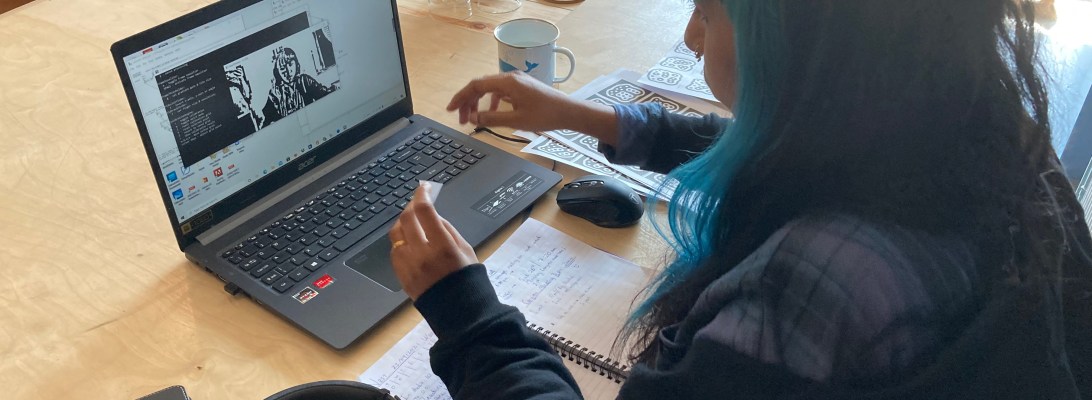


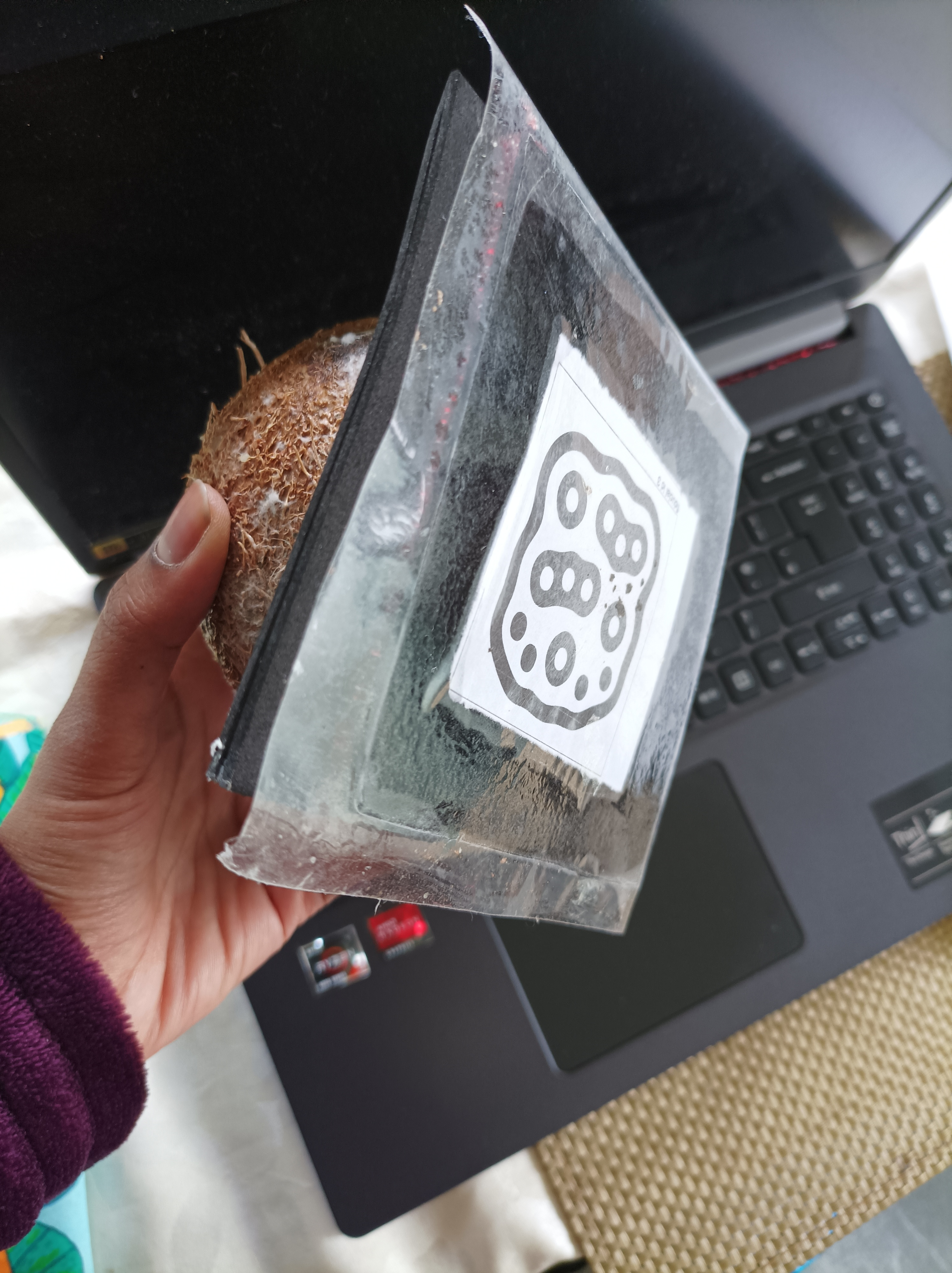
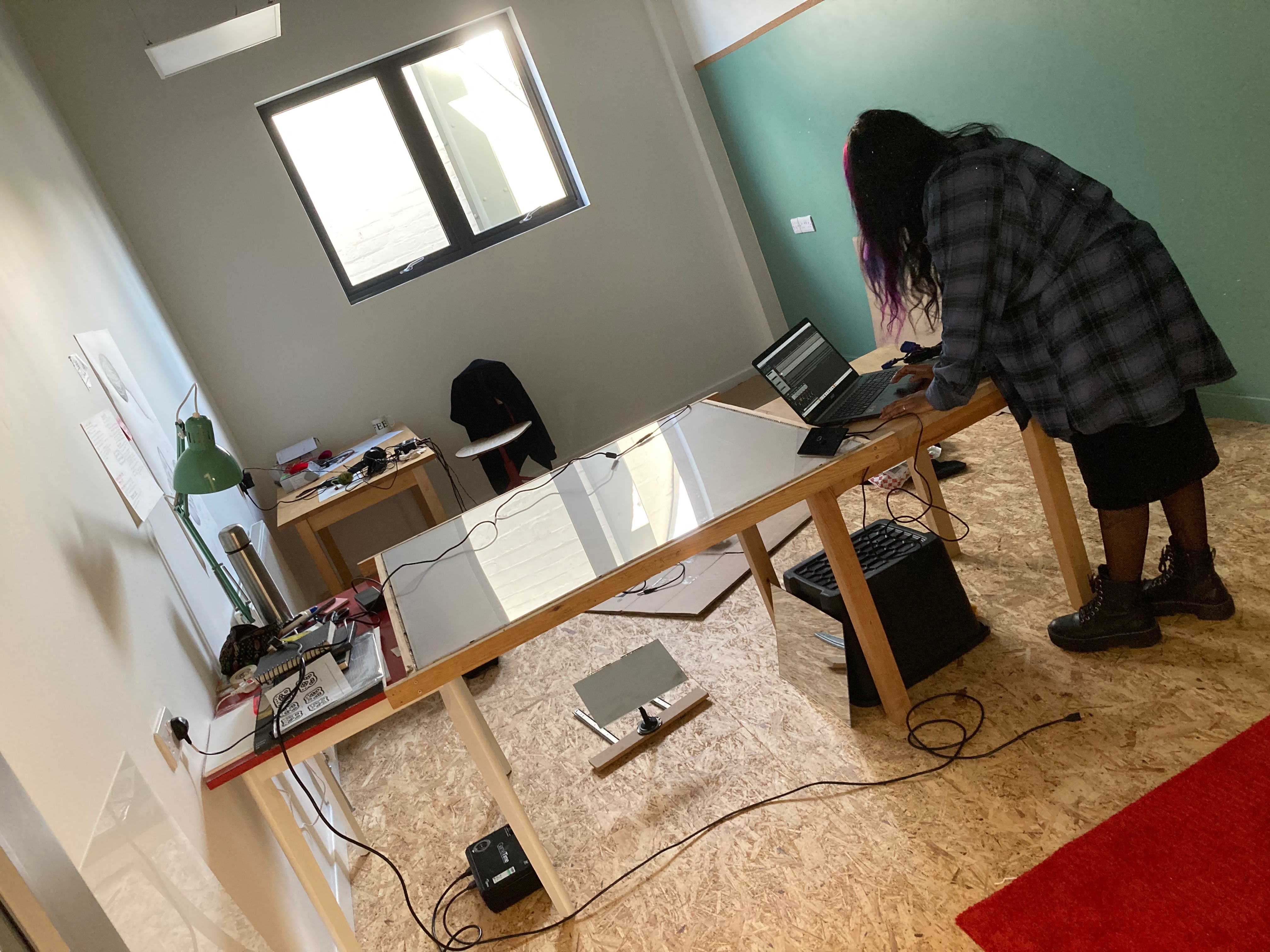


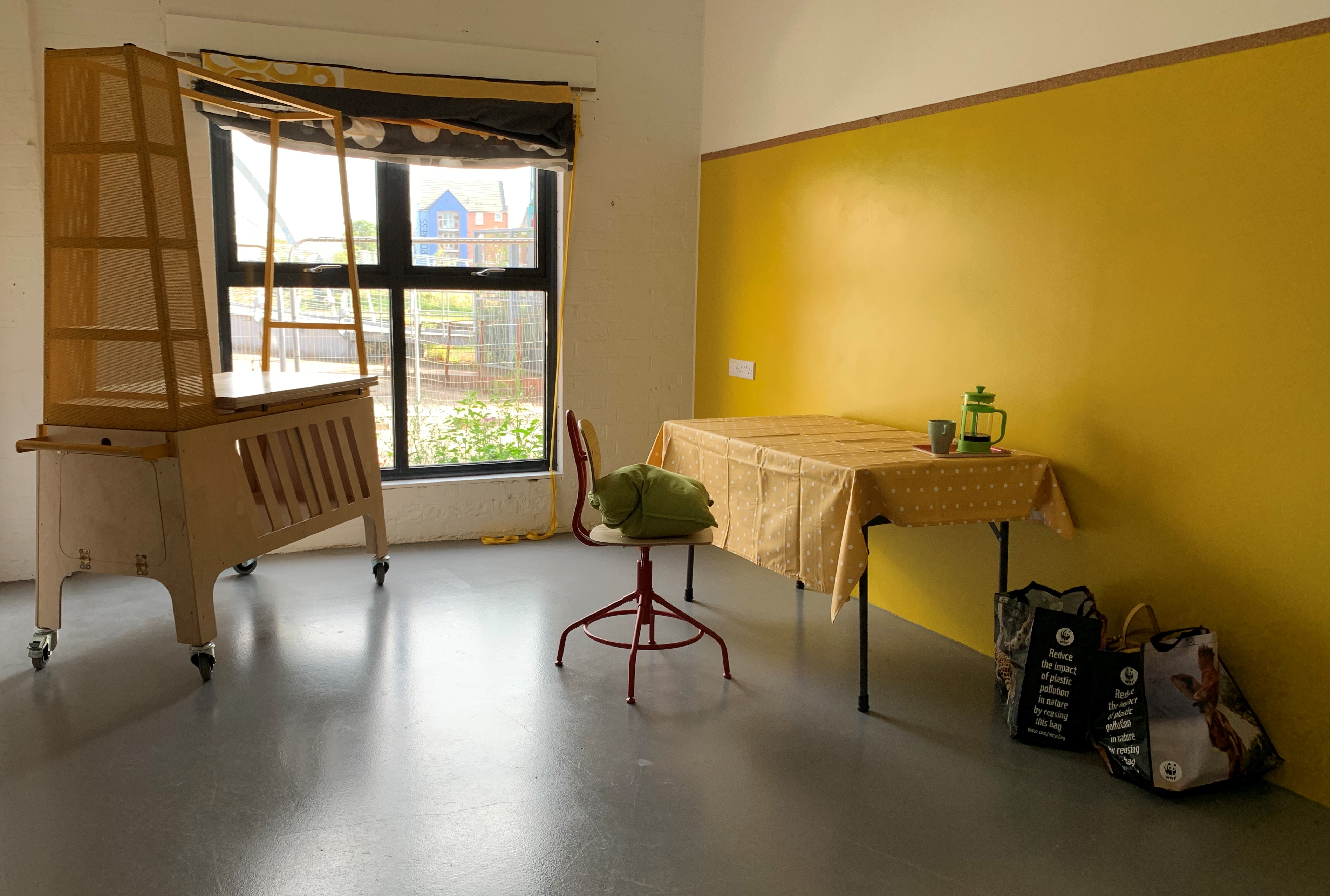

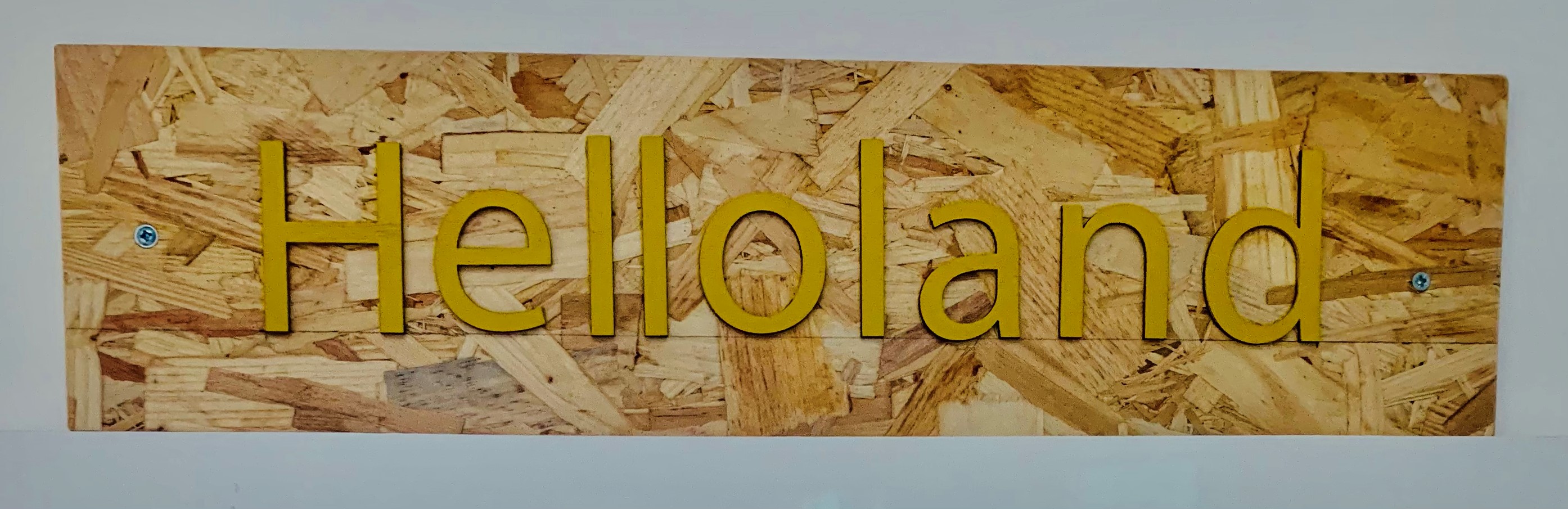


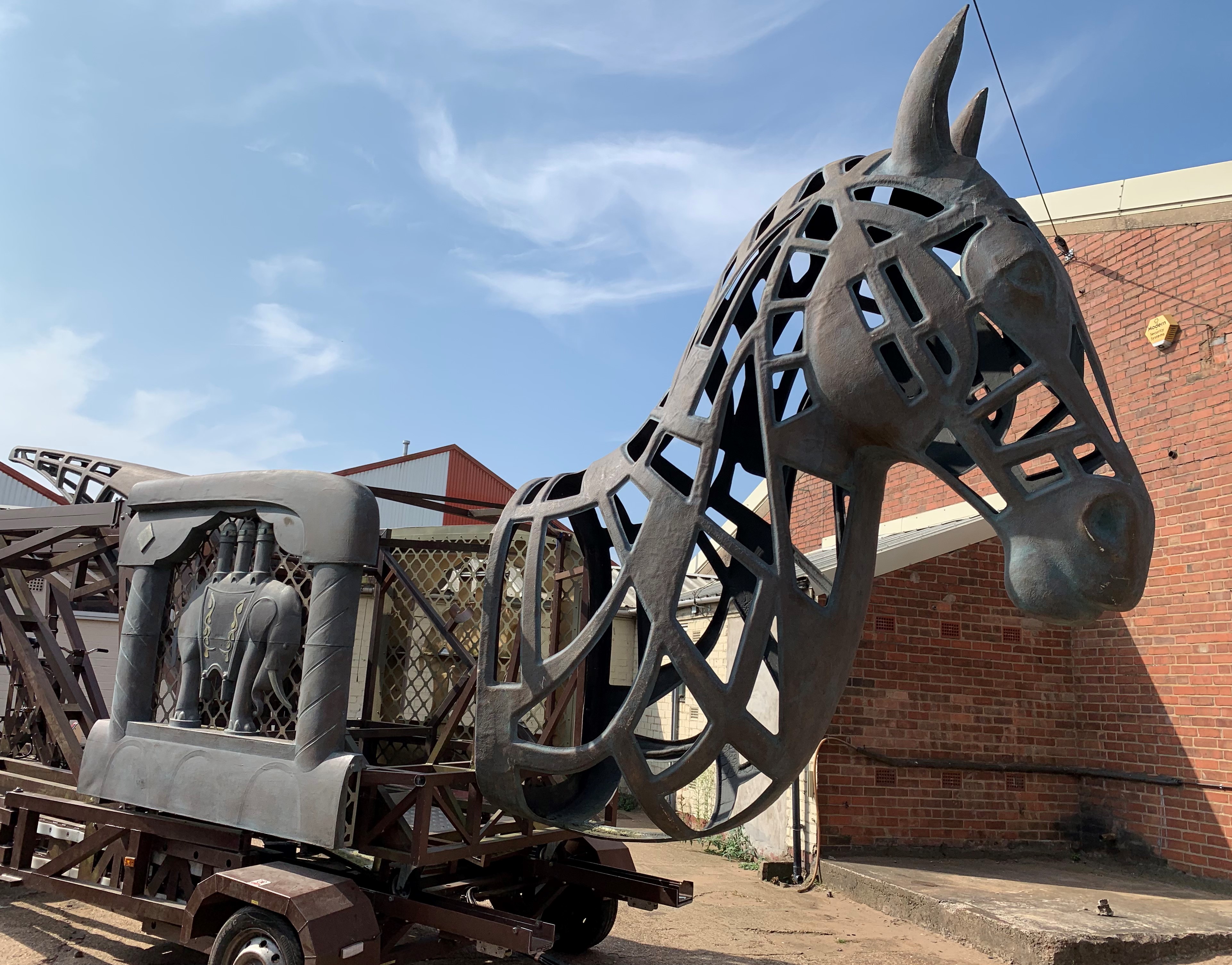

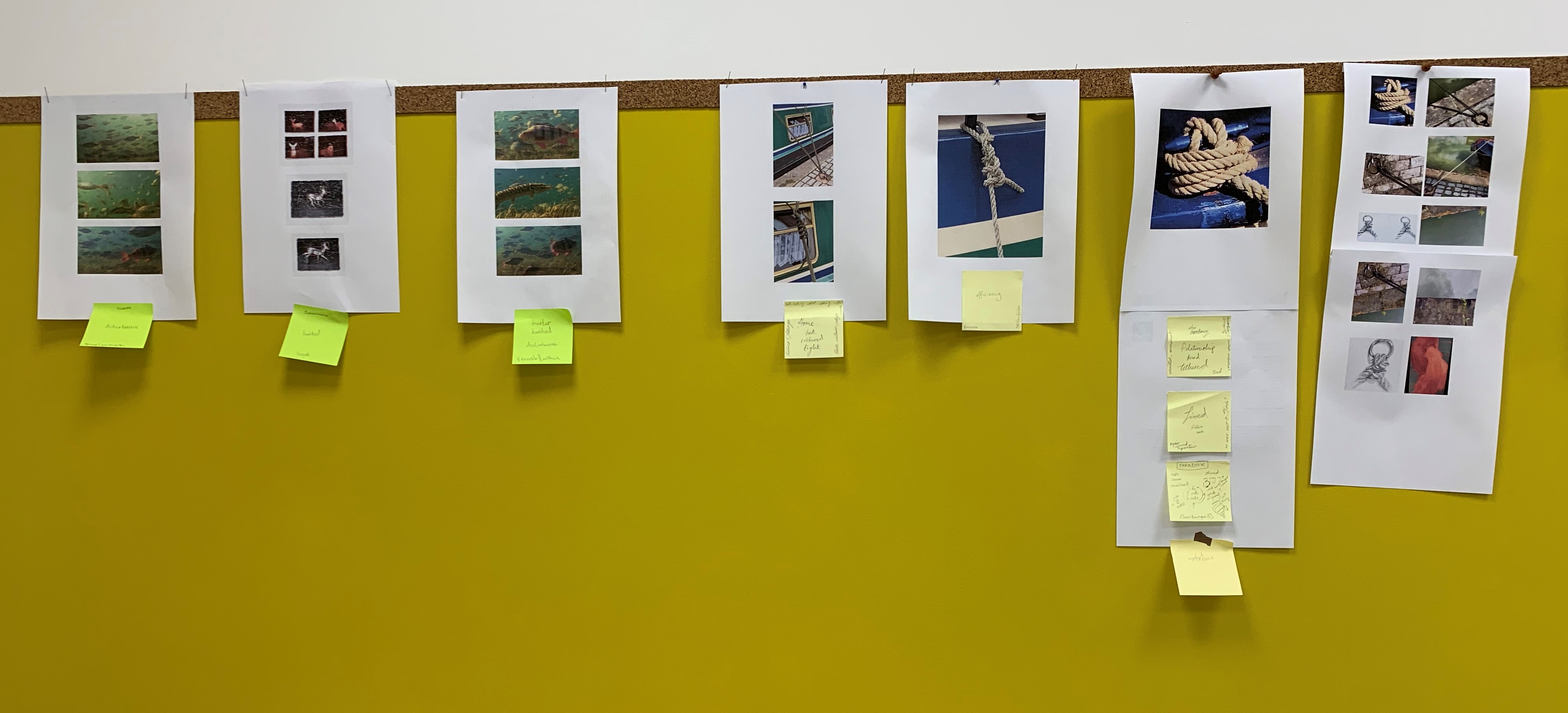




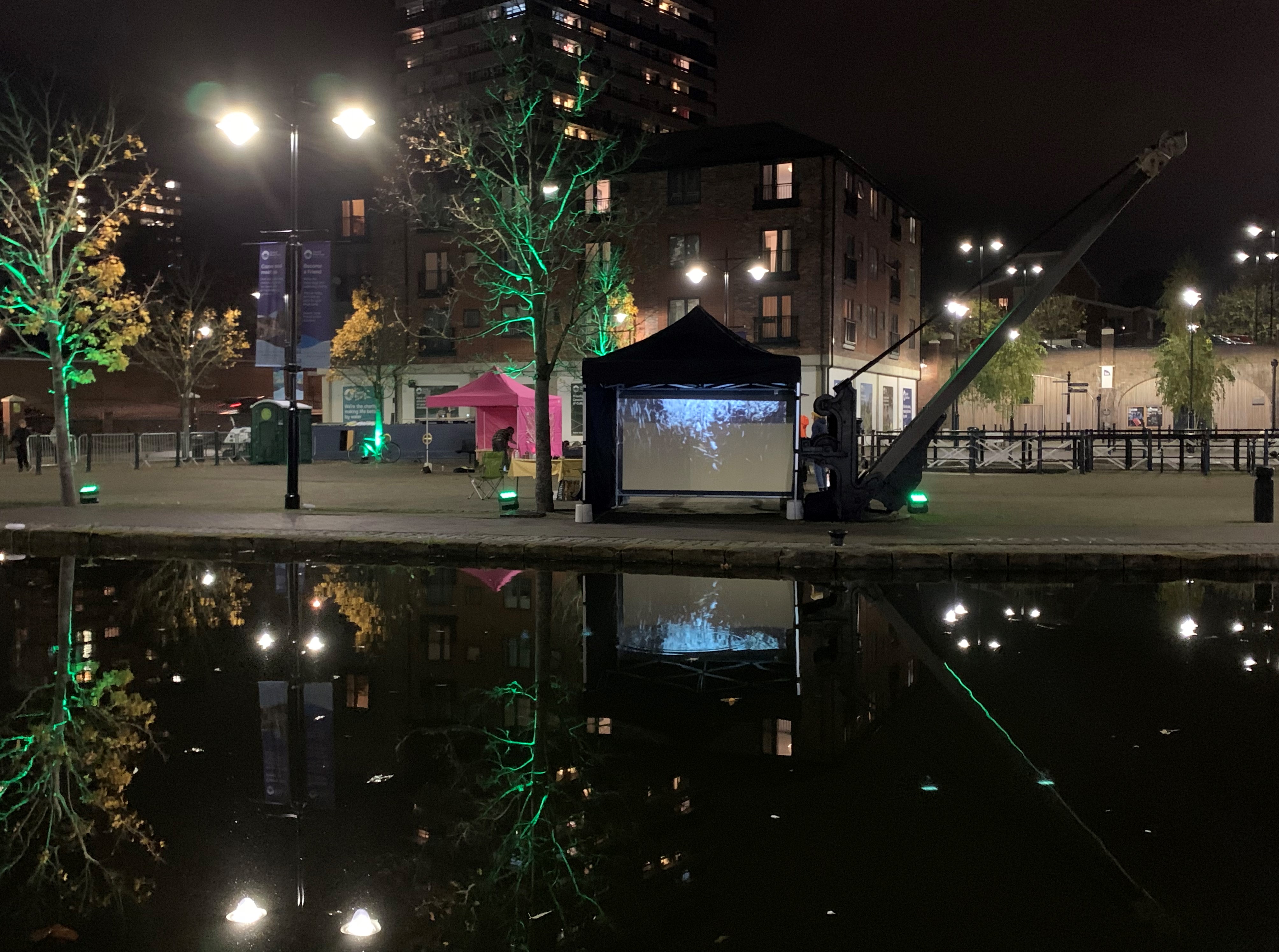





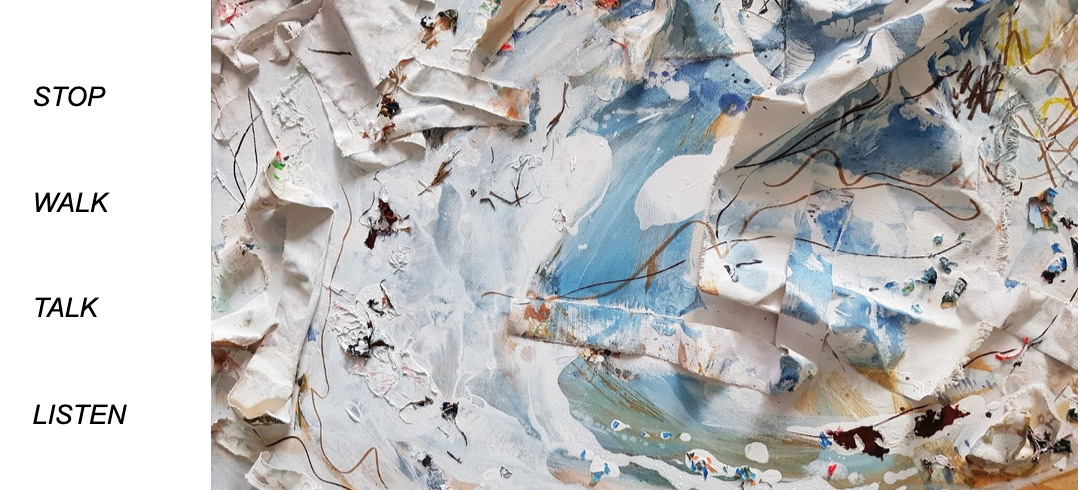
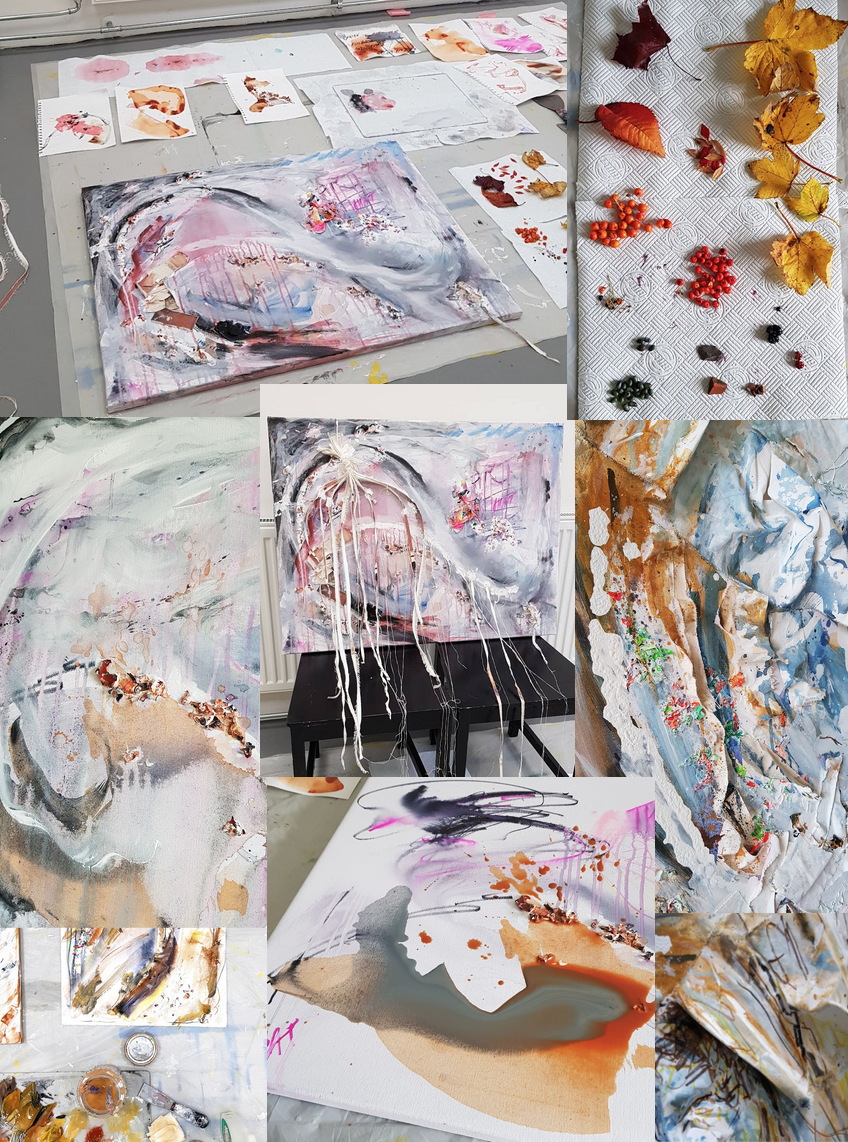


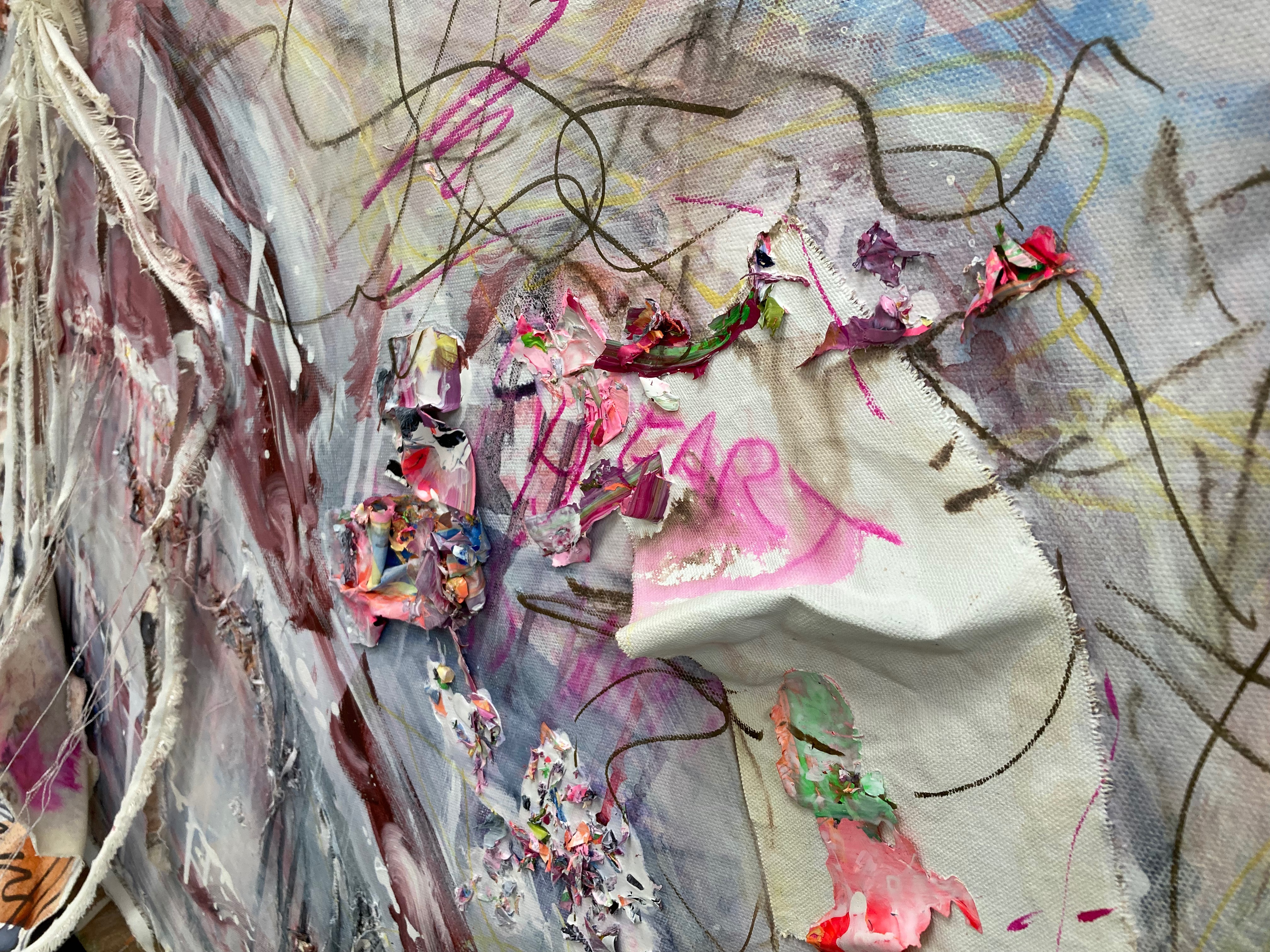

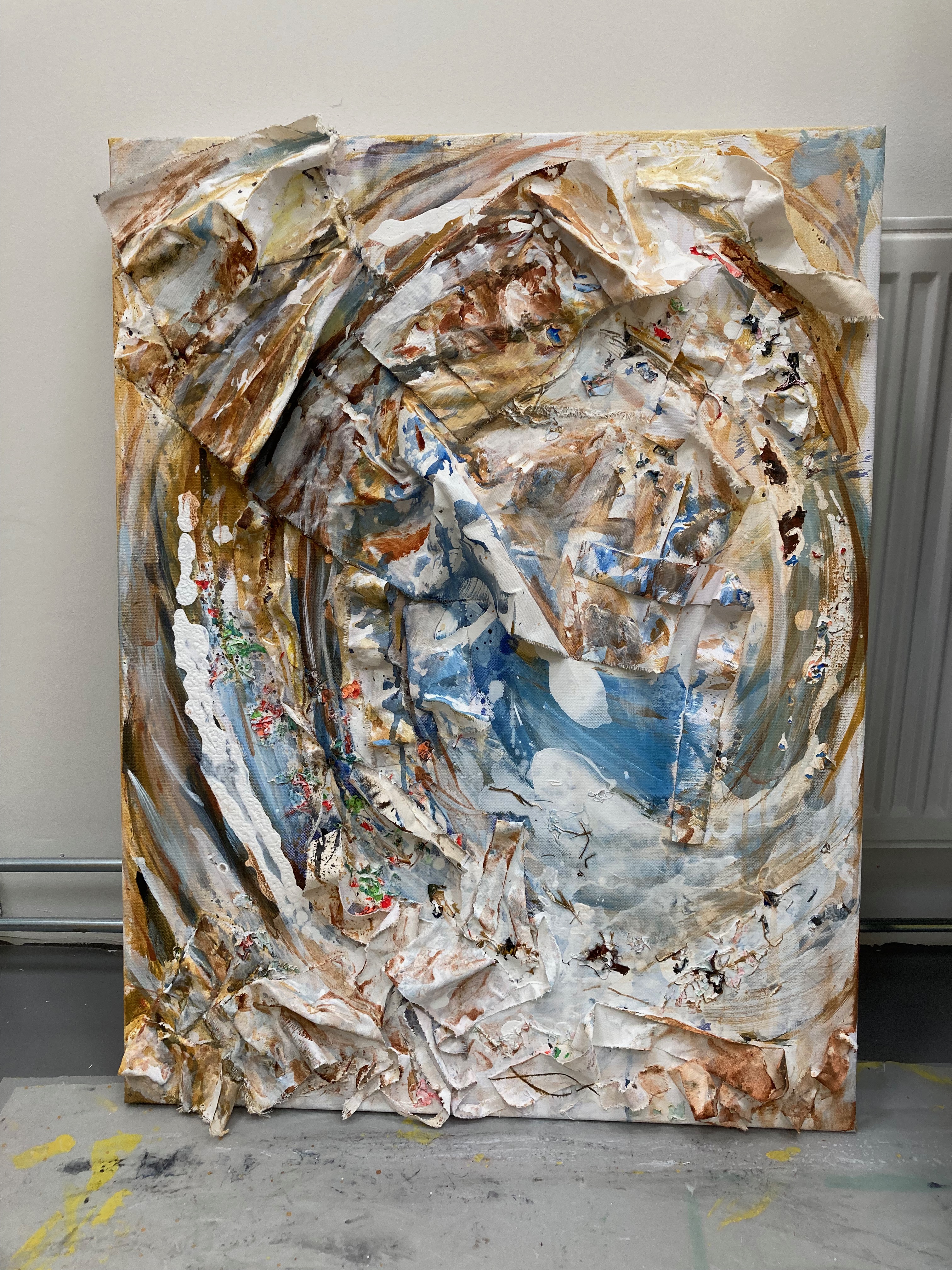


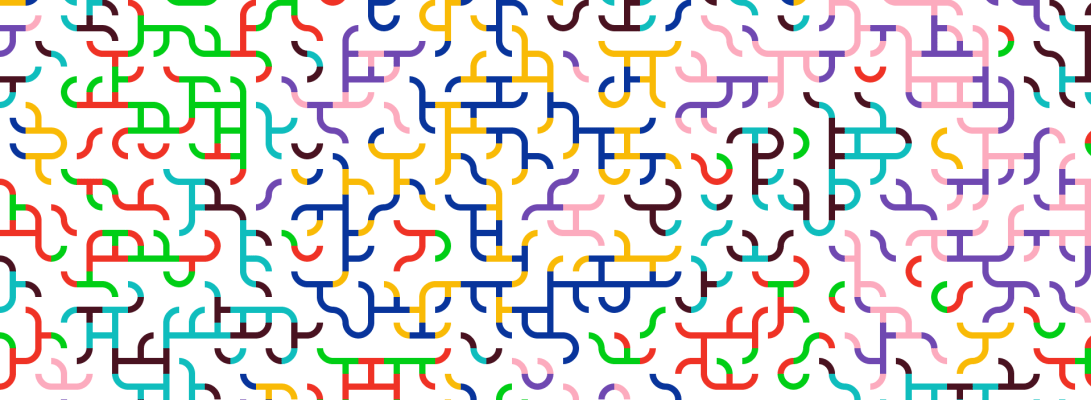


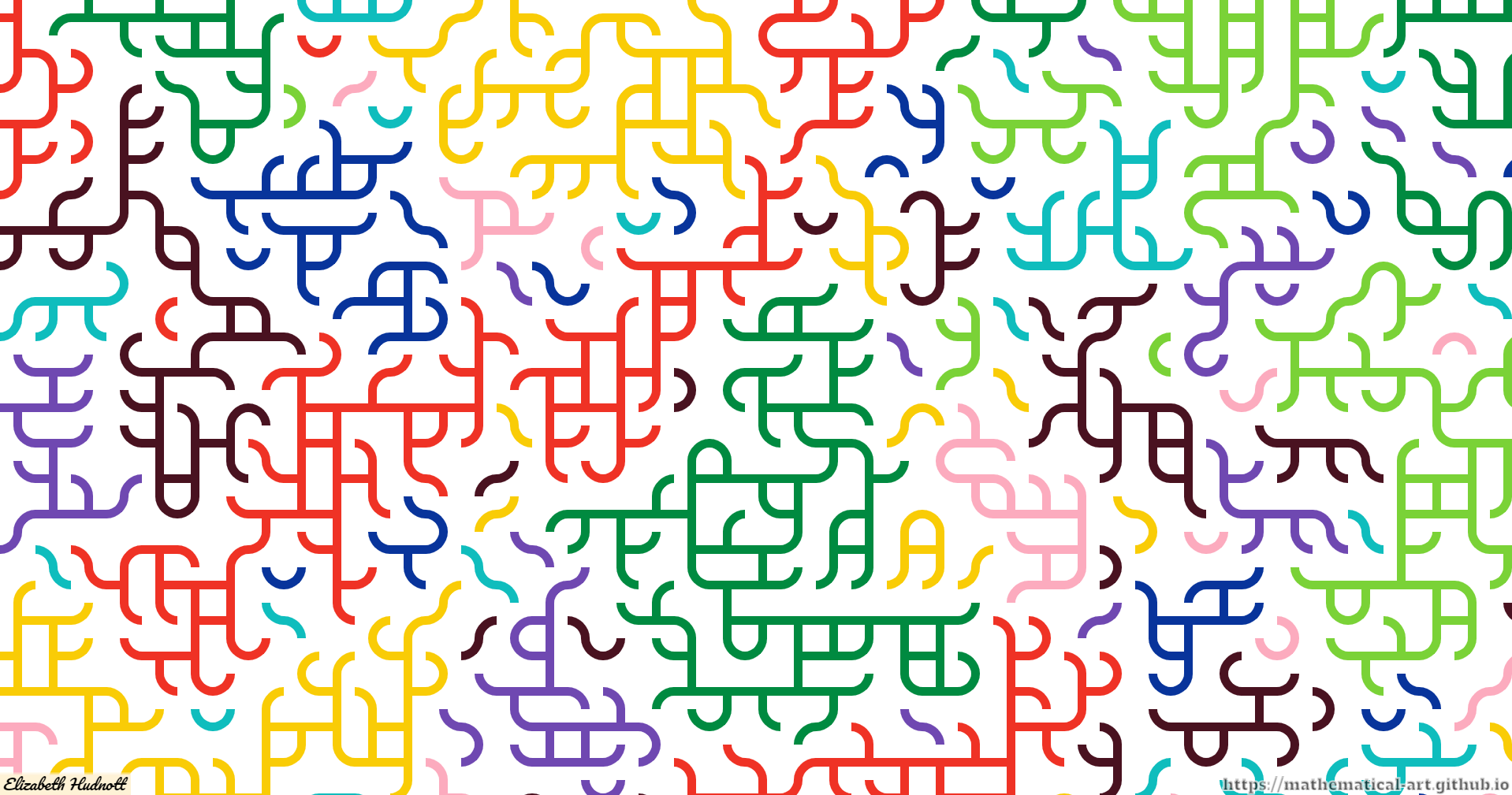



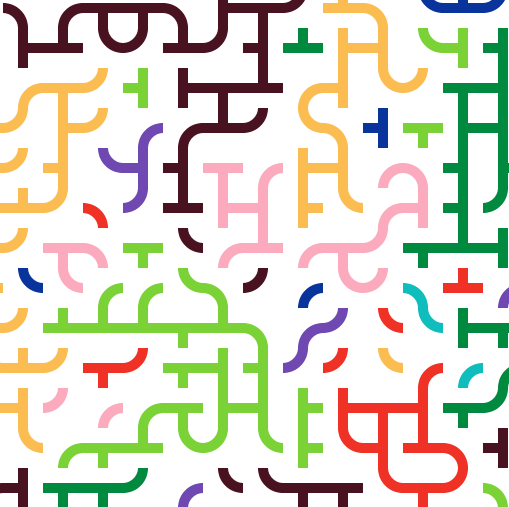
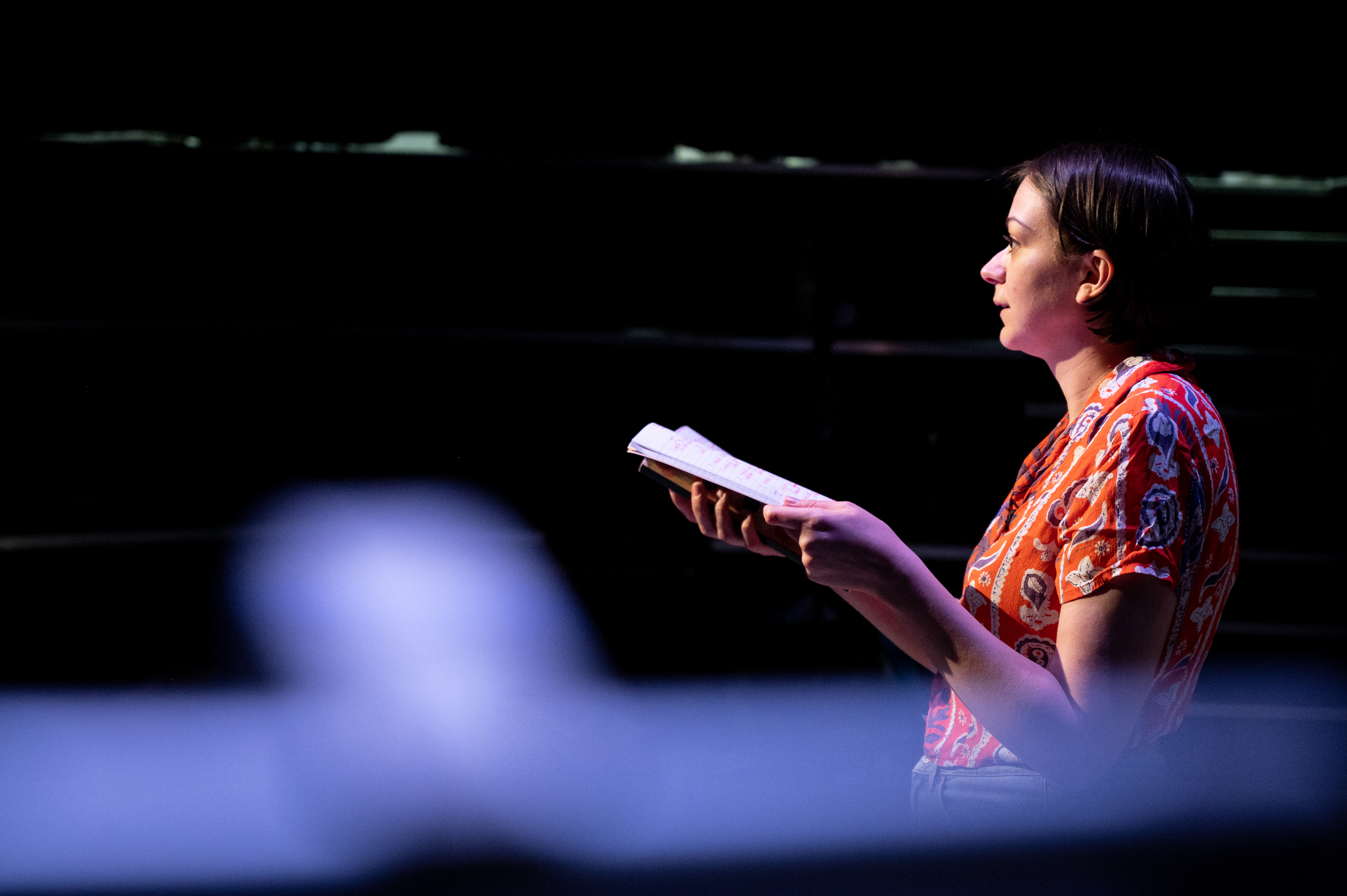


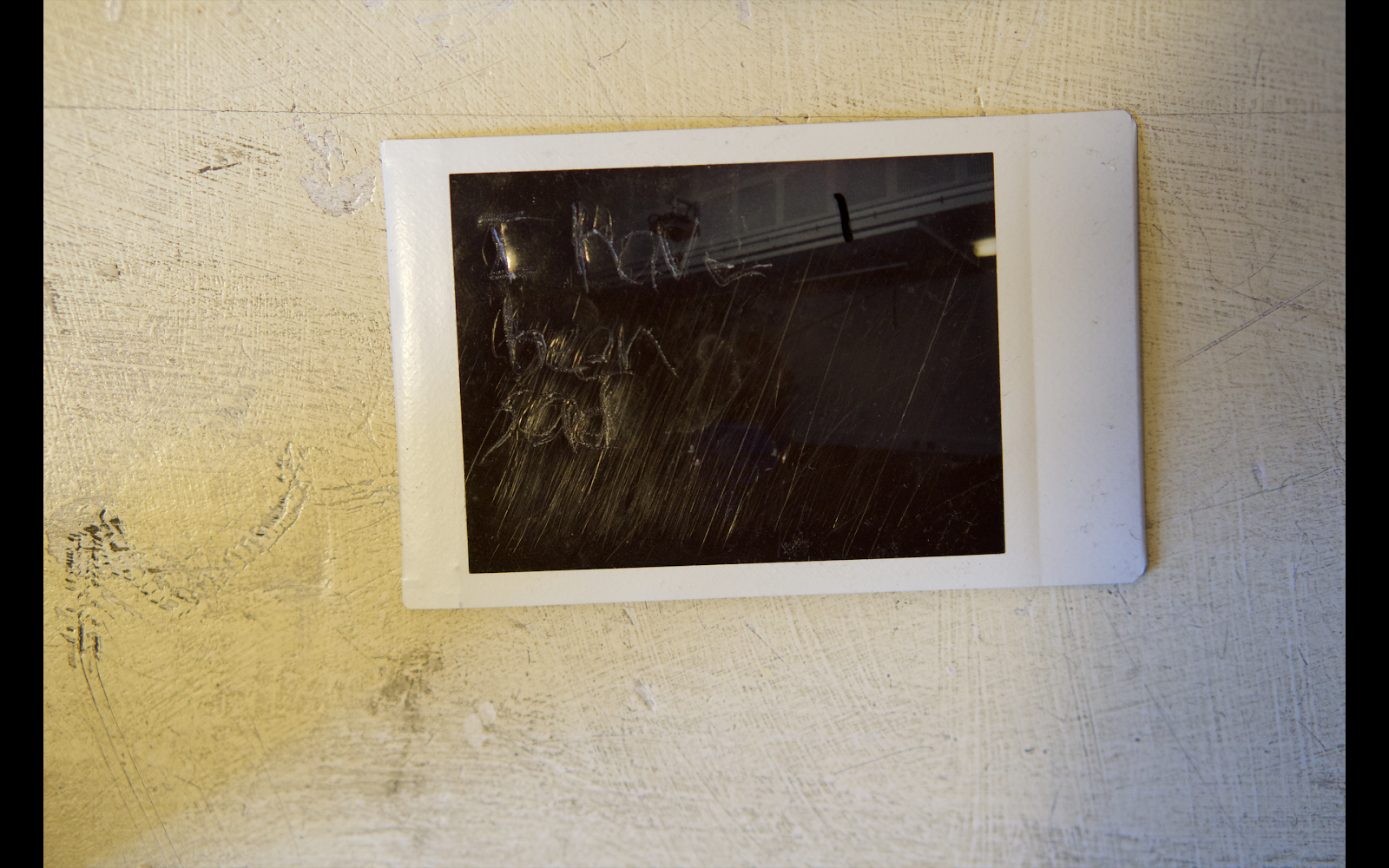
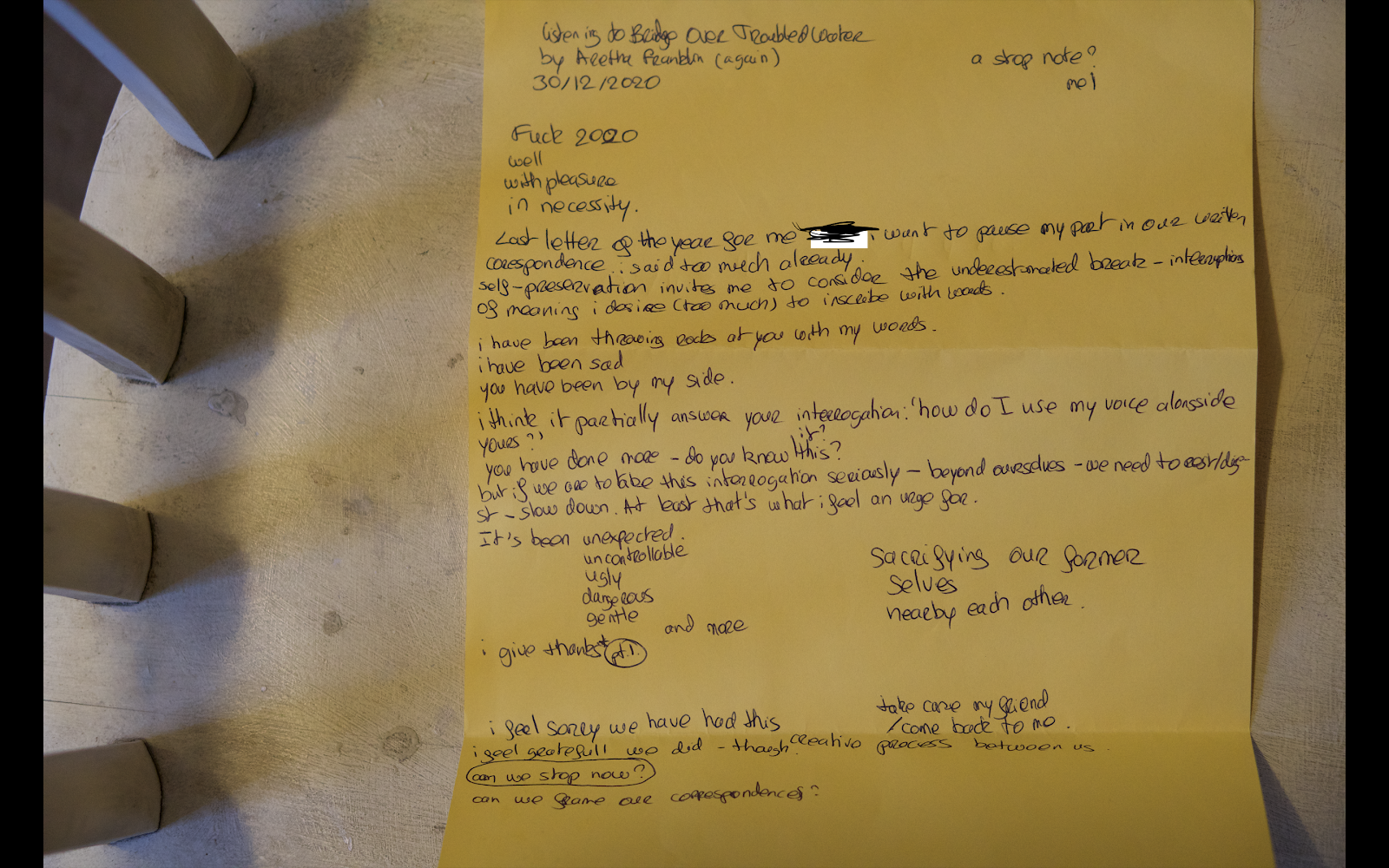
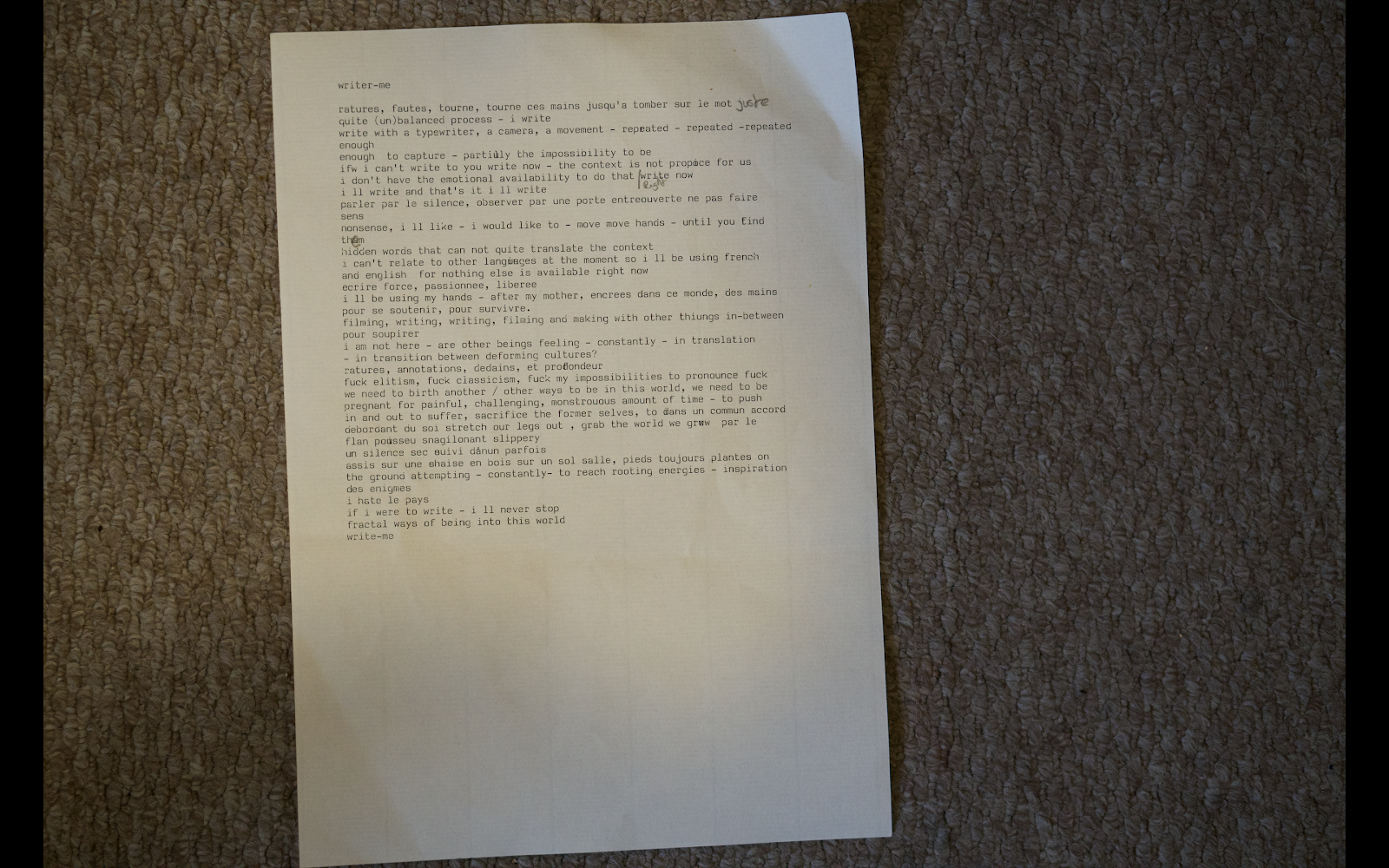
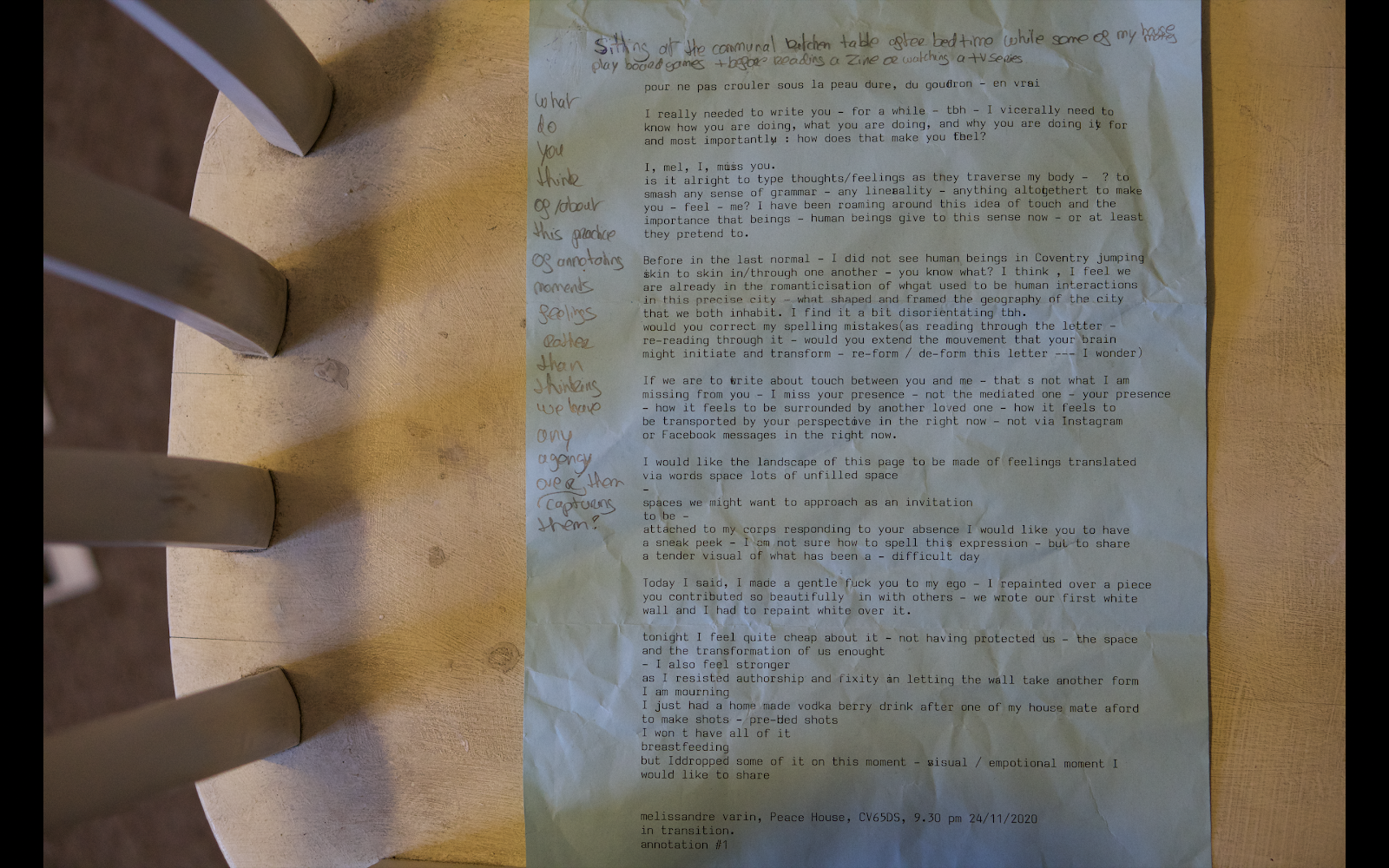
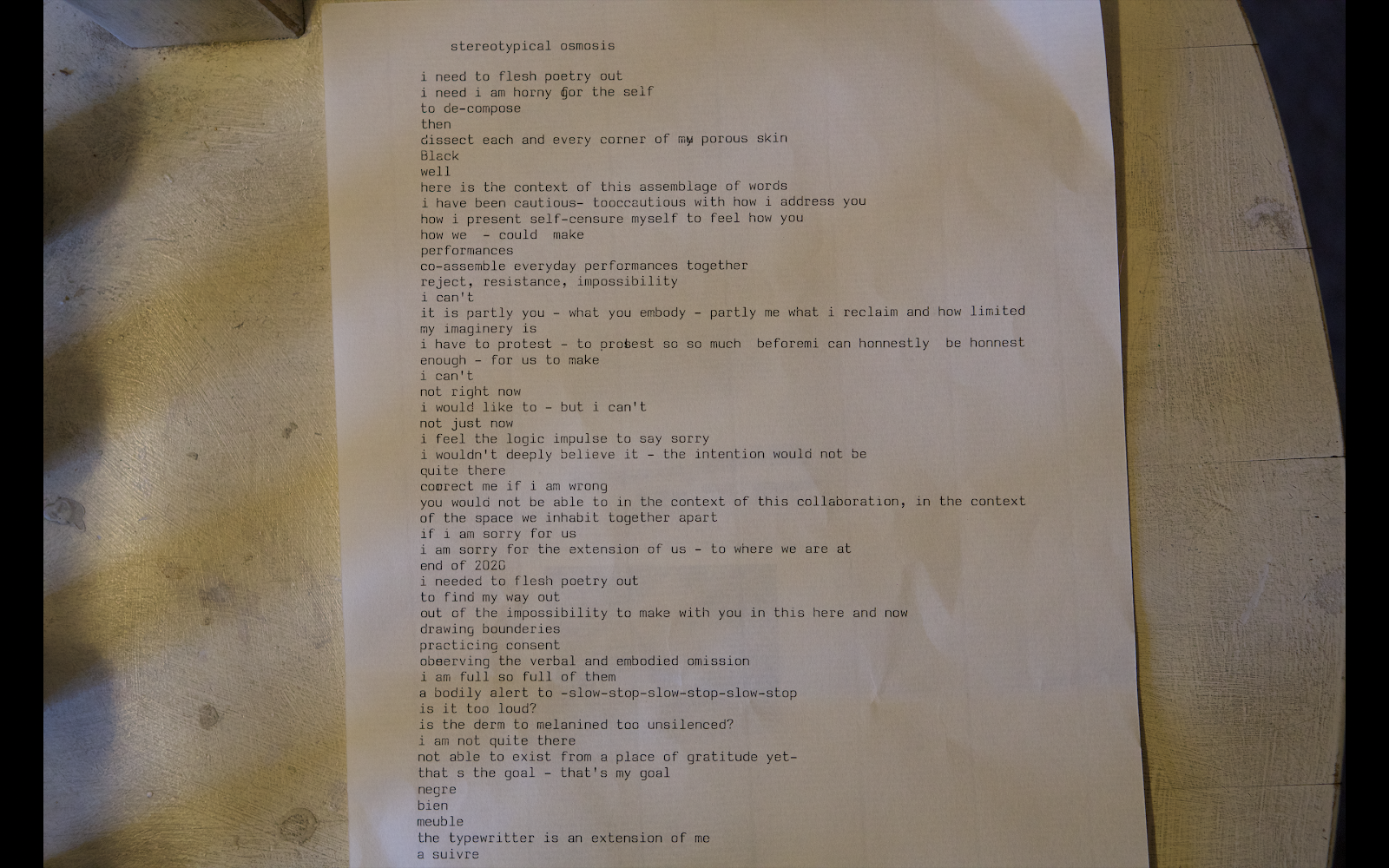
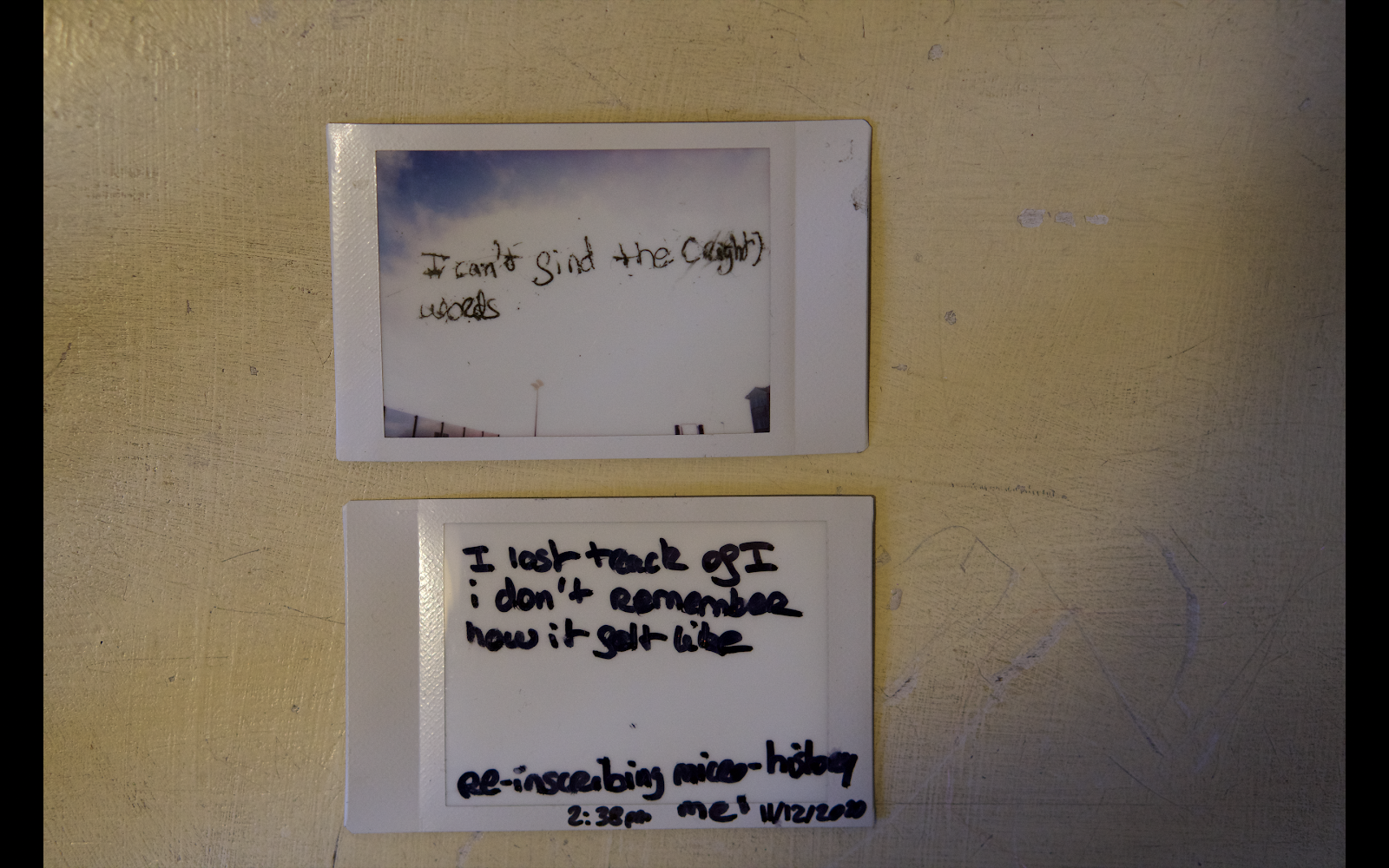
 Words from the Birds