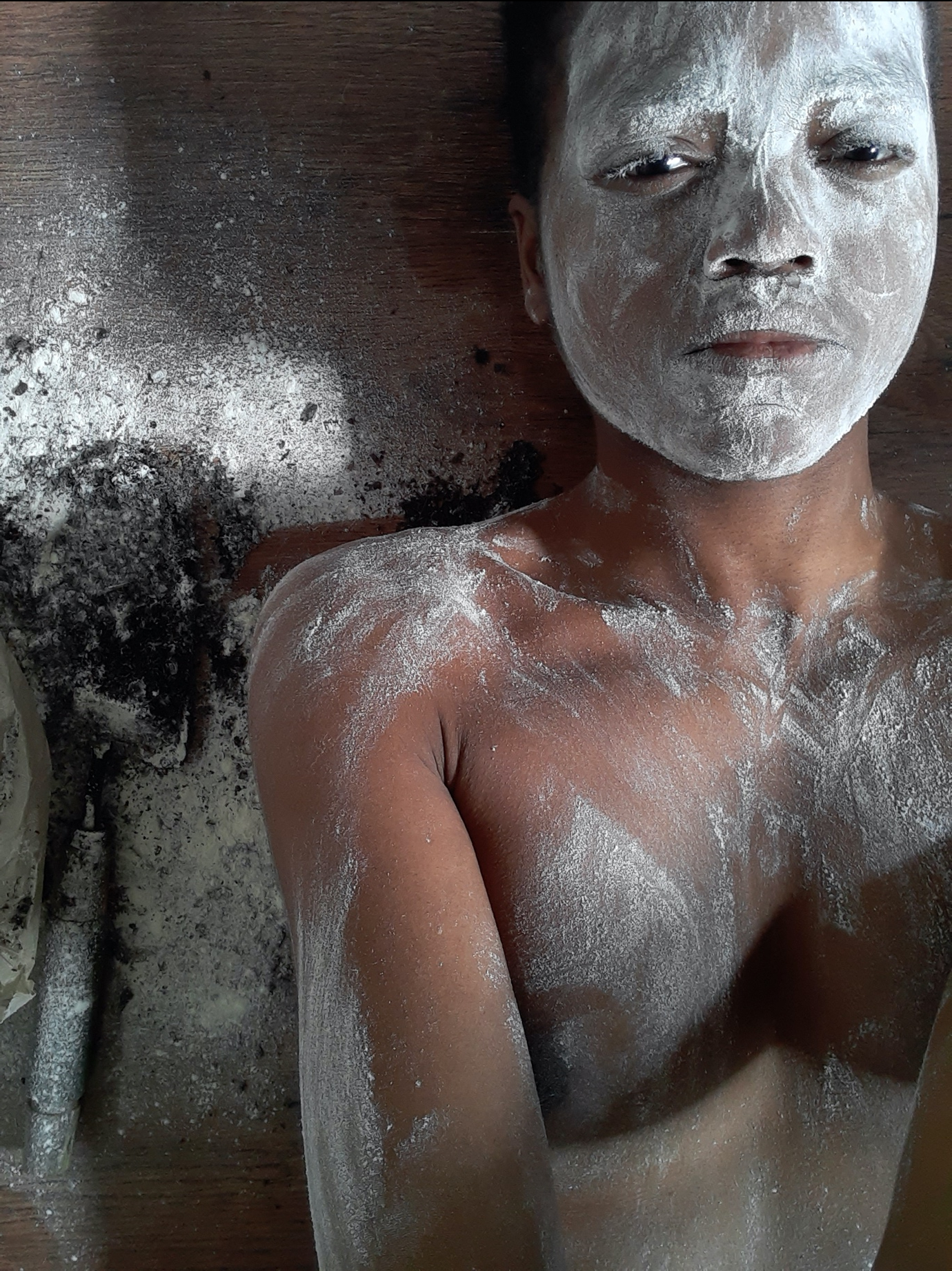
“a demonstration of the importance of human connection”

Luisa Freitas reflects on her Work From Home Nest Residency:

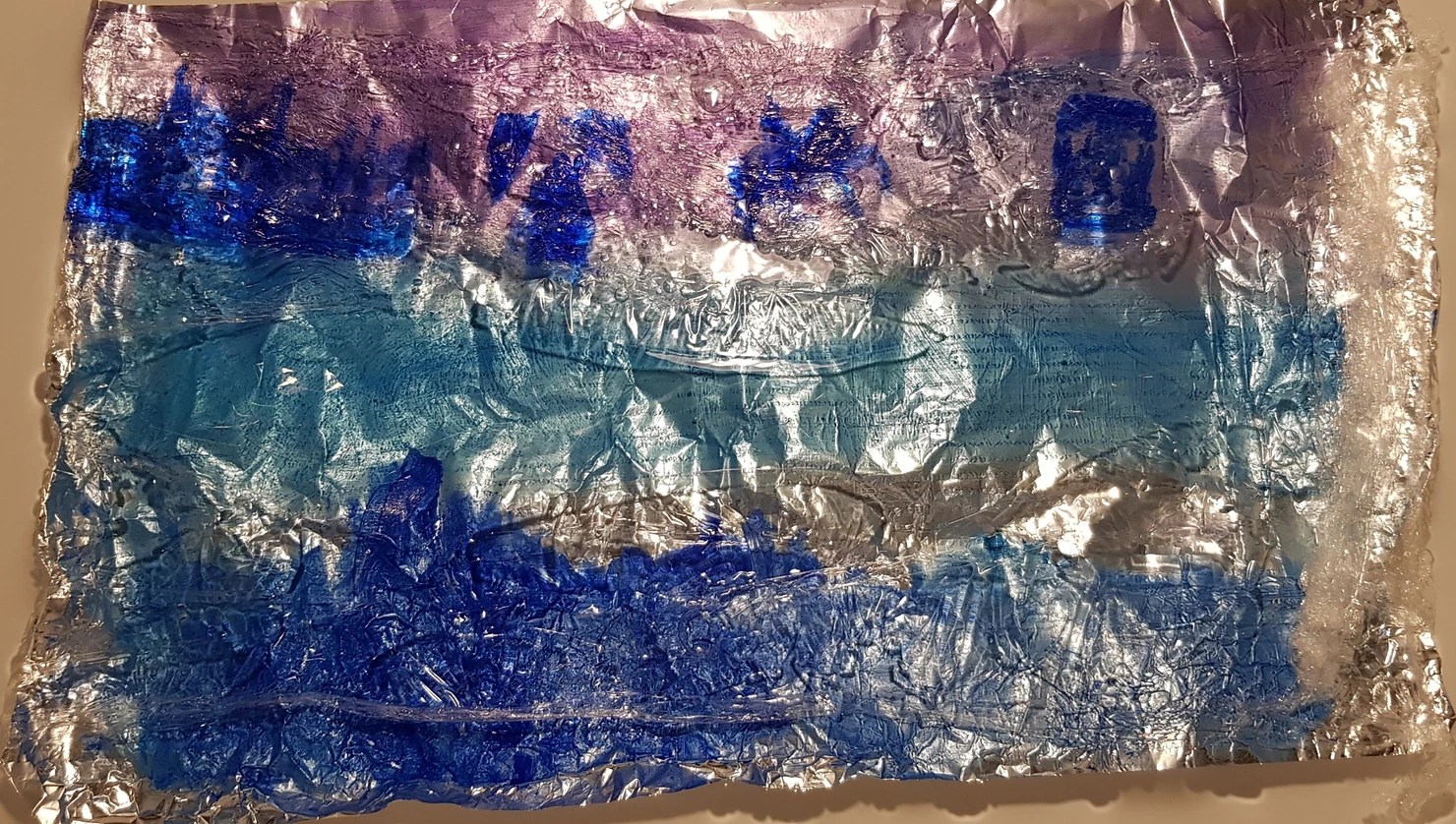
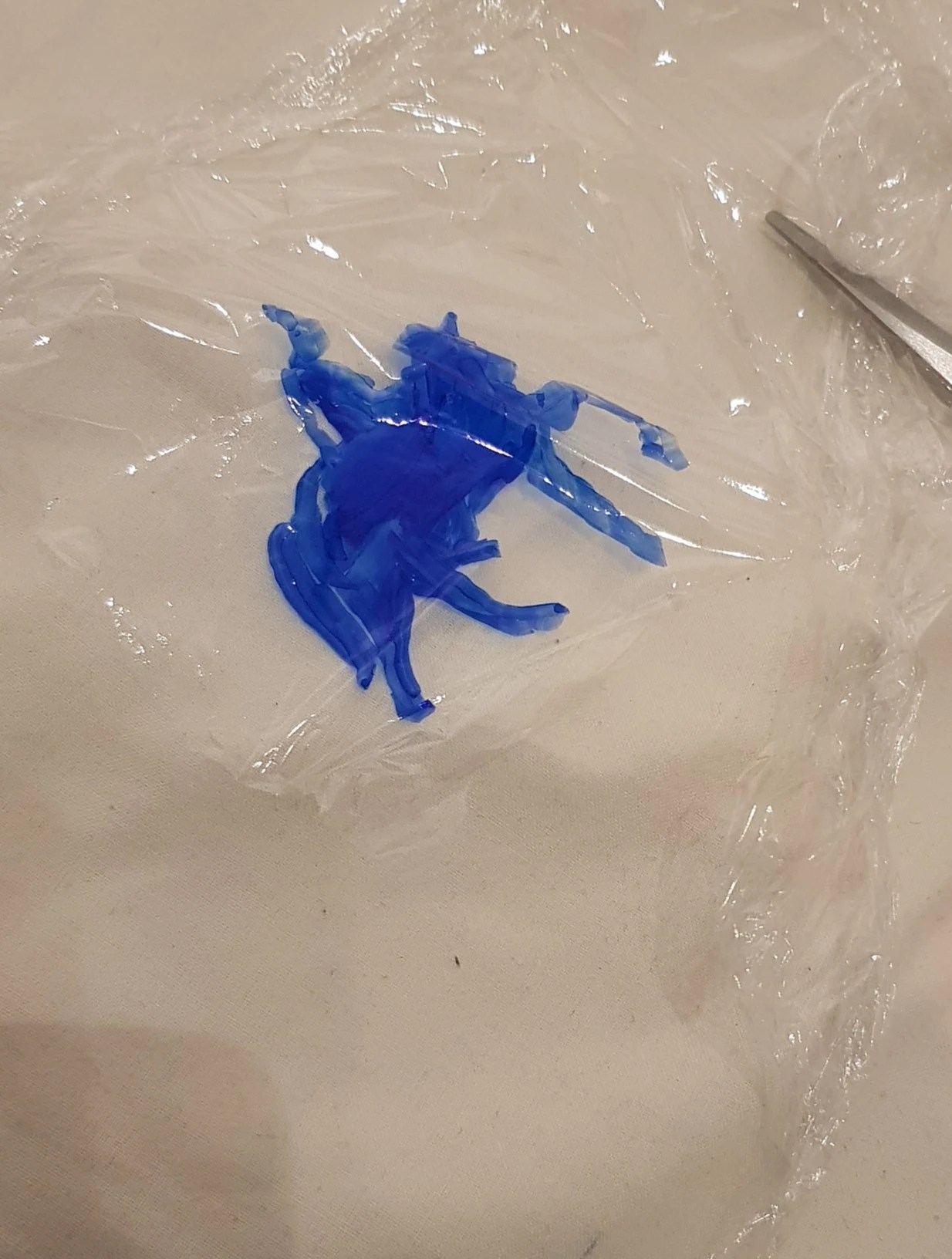
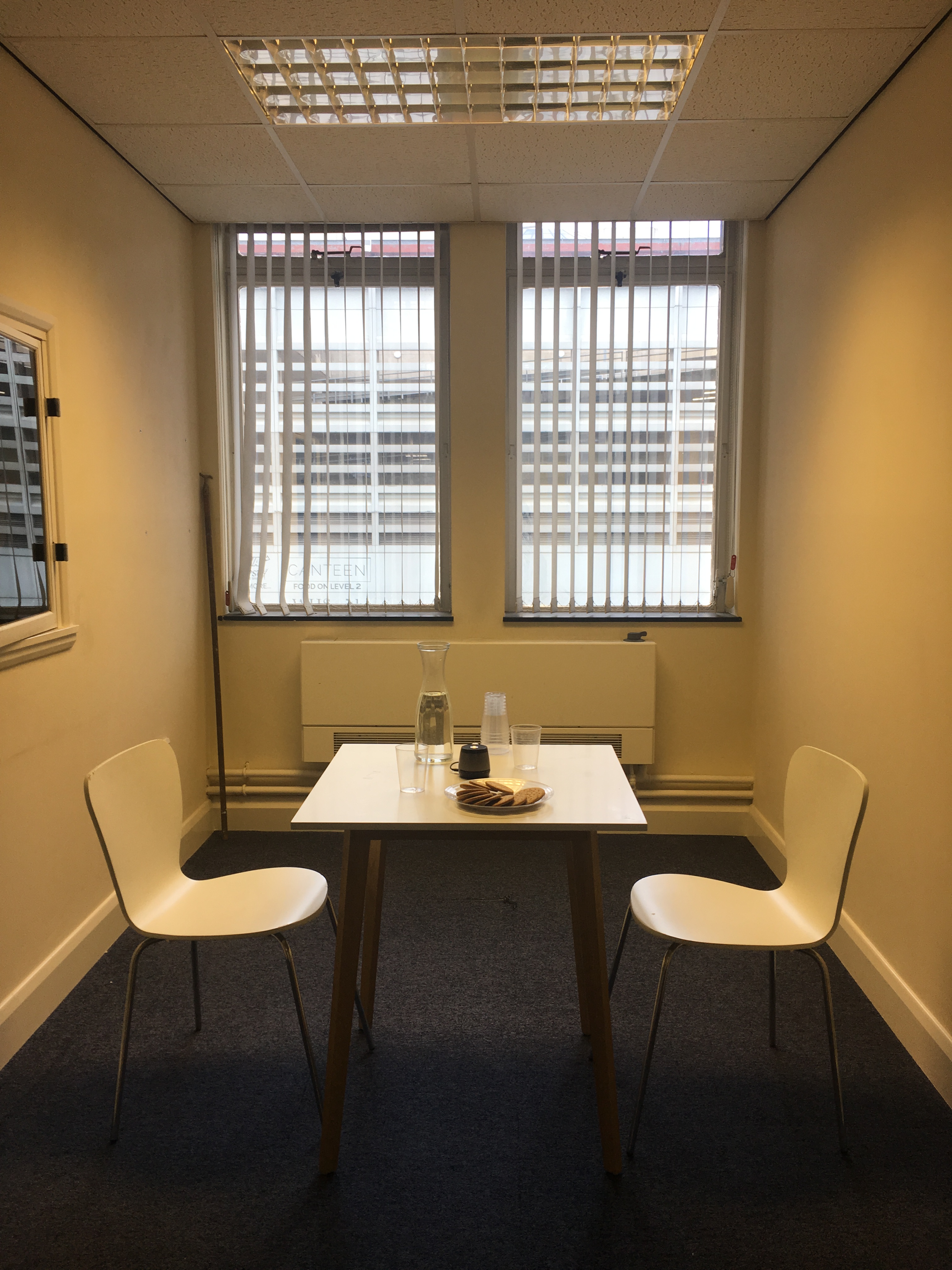
“Let’s Talk” is a social art project focusing on human connectivity shaped in the form of a platform where the audience can express themselves in an honest way, joining together groups of people from different backgrounds and therefore allowing strangers to get to know each other and their stories, in a way that otherwise wouldn’t be possible. The final product consist of a series of audio visual work through individual interviews, where each person is asked a question that reflects their personal experiences. This project was developed during a Fledgling artist residency supported by The Talking birds Theatre company. I got to know of the Talking Birds during one of the “Artist drop-In” meetings at Coventry Artspace and was immediately captivated by their principles in accessibility, social and environmental concerns and particularly searching for new ways to aid emerging artists from all practices to have a space to create their art. Since I’ve only created work about individual interests and inside my house, I felt that this was a unique opportunity to expand outside my comfort zone and create with the audience in a public environment.

LetsTalkLogo

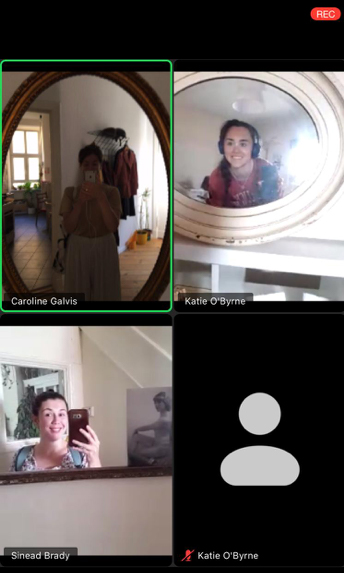
Initially the production was supposed to take place in the Talking Birds head office but due to the initial virus Covid-19 outbreak (uh-oh) I was relocated to an art studio The Row in Coventry, but then after the official quarantine all art studios closed and I was (literally) sent to my room. I was so close to having my “real” first art-residency and now I was isolated in my small space once again, which was precisely what I was trying to change by placing myself in the outside world and work with the public for once. But I didn’t let that discourage me and I continued the project by focusing on what I believed in and what I was trying to prove: Art connects! So I altered the live interviews into online call interviews, and proceeded with the project. This drastic change in production meant that the visual quality of my work deteriorated significantly but on the other hand my reach of interviewees expanded considerably, and I managed to interview not only people in the city of Coventry but also in other areas of the UK and even internationally. I want to give them all a special thanks for having given their time to make this work possible, despite the limitations and concerns of the virus and its impact in their lives.

Despite the fact that there are few – but good – interviewees, the result was a success, there are not only three but four videos exploring questions ranging from very personal matters to abstract concepts such as “inspiration”. Naturally, being an art-residency, this platform also touches on the art discourse, now debated not only by artists themselves but also by members of the general audience outside the field of Arts. This union between the “outside world” and art practice has always been a passion of mine and thanks to this project I managed to bring the arts to the non-artistic audience together and allow them to talk about their experiences and thoughts about art.

This Fledgling residency really helped me organise my thoughts on this project and understand how far I can take this subject within my possibilities, and made me realise that what I actually intend to do is create an online platform about the art discourse itself made for the public with the public, in an accessible way and in this manner break the existing barriers between the general audience and Arts. This new platform will take its identity as a YouTube channel, under the name “Art Chat”.

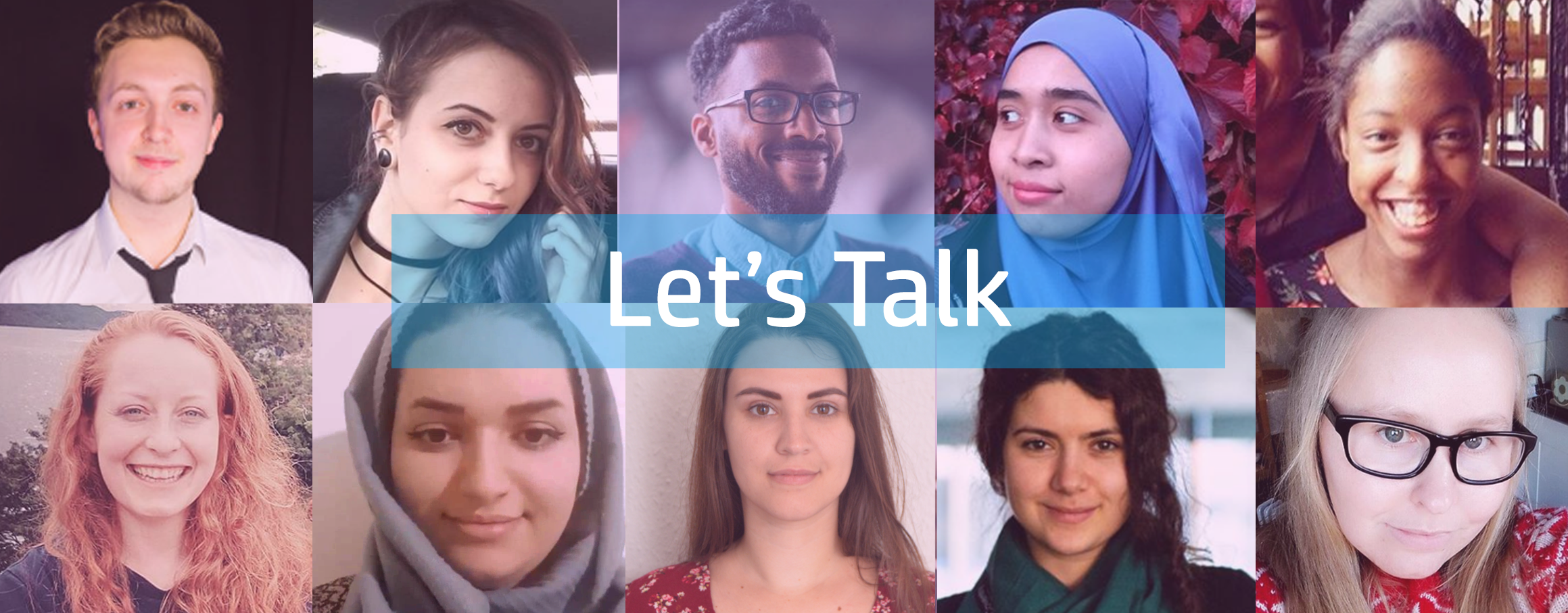
LetsTalkbanner
In many ways this residency was crucial for my development in thinking outside the box, exploring themes I never have before, finding solutions to the obstacles presented during unprecedented times and meeting so many amazing people, who inspire me to try new things and meeting many more strangers to come. The Talking Birds was also incredibly generous and patient in allowing an extension of my work due to the situation with the quarantine, and so my residency which started at the end of March 2020, ended almost at the end of April 2020. But perhaps precisely due to the difficulties presented by the virus this project was more effective in its function as bridge between various peoples and the demonstration of the importance of human connection.

You can watch the videos on Luisa’s website, by following this link.

Outbreaks of kindness

There’s been some great and inspiring outbreaks of kindness all over the internet this week, demonstrating just how amazingly selfless and supportive the arts sector is. So many brilliant people and ideas, giving us a glimpse of how humans can shine in a crisis, how much better we are when we work together, and how this worrying time could actually sow the seeds of – or even prototype – a better world.

Continue reading

Discursive Ability

Jazz Moreton reflects on her Nest Residency

Having graduated with First Class Honours in Fine Art from the University of Gloucestershire in 2017, I spent years finding my feet and doing little bits of (mainly unpaid) work in the arts. After moving back to Warwickshire, I began to network with artists in Coventry. When somebody mentioned the Nest residency in a meeting, I knew that I, as an artist with multiple disabilities, had to go for it!

My residency was jointly supported by Talking Birds, Coventry Artspace, Coventry Biennial, and Disability Arts Shropshire, and would lead to whatever my outcome might be being exhibited in Coventry Biennial of Contemporary Art 2019.

I proposed that I, as an artist who had never worked with or edited sound, would create a sound-based piece that showcased the abilities that people with disabilities have, in the face of a government, and a wider society, that discriminates against us in many ways (my bugbear since graduation was that people still often assumed that I was stupid due to my neurogenic stammer and dysarthric speech) and, after a nerve-wracking interview with a gatekeeper-esque panel of arts professionals (who, upon getting to know them throughout my residency, turned out to be some of the most delightful people I’ve had the chance to work with), I was thrilled to receive the news that I had been selected.

My piece, which I titled ‘Discursive Ability’ at the point when somebody asked me what it was called for an interim exhibition, was my first proper socially-engaged work. Making it involved me inviting people that I either knew personally or had found through networking to my studio or going to public venues, workplaces, and houses and recording one-to-one conversations about their experiences as people that have disabilities.

7D9CC1AB-246B-4ECB-9FBA-1D2C280D5233I have lived with multiple disabilities caused by a ‘massive’ stroke when I was thirteen, and I have faced a huge amount of discrimination in most situations. However, it was easy to feel saddened, shocked, appalled by the discrimination- and even abuse- that other people told me, during our recorded conversations, that they had suffered, and do suffer, week in, week out, in Coventry. It is absolutely vital to remember that the issue of Disability Discrimination, inequality, and abuse exists in every locality across the country if not the world, and the sample of Coventry people that I selected were mostly not connected (apart from in the respect that they all knew me). It’s a bit sad that it takes an artist to start to talk about this, rather than world leaders, but there we are.
After recording a long series of fascinating conversations, I had the huge task of editing them onto one soundtrack (which took about ten times longer than holding all the conversations). Thankfully, Derek of Talking Birds is a sound-editing pro (amongst his other talents), and he was able to offer really useful advice, such as switching to a different piece of software (it’s lucky I’m a fast learner)!

It was fantastic to have a studio space that I could use for up to eight hours a day (based on bus timetables) to edit in. At the time, I was living on a narrowboat and didn’t have facilities (or, in fact, electricity and broadband) to make any sort of digital work, so the Nest enabled me to work in a way that I otherwise would not have had the chance to.

I showed the final version of ‘Discursive Ability’ in Coventry Biennial of Contemporary Art, which was my first major exhibition. Having my audio work displayed in ‘the Row’ has led to other opportunities, and I am currently working on an engagement project for the Midlands Arts Centre, for which I was head-hunted after their curator heard the work that I made in residence during the exhibition.

I’ve also been working really hard on scoping out other opportunities, and I have one or two personal projects at quite a conceptual stage. All I can say is that I will be back!

Jazz Moreton (see Jazz’s AxisWeb profile here!)

‘How fragile time is…’ Chloe Allen reflects on her Nest Residency

I first learned about Talking Birds when my friend told me about her Nest Residency at Eaton House. I decided to look them up online and was pleased to discover that they aim to make residencies more accessible to people with disabilities and conditions like myself. I graduated from Coventry University in 2018 with an MA in Contemporary Arts Practice and, until my Nest Residency began, hadn’t had access to a space to be able to make work for a whole year – so I knew that this would be a perfect opportunity for me and was so pleased when my application was accepted. My residency began in December 2019 and finished in February 2020, during this time I was able to further explore the effects that Narcolepsy has on my life. In 2012 I was diagnosed with the chronic sleep condition Narcolepsy, this causes me to experience Excessive Daytime Sleepiness and so I can have a sleep attack at any time anywhere. Due to my constant fatigue I often don’t leave the house for weeks at a time and so to have a work space away from home was a great motivation for me to actually get out of bed because I knew I had the chance to actually make work again. During my residency I felt content in the knowledge that I could take naps and not be disturbed, I was safe inside the studio space, I wouldn’t be in anybody’s way, taking naps allowed me to gain just that little bit more energy to then continue to make work once I’d woken up.

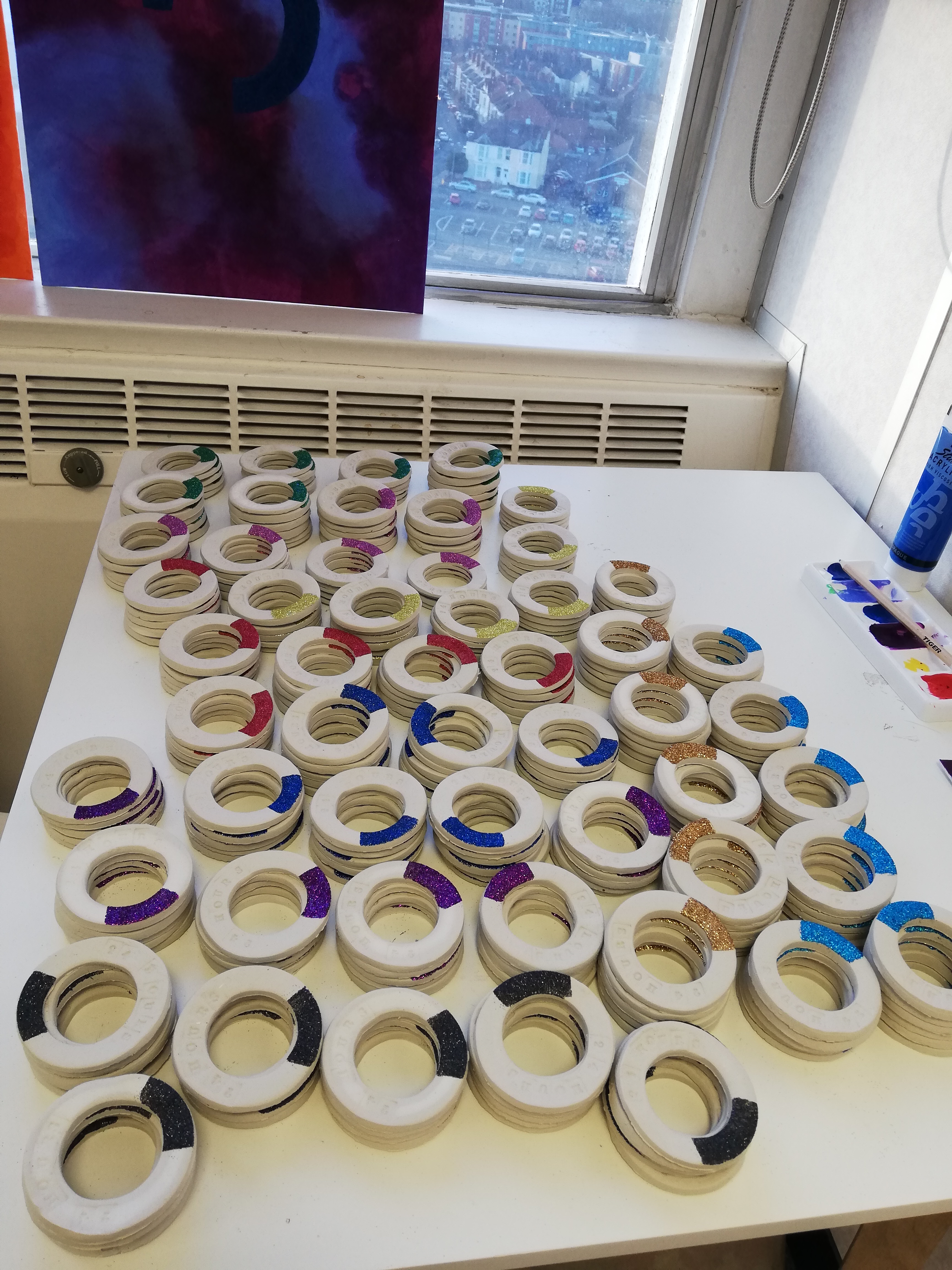
This residency has allowed me to further explore my ideas in relation to time being wasted due to Narcolepsy. For the past 5 years or so I had often used raising awareness for Narcolepsy as the main idea for my work but once I had graduated this all came to a sudden halt. Being in a studio space has allowed me to spread my work out across the floor and experiment with different ideas, having this space gave me the motivation to push myself further with my work thus I created 366 clay circle ‘time tokens’, had I not had the studio space I wouldn’t have been able to do this because creating something like that isn’t too easy on a cramped bedroom floor!

IMG_20200212_163031

To begin I started creating work in my comfort zone of acrylic on canvas, I’ve often used text art in my previous works and so knew that this would be something that I’d be pleased with aesthetically. I worked on canvas boards and the pieces were relatively small, after reflecting on this I decided that I wanted to make work on a larger scale especially since I’d got the space in the studio and so I got some plastic sheeting and bought some clay. The image of a circle was at the forefront of my mind, based on a clock. I began by creating rings from the clay with circle cutters, then cut segments from these circles based on how much time I’d wasted napping, I then used metal letter stamps to press words in to the segments, the words were the things I’d missed out on by napping e.g. family dinners, however, despite these turning out well I knew that I still wasn’t entirely achieving what I wanted. I researched into artists that created work based around time and came across Alyson Provax, her works in ‘Time Wasting Experiment’ really inspired me, she would state how many minutes were wasted and what the time was being wasted on. I could time every single nap I’d taken but because of my condition I don’t always get to choose when I nap and sometimes I don’t even know that I have napped – it’s sometimes hard for me to tell the difference between my dreams and reality because I nap do frequently. Narcolepsy affects me all day every day so I decided that I would make a circle for every day and instead of cutting out segments I would create segments on the circles with glitter. I created 366 (as 2020 is a leap year) circles, using different coloured glitter for each month. Each circle had ’24 HOURS’ printed on to them, each a token of time that we choose how to spend, the circles weren’t fired and so could very easily break, should they break this will only demonstrate how fragile time is.

The Nest Residency was so valuable to me, I was able to explore ideas, set myself bigger challenges and my importantly create work again. I also found it very useful to be at Eaton House and attend the First Thursday Drop-in, this gave me chance to network with other artists and instead of just explaining about my work as I had previously I also got to show people my studio space to that they could see the processes I was going through to create my work.

Reflecting on Cinematica at Arcadia

Rosa Francesca reflects on her recent Nest-supported exhibition at Arcadia Gallery

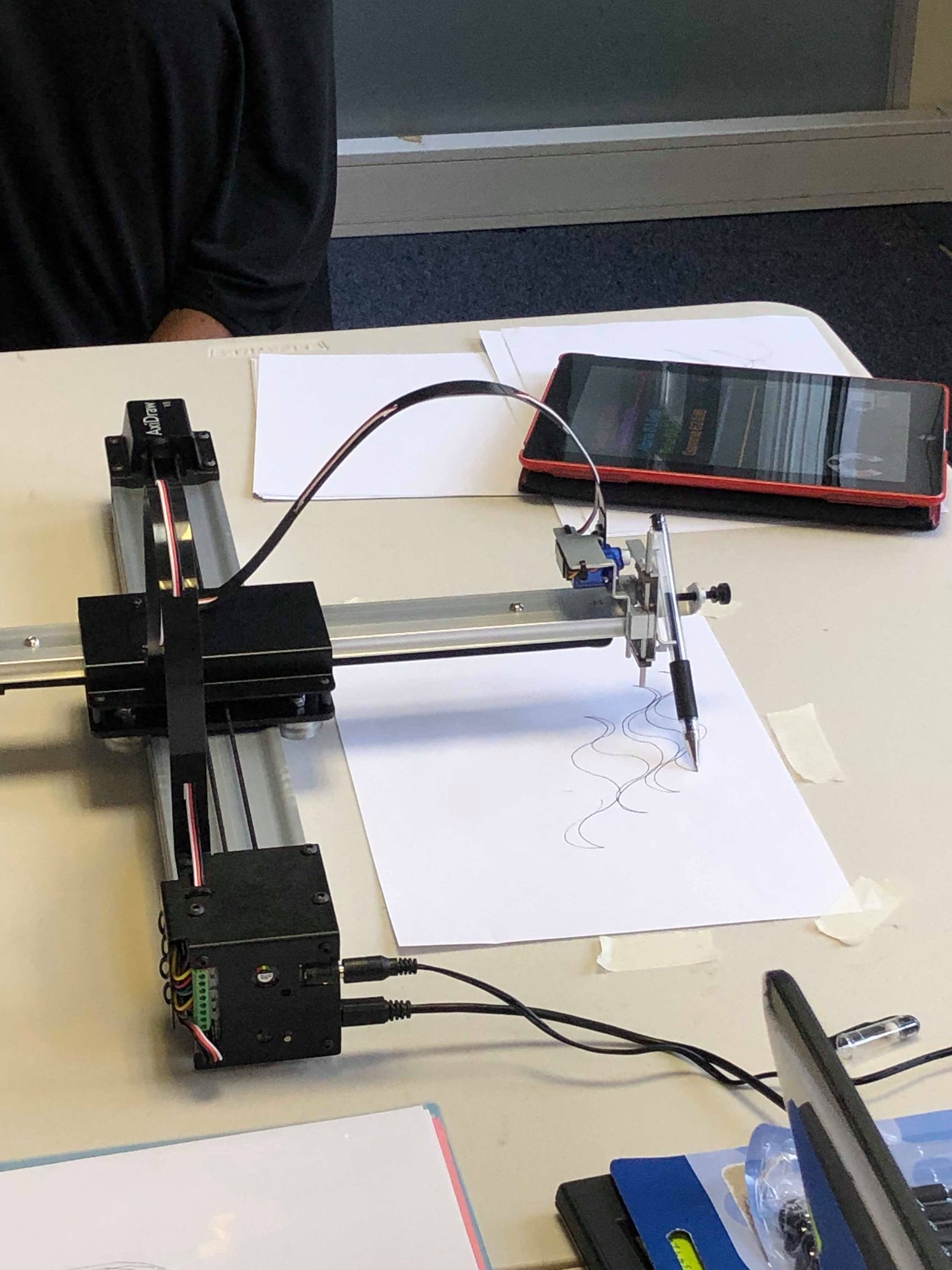
From January 11th-16th I was at Arcadia Gallery in Coventry for a second showing of my project Cinematica, which uses an EEG brain monitor in combination with a pen plotter to create brain-controlled drawings. Members of the public were invited to come in to the gallery and have a go at creating a drawing by trying on the Muse headband and watching the plotter work. Drawings were either kept by the participants, or displayed on the wall.

A13A92AA-9E3A-4EB5-82F5-49C5B8818B59For this second exhibition I changed the design to a sort of geometric flower that moved in a clockwise direction. I found that having a circular design benefitted the project as the pen was far less likely to travel beyond the limits of the plotter and therefore I didn’t have to keep stopping the program to reposition the pen, but also because moving in a repeated clockwise motion meant it was easier to spot variations in brainwaves. I continued to alter the design during the exhibition between visitors, changing the size and shapes slightly. I also found that there was a lot of variation between my brainwaves and brainwaves of participants, so on the third day of the exhibition I began to spend more time on calibration; I would set them up with the brain monitor, look at the programme for a while to see the values coming in from the EEG, so that I could figure out the range of their waves and adjust the programme accordingly.
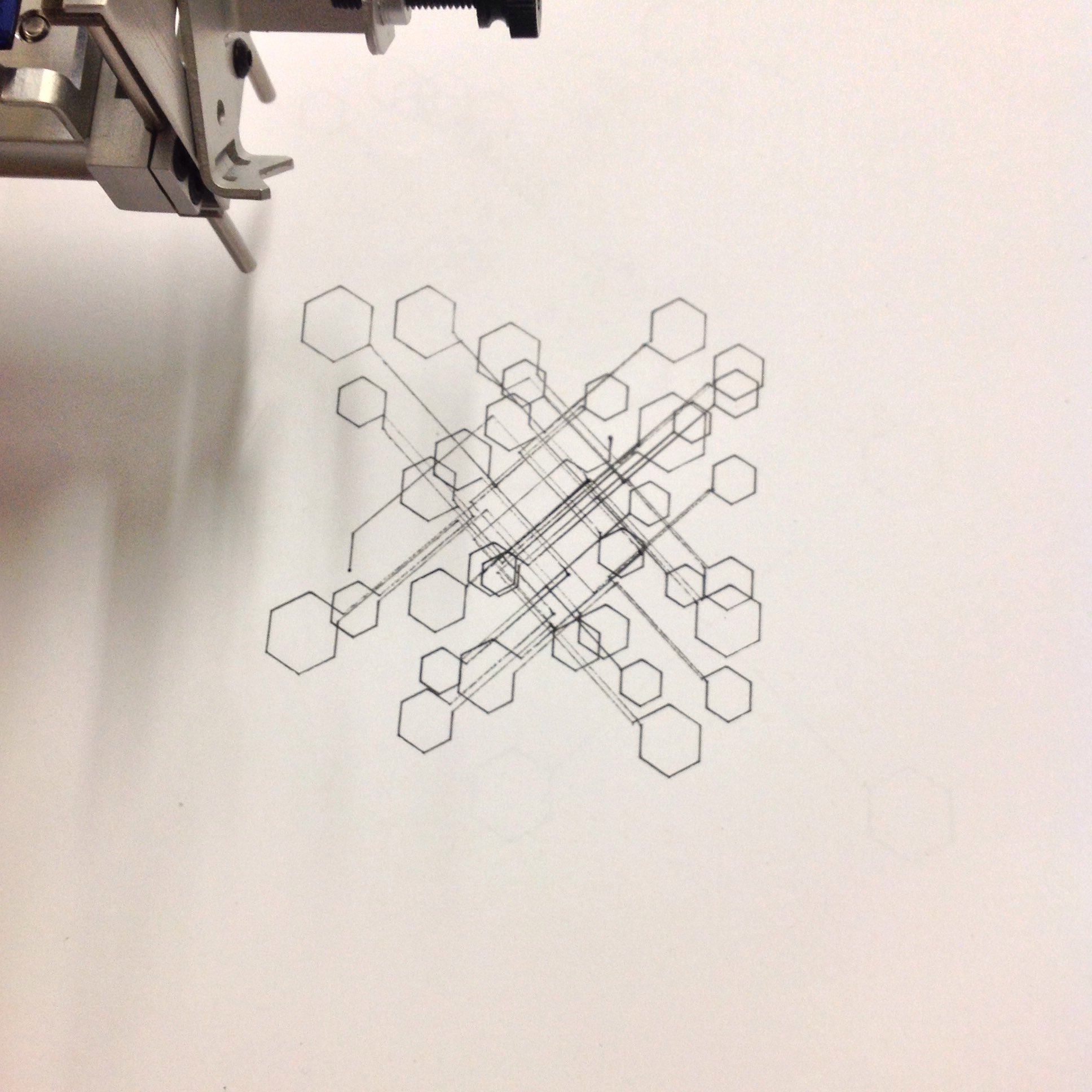
One of the most interesting findings was when a man brought in his eight-year-old daughter. Although her brainwaves showed on the Muse Monitor app (the app I use to read the EEG waves via bluetooth), no data appeared in the computer programme that the brainwaves are streamed into and therefore I was unable to draw anything. Numbers either displayed as 0 or ‘-inf’. Initially I considered that this was because children’s brains are known to have vastly different EEG results than adults, as their brains are less developed. However, the next day I saw a young child of around three years old who had very clear results in a similar range to some of the adults who had visited. From this I can only guess that the first girl had just not been able to fit the monitor properly, for example if it was not tight enough or not positioned at the right height on her forehead.

B95FBE0F-B0D2-42FD-9915-60FC6963D447For the next outing I would like to improve some of the technical aspects; I need to get used to the routine of calibrating and making sure I explain properly how to wear the brain monitor, as some people had difficulty fitting the headband and therefore there was a weak connection (and in one case, non-existent). I would possibly use better quality paper, and better pens. Sometimes the ink came out too light, partly because of bad quality pens, but also because I needed to adjust motor speed so that the pen was spending long enough in one spot for the ink to reach the page. I also need to work on getting the drawings more centered so that there is more consistency when comparing drawings. It was suggested that I pick shapes such as lines that are easy to compare as well, which is something I intend to work on throughout this year.
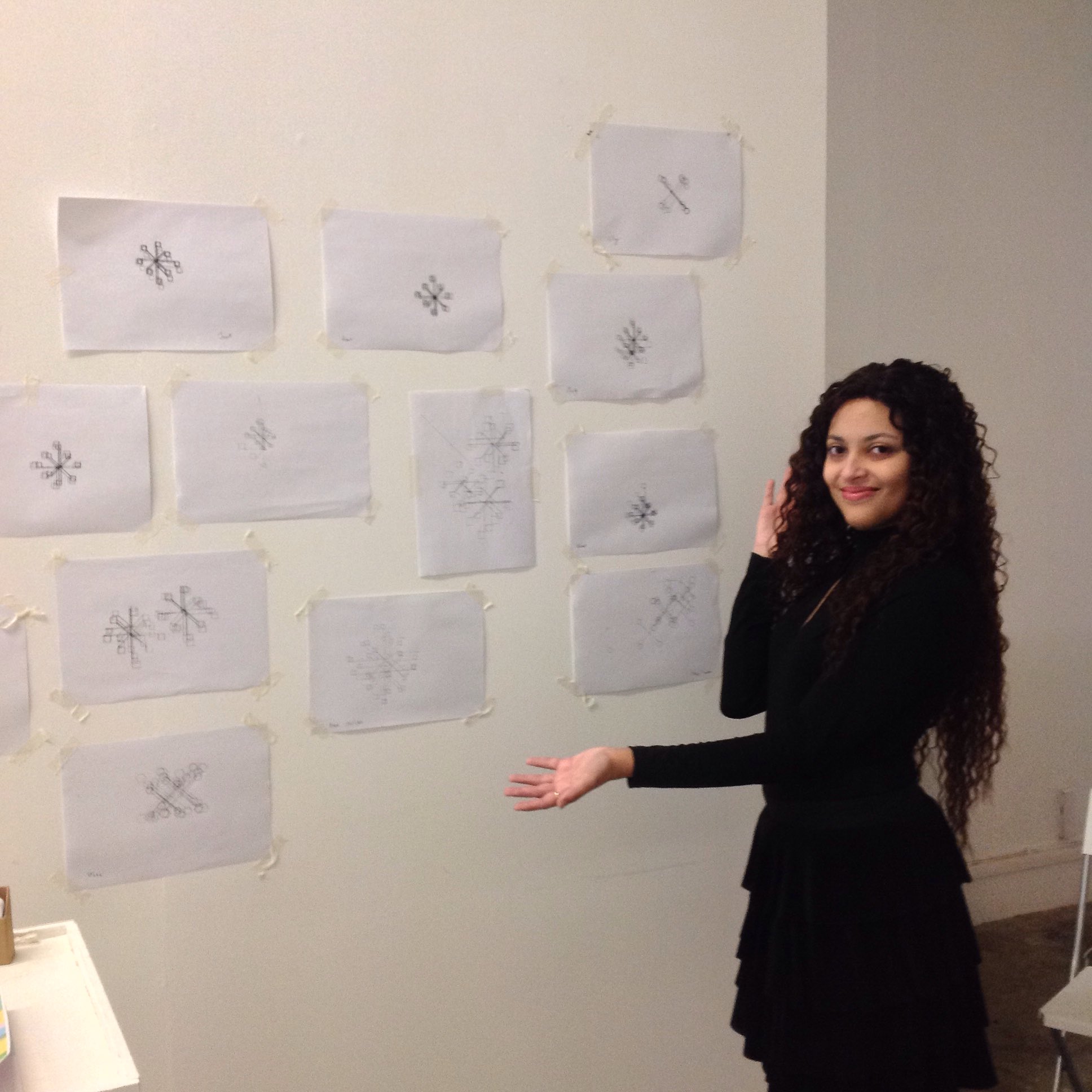
There was an overwhelmingly positive response to the work. The majority of visitors were other artists who had found out about my work through Twitter or Instagram, and a couple of people who also worked in the City Arcade also came in to try it out. Some visitors had specific interests in plotters and fabrication so they were particularly excited by this project. I felt that it was a great opportunity to network with Coventry artists and get to know the scene. I’m excited to continue developing this project as the years goes on!

DF9DF711-DFD4-4E27-B05E-91569DD2D51A

[Photos from Rosa’s Twitter Feed @RosaFrancsArt]

‘…a totally enclosed window for us to explore, experiment, and create exactly what we wanted…’

Ryan Leder of Theatre in Black reflects on their recent Nest Residency:

‘Loop’ was conceived between myself (Ryan Leder, playwright) and Helen Crevel (performer) on a week-long residency in ARC Stockton. At the time, we didn’t know what we wanted to make – we arrived with only ourselves, a loop station, and a copy of Duncan MacMillan’s ‘Every Brilliant Thing’. Originally, we thought we were exploring legacy, but by the middle of the week – we were talking about a subject we both felt much more personal about: loneliness.

This meant we were making a show for people who felt lonely. This meant we couldn’t expect audiences to come to us. We needed to make a show that reached our audience physically and with resonance. Walk in: Talking Birds.

Our introduction to Talking Birds was one of those wonderful accidents – I was taking part in China Plates’ Optimists scheme where Talking Birds were a guest speaker. As they spoke about non-conventional spaces and reaching audiences, I felt like the stars had aligned. I only approached them to ask for some advice, but was instead encouraged to apply for the Nest Residency. We did, it was successful, and suddenly the whole project seemed considerably more achievable.

Our residency took the form of: a week-long research and development in Theatre Absolute’s Shop Front Theatre in Coventry: a financial contribution to help with the costs of that week: access to the difference engine for ‘Loop’s tour this November/December.

For those of you unaware, Shop Front Theatre is exactly as it says – a converted shopfront in a shopping centre, now one of the most exciting and unique theatre spaces in the Midlands. The team and I personally dubbed it “the perfect place for research and development, the worst place for rehearsals” – because being there didn’t feel like work.

There was no pressure, no outside eye asking us to justify our time – we were in a safe and supportive space that we were allowed to temporarily make our own. We were literally given a key – and thus offered absolutely flexibility to work exactly how we felt necessary for the process. It was a joy to travel to that space each day – and some of the best work of my career so far took place with the city centre right outside the theatres window walls.

The financial contribution was the addition that made it feel as though the whole thing was too good to be true. So often at these emerging stages space and support can feel like all you deserve, but Talking Birds recognised the time and risk involved – and offered to take it off our hands. Suddenly the space they’d provided became not only a physical one, but one in time – a totally enclosed window for us to explore, experiment, and create exactly what we wanted for the betterment of our audience.

At time of writing, we are a few weeks away from rehearsals for ‘Loop’, and Talking Birds’ support has been integral. The show has grown and evolved in ways that we couldn’t have anticipated 2 months ago, yet alone one year, and we now feel like we have something that can truly achieve our aim of reaching audiences, physically and with resonance.

Thank you to Talking Birds.

If you’re interested seeing our show, we’ll be performing at:
The Core at Corby Cube, Nov 22nd
ARC Stockton, Nov 27th
Mansfield Old Library, Nov 28th
Arena Theatre, Nov 29th
Forest Arts Centre, Dec 3rd
Attenborough Arts Centre, Dec 5th

Ryan Leder, Theatre in Black

Cinematica: Artist Rosa Francesca reflects on her Nest Residency visualising brain data.

Artist Rosa Francesca reflects on her Nest Residency:

Cinematica is a digital art project using an EEG monitor in conjunction with an XY pen plotter to create visual art. The participant is invited to wear the EEG headset and their brain data will then be sent to the plotter giving it directions in which to draw, producing in the end a ‘mind-controlled’ drawing. This project was developed during a Nest Residency supported by Talking Birds.

I began my residency at the start of June 2019, and I had applied to Talking Birds in particular after hearing about them through the Coventry Biennial open call. I was particularly impressed with their commitment to accessibility, working with disabled artists, and creating environmentally conscious work. I felt that their views aligned with my own, and in particular related to the aims of my work.

3Dspirals

I first had the idea for Cinematica after being diagnosed with Tourette Syndrome at the start of 2018. I had suffered from motor tics and a few vocal tics for most of my life, and waited until adulthood to seek diagnosis. Although it no longer affects me as harshly as it did during my teenage years, I am a member of an online community for adults with Tourette Syndrome and can see the debilitating effects on others less fortunate than myself. One man described how he was no longer able to make art because of his motor tics which rendered his hands to unsteady to hold a pen or a paintbrush. Other members suggested that he tried digital art, but he wanted the ability to create a physical drawing. I decided then and there to create a means of physical art creation without the necessity of fine motor skills.

I had recently purchased an EEG monitor for artistic purposes anyway, and thought it might be good to put it to good use alongside a plotter, which is a robot arm that draws with a pen and paper moving along an XY axis. Through my Nest Residency, I was able to get support to purchase a plotter and to learn to manually code it and figure out how to send data from the brain monitor to the plotter to create real life brain drawings.

hellocov_4

The residency was invaluable in that it provided me with the physical space to contain the machinery, but also gave me a space away from home where I was able to focus all of my attention on this project. Without time constraints and deadlines I was able to work freely without pressure, but the space still allowed me to stay motivated. Janet provided an incredibly useful sounding board, as did other studio holders in Eaton House where my residency was based. It was a wonderful opportunity to meet other local artists and connect with like-minded individuals, and I hope to stay in touch with some of them through the regular Artspace networking events.

hellocov_1

I was able to present a first draft of my project at the Hello Cov exhibition for Artspace studio holders at The Row in Coventry, and the response was overwhelmingly positive. Although at that point the drawings did not look particularly ‘pretty’, it was still fascinating to see how different people’s brains produced different drawings, and allowed me to build a portfolio to compare how the technology worked for different people in different states of mind.

Overall I am incredibly grateful for this residency. I feel that I have achieved more than expected in this project, and can now build on that knowledge even further.

IMG_7963

You can follow Rosa on Instagram @rosafrancesca.art

The importance of Space and Place: from Coventry to Volgograd

Guest Blog by Nest Resident Artist Sylvia Theuri, reflecting on her Nest Residency.

I began this residency with the aim of further developing my artwork, in particular a project which focused on engaging with Coventry’s twin cities. The twin city that I was concentrating on during the residency was Coventry’s first twin city; Volgograd. I wanted to create new work outside of my home environment and discuss ideas with other artists. I was especially interested in having discussions with Talking Birds as they had previously created a project around twin cities with their “Twin Story” project.

The residency gave me space to think, which is so vital in being able to create interesting and insightful artwork. I was also able to spread out in the studio space, rather than be confined to the dining room table, which often happened when I worked from home. It is interesting that my work is all about spaces, yet I often have limited space to actually create the work. 

IMG_6268The residency also gave me the opportunity to talk. I talked with both Janet and Derek about the city of Volgograd, and because they had both been there, they were able to help me to understand the city better. I talked to other artists based at Coventry Artspace, my temporary neighbours. The residency became somewhat of a “third place” for me, somewhere away from my home environment where I could come and feel connected.

At the end of the 9 weeks, I felt like my work had developed, but more importantly I felt that the way in which I thought about my work had developed more. This was because I had focused time to read, and question myself and my work. Looking back on this residency what I am most thankful for is the “space” I was given to come and think about and engage with ideas about space, ironically.

Photo credits: Volgograd Photos by Nastya Tol; Studio photos by TBs; Postcard washing line and works-in-progress by Sylvia Theuri.

Link to Sylvia’s project site

For more about Sylvia and her work, see her website [link to external site].

GUEST BLOG: Contemporary visual artist Andy Sargent reflects on his month-long Nest Residency with Talking Birds.

Nest Residency No 1 by Andy Sargent – Contemporary visual artist.

As I write this, I am looking back on four weeks of a residency organised by the wonderful Talking Birds which ended on the 22nd March 2019, that took place at Eaton House in Coventry. The studio space was provided by Coventry Artspace, up on floor 11, which is I think, the highest place I have ever created work!

54800141_2295069170544789_5751540149460664320_o

I wanted to use this opportunity to further my ideas on a series of works called “Hidden monster”, which deals with the subject of sudden (and permanent) injury, the impact it has on one’s life, how one deals with having to adjust to it, other peoples perceptions of it, and so on. It deals with the isolation, pain, depression, vulnerability, and struggle that comes with disability. I use the motif of the “Hidden monster”, and through this character I can describe the issues I have faced, and still do, as I have first hand personal experience.

53609536_2271343556250684_2821285101013303296_o

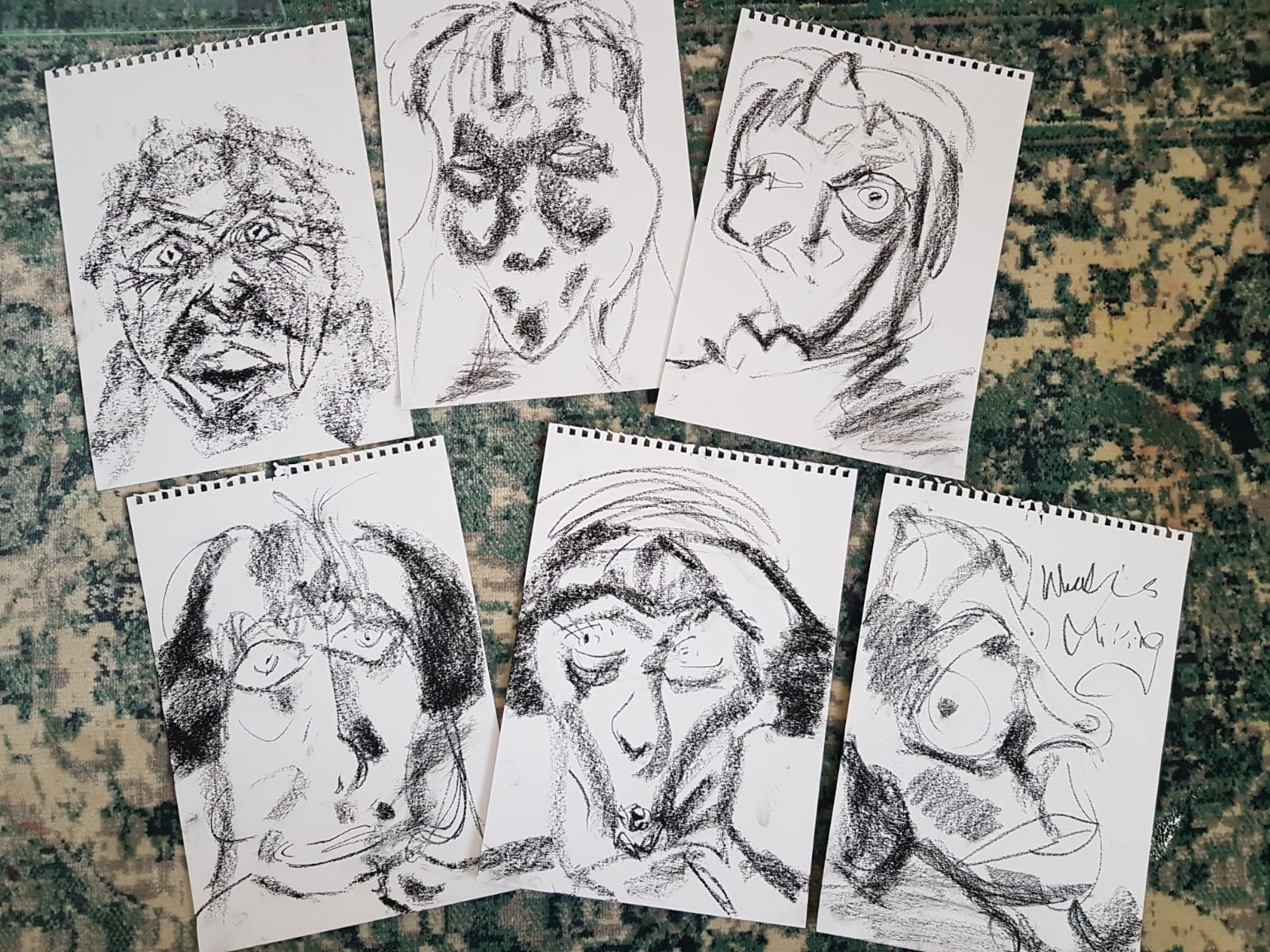
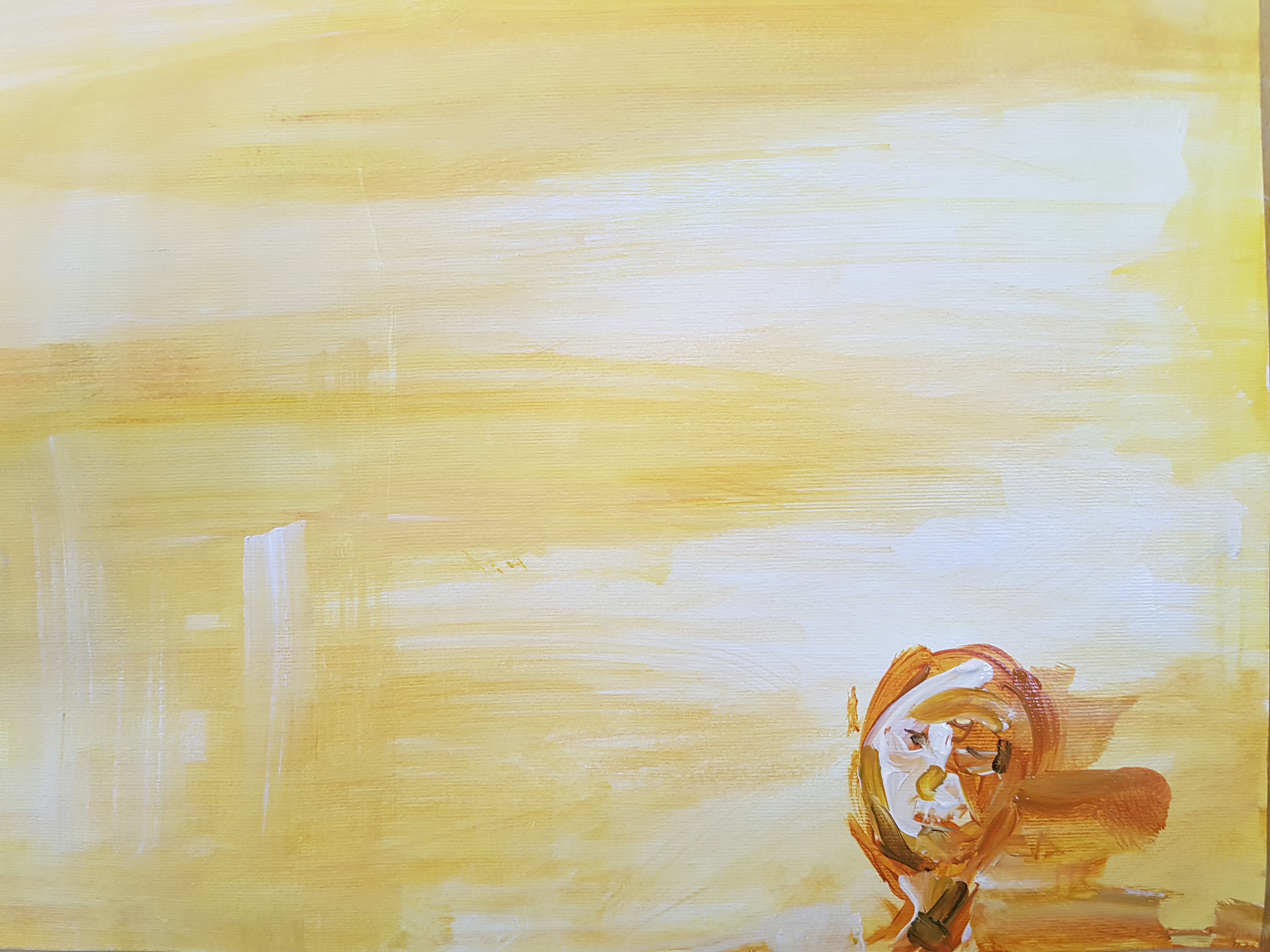
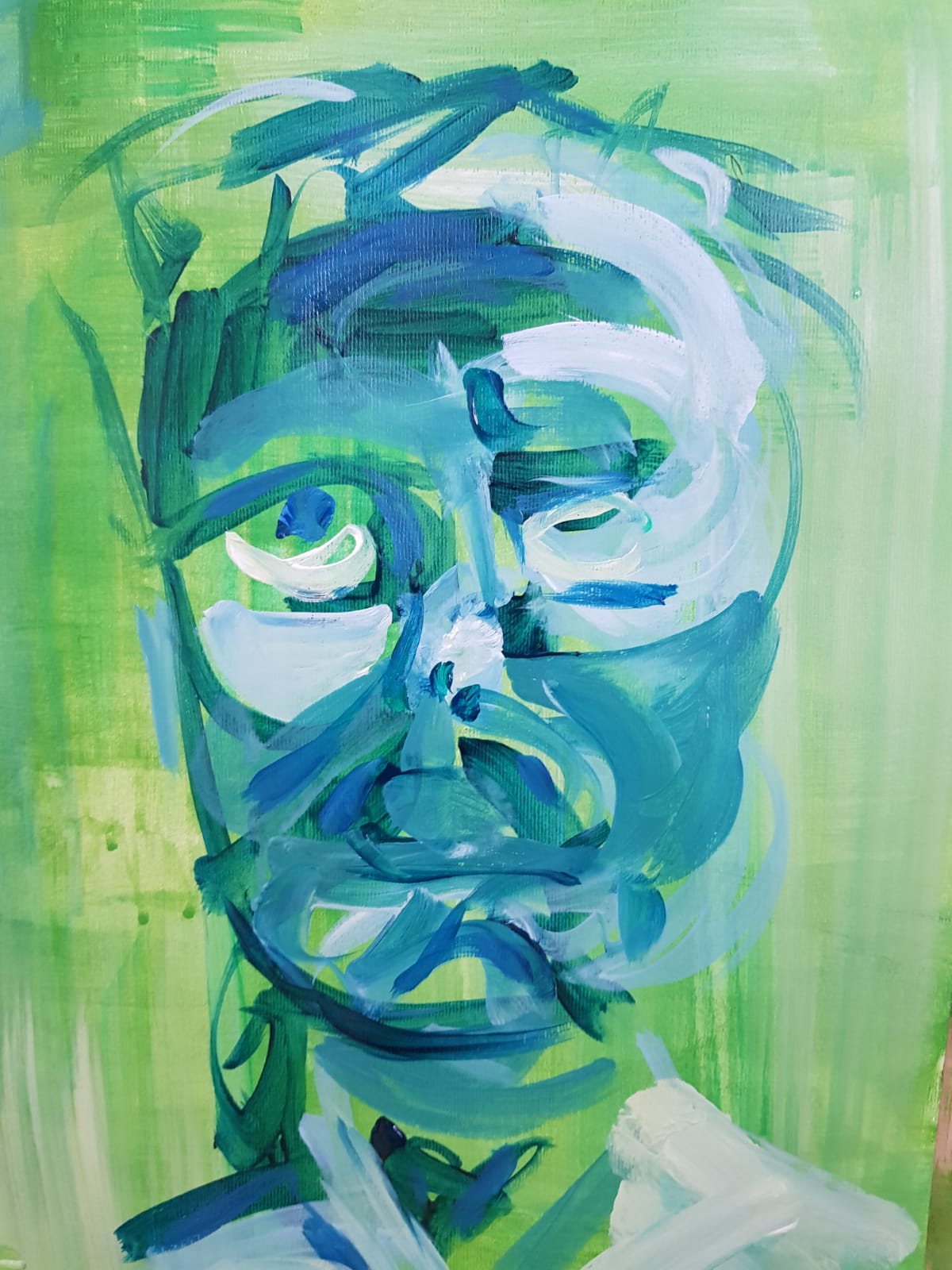
This residency allowed me to expand my ideas, and as I don’t have a personal purpose built studio space, I jumped at the chance to take up this opportunity. Even though I struggle daily with mobility issues, I made sure that I could get into the residency as much as possible, to get full use of the studio space provided. From day one, I started creating lots of charcoal drawings, mapping out and moulding images that could be used for three dimensional and two dimensional works. These ideas then filtered into paintings on either board or canvas, small sculptures, and also two large banners or wall hangings. All these works dealt with a multitude of subjects to do with this over-arching subject of being “the monster”. Some of the work dealt with “who is the monster?”. I had been called a monster after my injury, however I see ignorance and hatred towards the disabled as far more monstrous, than someone who has found him/herself on what has been described to me in the past as “the scrapheap of society”. I cannot, nor could I, speak for all disabled people, however these works represent a collection of outpourings on a subject often swept under the proverbial carpet!

53164953_2271221616262878_7262043794860670976_o

During this residency, Talking Birds were busy contacting various people and organisations they saw as being interested in seeing this work and meeting me. I got to discuss the work, the issues depicted in it and life as an artist with physical limitations. Many ideas were discussed, ways and places to show the work, reactions to seeing this work, how the work could be presented in other forms etc. Certainly, from being an artist who lives on the outskirts of Nuneaton, away from the cultural centres in this country, the residency with Talking Birds provided me with a way to raise my profile, and be noticed by more people, getting the message out that my work exists. One aspect of becoming permanently injured in my case, is that you lose your career/job, and earning money becomes a major issue. So not only does physically getting out to meet people pose a huge problem, but you often can’t afford to go anywhere after you’ve paid your essential bills! So a major part of this residency was meeting other very creative people, and feeling, albeit temporarily, part of an artistic community.

53098717_2271244182927288_6700125801821503488_o

So, on reflection, this Nest Residency has been a fabulous four weeks in which to get work created, meet great folks, plan further ideas and opportunities. I would certainly recommend to any other artists who consider themselves disabled to apply for a Nest Residency. You never know what it may lead to!

(A huge thank you to Phillipa Cross, Janet Vaughan and Derek Nisbet from Taking Birds, and Mindy Chillery at Coventry Artspace for making this residency happen. Also many thanks to all the artists, arts organisations, and arts professionals who came to see my work during my residency)

Andy Sargent.

[Photo gallery pics by Talking Birds, Photos in the text by Andy Sargent]


The Nest Residencies are a key part of Talking Birds‘ Artistic Programme for 2018-22, funded as part of the company’s membership of Arts Council England’s National Portfolio, and aimed at D/deaf or disabled and/or Midlands-based artists. For information on how to apply for a Nest Residency, visit Talking Birds’ website.


Welcome to our first Nest Residents!

One day, (funding pending…) The Nest will be a real place. Until then, The Nest is wherever we can find a space to support our Nest Artists’ Residency Programme – and we’re really thrilled to announce that our first two artists have now taken up residence in studios at Eaton House (big thanks to Coventry Artspace for their help with this!).

Andy Sargent started last week and has already practically filled his studio with sketches, paintings and sculptures which are adding to his ‘Hidden Monster’ series exploring “the issues of loneliness, isolation, abandonment, negative reaction, pain, depression, physical instability, poverty, all created by sudden physical disability due to spinal injury.”

IMG_5220

Digital artist Sylvia Theuri started yesterday. She will be using the residency to continue her dialogue with Volgograd (begun through her postcards project) and to make some pieces that respond to the photographs and messages from the individual in Volgograd that received and responded to Sylvia’s Coventry postcard.

IMG_5357

We’re really looking forward to seeing how both artists’ works develop – and to the many interesting creative conversations we hope to have with them (without interrupting them *too* much!)

>> If you are a D/deaf or disabled and/or Midlands-based artist and are interested in applying for a Nest Residency, you can find all the details here.