Leanne Moden reflects on her recent Nest Residency
At the end of April 2022, I spent a beautiful, sunny week in Coventry with Talking Birds, as part of their Hatching Residency.
I was really excited to work on a completely new idea – a one-person show based on my recent experiences of chronic illness – and the residency gave me the headspace to finally start the process of thinking about the project, rather than just thinking about thinking about it.
In 2021, I had a sudden and frightening period of ill-health, and the experience really showed me how invisible and chronic illnesses are often treated in the UK. I wanted to explore the highs and lows that come from navigating the world with a chronic condition, with a view to turning this into a piece of autobiographical theatre.
One of the things that struck me most about getting sick was how worried I became about ‘not being useful”. When I was incapacitated by my condition, all I thought about was how much time I was taking off work, and how inconvenient I was being to those around me. That made me think about the current societal narratives around productivity, usefulness, and community, in relation to illness and disability.
During my first couple of days on the residency, I did a lot of thinking, note-taking, and reading, and I wrote pages and pages of stream of consciousness narrative. At the end of each day, I worried that I hadn’t written enough, or used my time as wisely as I could. This was pretty ironic, given I was meant to be writing about productivity and rest! So, by Wednesday, I vowed to just go with the flow, and not get too het up about “being productive”.
As a result, I spent the final few days writing around the themes of the show, as well as plotting the story arc, thinking about how “Deal Or No Deal” might be the perfect metaphor for the Just World Hypothesis, and generally getting super excited about what I was writing.
I also found time to write a draft for a commissioned piece for an unrelated project, and I spent a day working through my current archive of poetry – finding stuff that I’d started but failed to finish, and earmarking it for editing in the summer.
It was almost as if the fear of not being productive was causing me not to be productive. It all felt a bit meta, truth be told! But actually, it was all grist for the mill, and I wouldn’t have found time to consider my own relationship with “feeling useful” if I hadn’t had the time/space afforded by the residency.
It was also really lovely to meet and chat with other creative people during the lunches, and these serendipitous conversations were super inspiring too. I’d like to extend a huge thanks to everyone at Talking Birds for such a lovely, welcoming, and creative experience. I hope it won’t be too long until my next residency!
I have just completed a two week Nestival residency with the amazing Talking Birds organisation. The residency ran across two separate weeks in March 2022 (due to falling ill in-between the scheduled 10 day period) and took place inside The Nest; Talking Birds’ beautiful base adjacent to the Daimler Powerhouse on Coventry Canal.
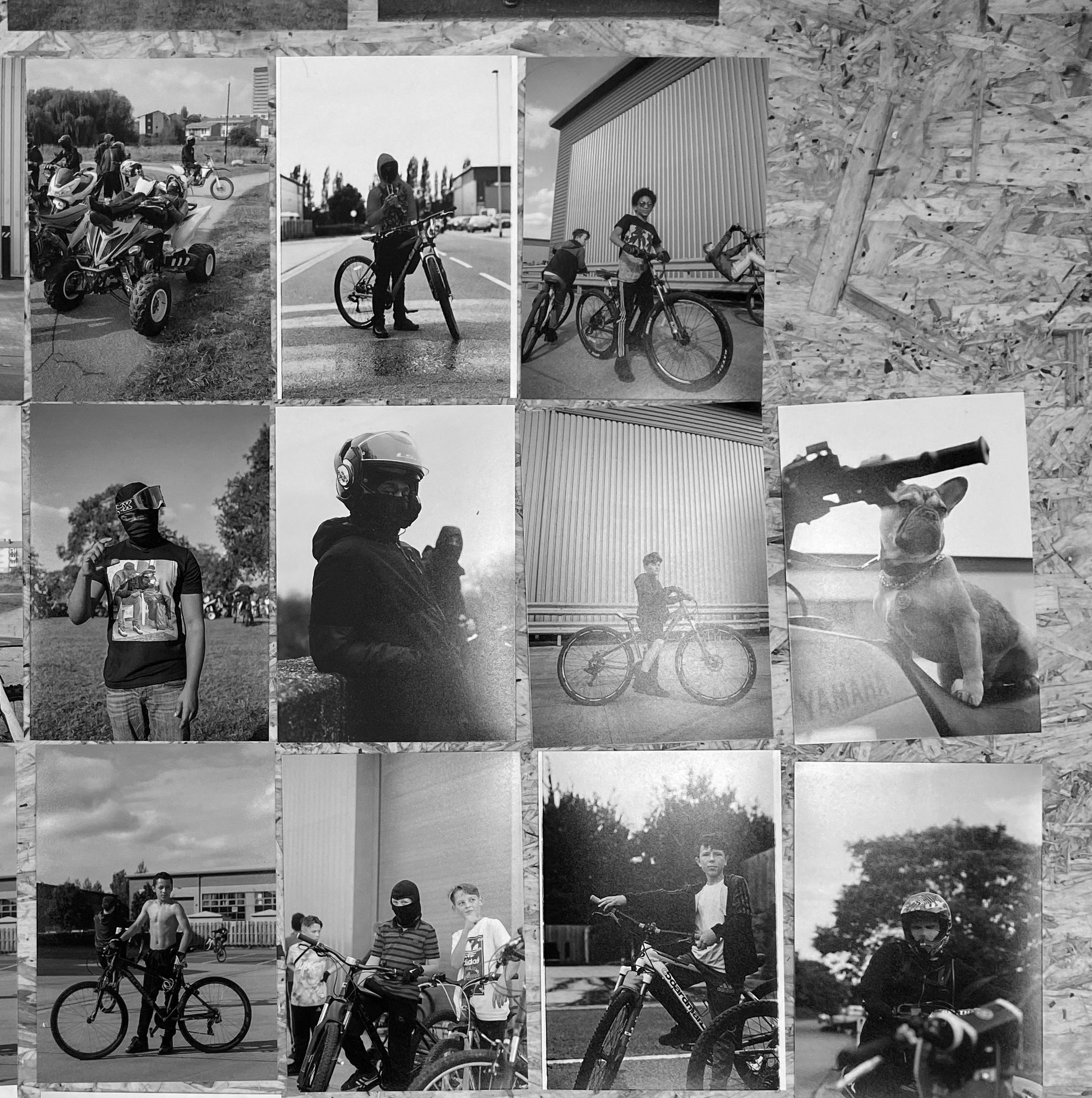
The residency allowed me to take a break from work and gave me the space and the freedom to look at my project work with fresh eyes and excitement. I worked my way through my archive to start the lengthy process of curating my work into a photography book. Due to the nature of being freelance and constantly needing to look for work and move forwards towards the next job, whilst I always ensure I am shooting personal work and passion projects, I often struggle to find the time to develop and explore ideas in depth and work on the post production side. This residency gave me the freedom to delve into my hard drives and rediscover old work that has been untouched and unseen for weeks/months/years.
The first week consisted of trawling through hard drives and collating all of my images from a specific documentary project and then re-editing a chosen selection of images to be printed. The work in question was a documentary project shot around the UK over the past 7 years focusing on the bikelife subculture and movement. Revisiting old work with fresh eyes and new perspectives allowed me to view previously ignored work in a completely different light.
I then printed a wide selection of images for my second week at Talking Birds so that I could see the work in its physical form and as a ‘project’ for the first time. Having the space in the studio to lay out my photographs next to each other allowed me to see what worked together and create ‘categories’ and ‘collections’ of images. It also highlighted where the possible gaps are in the work, so that I can see what is missing and now plan what needs to be photographed in order to complete the project.
The Nest is a great creative hub, with clean and spacious studios to work from. I was lucky enough to experience two different studios due to my residency being spread across several weeks; Space Odyssey in my first week and Solid Blue in my second week. Changing my environment often leads to an increase in productivity and I was very lucky to have this unique experience of being able to enjoy two studios at The Nest.
An extra benefit was having interesting and inspiring conversations with staff and other residents. Other Coventry photographers were doing a different residency towards the end of my time at The Nest and I was able to show them my work for critique and exchange ideas / opinions.
Thank you to everyone I met at The Nest, I promise I won’t be a stranger. To any creatives in Coventry reading this, make sure you apply for a residency if you think you could benefit from it, as it’s such a great opportunity within the city.
(Paul Tafaro reflects on his recent Nest Residency)
Plan first
March 2022. I was pleasantly surprised to be offered a two week residency at Talking Birds. I clenched my fists and shook them, a gesture from footy. I’d found every excuse not to work at home. Here were two weeks, ten days, in a room, giving myself permission.
I had thought about writing this play for over a year. Subconsciously working on it perhaps. Every time I mentioned it, friends said ‘YOU HAVE TO WRITE THIS!’ I’d reply, ‘No you write it!’. Untrue.
A few months earlier, I had collated all of my notes (iPhone notes, email drafts, WhatsApp conversations, underneath loaves of bread) into a 29 page Word document. I distilled these notes ‘research’ into an 8 page scene plan. I had written out the plan a few weeks before the residency. The plan consists of scene headings, bullet points with tent poles of interesting things that should be included in the scene, the main action of the scene (the thing that needs to happen) with snatches of dialogue to consider including. This plan went through a few drafts, as I initially had fifteen scenes. When I have written a plan I know that the play can be written. On the residency I’d forget what the next scene was, but the plan steers me back and keeps me above sea level.
I figured I had a three act play. Nine scenes. One location. Each scene would be a mini pressure cooker play in itself. The audience a fly on the wall.
I had also worked out who would be on stage at the start of each scene. This was to create contrast, and focus on different dynamics within the play. Act I I C & E II A & D III B & C IV E Act II I A II D III B Act III I A II C
Interior design
On the first day of the residency, I completed emails before lunch, drawling the line under the first stage of another project. It took me two days to complete scene one. The longest scene (16 pages). The first scene of a play is sometimes tricky. I was introducing five characters and had some exposition. But it was also the scene where everyone, for the most part, is getting along. On the second day, I was behind, sat in the comfy chair and had a rest.
I was in the blue studio and decided to move the room around a little. On the second day, I had pulled out diva card #31 and asked for a computer chair from downstairs. This was kindly accommodated (brought up in the lift didn’t you know!) by Philippa. I adore natural light and faced the window but didn’t want my back to the door (opposite the window). I positioned myself near the radiator. This was partly so I could see if people were at the door. Whilst writing, I sometimes listen to classical music in the background – like Mahler or Shostakovich. Anything grand that I don’t need to dance to.
After the request for the computer chair, I realised that I’d also got used to the laptop at a particular height. I’ve lived in places without a desk before and used a chest of drawers that I opened up and balanced the laptop atop clothes. I was currently using some cardboard boxes and a Jamie Oliver (useful Xmas pressie) cookbook at home. What could I use here? Is that a bin?
It all seemed minimalist, possibly Scandi and in keeping with TB principles (I seem to have removed the bin for the photoshoot). Frances also kindly brought up the cushion in the photo for my arms leaning on the wooden table. I never knew I was this unbelievable. Scene a day.
Journey not the destination was that?
On the journey to the residency, I find myself noticing the tops of buildings. What was the story behind these? What were/are these rooms used for? There’s a moment when you drive into Radford, by Barr’s Hill, on a bus, that you are really quite high and can see quite far. I find myself wondering what the structure rising high above the rest was? Was it Warwick University? Was it, no surely, student accommodation?
On one journey, I see adult twins dressed in the exact same outfit, holding the exact same gym bag each. I think about mistaken identity … I wonder if there is enough lightness in what I am writing?
One morning at a stop, I watch a lady collect something off someone. She goes to another. I realise that she is asking for money. Out of four people, two stop and hand something to her. I think about what the money might be spent on? Who this person lives with? Why did I believe out of four people, four would not have given her anything?
12.38pm Lunch
The communal lunches were lovely. For an hour a day, everyone at TB generally gathers for their lunch downstairs, sometimes outside, if the sun’s got the memo it lands on Janet’s plants, everyone finishes their lunch and you can stay outside a little longer and sway to a summery song like Two Occasions by The Deele. For these two weeks you are freelance, child. On different days, different people are in. Some days my lunches lasted an hour, others two. Dez is an extraordinary raconteur. I needed any excuse not to work.
Plot twist
There would be an event and co-working day on Friday, the last day of residency – this meant no work Friday for me. Co-working days are a chance to chat and try brownies. Sometimes, I look at brownies through glass and imagine their taste. A van comes every day at lunch and sells food and drink. I haven’t bought a large Bakewell tart since Memorial park 2006 so I did relent once. I figured that I needed to finish the play on Thursday.
Work then
A working day might be 10.30 – 12.30, 2.30- 4.30 if the scene wasn’t finished, 9:30pm – 1:30am in the evening. A brilliant thing about the nest residency is that there is no expectation to create something, and you don’t need to be in the office.
I was surprised at how clearly the characters voices were in my head. One joy about playwriting, particularly when it works, is when characters surprise you. I had written out a plan with things that should be in the scene, but sometimes they didn’t end up in it, or characters entered the scene wanting something different (affecting but not changing the main action).
Some playwrights prefer to write by hand, even typewrite, but I like how the laptop can accommodate the speed of an actors thought.
Installation
The toilet upstairs is illuminated by a wondrous green light. I often used just this light when using the loo. It reminded me of a sort of nostalgic Megabowl laser quest/Drayton Manor ride which was potentially waltzers in the dark but I don’t remember. One day I was in there, I heard birds chirping? Later informed that this wasn’t from the NPO auditory access budget but real birds! Highly recommend a visit.
Wet Wednesday Will
Non-stop rain perfect working conditions. Dez made steps with a new score. I completed the first draft of the play. A year in the making, under the cover of rain. James Horner’s Brainstorm haunts me as we print double-sided. Feels like we we’re doing something forbidden. I had wanted to write this for a long time and was excited to get to the end. There were times when I’d come down for the communal lunch after an argument between characters (in my head) and the quietness of the adults in real life at lunch was an interesting juxtaposition. I really appreciated not being alone with my thoughts as one would normally write.
I used Thursday to learn how to put captions onto a YouTube video, thanks to an empowering tip from Janet.
I then spent a few days celebrating, resisting reading the first draft, a few more stretches of joie de vivre.
The residency was a beautiful experience. I had some lovely conversations. I spent one evening going to a dance class and another seeing The Batman. The weekend on another writing project. Knowing that I would be turning up for a few hours in the studio gave me a structure and time to focus. A laid back process. This was my first paid residency experience. Thank you very much.
melissandre varin reflects on their recent Nest Residency
i had my third residency with Talking Birds between the 7th and 18th of March – in-between spaces.
i had access to “Odyssey” studio space at the Nest, received £1000 financial support, and found comfort (once again) in a warm hug, a half-pronounced joke, an overdue catch up and a permission to be – me.
i ended up inhabiting the studio offered to me about 4-5 days across a 2 weeks residency, i never felt like i was feeling the space as i needed to. Was i avoiding the spaces i intended to investigate with this project? i guess that this question will stay in suspension. It is only at the last moment, last day of residency that i started to connect threads, bits and pieces of me in regards to this inavouée (undisclosed) feeling.
Where i needed to be was at linoleum dreams parked on the parking of the Nest.
But – i did not feel ready, in all the complexity of what being ready to re-visit an artwork i sweated in, dreamt in, loved in – could (have) mean(t).
i felt like avoiding, and accepting the fact that i came to this residency depleted for multiple reasons that i will keep silent in typed words but could expand on if you ever see me in the detour of a street, gallery, theatre.
– depleted – it is when i am most vulnerable to external forces. i felt the pressure to produce for the first time in a while at the beginning of the residency. But – returned to myself spiritually guided by (non)living ancestors. i paused on the fact, the need to have such pockets, portals, moments to come depleted, stay depleted – feel its wind of change and its static corners – without pressure to ‘sort it/myself out’. As an artist with mood swings, chronic depression, and care responsibilities – i never paused on the thought that maybe feeling whatever i am feeling, including depleted, did not have to be a feeling, space i needed to unknot but could – be – with/in.
Without performing Black joy, without performing Black queer trauma, without performing but being and trusting the fact that what was (not) happening was ok.
Sym and mel inside linoleum dreams, parked on the parking of the Daimler Power House, kindly supported by Talking Birds
i had pleasure though! Surrounded by beings i love and did not see in a while, taking time to share a cuppa, nurturing friendships learning about how/where Black queer artist friends grew up in in Dakar, Birmingham, Nairobi… working at Odyssey studio with a friend part of B.O.O.K (Building Our Own Knoweldge) working group, inspired by friend and collaborator Samiir Saunders i wrote the first version of my access rider (happy to share with anyone interested) – i got to know about myself and share it to the world.
Ok now that i am starting to list things it actually sounds like it was 2 full wholesome weeks. But i want to highlight the reality that these were interrupted with times when i had to cancel my days as i felt the need to stay still – i must admit that i spent a whole day watching Love Is Blind season 1 and 2 as well (learnt so much!)… . Also learnt a lot navigating the British Arts Show in Wolverhampton as part of a day trip investigating this aching research question: how do we create loving environments? (perspectives from Black queer artworkers who grew up on the African continent and in the EU/UK-based diaspora) –
this residency has been transformative – quite in line with most of Talking Birds’ work. as i am ending this annotation on the residency, i would like to share my love for the being making this organisation – a warm womb i (re)turn to while excited, on a high, depleted, lost ….-
Talking Birds, and its residencies programme is an essential example of what mothering could mean when it comes to the arts sector.
More on this slow-birth-ing creature i am working on or that is working within me in due course.
here is a snippet of a tentacle of this thingy that works and mixes my within for almost a year:
i would like to have conversations with members of my chosen family (mainly (Black) queer artworkers) this time and compile the transcripts of them – both work will inform a multi-language performance and multi-sensory installation i feel the impulse to make. With this project that lives in my heart i have the desire to investigate how senses of aesthetics, of what is art and what is not – are formed and informed by the built environment/ interior design/ furniture/ type of flooring / wall-paper and so on – we grew up in? How can this inform the creation of loving environments in the arts (too)? How can we create loving environments? Dissecting these questions by looking back at our immediate roots and acknowledging the power of ‘things’ in contributing in making us who we are now – i am currently thinking of expanding my understanding of my vibrant materialist approach.
As a dear being sent me on a low a couple of months ago: Octavia E Butler’s assertion in Parable of the Talents, “To survive let the past teach us”
These words will definitely find home on my skin through ink asap.
Co-AD Janet on why we have decided to pause a recruitment process part way through.
Last week we held interviews for the role of Nest Community Connector. We met five really interesting, amazing and unique humans, all of whom would have brought something really interesting to the role and to Talking Birds.
Indira Lakshmi reflects on her recent Nest Residency
Y E A H ! So Excited!
I was in Delhi, sitting next to my husband in a bar called ‘Dr Zombie’ decorated in neon green and black with plastic skeletons hanging from the celling. We decided to go out, things are opening up again in the city after the second dreadful wave of Covid, which seems to be rapidly fading from collective memory. I opened my emails and found out that I’d been selected for the Future Ecologies Nest residency. I was totally ecstatic to be able to have been offered space and time to develop my practice, and was eager to get started.
—-
September 5th. Back in England. Mixed feelings about being back. L o n e l y … u n c e r t a i n t y lovely weather 🙂 w=i=l=d=p=r=i=m=r=o=s=e sittiNGoN**thegrass
—-
15th September – 10am – canal trip – Dom Breadmore’s boat.
It takes a few minutes to get used to the motions of the boat, the sensation of buoyancy is something I’ve not felt in years. The last time I was on a boat was in Orissa, December 2017, Chilika lake, looking at gangetic dolphins. Being on the canal felt like Coventry’s secret mirror world, where everything moves in slow motion, watching the flora of the banks drift by, and the soft motions of the water felt surreal and healing.
C O C O N U T S –
There’s objects in the water that look like coconuts. I think of when offerings are given to the river Ganges, to show gratitude for sustaining life. I start remembering my grandma and the ritual when we immersed her ashes in Stratford upon Avon, because the river Avon eventually reaches the sea, just like the Ganges.
Dom explained that there’s a Hindu temple which backs onto the canal, and the coconuts are indeed ritual offerings. Something about the coconuts stuck in my mind. I feel they’re poignant metaphors for cultural displacement. I started to think about the diverse histories of migration to the city. My own family migrated to Coventry from Punjab in 1958 following the post-war call out for workers from the commonwealth.
The canal has a rich history. It was once lined with numerous factories and the homes of workers. A fascinating range of objects have been found in there including old machinery parts and even a grenade! Then there are these seemingly random, floating coconuts. They’re such loaded objects. They contain the energy of hopes, dreams, pleas, hundreds of prayers… They make me think of cultural displacement, not only within the Indian diaspora community I grew up in, but also within myself as I’ve navigated through both England and India. I’m a floating person, not truly belonging to either culture, that’s also a gift.
I started thinking about interactivity, as I knew my work would be potentially displayed physically at Random String Festival. I’d been thinking about passive participation in art spaces vs active participation, where the viewer considers the traces they leave behind in a space as well as what they take away. I’m also interested in technology bringing people together, physically rather than remotely in a metaverse dystopia, and how we create environments where physical exploration and movement can take place.
I constantly think about the body in space. How does the body inhabit the environment, how does the way we move/ position ourselves effect perception and vice versa.
I had been experimenting with the software Pure Data for a while, an open source visual programming environment. In Delhi I’d visited an exhibition where an artist had used Reactivision, an open source, cross-platform computer vision framework, to track markers to the effect of the viewer moving around and triggering a print command. I instinctively knew this was something I had to delve into, though initially I wasn’t sure how I’d use it.
R E A C T I V I S I O N == :s ….. 🙂 …… ❤
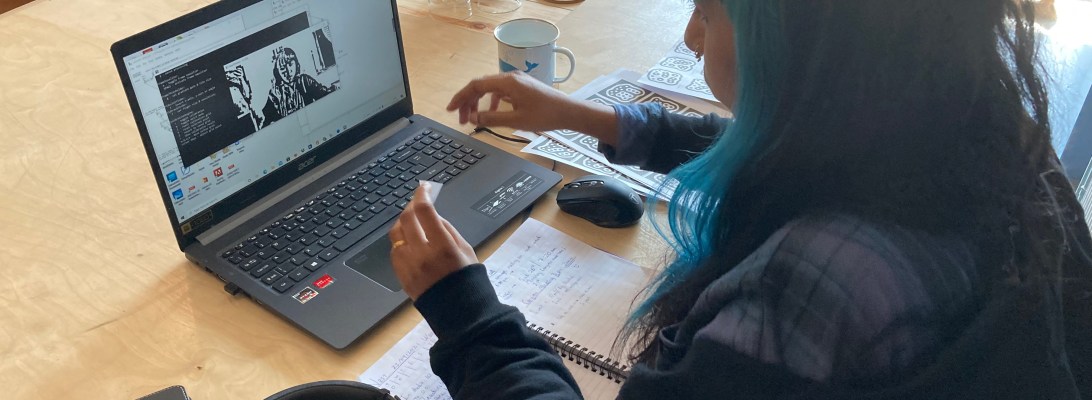
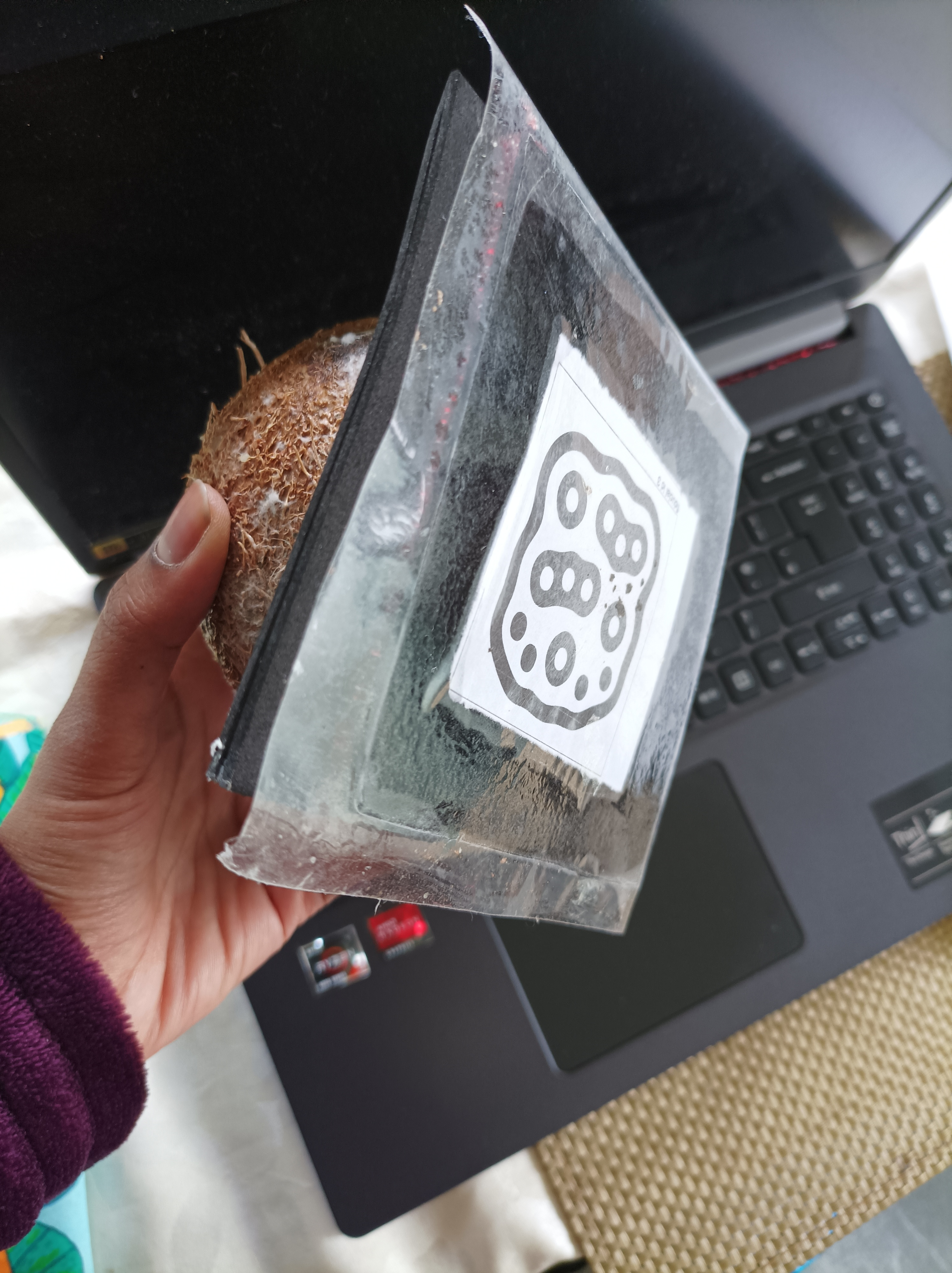
There was some refurbishment going on upstairs at The Nest, so I couldn’t access the studio. Frances helped me to print out sheets of fiducial markers, and I sat in the downstairs communal space and got to work.
I learnt the initial basics of programming during my MA in Visual Arts Practice at Ambedkar University in New Delhi, then carried on teaching myself. I figured out the basics with Reactivision fairly quickly, but getting beyond the basics took hours of sitting transfixed at my laptop.
One use of Reactivision is to track movement of fiducial markers. You move a fiducial marker – Reactivision tracks the coordinates and position – events are triggered depending on how you write the program. My process was – Reactivision feeds the X and Y coordinates into Pure Data, with that data you can assign certain events to certain markers, or to the X and Y coordinates of the markers. Initially I routed out the data to a digital synthesizer and started experimenting.
I wanted to find out what life was like living on the canal, in a boat. I remember when I lived in Leicester, my ex’s dad worked on a marina, I had some friends that lived in a boat too. I remembered bits of conversations from back then about what it was like to live on the water, the reasons why people wanted to get away from city life.
Frances, the community connector at Talking Birds, connected me with a friend of her husband named Marc Denny. Marc lives on a boat moored up in Trinity Marina, Hinkley. We drove up to meet Marc, who had gathered some of his friends together who also lived on boats there. We sat in a pub nearby and I recorded a conversation between us.
It was brilliant to speak to them, I wish I could have gone back and had individual recorded chats with them all but there wasn’t enough time. The main things I took away were that there was a greater sense of community, the pace of life was different away from the city/life on land, you had to be more mindful about your resources i.e water and heat…
I caught up with some friends who had lived on canal boats. They said life was hard in the winter but equally beautiful. Sensorially it’s a totally different way of life.
O C T O B E R 7th </3
Bad News… </3… S-l-o-w-f-u-n-c-t-i-o-n-i-n-g | h-y-p-e-r-p-r-o-d-u-c-t-i-v-i-t-y — Taking breaks to cry in all the video installations at Coventry Biennial.
S4DN3*ss s l o w l y thenfast ( ͡❛ ﹏ ͡❛) l a g
C A N A L sOng
I joined Dom and Anne from Ludic rooms for a trip down the canal, to record using a hydrophone (underwater microphone). The results were interesting but not what I expected. All the hydrophone recordings sounded like a motorbike…
I applied some reverb and added layers of guitar and vocals over the top.
I fragmented the song into separate tracks and inserted them into the Pure Data patch I was working on. I developed the patch enough to be able to use it for a table-top interactive soundscape.
T A B L E – T O P (( OMG Kill me now :’) )) C R E A T I O N H U R D L E LONGTIME
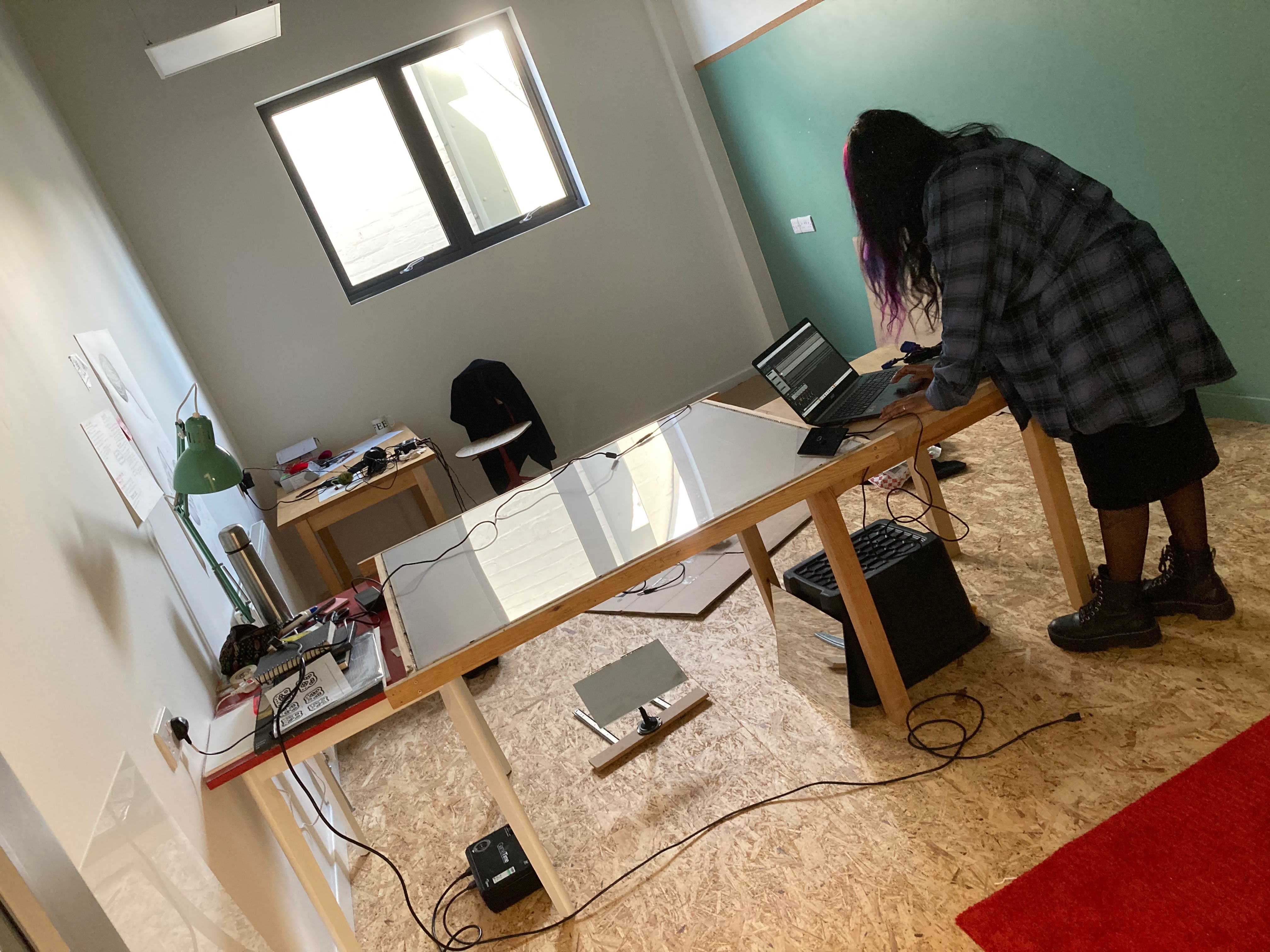
I researched different ways that people had used Reactivision and marker tracking with interactivity, and decided I was going to make a rear-projected table-top interface where the markers could be read from underneath. This was the plan:
Here’s an example of the moveable objects with fiducial markers underneath. I decided to use objects found in the canal which are anomalies; coconuts, litter, empty beer cans…
I borrowed a large piece of perspex from Ludic Rooms and initially began working with the perspex balanced on two tables. I began working with rear projection, which is one of the most frustrating things I’ve ever done…
s l o w l y thenfast ( ͡❛ ﹏ ͡❛) l a g
The code was now working well, but getting the hardware and physical elements to work was much more challenging. This is really what took up the most of my time, but I’m really, really glad to have had this time of trial and error. It’s been an invaluable learning process. I eventually figured things out, and moving forward I have this know-how in my artistic tool kit – I’m already planning the next development of this work.
My friend Tom Edwards helped me with making a wooden structure for the perspex, which we assembled at Random String Festival.
I wish I had more time to make things more polished. I think I utilised the time as well as I could, and ended up with a working prototype for the future. If I could do this again I’d do it with floating objects on water, in a shallow tank…
I realise that when you finally get over the technical hurdles your mind opens up to more possibilities, rather than being obsessed with overcoming tech difficulties. I heard a phrase in November that sticks with me ‘rationally working with what you have reveals hidden treasures’. I’m trying to do that. I’m not a software engineer or a trained musician, until now I’ve intuitively worked with the skills I’ve picked up at different points in life, and this residency has given me the time and space to develop my skills with programming. A new window has opened for me. Though I used found objects for the work at Random String, I know that now I can integrate my skills as a sculptor into a touch interactive framework, and I’m thinking along new lines with interactivity, games and experiences.
14th November, 2021, Random String Festival 😀
The display at Random String Festival was a really valuable experience. The work was interacted with a lot by people of all ages, it was a really positive atmosphere. The rear projection wasn’t perfect, my positioning of the mirrors is something I need to work on in the future, as well as refining the code and other hardware/physical elements.
One of the great things about the display was the constant interaction with the work, people were engaging and actively participating in the experience – people were having fun with it, having a laugh with their friends, children were fascinated with it…
I’m thinking about the balance between something which is a spectacle and still looks inviting enough to physically engage with.
I’m working on the next rendition of this table top interface for a gig my friend George and I are organising in March with our project Human Oils. I’m trying to create a game, where there are more obvious rules, more clearly defined ways of moving things around. I’m thinking noughts and crosses with different objects, just as an experiment.
(Coventry City of Culture video, me talking about the work)
I want to sincerely thank everyone at Talking Birds and Ludic Rooms for their support and for the invaluable work they do. This has been an incredible and valuable experience which I feel has really propelled me forward with my practice. ❤ 🙂
Let me take you back through time – to the evening of 31st October, 2020. Picture the scene: I’m working night shift, and the news comes through on the radio. The country is, once again, going into lockdown, which means I won’t be able to come into work for the next month or so. This was obviously not a good thing for many reasons, and yet I couldn’t help but be relieved at the idea of having several weeks of time at home to do whatever I wanted. Because an idea I’d been playing with had latched onto my brain, and it wasn’t going to let me go until I got it out.
That idea? An electronic concept album called Once Upon Two Times, which I did end up completing over the November lockdown. However, the idea did not let me go. In fact, if anything, it only grew after I completed the album, gradually getting wildly out of hand. Within a few months, I decided that the story had outgrown the original album, and that the format was actually constricting it – it needed to be something bigger, something different.
So, naturally, I decided that I needed to rewrite the entire thing as a stage musical.
This is no simple feat, as I’m sure you can imagine. I’ve never written a script before, but I do have a lot of determination, and once an idea has latched onto me, I find it very difficult to shake. In addition to that, this project very quickly became something that was important to me – as it grew, I realised that the story wasn’t just about what it seemed on the surface – about Time itself – but also something much more personal. It had become a story that wanted to be told. And even though I was very aware I was in well over my head, I was going to do something about telling it.
The most difficult thing, ironically, was time. Or, rather, finding the time to actually sit down and write. As a creative, I can struggle to settle sometimes, flitting around between projects, unless I have a dedicated time and space to focus my attention entirely on one thing. And so, when a good friend of mine suggested applying for an artist residency with Talking Birds, I was immediately excited. A designated time and space to work on this project? And be able to talk to people who are more experienced in performing arts and get advice? It sounded like just what I needed, the first step towards turning this idea into something tangible and real – and so, when my application was successful, I was absolutely ecstatic.
The residency was definitely a first for me – I’ve never experienced anything quite like it. For so long, I’ve been used to working on creative projects in between the things I’m supposed to be doing – keeping these things I enjoy contained within moments of procrastination or snatched seconds of free time. And so, to have my own dedicated space – and a lovely one, at that – where I was not only allowed to work on this project the whole time, but in fact that was what I was specifically there to do…it was almost overwhelming! I was extremely worried I was going to end up floundering or hitting a brick wall, and ending up wasting the whole two weeks. For my very first day, I came up with a plan to try and stave this off – I was going to map out the entire musical, on the wall, with post-it notes. If I was going to have access to a blank wall that was big enough, then I was going to use it! But it was also something visual and practical, which meant that I could step back and see the bigger picture and spot the gaps that needed to be filled. This ended up being incredibly helpful for letting the project solidify into something tangible – because suddenly this wasn’t just something in my head. It was something I could see and touch. That other people could see and touch.
I was off to a good start – and for the first few days, I spent hours poring over the basic elements of the musical. I took the story apart at a base level, figuring out what it was trying to say. It was like archaeology – this thing already existed, and it was up to me to unearth it. I’d just needed the time to scrape away at it until it became clear, and this residency was finally giving me that time. From there, I was able to build on it. I discovered I could break down the main message of the story into four key themes – Identity, Scars, Stories and Choices – which was a really valuable step to take, because then it made me focus on those themes in pretty much everything I did from that point, weaving it into the songs and the dialogue, and even the characterisation. It gave the story a much more solid grounding and made it feel a lot more structured, as well as really helping me flesh it out. The gaps that I had seen on my post-it wall were starting to be disappear. New ideas were coming easily – the whole thing just kept growing. Now that I had defined its edges, the rest was starting to fill itself in.
But then, about part way through the first week, I hit a snag. I wasn’t sure where to go next. I knew I needed to start on the script, but I didn’t know how to start, or whether I was ready. And there was also this strange pressure that I was putting on myself – a sense that because I was here to work on this project, I needed to be working all the time. Each day, I felt, I needed to produce something. To have evidence of the project moving forward, to prove that I was constantly creating. That I couldn’t just sit and ponder things – even though, on some level, I knew that I needed to allow things to settle in my mind.
Luckily, something came to my aid – one of the lovely things about working at Talking Birds is that everyone is encouraged to have lunch at around about the same time, in a shared communal space. It’s a lovely opportunity to talk about what people are working on and express creative woes. In particular, it was great for me since another artist had begun her residency at the same time as me – another autistic artist who, funnily enough, was also working on a project relating to time. We ended up talking a lot over lunch, and poking our heads into each other’s studio spaces to chat for a little while and get a sense of what the other was doing, even though our art forms were very different. We discovered that we were both feeling that same pressure on ourselves – that we constantly had to be creating, constantly working. That there was a sense of time running out, and that if we weren’t using every second of it, then we were doing something wrong. Together, we came to realise that maybe we needed to think about it differently – that this residency, this time, was for us to use as we needed to, how we liked. And if we needed to pause, to stop, to let things figure themselves out for a little while…then that was completely fine. It was part of the process. And once I’d realised that – once I let myself take my foot off the gas, and didn’t pressure myself in the same way – everything began to flow again.
Chatting with more experienced artists over lunch also helped a lot in figuring out how to approach the thing I was most worried about – the script itself. It was frustrating, because by this point, I knew exactly what the story needed to do, and what needed to happen – I had all the post-it notes to prove it! – and I just needed to get it written down. But I didn’t know where to start. I got to the point where I knew I needed to begin working on it, or I never would. I expressed this over lunch, and got a lot of encouragement to start in a place where I felt more confident – that I didn’t need to do anything in a logical or sensible order, just do something that would get me started, and go from there. I ended up deciding to try writing a key scene in prose first, before converting it into a script. This ended up working really well to get me started, and then as I transferred the scene over, I realised that I was changing things as I worked, making it fit the style of a script better. From there, I was able to continue the rest of the scene writing it straight into a script, and the whole thing began to come into its own. I realised what I needed and how I needed to approach it, which enabled me to go all the way back to the beginning and start from the top. I ended up writing out little notes of all the key points of the story – a tip from the composer next door, who was doing the same to work out his new piece – and started working through them one by one. This really helped focus myself because it allowed me to see where I was going – but, at the same time, it was flexible too, because I could switch the order of the key points around as and when I needed.
The residency was also such a brilliant source of inspiration – I suddenly found myself having to explain this strange and weird project to other people! And it was so fascinating to see other people’s responses to it, especially as other artists, which inspired me in turn. I started asking myself questions I hadn’t thought about before – thinking about how the story might look on a stage, and how you could be creative with that in ways I hadn’t considered. It made me think about how costumes and set could be used to tell the story and show the central themes just as much as the words and the music. I knew that, at this point, I didn’t need to know all the fine details about how this thing might eventually look – all those decisions will be made by directors and designers one day, I hope! But it did affect how I approached writing the scenes, changing how I thought about how the story could be told. And, as a result, it made the work I did all the richer.
By the end of the residency, I had completed the first half of Act One – about a quarter of the entire thing. I consider this a huge achievement, much better than I had dared to hope when starting. I’d been so worried that I would be too scared to actually sit down and write – that I would end up wasting time or staring at the walls. But, after learning that sometimes you need to stare at those walls a little while, I managed to put pen to paper (or, rather, fingertips to keys) and start to bring this story to life. To begin the process of turning it into something that, hopefully, will mean as much to other people as it does to me.
A dedicated studio space is a truly wonderful thing, perilously so … demanding inordinate ounceage of self-discipline, for wont of losing all sense of time, space and ‘other’. Fortunately there is a clock on the wall in Helloland with a fully operational acid battery. Life exudes paradox; compromises, contradictions, imperfections … there’s always room for error, improvement, mistake-making, potential for allowance of some slack. Everything remains where you left it in the dedicated studio space, pretty much just as your yesterdaySelf thought you left it. I’d forgotten this was even possible. The turnover on our dining room table revolves around the minute and second hand.
Like the of confines of A1 cartridge, facing-off the resistant bounce of board and easel, brittle charcoal, graphite, chalk stick and Stop-Clock of the lifedrawing room; anything is possible within certain parameters. Parameters to push against, adhere to, depend upon, agree, disagree, debate, request, contest, accept or change. The potential to perform, under pressure, against the clock, in the moment. Sometimes, nothing worth keeping. Always something to build on – to take forward. A dedicated studio space offers back-to-back moments (a full packet, the whole cake …). How to set one’s own internal parameters when you’re adrift, casting off ‘in the space’ ?
Thankfully, there is always someone elsewhere, ready to pull you out (ready or not) – School Run usually (“time at the bar”).
What an utterly joyous opportunity.
The last time I experienced creative practice within a dedicated studio space was as Fine Art undergraduate sharing messy spaces last millennium, in the early nineteen nineties (before the rise of Edit/Undo). The liberation of free construction in a wide open space had been a distant memory. A Room of One’s Own, indeed, even for the short term, resonates deeply within the psyche; worthy becomes the practice, practitioner and the work.
Now changed with responsibilities, technologies and disabilities involving long term mobility issues, hearing issues and more recently, permanent loss of central vision in what was a dominant eye. Initially truly debilitating for a lifetime photographer and visual artist. Not so for the lifelong experiential learner and stubborn optimist experiencing first-hand the wonders of neuro-plasticity, renegotiating spatial depth and relational proximity.
For the Nest Future Ecologies residency I set out to explore something of the psychology of behaviour … through the medium of interactive art; the potential for change [within ever-pressing Climate Change]. I planned to develop a tug, push-pull mechanism that might demonstrate modes of action; lone, collective and sustained interaction with audio-visual triggers and responses. I wanted all of this to be powered by dynamo, demonstrably off-grid (turns out Coldplay had the same idea, recruiting cyclists to power ostentatious gigs). I had it all mapped out. I knew what I wanted to achieve. I needed to gather a team of skilled engineers and soldering experts. All I had to do was bring them onboard and start experimenting as fast as possible, in this dedicated space. I could work on certain parts myself in the meantime, and start bringing it all together.
Things do indeed take longer than you first think, even though you already know that. I set about ‘cutting back’, editing; the process of removal, decluttering, identifying achievable chunks … reducing on a slow simmer, getting closer to the essence of it. Equally, within a day I started achieving more than even I could have listed on both sides of one envelope. There were also days of unprecedented setbacks, including opening an errant email by mistake and consequently losing access to a decade of emails and having to spend several days on the phone troubleshooting to get back to near ground zero. How many steps, which way?
I decided to slow down. As method in itself. I slowed down.
I looked, observing what I had, what was going on … and I listened to the work (I could see it, spread about me, pinned aloft, reshuffled, handwritten notes, building/ collating narratives, pegged to a line, rearranged, reviewed, removed decisively – having lived with it a while, having stood back – a change of perspective, being able to return to it after a break). That is when I started to play (and really enjoy discovering) – when I caught myself chastising myself for not keeping to what I’d set out to do on today’s Studio Diary entry – and realised over the following weeks, that those side-tracks were the deeper explorations of what was stirring within these ideas – they were already present, within – they are the sketches that stuck – the new dawnings of connection-making – that freely flowed when I ‘let go’ – that I presented – that formed significant particles in the unfolding narrative told.
I continue to observe how I operate and look forward to returning to the dedicated space.
One more thing … I am overwhelmed by the breadth and depth of public engagement with the work in progress that I shared for Random String; 2021. I thought I had printed (sustainably) a surplus of short, open questions;
What do you think might be happening in each of the 3 parts of the video? What do they mean to you?
How does the video make you feel? What feelings or thoughts does it bring to mind?
What do you think should or might happen to get from one part to the next (to move from one phase or state to the next)?
What else could happen?
Every sheet returned, spilling with glorious handwriting; the creative imagination of so many different people who each stayed the full 5 minutes and absorbed the 3 parts – some longer, engaging in the repeat, the loop, the cycle – the spoken and unspoken shared conversation.
The work takes on a life of its own when others see meaning and make their own connections; it begins to make ripples. Moving beyond the self of artist practitioner, if successful, art resonates with others. My task now is to harness what resonates and steer with integrity, more clearly able to actively listen to the work itself, in relation, with others.
A genuine, humble “thank you” to Talking Birds, Ludic Rooms, Arts Council England, the City of Culture Trust and all supporting partnerships in providing generous opportunity for artists in Coventry to develop creative practice in a dedicated studio space with opportunities for conversation, professional development, social connection as well as paid opportunity to exhibit work in progress, without pressure.
Talking Birds’ Nest Residencies are open to any Midlands-based solo or small company of artists (in pretty much any artistic discipline) and will prioritise d/Deaf, disabled and/or neurodivergent artists that apply. – find out more, including how to apply, here.
I came to the Nest residency with an artistic practice that has been through a lot to find its current medium. I feel my art has always been harnessed around a need to decode and observe, flip and reflect back a version of life’s archetypal pains through my own lens in an attempt to reckon with it. However, it wasn’t until I ‘found’ more abstract visual forms that I felt I had the means to express the experiences that I couldn’t translate into a linear narrative.
I was no longer aiming for a recognisable form to anyone but myself. Sensory | Emotional | Abstraction. I was starting to sit with the pain and joys of a late-in-life diagnosis of ASD and slowly unpacking the years of seemingly anomalous perception now rooted in a context that made sense. It was around this time I became acutely aware of how disconnected from nature I had become during my landlocked years in Coventry, and began to make a concerted effort to return to what had been my home from home in my childhood of the great outdoors.
I was finding a lot of peace and therapeutic benefits in nature bathing and beginning to form loose notions of taking natural pigments found during such moments in nature, as sort of talismans, and using them to process some of the emotions I’m trying to put on canvas. Alongside this I was becoming increasingly concerned by the sustainability of my painting process and began to toy with incorporating waste such as canvas offcuts and old paint scrapings from my palette into textures on new works.
As a result I craved time and space to really play with those ideas free from the usual financial restraints that come with maintaining an artistic practice that is still developing. I applied for a Nest residency proposing to experiment with recycling painting waste into new works and using these textures to really explore mark making and layering. Talking Birds were kind enough to provide me some time, space and conversation.
Initially I hit the residency raring, with all the substanceless gusto a naive artist has when entering a new realm. Here I was, with all this time and space to make my own, everything I had dreamed of. I dragged my wares into the studio I’d been provided and marvelled at the rich bright yellow feature wall that would surely act as creative sunshine and nourish my journey from seedling to fully bloomed sunflower.
Time to paint, time to take the 30-odd years of energy that has built up and do something with it. Time to embody the whirlwind of executive functioning that rules my life and bend it to my will.
I could certainly feel the whirlwind. And I was there to paint it. So why couldn’t I tap into it? The wind is an unsettled home from home that I’m all too used to by now, it should be so easy to just open the door. But the door only gave me brief glimpses and hints of the homely scents that wafted through its crack.
So I kept moving. For that is what I’ve always done. Just keep moving. In fact I moved so much during those first few days I don’t think I even realised what I was doing, that I had slipped back into this autopilot, desperately trying to convince myself I was busy, productive, and therefore worthy of this time.
Cognitively I had grasped that this was ‘free time’, mine to use as I wished, but the body remembers. And mine remembered watchful eyes of corporate cultures checking I was on-task. So what to do when the task was to de-task, to move away from blindly running towards an end point and see what I found along the way?
At home, in my spare-room-turned-studio, I had created a little sanctuary in which I could stop, unmask, perfectly cut off from the world and any interaction. The whirlwind and I were a lone duo, conversing back and forth on perfectly squared canvas. With no other bodies to consider in our cosmos all I could do was feel that feeling.
How was I going to do that here? In a new space, that initially seemed so novel to me that it had its own time too. Faster than I’ve experienced. How was I going to work a shared environment back into my practice after having shied away from it for so long? In an attempt to give myself time and space, perhaps I had created a little too much of it.
Two weeks seemed to pass in a singular cycle, one big dawning and sundown. Yet there were pockets of pools in the sandstorm.
I realised I was still aiming for some final image, concept, a palatable and presentable piece.
I was starting to find the patience and tenderness to let myself sit in these pools, striking a balance between thinking about my next move and not thinking too much.
IT WAS OKAY TO STOP.
THE MOST PRODUCTIVE THING I DID WAS ‘NOTHING’.
I actually looked at the work. Not to take photos, not to decide what my next mark would be. To see and hear what happened in the spaces I didn’t try to fill. I allowed myself time to be non-verbal. If a response came I may note it down in mark form, but no pressure.
Sometimes the work was best done in my head, rather than on the canvas.
I’d expected to really spend my time mark making, layering washes and immersed in the painting process like I do when I’m working from home.
I found some cool new ways to make use of canvas offcuts and old dried paint that would otherwise go to waste. I had some great conversations with my peers about inviting others to explore non-verbal and diverse communication in publicly engaged performances. But I found that those activities just facilitated the real lesson, which was in being able to come to my practice from a place of experimentation and play, responding to changes as they occur, organic improvisation, a willingness and readiness to fail, and deal with the sensations should that happen.
Taking my eye away from a final focal point and realigning it to what is in front of me, is when I will see most clearly.
Unfettered Time | 66 x 86 cm | Mixed media, acrylic, watercolour pen, canvas offcuts, waste paint, Coventry earth pigment
I want to develop this time and space further, and perhaps one day invite others to share that time and space with me, creating a ‘conversation’ around finding other ways of being, sitting and sharing our inner experiences together.
I started the process of transforming into Daisy, my imaginary and only childhood friend. I met Daisy when I was six, I was crying in bed and she walked through my wall. I struggle with mental illness and often hear voices (auditory hallucinations). My voices are horrible and insist on keeping me awake at night, but sometimes I hear Daisy and she chases them away.
My hair’s a medium brown and Daisy’s a natural blond, though this changes depending on her mood. I was a painfully shy child and was often teased at school, this made Daisy angry and her hair turned the shade of fire. I brought a couple natural blond wigs, trimming and styling them until they resembled Daisy’s hair. For Daisy’s ‘angry hair’ I coloured the second wig with an orange pen, then drew Daisy’s many freckles upon my face with a freckle pen. I wear wigs as I struggle with the hair pulling disorder (Trichotillomania) and brought a dark wig that resembled the hair I had aged six.
Using my phones camera, I lay in bed and began filming, seeing myself as Daisy for the first time was like a dream. For a few days I happily inhabited Daisy’s body. Then she thought of Dad and started crying, I think she misses him too. Suddenly the residency was both about Daisy and Dad. Daisy helped me channel my grief. Using both strands of my real hair that I kept and Daisy’s hair, I sewed ‘He’s Gone’ onto my pillow. I learnt even when I borrow Daisy’s body I cannot escape this fact.
I heard bird song in one of my recordings, we live by the woods, so I often hear birds by my window. During one of my meetings with Janet, I spoke about including bird song as something to break up the constant sniffing and crying sounds. Janet suggested Daisy could make bird sounds, I loved this idea. Every morning for a week, I recorded the birds from my bedroom window. With my partners support (they are my full time carer) I even managed a couple of trips to our garden and a short trip to the woods a couple minutes walk away from home. I’m afraid of leaving home and after years of being largely bedbound am physically weak, so spending a few moments in nature recording bird song was a big achievement.
This work wouldn’t have been possible without the support of Talking Birds. My Residency was spread over a few months because of my health needs and emotional nature of the work. I’m deeply thankful for Janet’s support and understanding. Thank you to Talking Birds for giving me this opportunity to start finding Daisy whilst finding an outlet for my grief.
Jazz Moreton and Alan Van Wijgerden reflect on their Green Futures supported Nest Residency for Random String
Alan Van Wijgerden and I embarked upon our Nest Residency in partnership with LudicRooms with ambitions to make better work than we have seen shown in the city.
Quickly learning that a relatively small grant couldn’t buy us the time required to take over the world, we focussed instead on experimentation with Ludic Rooms’ 360 degree camera. Due to the fact that our residency considered the Coventry Canal’s ecosphere in relation to the concrete and cars of the city, we intrepidly created opportunities to explore the canal and its environs on foot and on water, through the dual lenses of the above camera. Taking aural readings of the surrounding habitat’s soundscape, we created a plethora of footage, from seagulls that have flown all this way inland to feast on thrown-away takeaways and general detritus to a narrowboater and his squeezebox.
Our palatial studio in Talking Birds’ Nest was the scene of much heated discussion. Alan spent much time being told to “shush” by Jazz and retreating to the “naughty chair” (which was very comfortable). We thought that we had wasted the first week, after which we refocussed with an introduction to the 360 degree camera, but thankfully, Astrid Gilberto on Alan’s old HiFi- recovered from the corner of his garage- was very soothing and enabled us to rekindle our friendship and productivity.
Alan cheekily blagged our way onto the RV Scribendi for a boat trip all the way from the basin to bridge 4 in Foleshill: an hour’s cruise. We then walked back to the Canal Basin in all of ten minutes, thus proving Jazz’s experience of having lived and cruised on canals for almost twenty years as being extremely slow.
In another cheeky move, Alan shamelessly hailed the great Alan Dyer, who graciously allowed us into the historic Canal Basin warehouse in order to take photographs and record more 360 degree footage. These experiences were seminal in our bid for auteur cinematic status and we were extremely grateful for everyone’s help. Someone that we are particularly grateful to is the redoubtable Philippa Cross, who supported us in each one of our hours of need. Our biggest issue within the residency was the fact that we were using hardware designed for Mac users.
Both being Windows PC users, we feel- after the experience of transferring data from a Mac to Jazz’s trusty PC laptop- that apples should only be used in strudels, and possibly pies. Talking of pies, Alan came close to cooking seagull pie because Jazz forced him to go on numerous trips to try to record inner-city seagulls. The final successful recording is so deeply engraved in Alan’s memory that he knows for certain that it’s track fifty on his trusty recorder.
Like Donald Trump (and this is the only way that we are remotely comparable), we failed in our planned takeover of the world (also known as a finished production) but we are planning to use the material that resulted from the residency in a further application, after Alan has recovered from Jazz dragging him out of retirement to work on an Art project of momentous ambition.
In moments of contemplation, the view from our window of the futuristic canal crossing inspired us to greater experimentation, which we are going to use as part of an Arts Council or BFI funding bid.
Seriously though, we greatly enjoyed the residency and the opportunities and inspiration that it offered us.
Katie Walters reflects on their Remote Nest Residency in early 2021
Last year was a very difficult time to be a performer. Because of the pandemic, my world quickly became a sea of cancelled gigs and indefinitely postponed plans. As someone whose life revolves around the energy of crowds, it was really disorienting to find them abruptly and unceremoniously outlawed. Last year was also a very difficult time to be a disabled person. As someone who is very vulnerable to COVID, I have been stuck indoors far longer than most people, unable to take advantage of the brief gaps between national lockdowns. From care rationing policies that would deny me ICU admission, to the difficulty I’ve faced in accessing the vaccine, it’s become very clear how little the government value my life, and the lives of the people I hold dear. All in all, it’s been a profoundly alienating experience.
But if there’s one thing the pandemic has been good for, it’s writing. Vast stretches of unfillable time, for me, at least, were a great opportunity to sit down and work on things I’d been far too busy and stressed to make time for. Feeling freshly alienated by the total collapse of life as I knew it, the time felt right for me to pick up Planet Alex; a play about isolation, communication, and a literal actual alien. It’s a show I’ve been working on for quite some time, and a story I’ve been wanting to tell for even longer. In 2019, Talking Birds gave me the office space and financial support I needed to write a first draft (you can read my first blog here!), and in 2020 I was fortunate enough to be awarded a second Nest Residency, which allowed me to write vastly superior second and third drafts. I spent a total of four weeks writing, spread out over several months to suit my access needs, with invaluable input from Ola Animashawun, without whom the play would not be nearly as good as it is. Once it was written, Talking Birds also arranged a rehearsed reading of the script in full [performed by Adaya Henry and directed by Tom Roden], which gave me the chance to properly see how the whole thing fit together, and get some feedback from a small and supportive audience.
My second Nest Residency was a lifeline during a very difficult time for me both as a person and in my career. It gave me work during a time when work was very scarce, and gave me purpose when I felt directionless. Writing during the pandemic afforded me a newfound appreciation for why Planet Alex is such an important story for me to tell. It’s a solo play about an autistic teenager who meets an alien living in her back garden, and a coming of age narrative that reflects the struggles and joys of life as an autistic young adult. I describe it to others as the story I wish I could have heard when I was younger, and I’ve been driven to tell it because I want to improve authentic representation for autistic audiences. But after reading news stories about DNR orders that were imposed on autistic adults without consent during the pandemic, it’s become increasingly apparent to me that this story is important for neurotypical audiences too. Autistic people are literally fighting for our lives. Of course, we shouldn’t have to make great art for people to understand that we deserve to live, but until they do, plays that show how wonderful and complex and brilliant autistic people are feel very important to create. We live vibrant, human lives. That’s something the world needs to know.
The future of Planet Alex is looking bright. Through my Nest Residency, I was able to spend some time talking with producer Pippa Frith, to figure out the best way to take the project forwards. I’ve assembled a modest all-autistic creative team, in director Sam Holley-Horseman and composer Taka Owen. I’m planning to act as assistant director, too, because I really want to learn some new skills.
A four minute proof of concept film for the show is going to be shared at China Plate’s First Bite Festival later this year, and we’re looking for opportunities to spend some time experimenting with the format of the show. Sam is really interested in finding ways to integrate a “sensory diet” into the performance. Plays for autistic audiences tend to assume that we are all sensory avoidant, and need quiet environments with simple lighting to be able to concentrate. And that’s important, but lots of us a sensory seeking too, and we need things to be really stimulating to be able to pay attention to them. So we’re looking at using lighting, music, projected images, all sorts of things to make the show properly engaging for sensory seeking autistics. It’s a really exciting area to be exploring.
Honestly the biggest takeaway from my Nest Residency (apart from the playtext I suppose!) is just confidence. Having dedicated and specialist support from such a kind group of people, and the faith that those people seem to have in me, it’s left me feeling like I’ve got something really special here. Something with a lot of potential. I don’t feel that way very often! But I’m feeling really ambitious right now. I think we have a chance to make some real change in the industry, and that’s super exciting.