Filmmaker Adrian Dowling reflects on his Nestival Residency
It took me more than two months to apply to do the residency. I kept putting it off because I find those kind of things very difficult, but after attending one of the F13 meetings I felt quite comfortable in the space. Duncan Whitley [a former Talking Birds Resident] was pushing me, saying “Why don’t you do it? I think it would be good for you.” So I recorded a voice application with the help of my daughter, Kady, who’s doing all the technical stuff while I’m reading off some paper because I find it quite difficult to write things down.
Emily Tyler reflects on her Nest Residency earlier this year
Since I heard that Coventry was to hold the accolade of UK city of culture for 2022 I’ve been excited. I’ve found that other creatives have felt that it hasn’t been as positive as it could be. With the main events heavily weighted towards artists from the rest of the country, creatives have been feeling ignored. They have spoken loudly about this being a missed opportunity. I’m inclined to disagree on this subject, mainly because I haven’t stopped all year, and have not directly been employed by the official channels.
I have been a photographer longer then I’ve been a painter. And my dreadful film photographs did little to document my life or even be in focus. But with the invention of the digital camera, and later the camera phone, like many people I take photos of everything from food, to my child to times out with friends. But mostly I have found that it is a brilliant tool in which to share a unique view through your eyes that is easy to understand.
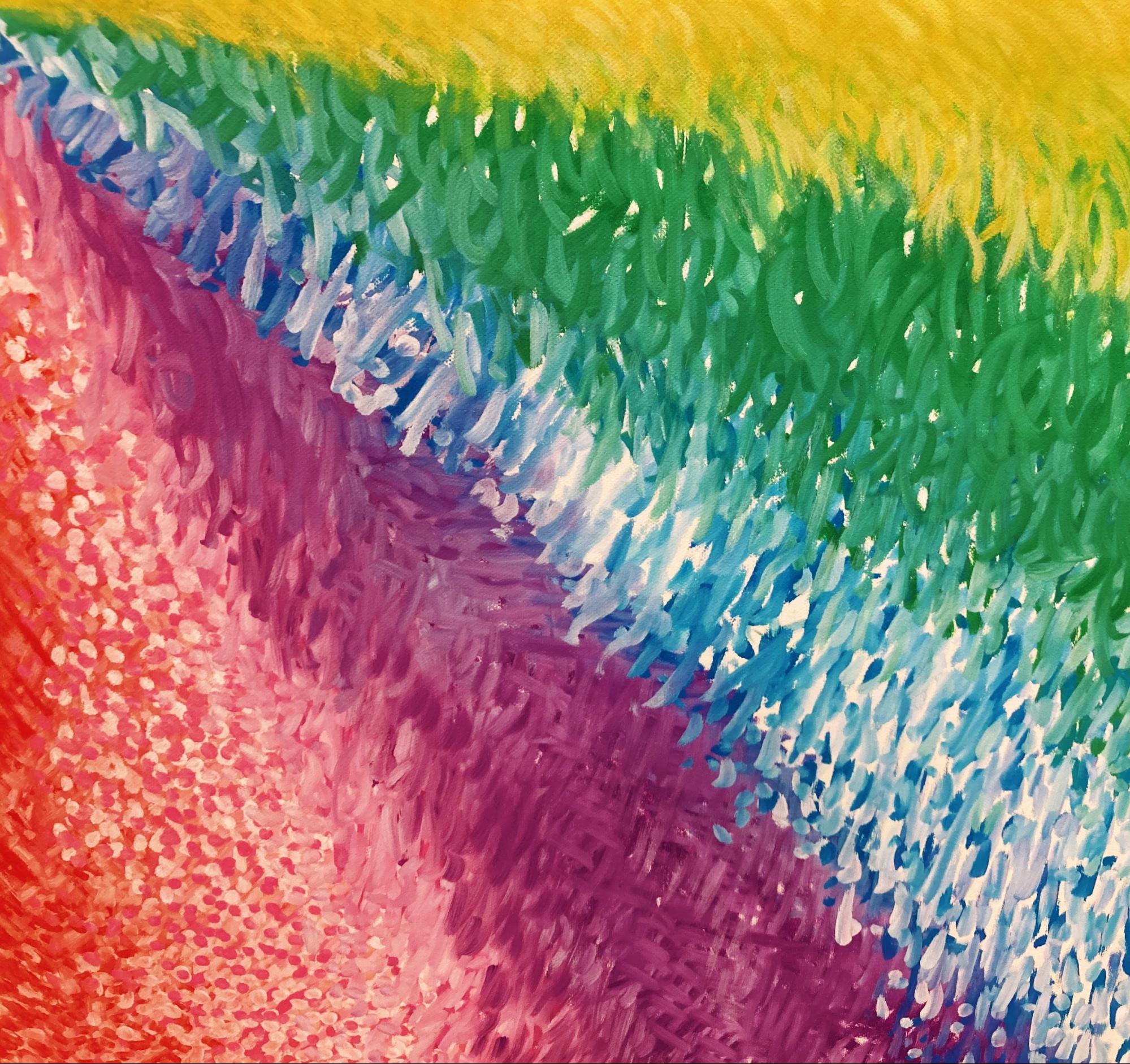
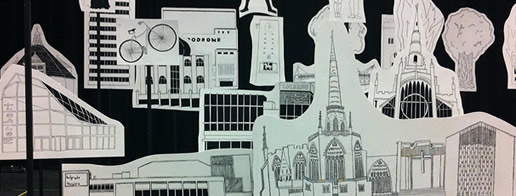
I created a map of Coventry to root this project to its geological routes. I used colour and texture to transport this image from a tool into a feeling and mood enhancer which reflects the cultural tapestry which I feel represents our city.
This project has been about how the general public are the important audience this year, those people who might not attend a gallery, events or a performance normally. For those that think arts are elitist and unrelated to their life. During these times where our current government is cutting arts funding left, right and centre, it shows that not only is it an important part of everyday life, but a way to build communities, bring money into the city, but something that can enhance your life.
As an artist I always start out taking my own photos, and editing them into the image that I want before I start to draw it paint. With this in mind, I decided I wanted to do a project which showed the peoples view of the City of Culture 2021 by collecting other peoples photos of events.
We are living in an age where language is becoming more visual then ever. People abbreviate words, use a sentence or two to describe a picture, and although I’m a bibliophile, I am first and foremost a visual learner and sharer.
Photo courtesy of Talking Birds
What I thought I needed to support the project when I began at my Talking Birds Nest Residency was space to work, and advice on how to reach the general population within the city.
But I quickly found that although a studio space is useful for creating a large canvas, as a part-time extrovert and general clutterbug, I didn’t actually enjoy being in an empty space on my own. I found that the loneliness was not something that worked well for me. This is possibly because of my dyslexia and my mental health problems.
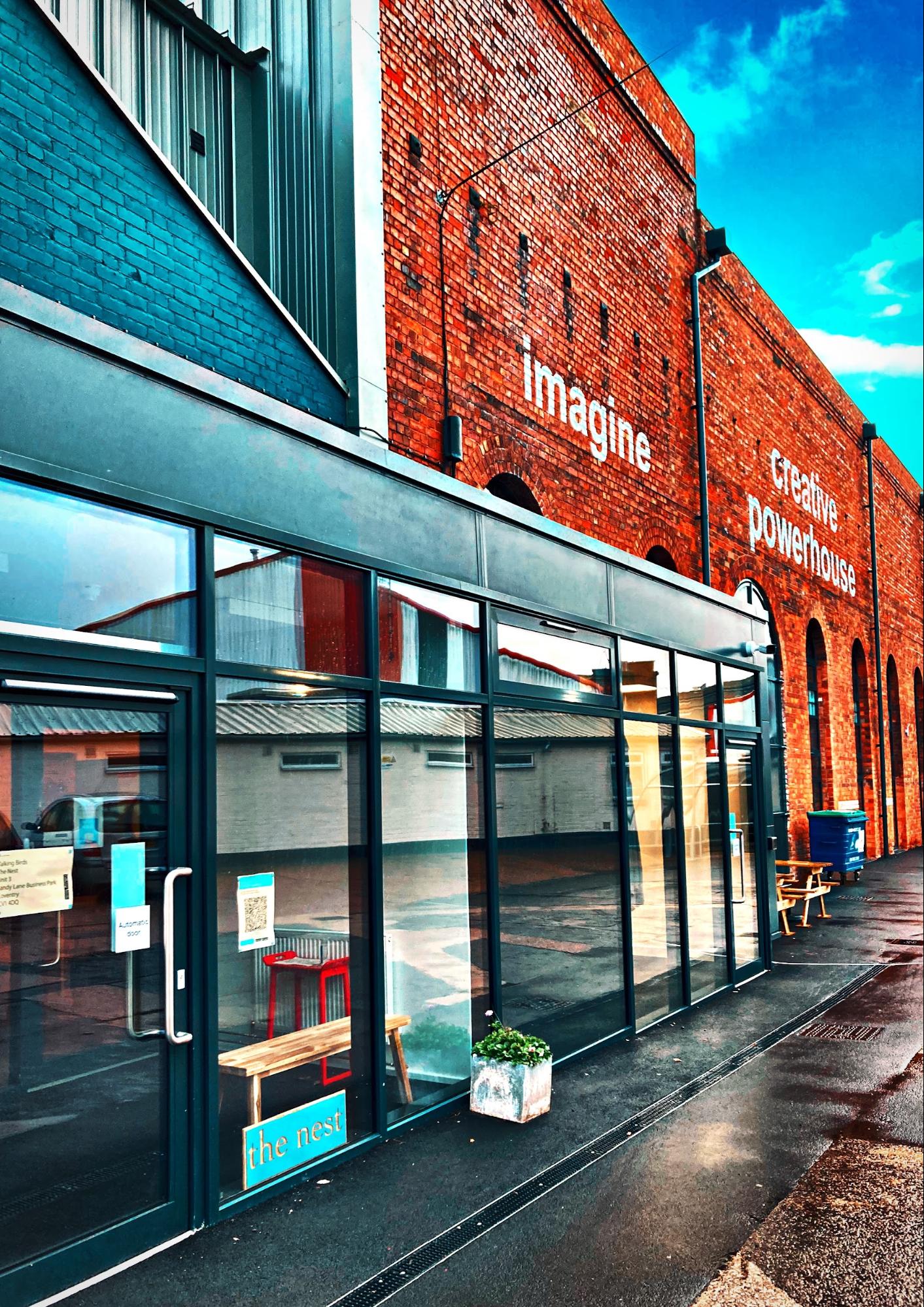
As part of the residency deal, a mentor was found for me to help me with my social media coverage. Tara Rutledge is an artist and social media guru who currently works for Imagineers within the same building as Talking Birds (Daimler) and is currently working on a “up my street “ project with ArtSpace and embarking on her own art residency with Talking Birds.
The two issues are complicated. Firstly, I need to share more of my work in progress posts, and make it more personal so that people relate to me better. Next I need to post stories more often, to keep my work in peoples’ awareness. Also I need to make my posts more chatty so that they are more understandable and people get what I’m trying to do, and how easy it is to take part!
As part of the career progression part of my social media, the above will generally help, but using the right tags and hashtags will also pull in people who are looking for the type of work I offer. Simple planning of posts and posting at the right times also can help.
All this said, social media is not the only thing I needed to do to be able to promote myself and my project. Media coverage, including digital newsletters was recommended, as well as focusing on certain publications and media outlets locally.
Fingers crossed that all this will help me to complete this project and increase the positive view of the City of Culture. And I hope to get this project displayed in the City Centre in the next few months!
With my mental health problems, I find that I lack physical and mental energy most days, and that being around people and bouncing ideas often helps to lift my mood and productivity.
Once I had my large canvas painted, I decided the best use of my residency time was to pick the brains of the team at Talking Birds on how to get the word out about my project, and how to market myself as an artist.
For my social media, I needed to appeal to two different demographics. The places that might want to commission me and my work, and those people who will share their pictures with me to show the city as a cultural place open to everyone.
Keep an eye on my social media @emilytylerartist for updates and further projects!
Indira Lakshmi reflects on her recent Nest Residency
Y E A H ! So Excited!
I was in Delhi, sitting next to my husband in a bar called ‘Dr Zombie’ decorated in neon green and black with plastic skeletons hanging from the celling. We decided to go out, things are opening up again in the city after the second dreadful wave of Covid, which seems to be rapidly fading from collective memory. I opened my emails and found out that I’d been selected for the Future Ecologies Nest residency. I was totally ecstatic to be able to have been offered space and time to develop my practice, and was eager to get started.
—-
September 5th. Back in England. Mixed feelings about being back. L o n e l y … u n c e r t a i n t y lovely weather 🙂 w=i=l=d=p=r=i=m=r=o=s=e sittiNGoN**thegrass
—-
15th September – 10am – canal trip – Dom Breadmore’s boat.
It takes a few minutes to get used to the motions of the boat, the sensation of buoyancy is something I’ve not felt in years. The last time I was on a boat was in Orissa, December 2017, Chilika lake, looking at gangetic dolphins. Being on the canal felt like Coventry’s secret mirror world, where everything moves in slow motion, watching the flora of the banks drift by, and the soft motions of the water felt surreal and healing.
C O C O N U T S –
There’s objects in the water that look like coconuts. I think of when offerings are given to the river Ganges, to show gratitude for sustaining life. I start remembering my grandma and the ritual when we immersed her ashes in Stratford upon Avon, because the river Avon eventually reaches the sea, just like the Ganges.
Dom explained that there’s a Hindu temple which backs onto the canal, and the coconuts are indeed ritual offerings. Something about the coconuts stuck in my mind. I feel they’re poignant metaphors for cultural displacement. I started to think about the diverse histories of migration to the city. My own family migrated to Coventry from Punjab in 1958 following the post-war call out for workers from the commonwealth.
The canal has a rich history. It was once lined with numerous factories and the homes of workers. A fascinating range of objects have been found in there including old machinery parts and even a grenade! Then there are these seemingly random, floating coconuts. They’re such loaded objects. They contain the energy of hopes, dreams, pleas, hundreds of prayers… They make me think of cultural displacement, not only within the Indian diaspora community I grew up in, but also within myself as I’ve navigated through both England and India. I’m a floating person, not truly belonging to either culture, that’s also a gift.
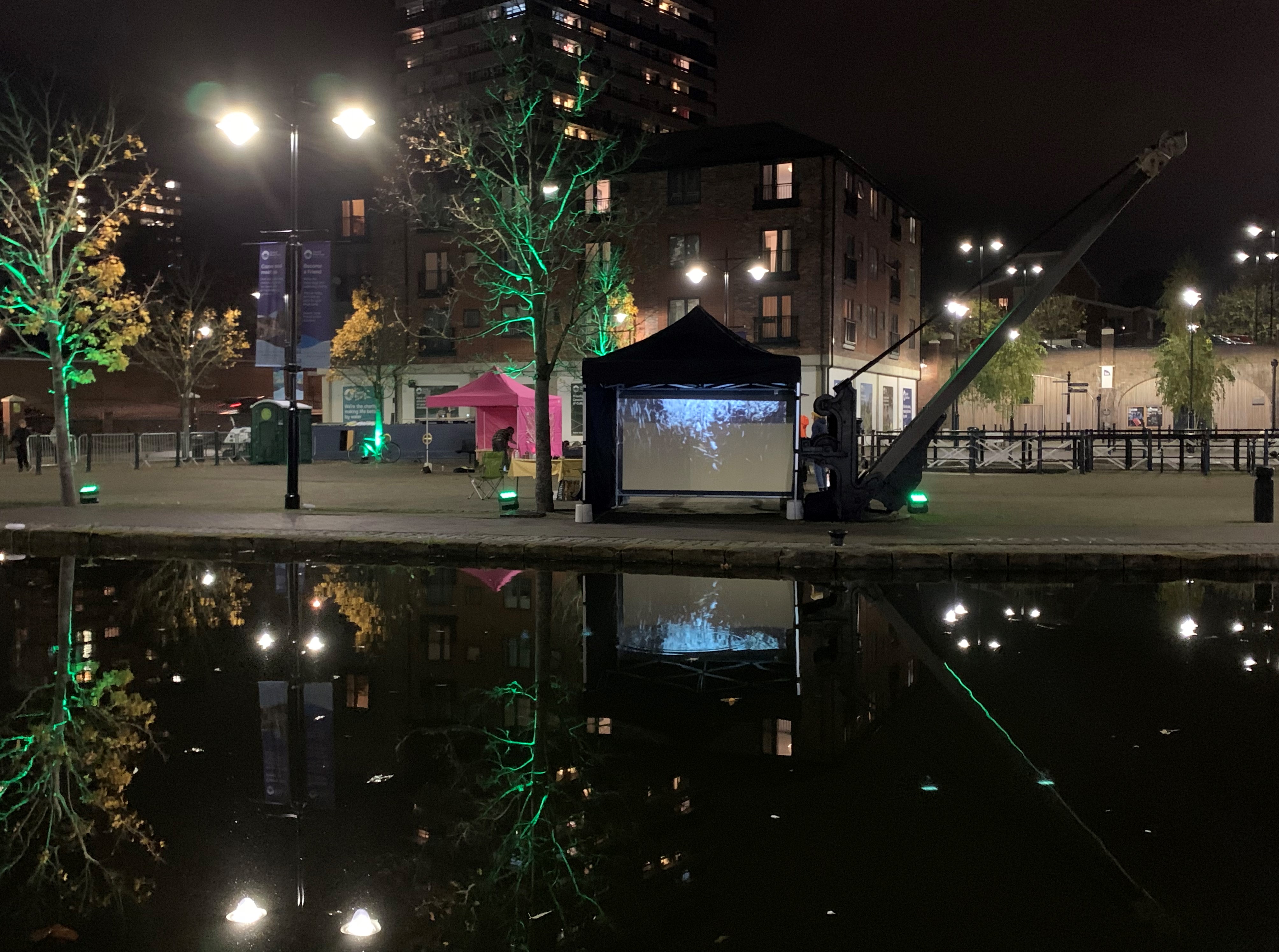
I started thinking about interactivity, as I knew my work would be potentially displayed physically at Random String Festival. I’d been thinking about passive participation in art spaces vs active participation, where the viewer considers the traces they leave behind in a space as well as what they take away. I’m also interested in technology bringing people together, physically rather than remotely in a metaverse dystopia, and how we create environments where physical exploration and movement can take place.
I constantly think about the body in space. How does the body inhabit the environment, how does the way we move/ position ourselves effect perception and vice versa.
I had been experimenting with the software Pure Data for a while, an open source visual programming environment. In Delhi I’d visited an exhibition where an artist had used Reactivision, an open source, cross-platform computer vision framework, to track markers to the effect of the viewer moving around and triggering a print command. I instinctively knew this was something I had to delve into, though initially I wasn’t sure how I’d use it.
R E A C T I V I S I O N == :s ….. 🙂 …… ❤
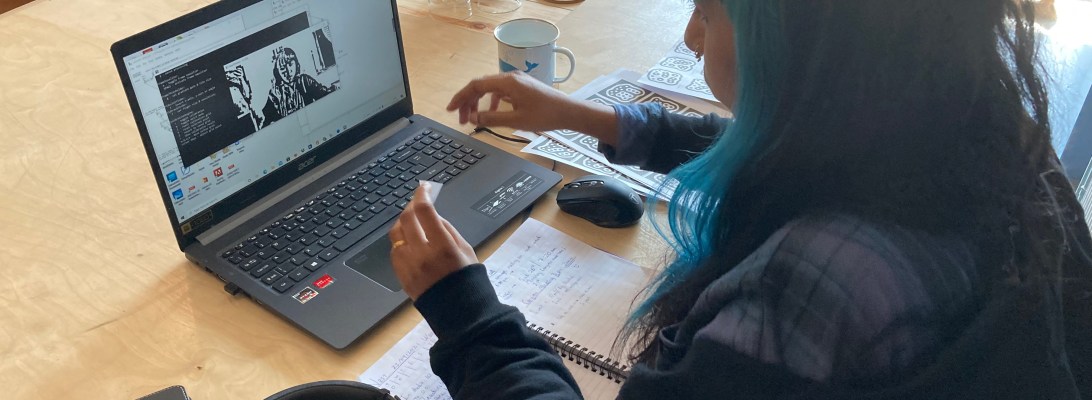
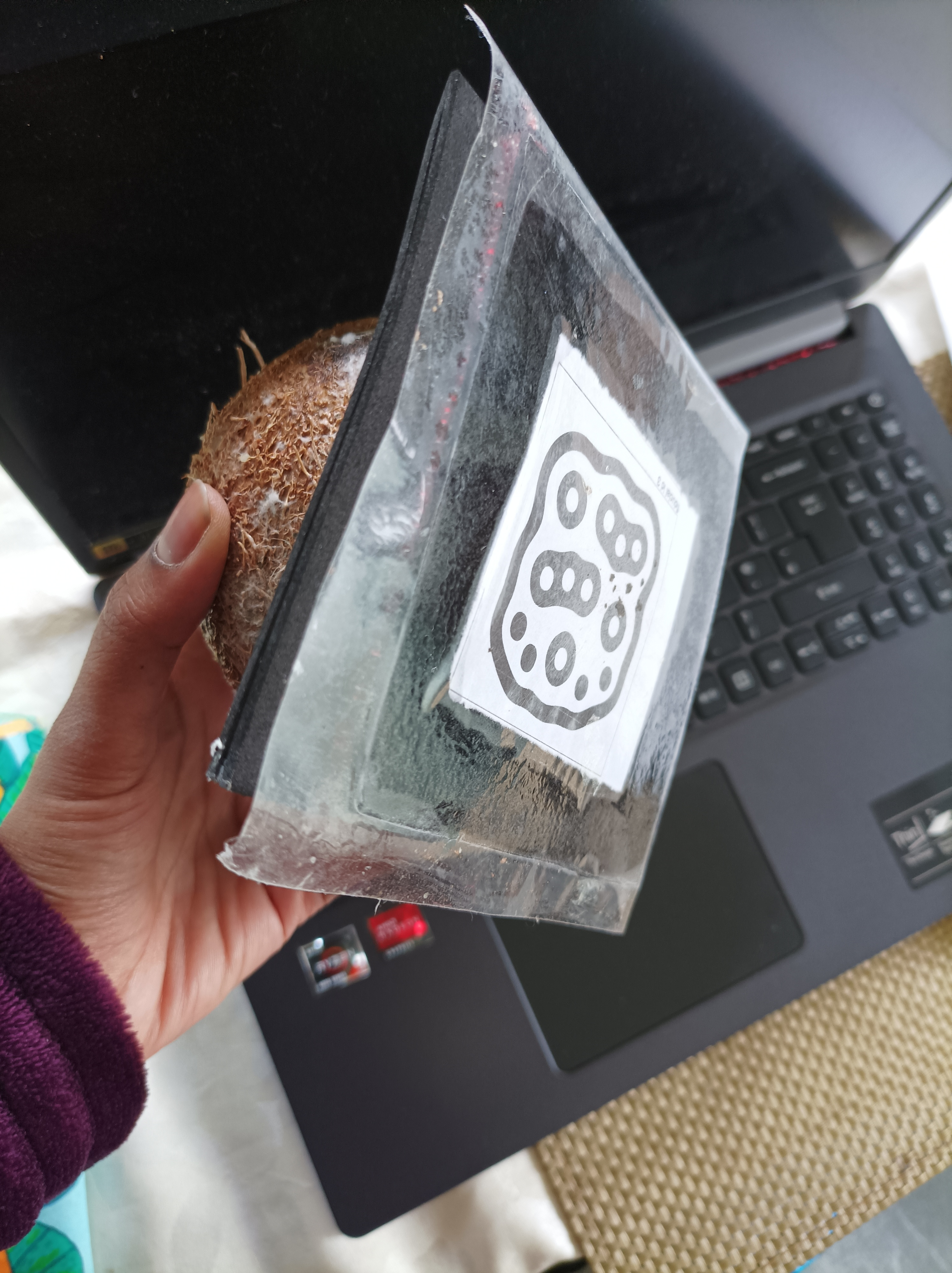
There was some refurbishment going on upstairs at The Nest, so I couldn’t access the studio. Frances helped me to print out sheets of fiducial markers, and I sat in the downstairs communal space and got to work.
I learnt the initial basics of programming during my MA in Visual Arts Practice at Ambedkar University in New Delhi, then carried on teaching myself. I figured out the basics with Reactivision fairly quickly, but getting beyond the basics took hours of sitting transfixed at my laptop.
One use of Reactivision is to track movement of fiducial markers. You move a fiducial marker – Reactivision tracks the coordinates and position – events are triggered depending on how you write the program. My process was – Reactivision feeds the X and Y coordinates into Pure Data, with that data you can assign certain events to certain markers, or to the X and Y coordinates of the markers. Initially I routed out the data to a digital synthesizer and started experimenting.
I wanted to find out what life was like living on the canal, in a boat. I remember when I lived in Leicester, my ex’s dad worked on a marina, I had some friends that lived in a boat too. I remembered bits of conversations from back then about what it was like to live on the water, the reasons why people wanted to get away from city life.
Frances, the community connector at Talking Birds, connected me with a friend of her husband named Marc Denny. Marc lives on a boat moored up in Trinity Marina, Hinkley. We drove up to meet Marc, who had gathered some of his friends together who also lived on boats there. We sat in a pub nearby and I recorded a conversation between us.
It was brilliant to speak to them, I wish I could have gone back and had individual recorded chats with them all but there wasn’t enough time. The main things I took away were that there was a greater sense of community, the pace of life was different away from the city/life on land, you had to be more mindful about your resources i.e water and heat…
I caught up with some friends who had lived on canal boats. They said life was hard in the winter but equally beautiful. Sensorially it’s a totally different way of life.
O C T O B E R 7th </3
Bad News… </3… S-l-o-w-f-u-n-c-t-i-o-n-i-n-g | h-y-p-e-r-p-r-o-d-u-c-t-i-v-i-t-y — Taking breaks to cry in all the video installations at Coventry Biennial.
S4DN3*ss s l o w l y thenfast ( ͡❛ ﹏ ͡❛) l a g
C A N A L sOng
I joined Dom and Anne from Ludic rooms for a trip down the canal, to record using a hydrophone (underwater microphone). The results were interesting but not what I expected. All the hydrophone recordings sounded like a motorbike…
I applied some reverb and added layers of guitar and vocals over the top.
I fragmented the song into separate tracks and inserted them into the Pure Data patch I was working on. I developed the patch enough to be able to use it for a table-top interactive soundscape.
T A B L E – T O P (( OMG Kill me now :’) )) C R E A T I O N H U R D L E LONGTIME
I researched different ways that people had used Reactivision and marker tracking with interactivity, and decided I was going to make a rear-projected table-top interface where the markers could be read from underneath. This was the plan:
Here’s an example of the moveable objects with fiducial markers underneath. I decided to use objects found in the canal which are anomalies; coconuts, litter, empty beer cans…
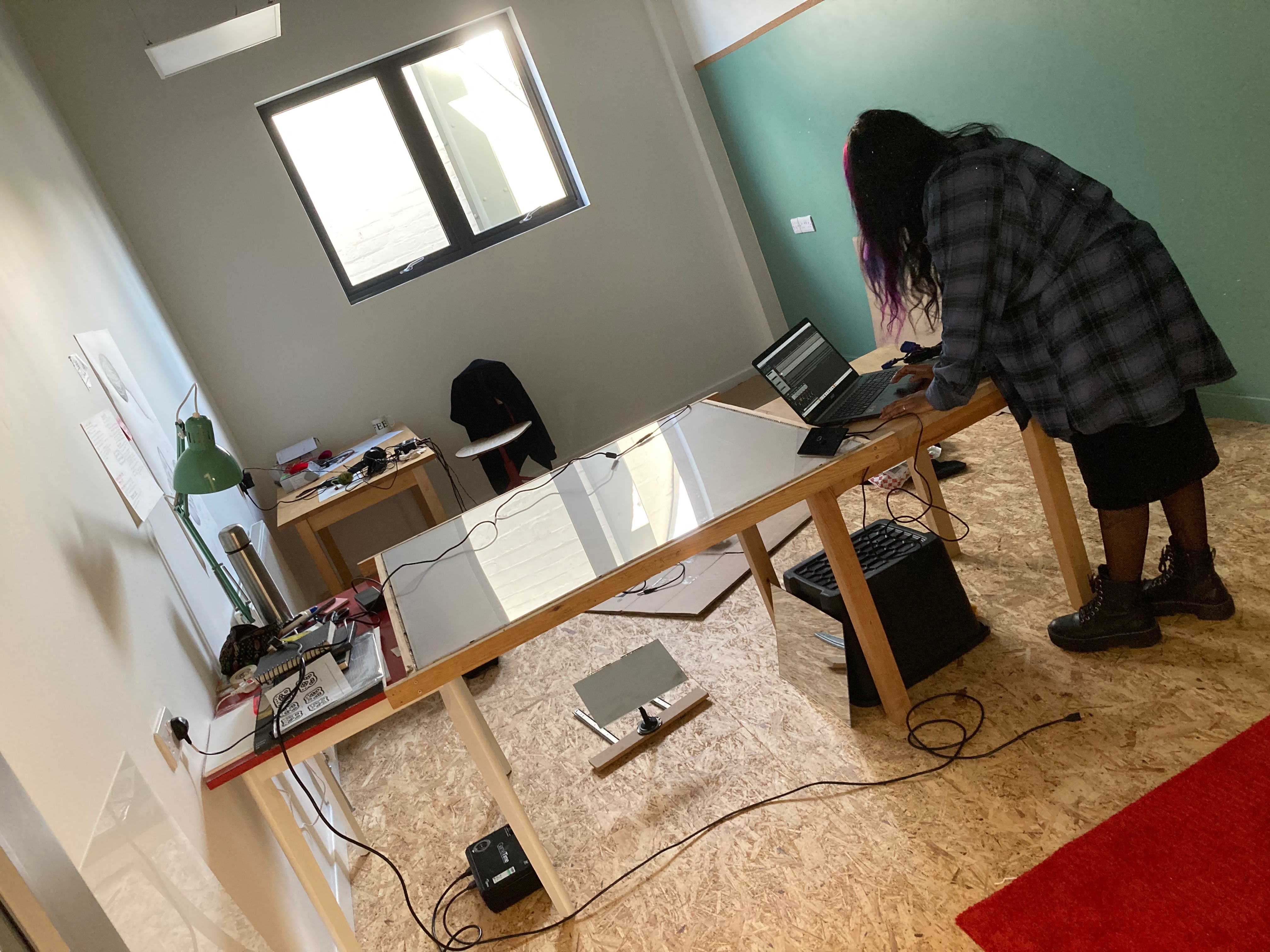
I borrowed a large piece of perspex from Ludic Rooms and initially began working with the perspex balanced on two tables. I began working with rear projection, which is one of the most frustrating things I’ve ever done…
s l o w l y thenfast ( ͡❛ ﹏ ͡❛) l a g
The code was now working well, but getting the hardware and physical elements to work was much more challenging. This is really what took up the most of my time, but I’m really, really glad to have had this time of trial and error. It’s been an invaluable learning process. I eventually figured things out, and moving forward I have this know-how in my artistic tool kit – I’m already planning the next development of this work.
My friend Tom Edwards helped me with making a wooden structure for the perspex, which we assembled at Random String Festival.
I wish I had more time to make things more polished. I think I utilised the time as well as I could, and ended up with a working prototype for the future. If I could do this again I’d do it with floating objects on water, in a shallow tank…
I realise that when you finally get over the technical hurdles your mind opens up to more possibilities, rather than being obsessed with overcoming tech difficulties. I heard a phrase in November that sticks with me ‘rationally working with what you have reveals hidden treasures’. I’m trying to do that. I’m not a software engineer or a trained musician, until now I’ve intuitively worked with the skills I’ve picked up at different points in life, and this residency has given me the time and space to develop my skills with programming. A new window has opened for me. Though I used found objects for the work at Random String, I know that now I can integrate my skills as a sculptor into a touch interactive framework, and I’m thinking along new lines with interactivity, games and experiences.
14th November, 2021, Random String Festival 😀
The display at Random String Festival was a really valuable experience. The work was interacted with a lot by people of all ages, it was a really positive atmosphere. The rear projection wasn’t perfect, my positioning of the mirrors is something I need to work on in the future, as well as refining the code and other hardware/physical elements.
One of the great things about the display was the constant interaction with the work, people were engaging and actively participating in the experience – people were having fun with it, having a laugh with their friends, children were fascinated with it…
I’m thinking about the balance between something which is a spectacle and still looks inviting enough to physically engage with.
I’m working on the next rendition of this table top interface for a gig my friend George and I are organising in March with our project Human Oils. I’m trying to create a game, where there are more obvious rules, more clearly defined ways of moving things around. I’m thinking noughts and crosses with different objects, just as an experiment.
(Coventry City of Culture video, me talking about the work)
I want to sincerely thank everyone at Talking Birds and Ludic Rooms for their support and for the invaluable work they do. This has been an incredible and valuable experience which I feel has really propelled me forward with my practice. ❤ 🙂
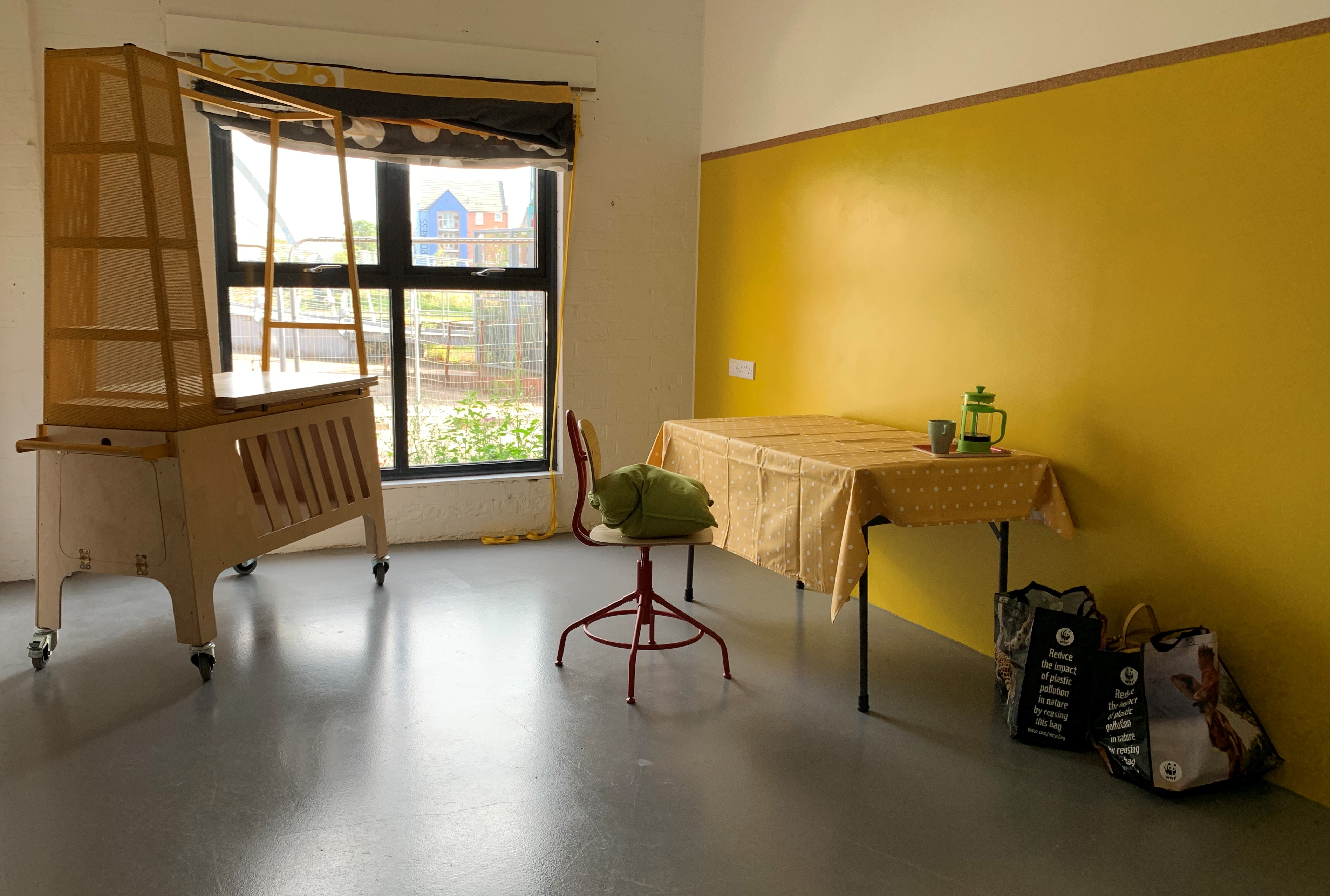
A dedicated studio space is a truly wonderful thing, perilously so … demanding inordinate ounceage of self-discipline, for wont of losing all sense of time, space and ‘other’. Fortunately there is a clock on the wall in Helloland with a fully operational acid battery. Life exudes paradox; compromises, contradictions, imperfections … there’s always room for error, improvement, mistake-making, potential for allowance of some slack. Everything remains where you left it in the dedicated studio space, pretty much just as your yesterdaySelf thought you left it. I’d forgotten this was even possible. The turnover on our dining room table revolves around the minute and second hand.
Like the of confines of A1 cartridge, facing-off the resistant bounce of board and easel, brittle charcoal, graphite, chalk stick and Stop-Clock of the lifedrawing room; anything is possible within certain parameters. Parameters to push against, adhere to, depend upon, agree, disagree, debate, request, contest, accept or change. The potential to perform, under pressure, against the clock, in the moment. Sometimes, nothing worth keeping. Always something to build on – to take forward. A dedicated studio space offers back-to-back moments (a full packet, the whole cake …). How to set one’s own internal parameters when you’re adrift, casting off ‘in the space’ ?
Thankfully, there is always someone elsewhere, ready to pull you out (ready or not) – School Run usually (“time at the bar”).
What an utterly joyous opportunity.
The last time I experienced creative practice within a dedicated studio space was as Fine Art undergraduate sharing messy spaces last millennium, in the early nineteen nineties (before the rise of Edit/Undo). The liberation of free construction in a wide open space had been a distant memory. A Room of One’s Own, indeed, even for the short term, resonates deeply within the psyche; worthy becomes the practice, practitioner and the work.
Now changed with responsibilities, technologies and disabilities involving long term mobility issues, hearing issues and more recently, permanent loss of central vision in what was a dominant eye. Initially truly debilitating for a lifetime photographer and visual artist. Not so for the lifelong experiential learner and stubborn optimist experiencing first-hand the wonders of neuro-plasticity, renegotiating spatial depth and relational proximity.
For the Nest Future Ecologies residency I set out to explore something of the psychology of behaviour … through the medium of interactive art; the potential for change [within ever-pressing Climate Change]. I planned to develop a tug, push-pull mechanism that might demonstrate modes of action; lone, collective and sustained interaction with audio-visual triggers and responses. I wanted all of this to be powered by dynamo, demonstrably off-grid (turns out Coldplay had the same idea, recruiting cyclists to power ostentatious gigs). I had it all mapped out. I knew what I wanted to achieve. I needed to gather a team of skilled engineers and soldering experts. All I had to do was bring them onboard and start experimenting as fast as possible, in this dedicated space. I could work on certain parts myself in the meantime, and start bringing it all together.
Things do indeed take longer than you first think, even though you already know that. I set about ‘cutting back’, editing; the process of removal, decluttering, identifying achievable chunks … reducing on a slow simmer, getting closer to the essence of it. Equally, within a day I started achieving more than even I could have listed on both sides of one envelope. There were also days of unprecedented setbacks, including opening an errant email by mistake and consequently losing access to a decade of emails and having to spend several days on the phone troubleshooting to get back to near ground zero. How many steps, which way?
I decided to slow down. As method in itself. I slowed down.
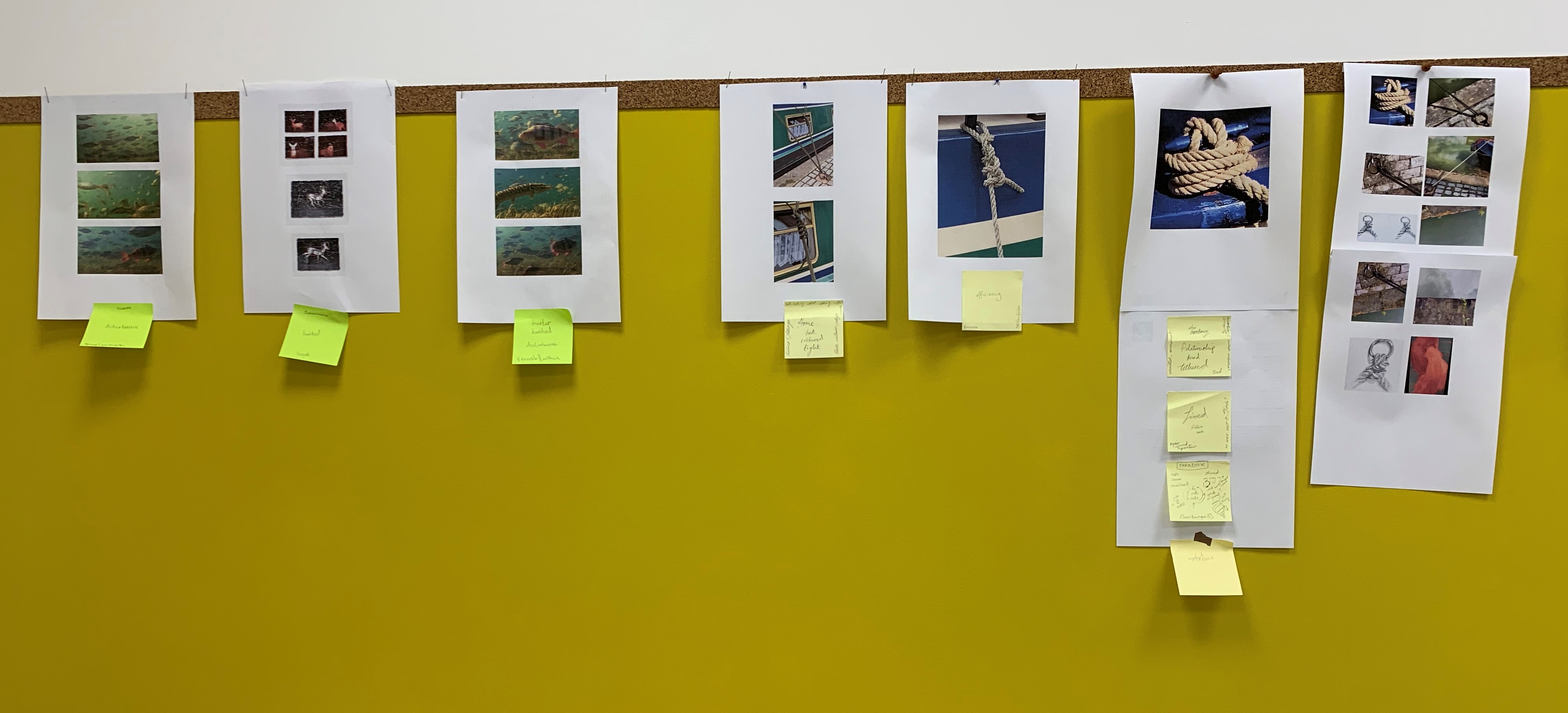
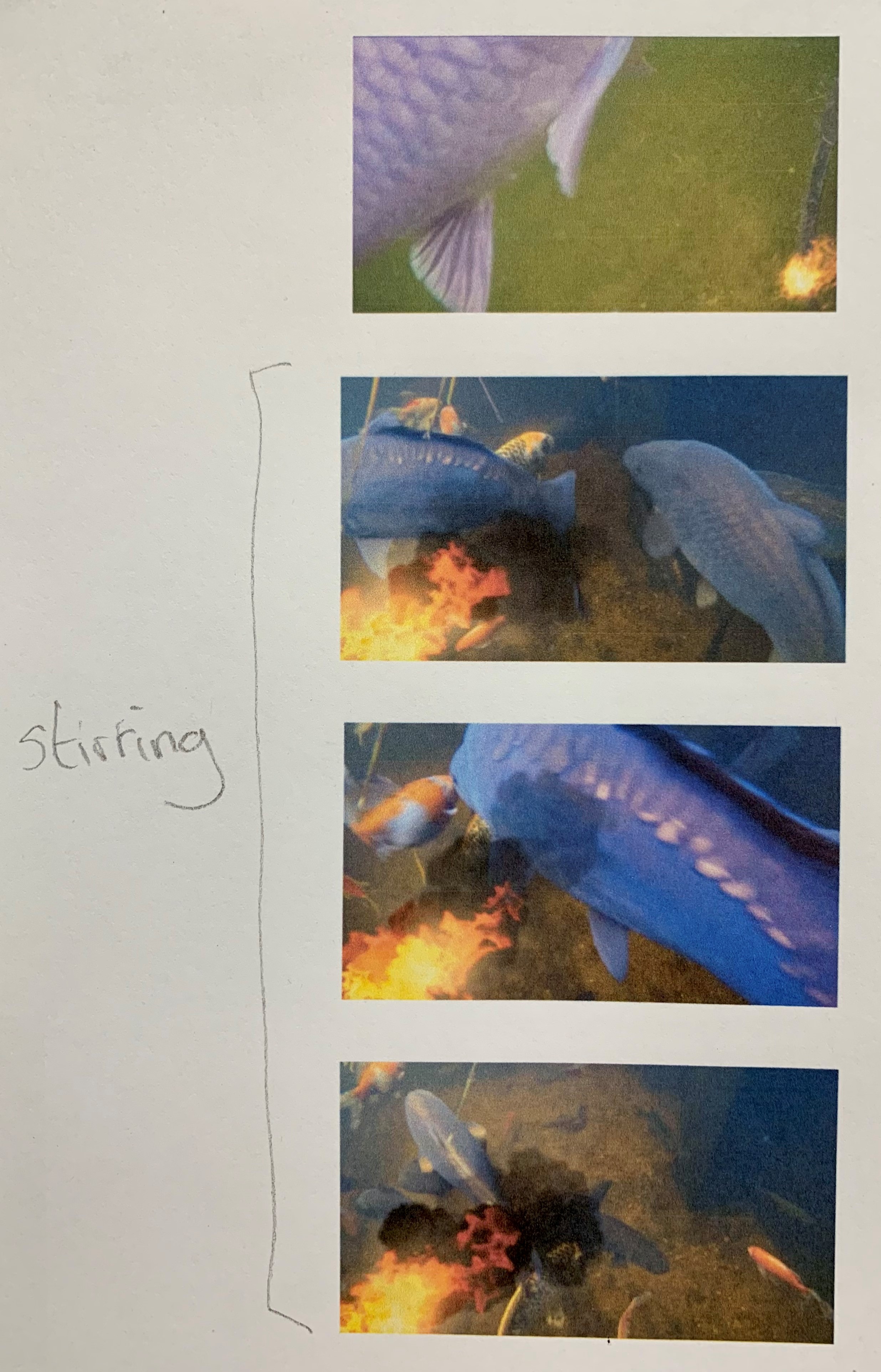
I looked, observing what I had, what was going on … and I listened to the work (I could see it, spread about me, pinned aloft, reshuffled, handwritten notes, building/ collating narratives, pegged to a line, rearranged, reviewed, removed decisively – having lived with it a while, having stood back – a change of perspective, being able to return to it after a break). That is when I started to play (and really enjoy discovering) – when I caught myself chastising myself for not keeping to what I’d set out to do on today’s Studio Diary entry – and realised over the following weeks, that those side-tracks were the deeper explorations of what was stirring within these ideas – they were already present, within – they are the sketches that stuck – the new dawnings of connection-making – that freely flowed when I ‘let go’ – that I presented – that formed significant particles in the unfolding narrative told.
I continue to observe how I operate and look forward to returning to the dedicated space.
One more thing … I am overwhelmed by the breadth and depth of public engagement with the work in progress that I shared for Random String; 2021. I thought I had printed (sustainably) a surplus of short, open questions;
What do you think might be happening in each of the 3 parts of the video? What do they mean to you?
How does the video make you feel? What feelings or thoughts does it bring to mind?
What do you think should or might happen to get from one part to the next (to move from one phase or state to the next)?
What else could happen?
Every sheet returned, spilling with glorious handwriting; the creative imagination of so many different people who each stayed the full 5 minutes and absorbed the 3 parts – some longer, engaging in the repeat, the loop, the cycle – the spoken and unspoken shared conversation.
The work takes on a life of its own when others see meaning and make their own connections; it begins to make ripples. Moving beyond the self of artist practitioner, if successful, art resonates with others. My task now is to harness what resonates and steer with integrity, more clearly able to actively listen to the work itself, in relation, with others.
A genuine, humble “thank you” to Talking Birds, Ludic Rooms, Arts Council England, the City of Culture Trust and all supporting partnerships in providing generous opportunity for artists in Coventry to develop creative practice in a dedicated studio space with opportunities for conversation, professional development, social connection as well as paid opportunity to exhibit work in progress, without pressure.
Talking Birds’ Nest Residencies are open to any Midlands-based solo or small company of artists (in pretty much any artistic discipline) and will prioritise d/Deaf, disabled and/or neurodivergent artists that apply. – find out more, including how to apply, here.
We’re hugely excited to be developing Art for the People with the support of Coventry 2021. This is a project that has been a very long time in the gestation – and for a while we didn’t know whether we would be able to convince people to invest and make it happen – because it doesn’t really take the shape of a traditional art project.
Jazz Moreton and Alan Van Wijgerden reflect on their Green Futures supported Nest Residency for Random String
Alan Van Wijgerden and I embarked upon our Nest Residency in partnership with LudicRooms with ambitions to make better work than we have seen shown in the city.
Quickly learning that a relatively small grant couldn’t buy us the time required to take over the world, we focussed instead on experimentation with Ludic Rooms’ 360 degree camera. Due to the fact that our residency considered the Coventry Canal’s ecosphere in relation to the concrete and cars of the city, we intrepidly created opportunities to explore the canal and its environs on foot and on water, through the dual lenses of the above camera. Taking aural readings of the surrounding habitat’s soundscape, we created a plethora of footage, from seagulls that have flown all this way inland to feast on thrown-away takeaways and general detritus to a narrowboater and his squeezebox.
Our palatial studio in Talking Birds’ Nest was the scene of much heated discussion. Alan spent much time being told to “shush” by Jazz and retreating to the “naughty chair” (which was very comfortable). We thought that we had wasted the first week, after which we refocussed with an introduction to the 360 degree camera, but thankfully, Astrid Gilberto on Alan’s old HiFi- recovered from the corner of his garage- was very soothing and enabled us to rekindle our friendship and productivity.
Alan cheekily blagged our way onto the RV Scribendi for a boat trip all the way from the basin to bridge 4 in Foleshill: an hour’s cruise. We then walked back to the Canal Basin in all of ten minutes, thus proving Jazz’s experience of having lived and cruised on canals for almost twenty years as being extremely slow.
In another cheeky move, Alan shamelessly hailed the great Alan Dyer, who graciously allowed us into the historic Canal Basin warehouse in order to take photographs and record more 360 degree footage. These experiences were seminal in our bid for auteur cinematic status and we were extremely grateful for everyone’s help. Someone that we are particularly grateful to is the redoubtable Philippa Cross, who supported us in each one of our hours of need. Our biggest issue within the residency was the fact that we were using hardware designed for Mac users.
Both being Windows PC users, we feel- after the experience of transferring data from a Mac to Jazz’s trusty PC laptop- that apples should only be used in strudels, and possibly pies. Talking of pies, Alan came close to cooking seagull pie because Jazz forced him to go on numerous trips to try to record inner-city seagulls. The final successful recording is so deeply engraved in Alan’s memory that he knows for certain that it’s track fifty on his trusty recorder.
Like Donald Trump (and this is the only way that we are remotely comparable), we failed in our planned takeover of the world (also known as a finished production) but we are planning to use the material that resulted from the residency in a further application, after Alan has recovered from Jazz dragging him out of retirement to work on an Art project of momentous ambition.
In moments of contemplation, the view from our window of the futuristic canal crossing inspired us to greater experimentation, which we are going to use as part of an Arts Council or BFI funding bid.
Seriously though, we greatly enjoyed the residency and the opportunities and inspiration that it offered us.
Armed with a massive pile of homemade pizza and a collection of Ikea’s kids’ cups and plates, Talking Birds convened the first meeting of what was to become the Friday 13th (or F13) network in December 2013 (Friday 13th December 2013 to be exact!). At that point, as the notes reveal*, Coventry City Council had a new leader and there was the first mention of City of Culture in the air – presumably because Hull’s win must have just been announced.
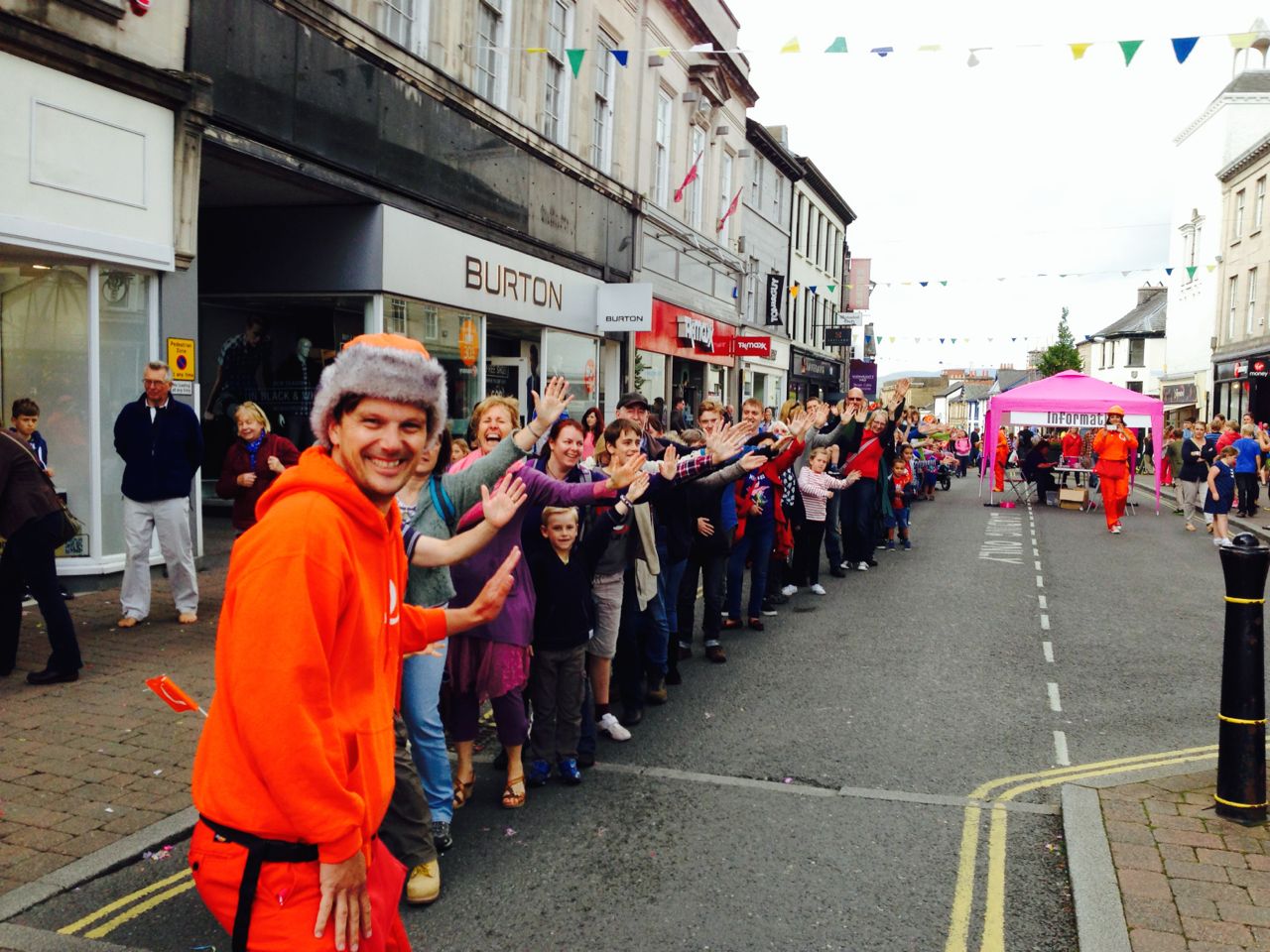
Talking Birds needs volunteers to join its street performance The Q on Friday 23rd & Saturday 24th March in Coventry, as part of the Shop Front Festival (the first event in the build up to Coventry UK City of Culture 2021).
The Q is a celebration of the Art of Queuing. In 2011 the Q Corporation was formed in Coventry to campaign for Queuing to be included in the Olympics (therefore ensuring a string of Golds for the UK). Now they return – still dressed in orange – to show why Coventry has the most cultured Queues in the UK, and that it’s high time for our foremost past-time to be recognised as an Artform in its own right.
What do I have to do?
The @Q_Mob is like a Flash-Mob, but slightly more orderly. To join Q_Mob you need to sign up for a 4 hour slot (with ample breaks!) during the Shop Front Festival on Friday 23rd or Saturday 24th March, during which time you will be helping form queues around the City Centre, led by our Q Corp Captains (the elite SAS of queuing).
You will also need to come to a short (1 hour) Q_mob workshop where you can find out more, meet the team and… practice queuing. There are two workshop times to choose from:
Weds 14th March 6.30pm
Friday 16th March 1pm
Both workshops are at Shop Front Theatre 38 City Arcade CV1 3HW (just opposite Argos)
Age requirements: Q_Mob volunteers need to be 18+, younger Q’ers are welcome but need to be accompanied at all times by an also Queuing Parent/Guardian.
There will be FREE CAKE (and other foodstuffs) for volunteers.
Or call: 0800 012 2401 and leave a message with your name, mobile number and email address (please spell out anything tricky to be sure we can get in touch with you!)
Maybe in a week or two it’ll have sunk in, but at the moment the announcement that Coventry will be the next City of Culture still has the dream-like status of something slightly unbelievable that you have been told several times, but somehow need to verify for yourself…
[THREAD #1] Apologies in advance to non-Coventrian followers, but today is going to involve a large volume of tweeting in support of @coventry2021 #ukcityofculture2021 #thisiscoventry #2021blue /1
I’ve been thinking a lot recently about what makes an individual put down roots in a place. I’ve tried to analyse what it was that made me settle here in Coventry – to understand why I am still here, and I’ve asked others what it was that made them decide to call somewhere home.
Guest post: Vanessa Oakes reflects on her stint on The Cart in the #ThisisCoventry tent (which was curated to launch Coventry’s bid to be UK City of Culture 2021) at Godiva Festival last Sunday.
a space… a cart… a place to sit and think… to listen… focus on our past, present and imagined futures… rest, recharge our phones, shut out the festival NOISE and… meditate on a life made up of memorable moments.
heads down.
needles in… stitch by stitch… cultural moments cross the ring road… pale blue, blue, white threads, births, love affairs and friendships thread through cloth, as conversations flow an observation surfaces sideways:
how artists and arts organisations talk about interacting with the community rather than thinking about themselves as part of the community.*
testing our powers of concentration… conversation… commitment… action stitching our way along roads, across precincts, towards homes… we lament: it’s only two thirty…
heads down.
children play, climb and hide… nest and then… disappear/lost… and finally, thankfully, found… we return again to the cloth… thread a needle… pin a note, add a thought, learn a stitch… listen… and… hesitate… a place to rest a pint? is he serious? no… thought not… a hasty retreat.
a cart… a place to… sit… perhaps just sit… rest our feet… process our words… and think, then… once again…
heads down.
we listen… and imagining a future landscape of our stories told on these streets… we stitch.























 Words from the Birds