RAPIDE SLIDEOUT

Paul Daly and Adele M Reed reflect on their recent Nest Residency.

For me, the sense of liberty that TB’s residency offers is the foundation to why it deserves most of its plaudits. It’s been so refreshing to focus on practice without expectations and time pressure, I gained so much from exploring without any sense of anxiety or stress. 

Sharing the space with Adele elevated the experience tenfold, allowing for a constant dialogue and reflection on both our practices. We staggered our days at the space, on reflection this actually benefitted us with further mental prep and insight before fully sharing our thoughts and aspirations to one another. Adele brought a playful impulsive energy to proceedings, something I have lost to a degree with my own work, this is likely one of the main things I wish to reintroduce to my practice in some form. Just revelling in a fully rewarding experience with our Adele, especially considering how each of our compulsions and obsessions are delicately interwoven into our work. So pleased we had this opportunity to dive in together. 

Other main takeaways are a refreshed confidence with my main creative focuses, a plan of action following the completion of a 7 year project, more undying love for analogue, and some of that bountiful optimism which is to be cultivated and injected into the next career phase. 

To top it all off, we were seen off with an in-kind chippy tea. This should speak volumes of the generosity and earthly nature of the Talking Birds team, a constant calm presence that made the experience that much more enjoyable. This is a golden opportunity for local artists.

By Paul Daly

Dear readers, apply for a Talking Birds residency! Rare is this kind of supported opportunity, a deep level of trust is gifted to you with respect for the artist, at its core. This treasured period of time affirmed many things – the cruciality of open space and time, the importance of dialogue with like minded souls, the joy of art in its myriad forms, the necessity to rest between heartening, powerful moments of revelation. 

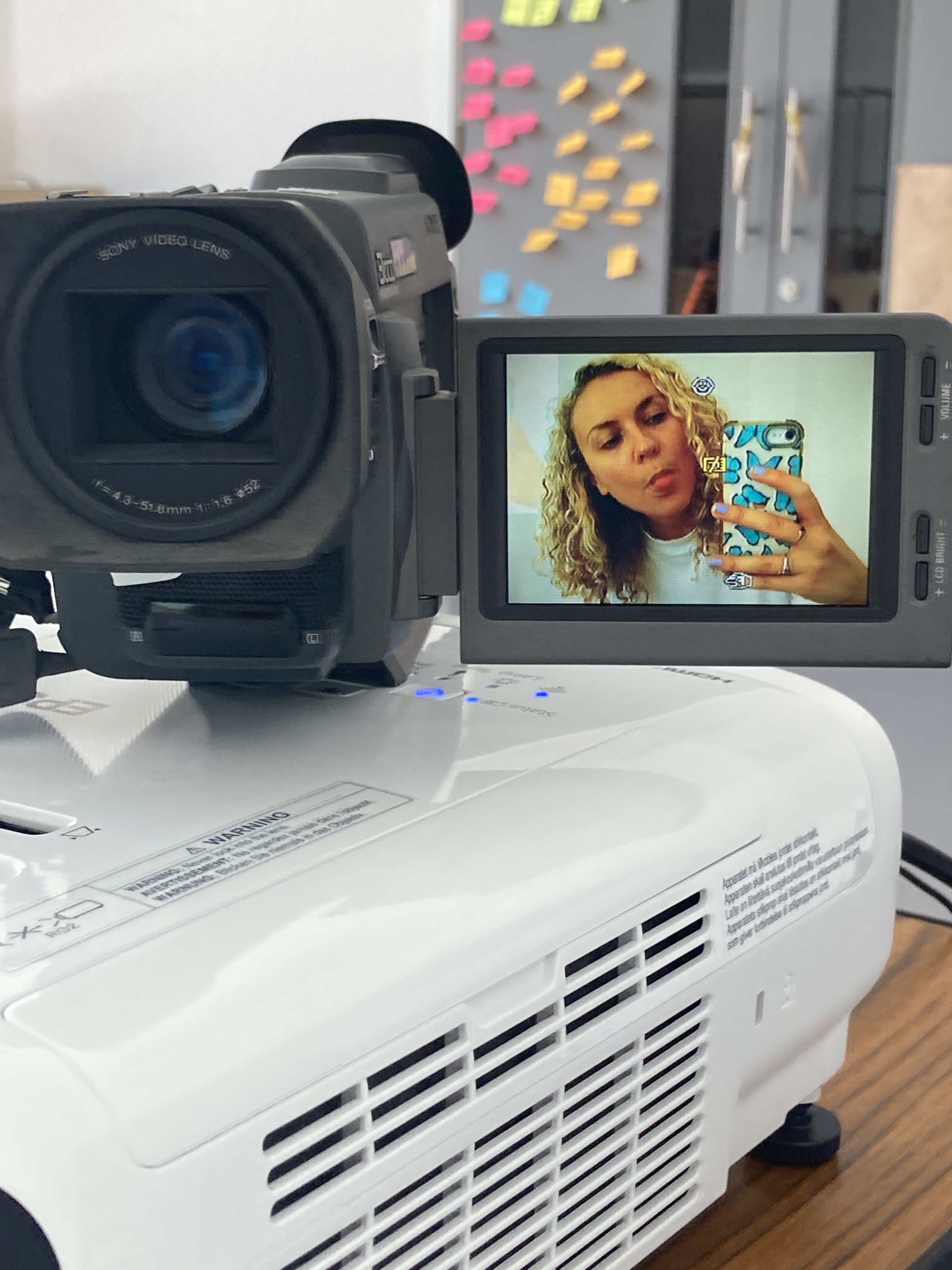
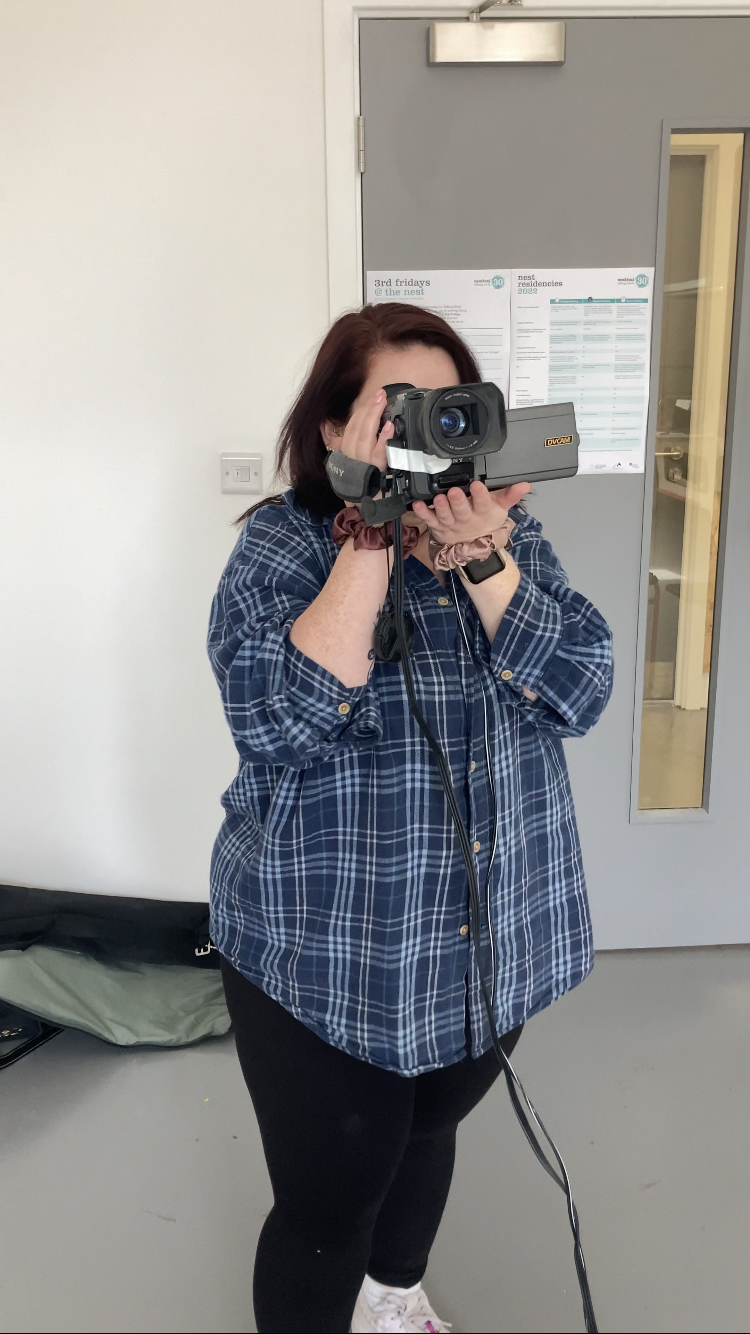
I went into the residency with Paul with one particular commitment in mind – to chronicle our eclectic shared interests and fast-moving insightful conversations. We play off each other in a very organic, uncontrived and playful way, and therefore decided to name our documentary blog ‘Rapide 40 Slideout’ – the title of a drain we walked over on the way to Daimler Powerhouse on our first day. Rapide 40 Slideout evolved into a collaborative, thriving breathing beast (in other words it became an obsessive tendency for me) of 122 posts in 10 days. Please explore it, if you’d like to delve inside the flying sparks of our minds, via emailing us to request link – adelemreed@yahoo.co.uk or pdalyphoto@gmail.com 

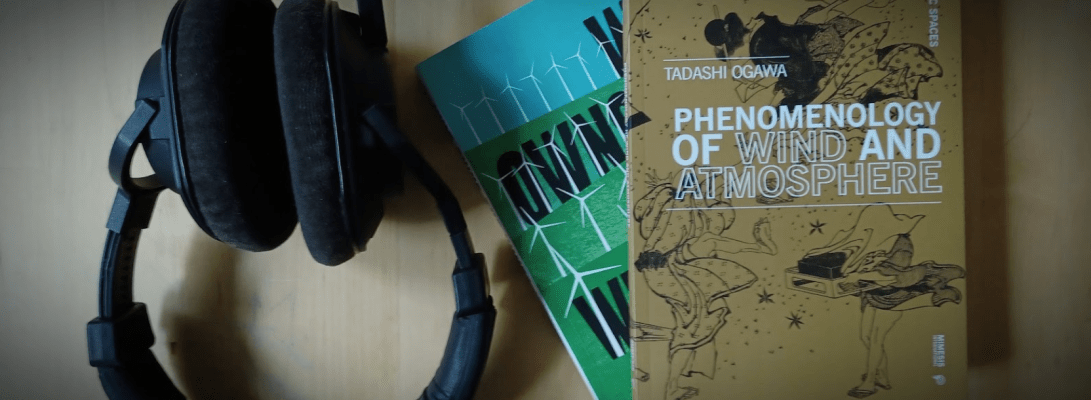
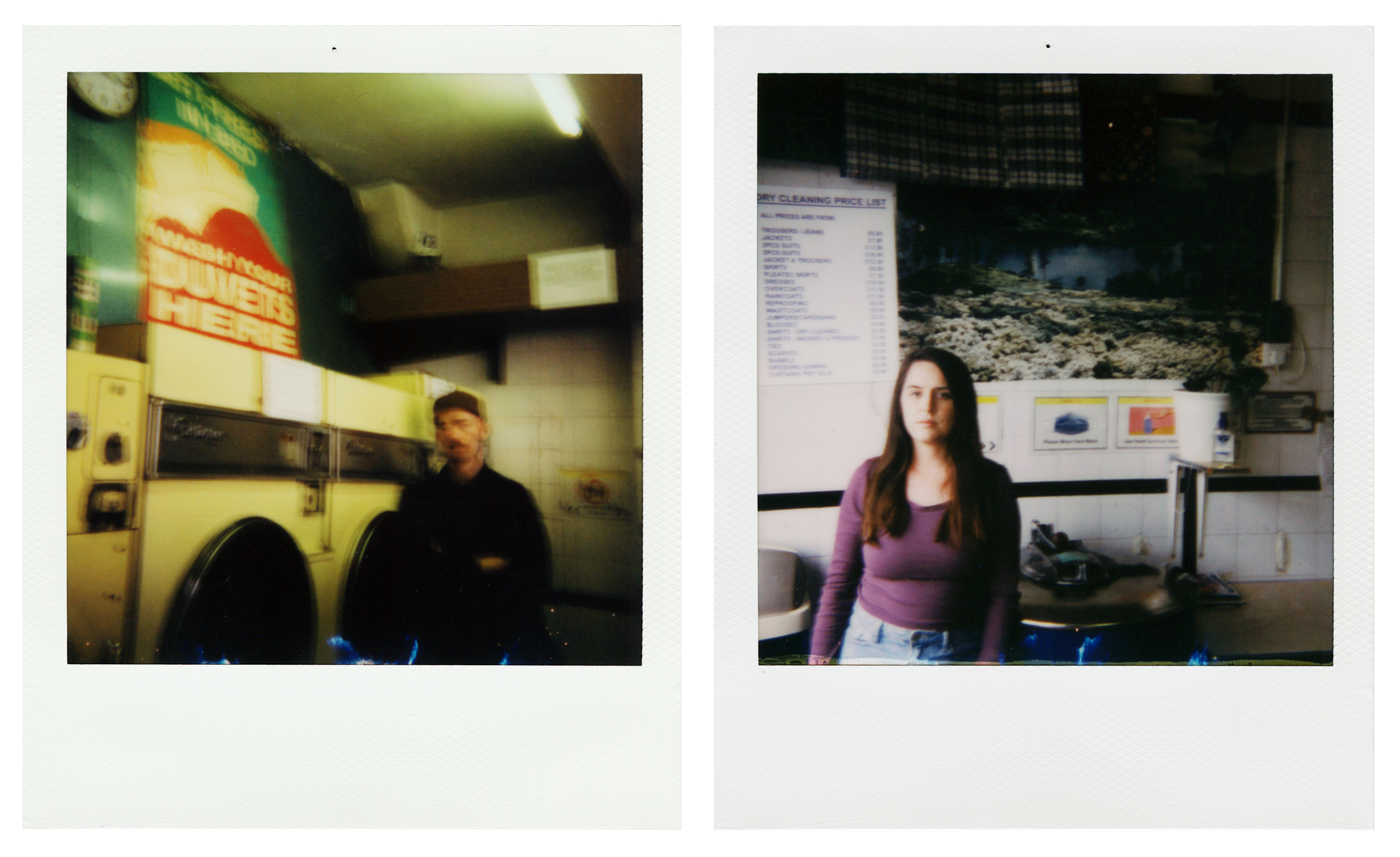
Polaroid making and manipulating became a notable focus, each day of the residency creating one new image each to either tamper with or keep as is. Audio play featured heavily also and Derek lent us Janet’s father’s condenser pencil microphone which taught me that my cheap cassette player is capable of far more satisfying analogue recording than I knew possible. I read gothic art literature and local historical crime and watched a plethora of international films on Mubi. And we spoke about the key themes within our work. I found these sessions particularly fascinating, unearthing parts of our motives that perhaps go far too often unexplored, unprobed. Many motives lie in politics, religion, upbringing, and so forth. The question was: why do we do this? What are the roots of our respective compulsions? 

I was surprised by the residency, for just how much it supported me, and as I first proclaimed: will be shouting about it and Talking Birds ongoing! 

By Adele M Reed

Taking our Time

Daz and Martha from calico reflect on their recent Nest Residency. 
 
We recently completed our first ever residency with Talking Birds. On our Hatching Residency, the Talking Birds team granted us time, space, advice and support, to try out a completely new idea. We had a week to play and explore, to create without any time pressure or expectation to produce. It was joyful, transformative, scary, and at times, a complete nightmare.
 
This was the most time we have had to explore an idea in, well, forever. We are so used to time-sensitive making, to cramming rehearsal time into commission opportunities and giving ourselves impossibly small amounts of time to create entire shows. And we are good at it, we have found a rhythm to working to the tick of the clock, built up stamina for the create-perform-create-perform way of working. 
 
We expected to keep up our pace; that we’d finish our week at the Nest with a whole new show, maybe two, with reams of polished content and new ideas to deep dive into. But, in reality, when Talking Birds told us to take our time, and expected nothing from us, we stopped in our tracks. The clock stopped ticking. 
 
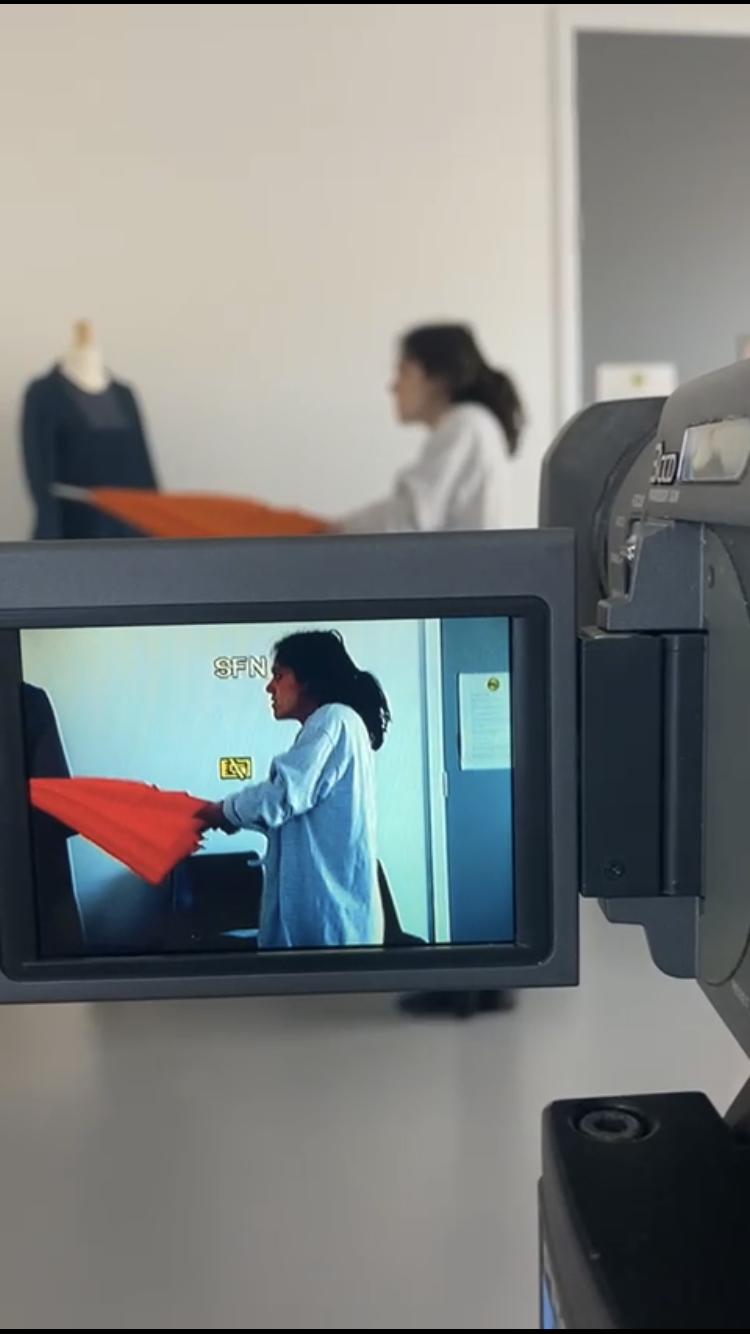
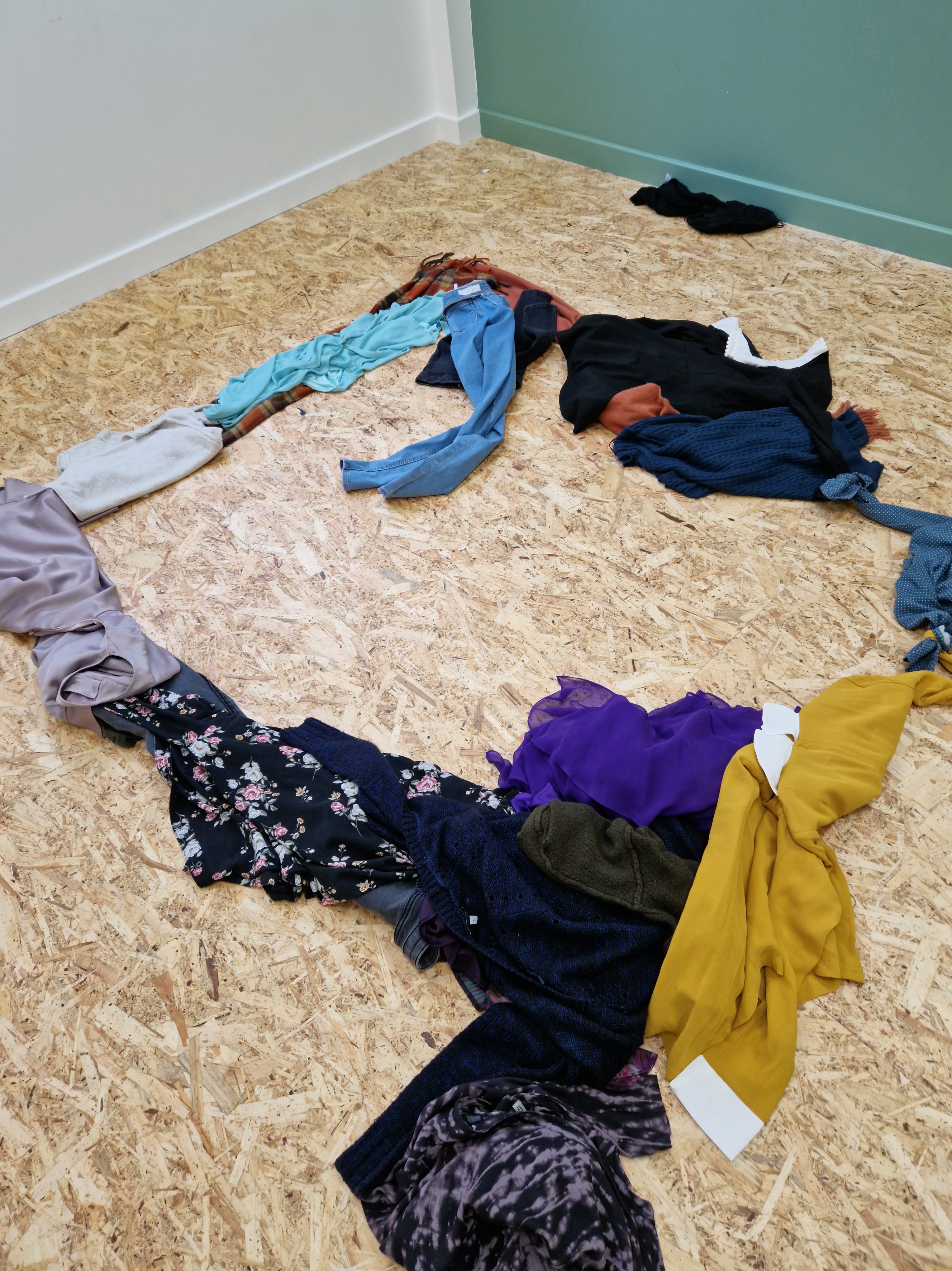
Sometimes, we were our own time-keepers, keeping our pace and continually pushing from idea to idea, medium to medium, trying out as many things as we possibly could in one day. We had this space, these people, this time, and we had to use every second of it creatively. We danced, we jumped, we played with shadows, with clothes, we drew, we wrote, we explored video, improvised, choreographed, imagined. On these days, the possibilities felt endless, that we could generate so much, interrogate our idea so deeply, all in one day. 
 
On other days, we had no idea what to do. There was too much time. We couldn’t keep up the pace. So we slowed down. We took more breaks, and longer breaks, basking in the sun by the canal. We abandoned The Nest and treated ourselves to a long lunch out. At first, we felt guilty for running out of steam, for killing time. But then we had new ideas, we reflected on what we had made and saw our ideas from new perspectives. We also reflect on the way we work, and on the landscape and reality that has made us feel like taking your time is time-wasting. But at the Nest, there is quite literally no waste. Everything is composted, recycled and reused, and this, like any good thing, takes time. 
 
Our Nest residency gave us the time to learn how to slow down. The reality of the fast-paced, product-focussed environment that we are now re-entering means that the clock will, inevitably, start ticking again. But we are so grateful for the Talking Birds, sharing their space, their ways of working, and their time, with us.

time immersed

Wes Finch reflects on his recent Nest Residency

I am taking two weeks, one either side of chocolate-gorging at Easter, to spend time immersed in fairy stories, folk tales, legends, and fables and work out how I might write something in response, along those lines that reach so far back into our collective past and persists into our messy and fragmented present. Maybe I can even jump into the future and look back at where we are now? Maybe that’s a little ambitious for a two-week period but it’s good to aim high, even if I just read some great stories and get a few ideas.

There are certain characters, ideas, formulas, and progressions of events that repeat themselves, in different contexts and wearing different clothes, in the stories that we share and enjoy that have been present from the beginning of storytelling and are still with us today. There are a whole set of ideas, circumstances and narratives that come to mind when someone says the name ‘Cinderella’, ‘Snow White’ or the phrases Let There Be Light! or The Chosen One. Stories are how we make sense of the world and inform how we navigate and interact with it. I’ve found thinkers and writers like Johnathan Pageua and Jordan Peterson fascinating in their unpacking of biblical stories in that regard – well what portion of it I can keep up with, anyway!

It’s a real privilege to have a room, a quiet space with wi-fi and books, with none of the distractions and obligations that come with trying to do this at home. I love being at home (which is a good thing, considering that last two years) but there are other people and animals that come in and out of rooms, people that knock the front door, guitars to be picked up, paint and pens, records, incomplete DIY jobs, things to tidy, laundry and washing up to distract and interrupt me. Here I have the luxury of time to dedicate thought and energy to something I hope I can form into a bigger project in the future.

At the moment I’m still trying to absorb stories and ideas, but I’ve written a little piece about a dragon that attacks Coventry and something about a metal detectorist finding a Golden Key…

The Nest is a fantastic place to be, amongst other creative people working in all kinds of disciplines. I’ve already bumped into a photographer and a dancer I know, passing between my room and the communal area downstairs. Now, I just need to find someone who might want to do some illustrations….

It’s now the end of the second week in my little office. I’ve met some more interesting folks working here and shared some of my writing with some, and as my time here comes to an end, I know I’m going to miss what such an environment has given me.

I’ve read more but nowhere near everything I’d want to (so many books, so little time!) and I’ve written a few more pieces. I worried I might not be able to get back into the rhythm of it after a break, but ideas have obviously been percolating and then insisting on being put on the page just as I’m trying to read another story.

The stories of Kurt Schwitter are bizarre, funny and brilliant, Katherine M Briggs’ British Folk Tales and Legends – A Sampler has been really useful, as have Lisa Schneidau’s Botanical Folk Tales along with Chainey & Winsham’s Treasury of Folklore.

It doesn’t help that Talking Birds’ small library downstairs is full of incredibly interesting and distracting titles too (I borrowed Octavia Butler’s Bloodchild and Other Stories over Easter and didn’t regret it, although I’m not sure it tied into my practice here other than highlighting some useful stuff about the practice of writing with a short contextual essay after each piece.)

There’s been some positive responses to whatever I’ve shared which has been encouraging. I wrote a retelling of an old French tale where a young lord marries a water sprite and I’ve started a retelling of the early life of Lady Godiva, when she was just called Evie.

I’ve struggled to get a foothold on something truly from the future perspective. After finding a map of the predicted flooding and redrawn coastline of the UK in 100 years’ time I really wanted to respond to that, setting a story on the Isle of Rasen where the market town of Middle Rasen now lies in Lincolnshire but that’ll have to wait to solidify a bit more.

I’ve been drawn to Fairies, or as I now know to call them The Gentry or The Good People and have a couple of pieces concerning encountering them in a more modern context.

As an over-arching theme I’ve been mulling over the idea of the ‘other’ or the ‘magical’ that features in so many stories and drawn to considering it all in a revised way; I think there is a lot to be gained from understanding and appreciating the symbolic reality of things and what they represent and manifest for us in the stories we tell and enjoy. We live in an age so dominated by scientific practice that to even deal with things like spirits and spells is at once dismissed as childish. Fantasy as a genre isn’t considered as worthy or important as say historical fiction because it involves things that have no basis in physical, manifest reality. If something can’t be observed, recorded, and quantified does it even exist?! Well, what does that say about your very own consciousness, eh…?

I think it’s probably important to remember the following, and it’s something that has been known eons before and is being slowly remembered and reconfirmed in physics labs today; what you observe to be real is very dependent on what and who is observing. Therefore, what is true might well depend a lot on you. So, just bear that in mind next time you turn the corner into your street and come face to face with a fox in the moonlight.

Research, Renew, Reflect

Leanne Moden reflects on her recent Nest Residency

At the end of April 2022, I spent a beautiful, sunny week in Coventry with Talking Birds, as part of their Hatching Residency.

I was really excited to work on a completely new idea – a one-person show based on my recent experiences of chronic illness – and the residency gave me the headspace to finally start the process of thinking about the project, rather than just thinking about thinking about it.

In 2021, I had a sudden and frightening period of ill-health, and the experience really showed me how invisible and chronic illnesses are often treated in the UK. I wanted to explore the highs and lows that come from navigating the world with a chronic condition, with a view to turning this into a piece of autobiographical theatre.

One of the things that struck me most about getting sick was how worried I became about ‘not being useful”. When I was incapacitated by my condition, all I thought about was how much time I was taking off work, and how inconvenient I was being to those around me. That made me think about the current societal narratives around productivity, usefulness, and community, in relation to illness and disability.

During my first couple of days on the residency, I did a lot of thinking, note-taking, and reading, and I wrote pages and pages of stream of consciousness narrative. At the end of each day, I worried that I hadn’t written enough, or used my time as wisely as I could. This was pretty ironic, given I was meant to be writing about productivity and rest! So, by Wednesday, I vowed to just go with the flow, and not get too het up about “being productive”.

As a result, I spent the final few days writing around the themes of the show, as well as plotting the story arc, thinking about how “Deal Or No Deal” might be the perfect metaphor for the Just World Hypothesis, and generally getting super excited about what I was writing.

I also found time to write a draft for a commissioned piece for an unrelated project, and I spent a day working through my current archive of poetry – finding stuff that I’d started but failed to finish, and earmarking it for editing in the summer.

It was almost as if the fear of not being productive was causing me not to be productive. It all felt a bit meta, truth be told! But actually, it was all grist for the mill, and I wouldn’t have found time to consider my own relationship with “feeling useful” if I hadn’t had the time/space afforded by the residency.

It was also really lovely to meet and chat with other creative people during the lunches, and these serendipitous conversations were super inspiring too. I’d like to extend a huge thanks to everyone at Talking Birds for such a lovely, welcoming, and creative experience. I hope it won’t be too long until my next residency!

Revisiting old work with fresh eyes and new perspectives

Dom Fleming reflects on his recent Nest Residency

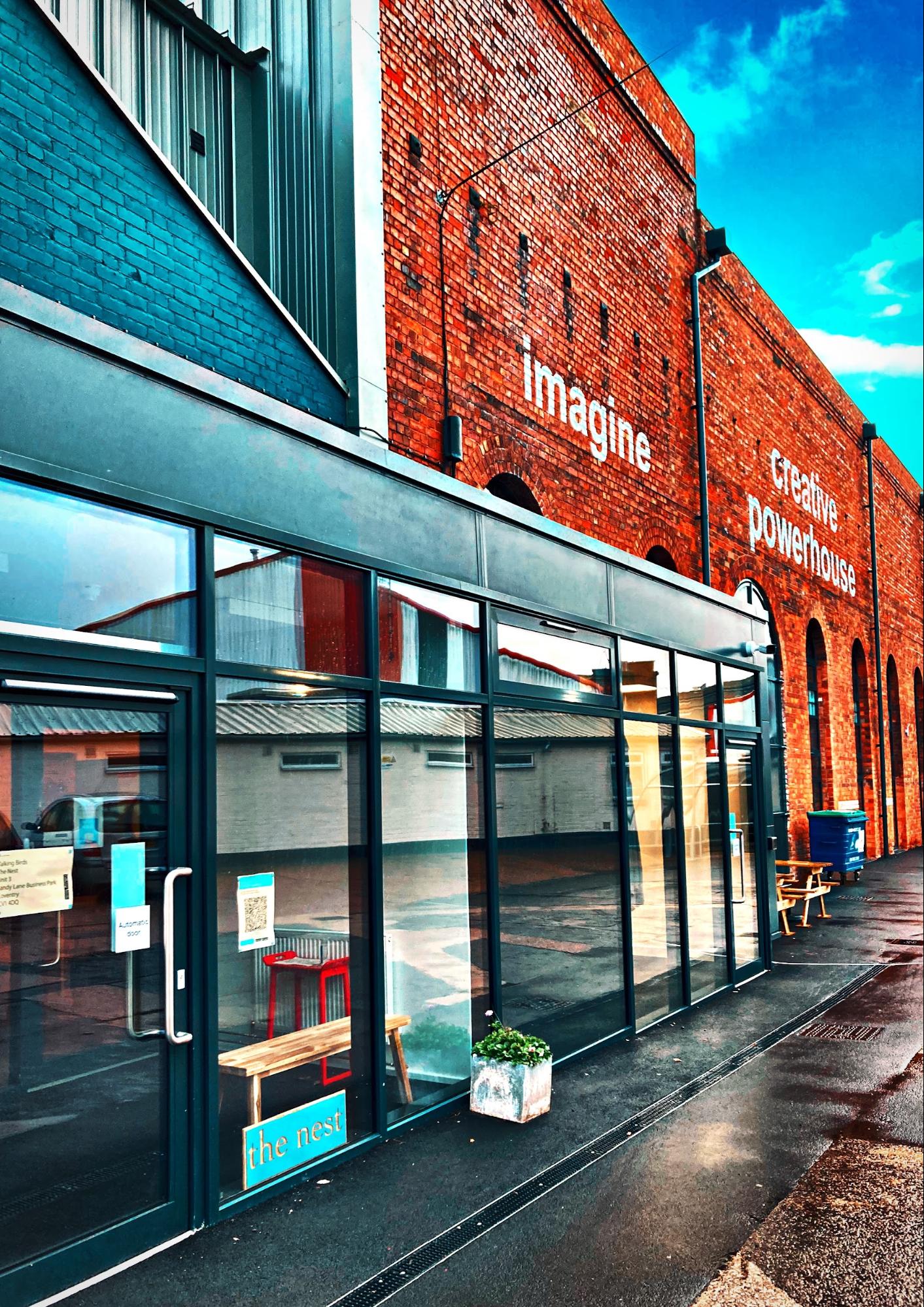
I have just completed a two week Nestival residency with the amazing Talking Birds organisation. The residency ran across two separate weeks in March 2022 (due to falling ill in-between the scheduled 10 day period) and took place inside The Nest; Talking Birds’ beautiful base adjacent to the Daimler Powerhouse on Coventry Canal.

The residency allowed me to take a break from work and gave me the space and the freedom to look at my project work with fresh eyes and excitement. I worked my way through my archive to start the lengthy process of curating my work into a photography book. Due to the nature of being freelance and constantly needing to look for work and move forwards towards the next job, whilst I always ensure I am shooting personal work and passion projects, I often struggle to find the time to develop and explore ideas in depth and work on the post production side. This residency gave me the freedom to delve into my hard drives and rediscover old work that has been untouched and unseen for weeks/months/years.

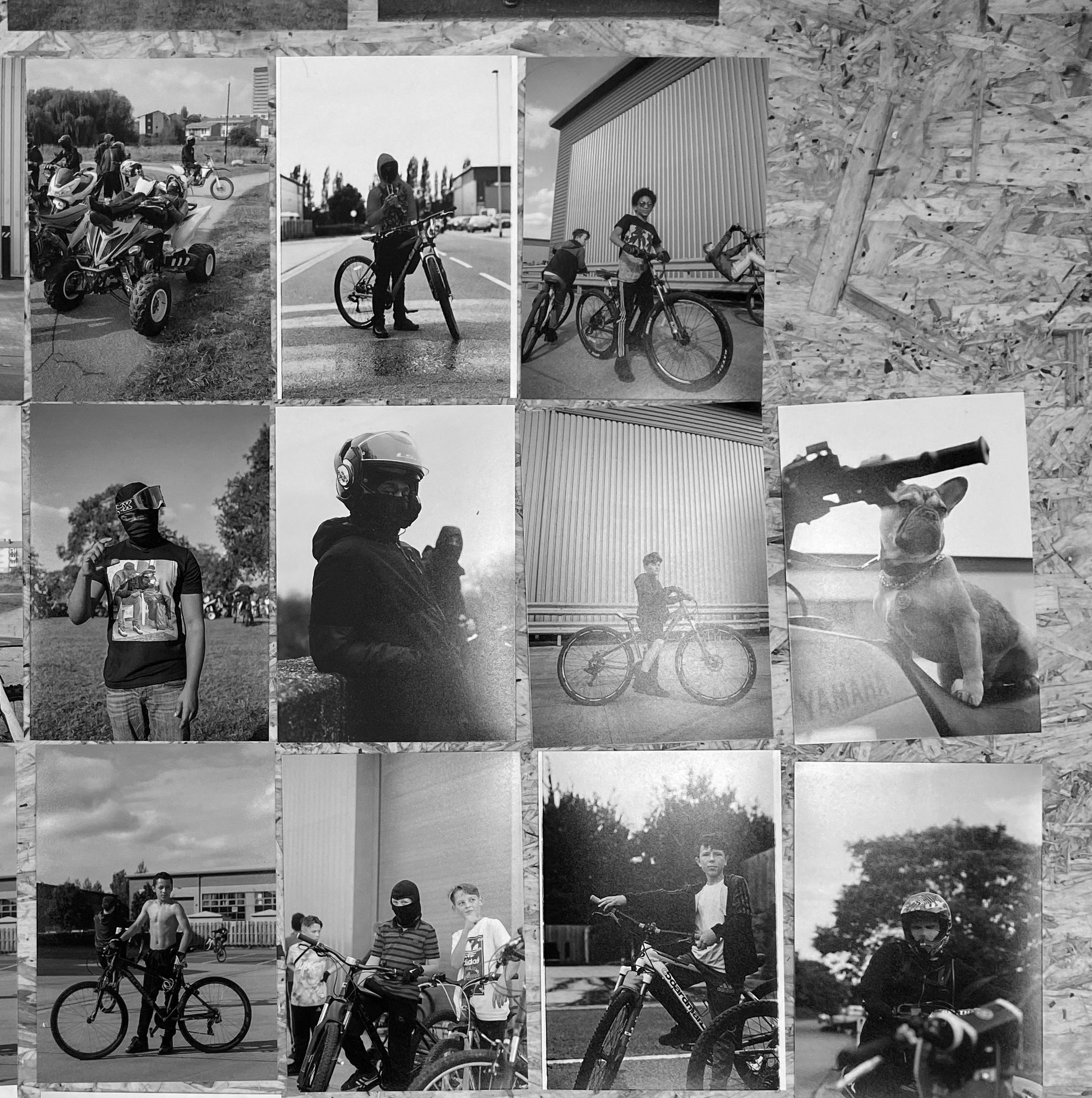
The first week consisted of trawling through hard drives and collating all of my images from a specific documentary project and then re-editing a chosen selection of images to be printed. The work in question was a documentary project shot around the UK over the past 7 years focusing on the bikelife subculture and movement. Revisiting old work with fresh eyes and new perspectives allowed me to view previously ignored work in a completely different light.  

I then printed a wide selection of images for my second week at Talking Birds so that I could see the work in its physical form and as a ‘project’ for the first time. Having the space in the studio to lay out my photographs next to each other allowed me to see what worked together and create ‘categories’ and ‘collections’ of images. It also highlighted where the possible gaps are in the work, so that I can see what is missing and now plan what needs to be photographed in order to complete the project.

The Nest is a great creative hub, with clean and spacious studios to work from. I was lucky enough to experience two different studios due to my residency being spread across several weeks; Space Odyssey in my first week and Solid Blue in my second week. Changing my environment often leads to an increase in productivity and I was very lucky to have this unique experience of being able to enjoy two studios at The Nest.

An extra benefit was having interesting and inspiring conversations with staff and other residents. Other Coventry photographers were doing a different residency towards the end of my time at The Nest and I was able to show them my work for critique and exchange ideas / opinions.

Thank you to everyone I met at The Nest, I promise I won’t be a stranger. To any creatives in Coventry reading this, make sure you apply for a residency if you think you could benefit from it, as it’s such a great opportunity within the city.

What are you going to do with it?

(Paul Tafaro reflects on his recent Nest Residency)

Plan first

March 2022. I was pleasantly surprised to be offered a two week residency at Talking Birds. I clenched my fists and shook them, a gesture from footy. I’d found every excuse not to work at home. Here were two weeks, ten days, in a room, giving myself permission.

I had thought about writing this play for over a year. Subconsciously working on it perhaps. Every time I mentioned it, friends said ‘YOU HAVE TO WRITE THIS!’ I’d reply, ‘No you write it!’. Untrue.

A few months earlier, I had collated all of my notes (iPhone notes, email drafts, WhatsApp conversations, underneath loaves of bread) into a 29 page Word document. I distilled these notes ‘research’ into an 8 page scene plan. I had written out the plan a few weeks before the residency. The plan consists of scene headings, bullet points with tent poles of interesting things that should be included in the scene, the main action of the scene (the thing that needs to happen) with snatches of dialogue to consider including. This plan went through a few drafts, as I initially had fifteen scenes. When I have written a plan I know that the play can be written. On the residency I’d forget what the next scene was, but the plan steers me back and keeps me above sea level.

I figured I had a three act play. Nine scenes. One location. Each scene would be a mini pressure cooker play in itself. The audience a fly on the wall.

I had also worked out who would be on stage at the start of each scene. This was to create contrast, and focus on different dynamics within the play.
Act I
I C & E
II A & D
III B & C
IV E
Act II
I A
II D
III B
Act III
I A
II C

Interior design

On the first day of the residency, I completed emails before lunch, drawling the line under the first stage of another project. It took me two days to complete scene one. The longest scene (16 pages). The first scene of a play is sometimes tricky. I was introducing five characters and had some exposition. But it was also the scene where everyone, for the most part, is getting along. On the second day, I was behind, sat in the comfy chair and had a rest.

I was in the blue studio and decided to move the room around a little. On the second day, I had pulled out diva card #31 and asked for a computer chair from downstairs. This was kindly accommodated (brought up in the lift didn’t you know!) by Philippa. I adore natural light and faced the window but didn’t want my back to the door (opposite the window). I positioned myself near the radiator. This was partly so I could see if people were at the door. Whilst writing, I sometimes listen to classical music in the background – like Mahler or Shostakovich. Anything grand that I don’t need to dance to.

After the request for the computer chair, I realised that I’d also got used to the laptop at a particular height. I’ve lived in places without a desk before and used a chest of drawers that I opened up and balanced the laptop atop clothes. I was currently using some cardboard boxes and a Jamie Oliver (useful Xmas pressie) cookbook at home. What could I use here? Is that a bin?

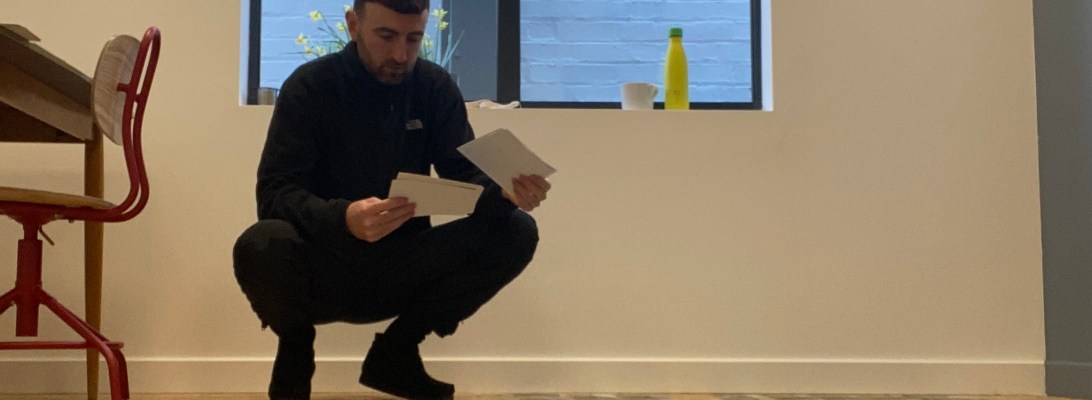
It all seemed minimalist, possibly Scandi and in keeping with TB principles (I seem to have removed the bin for the photoshoot). Frances also kindly brought up the cushion in the photo for my arms leaning on the wooden table. I never knew I was this unbelievable. Scene a day.

Journey not the destination was that?

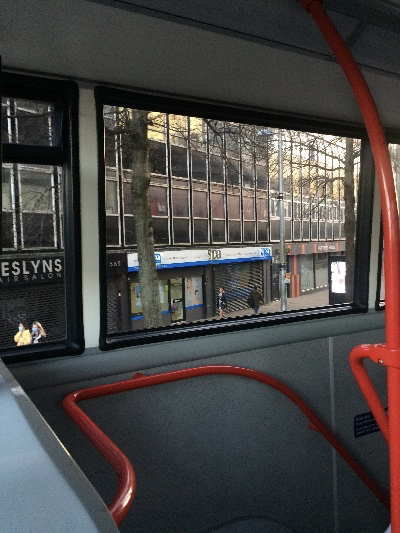
On the journey to the residency, I find myself noticing the tops of buildings. What was the story behind these? What were/are these rooms used for? There’s a moment when you drive into Radford, by Barr’s Hill, on a bus, that you are really quite high and can see quite far. I find myself wondering what the structure rising high above the rest was? Was it Warwick University? Was it, no surely, student accommodation?

On one journey, I see adult twins dressed in the exact same outfit, holding the exact same gym bag each. I think about mistaken identity … I wonder if there is enough lightness in what I am writing?

One morning at a stop, I watch a lady collect something off someone. She goes to another. I realise that she is asking for money. Out of four people, two stop and hand something to her. I think about what the money might be spent on? Who this person lives with? Why did I believe out of four people, four would not have given her anything?

12.38pm Lunch

The communal lunches were lovely. For an hour a day, everyone at TB generally gathers for their lunch downstairs, sometimes outside, if the sun’s got the memo it lands on Janet’s plants, everyone finishes their lunch and you can stay outside a little longer and sway to a summery song like Two Occasions by The Deele. For these two weeks you are freelance, child. On different days, different people are in. Some days my lunches lasted an hour, others two. Dez is an extraordinary raconteur. I needed any excuse not to work.

Plot twist

There would be an event and co-working day on Friday, the last day of residency – this meant no work Friday for me. Co-working days are a chance to chat and try brownies. Sometimes, I look at brownies through glass and imagine their taste. A van comes every day at lunch and sells food and drink. I haven’t bought a large Bakewell tart since Memorial park 2006 so I did relent once. I figured that I needed to finish the play on Thursday.

Work then

A working day might be 10.30 – 12.30, 2.30- 4.30 if the scene wasn’t finished, 9:30pm – 1:30am in the evening. A brilliant thing about the nest residency is that there is no expectation to create something, and you don’t need to be in the office.

I was surprised at how clearly the characters voices were in my head. One joy about playwriting, particularly when it works, is when characters surprise you. I had written out a plan with things that should be in the scene, but sometimes they didn’t end up in it, or characters entered the scene wanting something different (affecting but not changing the main action).

Some playwrights prefer to write by hand, even typewrite, but I like how the laptop can accommodate the speed of an actors thought.

Installation

The toilet upstairs is illuminated by a wondrous green light. I often used just this light when using the loo. It reminded me of a sort of nostalgic Megabowl laser quest/Drayton Manor ride which was potentially waltzers in the dark but I don’t remember. One day I was in there, I heard birds chirping? Later informed that this wasn’t from the NPO auditory access budget but real birds! Highly recommend a visit.

Wet Wednesday Will

Non-stop rain perfect working conditions. Dez made steps with a new score. I completed the first draft of the play. A year in the making, under the cover of rain. James Horner’s Brainstorm haunts me as we print double-sided. Feels like we we’re doing something forbidden. I had wanted to write this for a long time and was excited to get to the end. There were times when I’d come down for the communal lunch after an argument between characters (in my head) and the quietness of the adults in real life at lunch was an interesting juxtaposition. I really appreciated not being alone with my thoughts as one would normally write.

I used Thursday to learn how to put captions onto a YouTube video, thanks to an empowering tip from Janet.

I then spent a few days celebrating, resisting reading the first draft, a few more stretches of joie de vivre.

If the trend is to include a playlist, here
Ain’t No Stopping Us Now – McFadden & Whitehead
Before I let Go – Maze
Groovin’ (That’s what we’re doin’) – SOS Band

So

The residency was a beautiful experience. I had some lovely conversations. I spent one evening going to a dance class and another seeing The Batman. The weekend on another writing project. Knowing that I would be turning up for a few hours in the studio gave me a structure and time to focus. A laid back process. This was my first paid residency experience. Thank you very much.

feeling like coming back home

melissandre varin reflects on their recent Nest Residency

i had my third residency with Talking Birds between the 7th and 18th of March – in-between spaces.

i had access to “Odyssey” studio space at the Nest, received £1000 financial support, and found comfort (once again) in a warm hug, a half-pronounced joke, an overdue catch up and a permission to be – me.

i ended up inhabiting the studio offered to me about 4-5 days across a 2 weeks residency, i never felt like i was feeling the space as i needed to. Was i avoiding the spaces i intended to investigate with this project? i guess that this question will stay in suspension. It is only at the last moment, last day of residency that i started to connect threads, bits and pieces of me in regards to this inavouée (undisclosed) feeling.

Where i needed to be was at linoleum dreams parked on the parking of the Nest.

But – i did not feel ready, in all the complexity of what being ready to re-visit an artwork i sweated in, dreamt in, loved in – could (have) mean(t).

i felt like avoiding, and accepting the fact that i came to this residency depleted for multiple reasons that i will keep silent in typed words but could expand on if you ever see me in the detour of a street, gallery, theatre.

– depleted – it is when i am most vulnerable to external forces. i felt the pressure to produce for the first time in a while at the beginning of the residency. But – returned to myself spiritually guided by (non)living ancestors. i paused on the fact, the need to have such pockets, portals, moments to come depleted, stay depleted – feel its wind of change and its static corners – without pressure to ‘sort it/myself out’. As an artist with mood swings, chronic depression, and care responsibilities – i never paused on the thought that maybe feeling whatever i am feeling, including depleted, did not have to be a feeling, space i needed to unknot but could – be – with/in.

Without performing Black joy, without performing Black queer trauma, without performing but being and trusting the fact that what was (not) happening was ok.

Sym and mel inside linoleum dreams, parked on the parking of the Daimler Power House, kindly supported by Talking Birds

i had pleasure though! Surrounded by beings i love and did not see in a while, taking time to share a cuppa, nurturing friendships learning about how/where Black queer artist friends grew up in in Dakar, Birmingham, Nairobi… working at Odyssey studio with a friend part of B.O.O.K (Building Our Own Knoweldge) working group, inspired by friend and collaborator Samiir Saunders i wrote the first version of my access rider (happy to share with anyone interested) – i got to know about myself and share it to the world.

Ok now that i am starting to list things it actually sounds like it was 2 full wholesome weeks. But i want to highlight the reality that these were interrupted with times when i had to cancel my days as i felt the need to stay still – i must admit that i spent a whole day watching Love Is Blind season 1 and 2 as well (learnt so much!)… . Also learnt a lot navigating the British Arts Show in Wolverhampton as part of a day trip investigating this aching research question: how do we create loving environments? (perspectives from Black queer artworkers who grew up on the African continent and in the EU/UK-based diaspora) –

i lived.

i am writing this post fresh out of an inspiring talk by Zed Lawal, Dan Thompson & Derek Nisbet, and chair Philippa Cross.

this residency has been transformative – quite in line with most of Talking Birds’ work. as i am ending this annotation on the residency, i would like to share my love for the being making this organisation – a warm womb i (re)turn to while excited, on a high, depleted, lost ….-

Talking Birds, and its residencies programme is an essential example of what mothering could mean when it comes to the arts sector.

More on this slow-birth-ing creature i am working on or that is working within me in due course.

here is a snippet of a tentacle of this thingy that works and mixes my within for almost a year:

i would like to have conversations with members of my chosen family (mainly (Black) queer artworkers) this time and compile the transcripts of them – both work will inform a multi-language performance and multi-sensory installation i feel the impulse to make. With this project that lives in my heart i have the desire to investigate how senses of aesthetics, of what is art and what is not – are formed and informed by the built environment/ interior design/ furniture/ type of flooring / wall-paper and so on – we grew up in? How can this inform the creation of loving environments in the arts (too)? How can we create loving environments? Dissecting these questions by looking back at our immediate roots and acknowledging the power of ‘things’ in contributing in making us who we are now – i am currently thinking of expanding my understanding of my vibrant materialist approach.

As a dear being sent me on a low a couple of months ago:
Octavia E Butler’s assertion in Parable of the Talents, “To survive let the past teach us”

These words will definitely find home on my skin through ink asap.


If you are a Midlands-based artist working in any medium who might benefit from a Nest Residency, you can find more details and how to apply here.


I needed to make a difference

Mahendra Patel reflects on his Nest Residency

Being a musician for many years, I’ve often witnessed Discrimination on many levels, and I thought if I could turn this into a play, theatre piece this could be good.  For me it had to be done very differently to what I had seen on stage in the past, it would need to grab people’s attention, make them sit up, be involved somehow – and then of course go tell their friends, post on social media to get more people to come and see.

So the idea came and a few days later a friend posted online about ‘Talking Birds Nest Residency’ I had an idea that needed exploring, researching, bouncing around, talking through with a few theatre professionals. I grabbed my tablet made a few videos, picked the one I thought described what I wanted to do best and I applied for the scheme.

Tick tock time went by and one day I see a reply from them, my heart starts beating faster, getting anxious, scared of opening the email I put the kettle on and made a coffee.  Grabbed one of my drums to feel calm again and 2 hrs later I slowly took my mouse, clicked on the email . . … Nearly fell out of my chair with the biggest grin, I got it!  No Match Funding needed! I was going to be a Nest Resident, and so it started with a meeting with Janet and Derek.  To be honest I couldn’t believe it, but they believed in me to get this started.  

‘When Instruments come to Jam’ has at its heart the idea of using instruments as a metaphor to show discrimination on many levels.  So I started to focus on the conversations instruments would have if they communicated with each other, (as humans would) the fun, laughter, judgemental, good/bad thoughts, gossiping, sarcasm, joking around and then of course discriminating!

I’ve not written a play before, so Talking Birds they got me a meeting with Ola Animashawun to help me start to sketch out the story I wanted to tell – this was a chance for me to start sounding out my ideas with a theatre professional/dramaturg, and for me this was again all new territory.  Within a short time I’d realised there was a lot of work to be done by myself – he left me with provocations regards my idea which going forward would help me structure my idea/my play. I had conversations about my idea with musicians and animators and they all helped influence the way the idea shaped up.

About a month later my partner and I were off on a short break to Bulgaria (sadly not part of the residency!), the weather was great and I found this wonderful beach bar.  The laptop came out and for the first time I was inspired to start writing the beginnings of ‘When Instruments come to Jam’, for some reason the beach bar provided the perfect conditions, the sea, sand and gentle breeze.  

How do you write about ‘discrimination’?  It’s simple, you draw on your very own experiences from the first day at school to today!  Remarks about colour/size/abilities/being too good/being too bad/ethnic background/standing up for yourself/for your friends/not being white! And to be honest not all was that bad – especially because most remarks/insults around ethnic background were wrong (for some reason very few people could actually truly insult me about this since they never take the time find out what my ethnic background actually is!)

Transferring this to instruments at first was difficult but then surprising enough started to become easier as even instruments have a make-up.  Colour/size/background/abilities/the sound they produce/presence and they too have feelings.  It’s hard to explain that although music has no barriers, the musicians choose to put up barriers.  

As the title says, the story starts ‘When instruments come to Jam’ – although I have an idea of how the story plays out, I want to develop it collaboratively over time, maybe once a week with an open call to musicians to attend; building up a group producing great music regardless of knowing or ever having played alongside each other…. that’s where the trouble starts!

Without this Nest Residency, I would not have been able to get started  on this project – the funds and support allowed me to schedule time in to my work specifically for this project/idea, think about why I wanted to tell this story, and who it was for.  Being a full time musician means I have to generate my own income and anytime spent on ideas, looking at new projects in my own time would mean I’m not earning.  The Nest Residency meant I could afford to spend time on this and explore this idea of mine: contacting artists, writers, audience development specialists. I wanted to see if, firstly, this kind of delivery has been done in theatre, have instruments been used as a metaphor and the main point was would audiences be open to a play without spoken words and just music? I’ve spent a lot of time wondering, experimenting, and being ‘brave’ in order to develop the idea further.

The next step for this project has been to apply to (and be shortlisted for) the We are Unlimited/City of Culture Trust commissions, taking this to the next level of applying for an Emerging Artist Award in theatre. My time as a Nest Resident exploring this idea needs to end to move forward.  I’d like to thank Talking Birds for their time, guidance so far and hope that we’ll continue this on the next step as it starts to take flight . . .

GUEST BLOG: Contemporary visual artist Andy Sargent reflects on his month-long Nest Residency with Talking Birds.

Nest Residency No 1 by Andy Sargent – Contemporary visual artist.

As I write this, I am looking back on four weeks of a residency organised by the wonderful Talking Birds which ended on the 22nd March 2019, that took place at Eaton House in Coventry. The studio space was provided by Coventry Artspace, up on floor 11, which is I think, the highest place I have ever created work!

54800141_2295069170544789_5751540149460664320_o

I wanted to use this opportunity to further my ideas on a series of works called “Hidden monster”, which deals with the subject of sudden (and permanent) injury, the impact it has on one’s life, how one deals with having to adjust to it, other peoples perceptions of it, and so on. It deals with the isolation, pain, depression, vulnerability, and struggle that comes with disability. I use the motif of the “Hidden monster”, and through this character I can describe the issues I have faced, and still do, as I have first hand personal experience.

53609536_2271343556250684_2821285101013303296_o

This residency allowed me to expand my ideas, and as I don’t have a personal purpose built studio space, I jumped at the chance to take up this opportunity. Even though I struggle daily with mobility issues, I made sure that I could get into the residency as much as possible, to get full use of the studio space provided. From day one, I started creating lots of charcoal drawings, mapping out and moulding images that could be used for three dimensional and two dimensional works. These ideas then filtered into paintings on either board or canvas, small sculptures, and also two large banners or wall hangings. All these works dealt with a multitude of subjects to do with this over-arching subject of being “the monster”. Some of the work dealt with “who is the monster?”. I had been called a monster after my injury, however I see ignorance and hatred towards the disabled as far more monstrous, than someone who has found him/herself on what has been described to me in the past as “the scrapheap of society”. I cannot, nor could I, speak for all disabled people, however these works represent a collection of outpourings on a subject often swept under the proverbial carpet!

53164953_2271221616262878_7262043794860670976_o

During this residency, Talking Birds were busy contacting various people and organisations they saw as being interested in seeing this work and meeting me. I got to discuss the work, the issues depicted in it and life as an artist with physical limitations. Many ideas were discussed, ways and places to show the work, reactions to seeing this work, how the work could be presented in other forms etc. Certainly, from being an artist who lives on the outskirts of Nuneaton, away from the cultural centres in this country, the residency with Talking Birds provided me with a way to raise my profile, and be noticed by more people, getting the message out that my work exists. One aspect of becoming permanently injured in my case, is that you lose your career/job, and earning money becomes a major issue. So not only does physically getting out to meet people pose a huge problem, but you often can’t afford to go anywhere after you’ve paid your essential bills! So a major part of this residency was meeting other very creative people, and feeling, albeit temporarily, part of an artistic community.

53098717_2271244182927288_6700125801821503488_o

So, on reflection, this Nest Residency has been a fabulous four weeks in which to get work created, meet great folks, plan further ideas and opportunities. I would certainly recommend to any other artists who consider themselves disabled to apply for a Nest Residency. You never know what it may lead to!

(A huge thank you to Phillipa Cross, Janet Vaughan and Derek Nisbet from Taking Birds, and Mindy Chillery at Coventry Artspace for making this residency happen. Also many thanks to all the artists, arts organisations, and arts professionals who came to see my work during my residency)

Andy Sargent.

[Photo gallery pics by Talking Birds, Photos in the text by Andy Sargent]


The Nest Residencies are a key part of Talking Birds‘ Artistic Programme for 2018-22, funded as part of the company’s membership of Arts Council England’s National Portfolio, and aimed at D/deaf or disabled and/or Midlands-based artists. For information on how to apply for a Nest Residency, visit Talking Birds’ website.