Co-Artistic Director Janet reflects on the 5G Explorer programme.
In 2005, I gave one of the ‘Hothaus Papers’ talks at Vivid. My talk was entitled ‘Are theatre-makers natural net artists?’ and explored some of the crossover techniques that Talking Birds and others were adapting from our experimental theatre practice to the – then relatively new – practice of making natively digital artworks that existed purely on the internet, arguing (spoiler alert) that it was a pretty good fit.

In my experience, every time there is a new bit of tech (or any new tool), this process cycles around again. Making any new piece of work involves an intense period of immersion in, or obsession with, the matter of the piece while the work is being constructed – and so it is with new tech. As new digital tools are developed, artists (and others) are compelled to become totally immersed, in order to explore all the possibilities – to take it apart, work out what it is for – before deciding whether the new tool can stay in the box, or was only useful for one project.
Talking Birds has often played with tech in one way or another, sometimes trying to do things which proved quite a challenge at the time but would now be far simpler thanks to new tech developments. It is this that perhaps explains why we find ourselves on this Coventry University 5G Explorer project – looking at what will imminently be possible as the tech is already on it’s way – which hopefully means our offering won’t be quite so DIY this time…
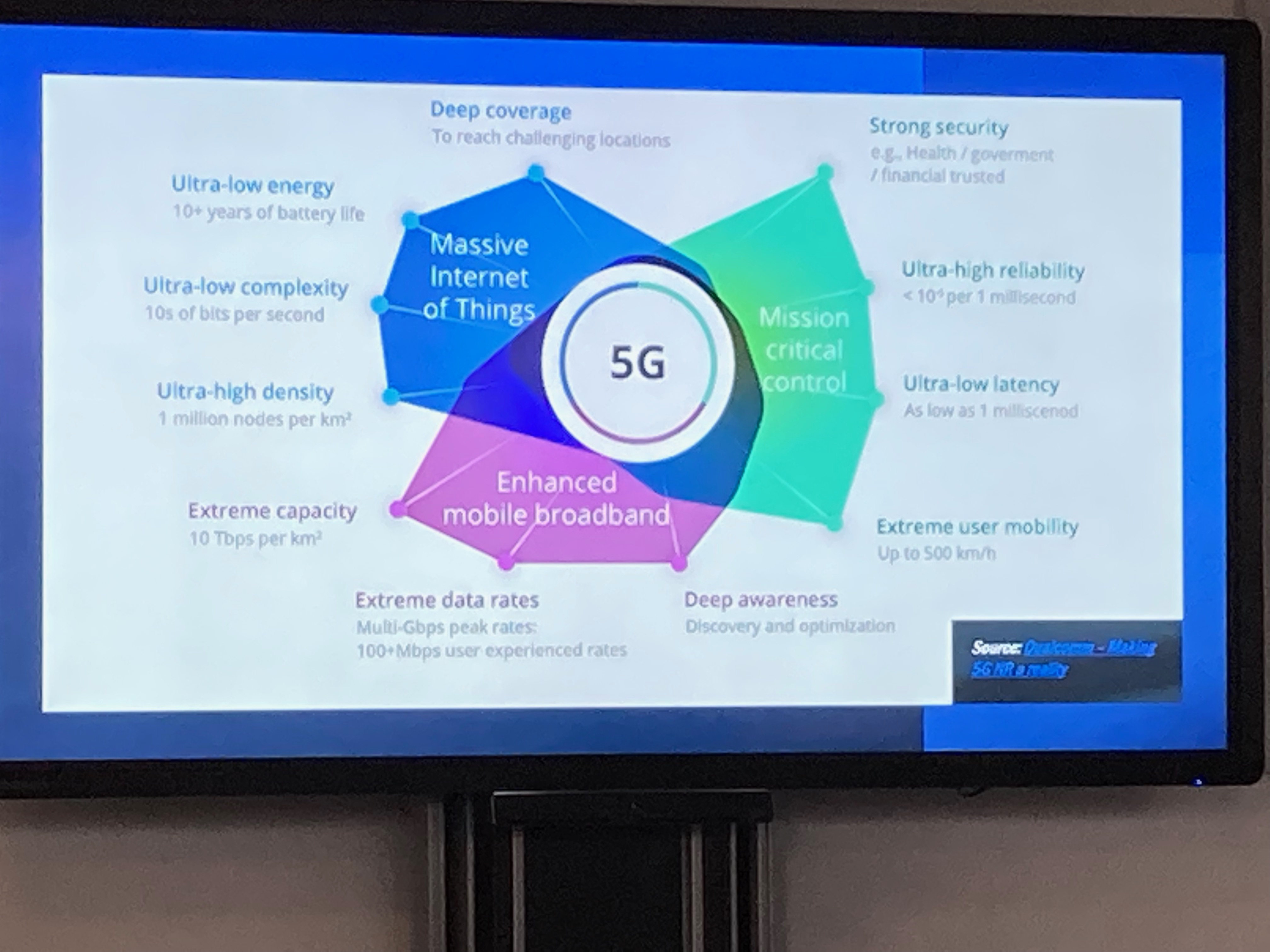
The 5G Explorer project opener was a speedy introduction to all things 5G from the Institute of Coding. What really struck us was the obvious benefits of the application of 5G in, for example, healthcare – where it could enable A&E staff to be video-connected to ambulances, interact and diagnose while the patient is in transit, and therefore accurately direct paramedic action in real time that could drastically improve patient survival rates.
In sharp contrast to this tech-enabled benefit to human health and wellbeing, the environmental impact of the 5G rollout is troubling – not least from a waste point of view – because the existing infrastructure cannot be upgraded/adapted as it works in a completely different way (disclaimer – we’re artists, not tech experts, don’t expect us to be able to explain this bit) and so will just be replaced with totally new 5G masts etc.
We were continually struck by how differently the words ‘opportunities of 5G’ might be interpreted by an arts and culture cohort, compared to how it might land with the business people to whom this talk is usually delivered. Our motivation – of exploring new ways to tell stories that actively immerse and engage audiences in the narratives – sits rather uncomfortably with the business enrichment motivation that drives much of the corporate and commercial exploration of the ‘opportunities of 5G’.
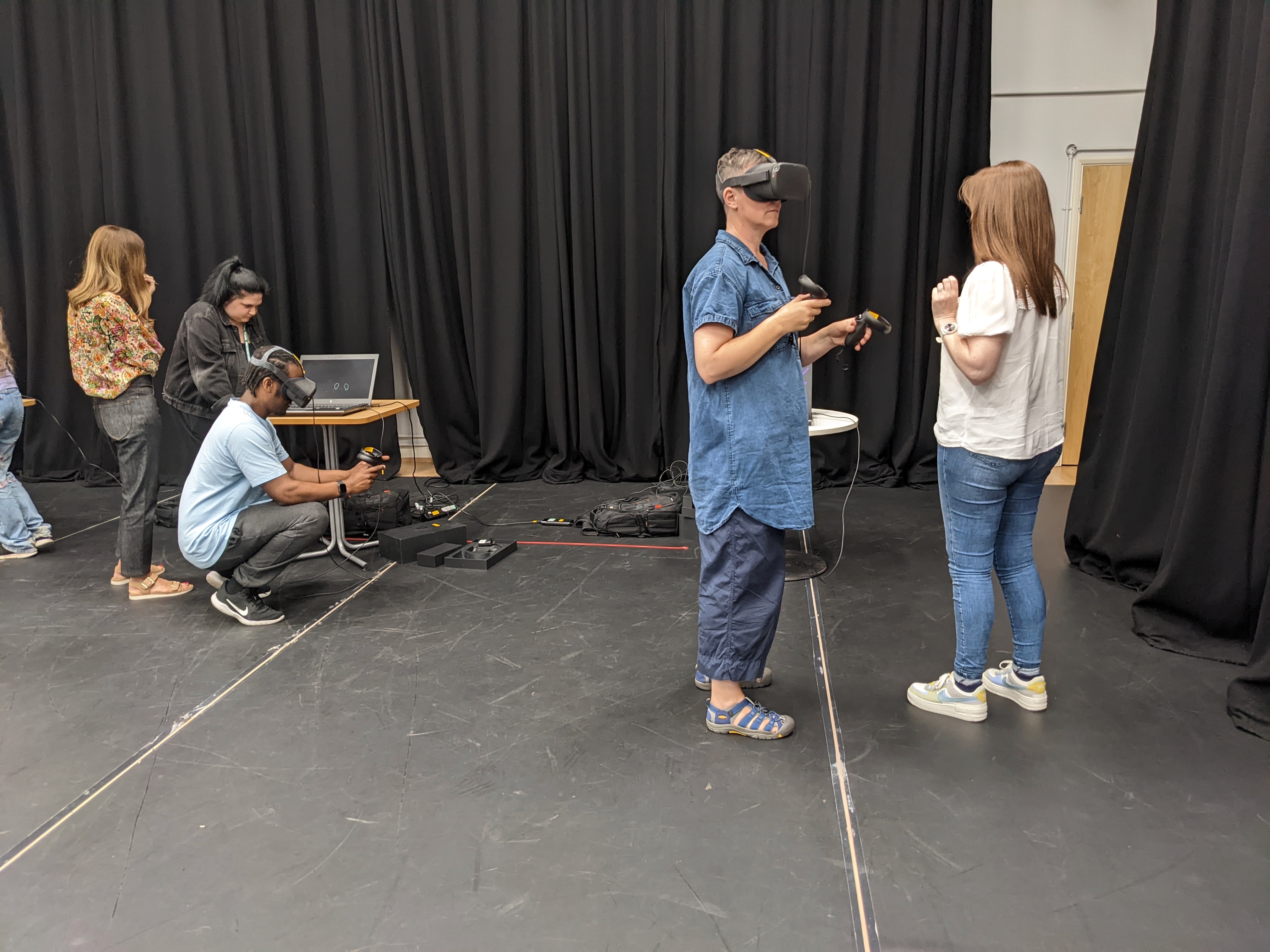
The ethical and philosophical questions around this kept surfacing for us throughout the ‘bootcamp’ week, which saw presentations and workshops by, and conversations with, artists and technologists working in all kinds of immersive tech, including 5G-enabled.
We earned ourselves a (justified) reputation as the ones in the group who just could not stop banging on about the ethical issues raised by all of this, and particularly our discomfort with the extractive ‘goldrush’ motivation of many entering the ‘race to 5G’. We wondered how, through this 5G Explorer project, could we express this discomfort? Could we propose regenerative uses for the tech that might help people to collectively imagine and (to use Rob Hopkins’ phrase) ‘create a longing for something wonderful’? And how about moving people to take real-world regenerative action?
Or is there actually no way to square our ethical position with embracing this technology? Is it hypocritical even to try?
After an intensive week of talks and workshops, we find ourselves most interested in the creative possibilities of augmented, or mixed, reality – and in finding ways to harness the social aspect of 5G connectivity to tempt people into exploring new ways of interacting with, and taking positive agency in, the real world. These feel most relevant to our practice.
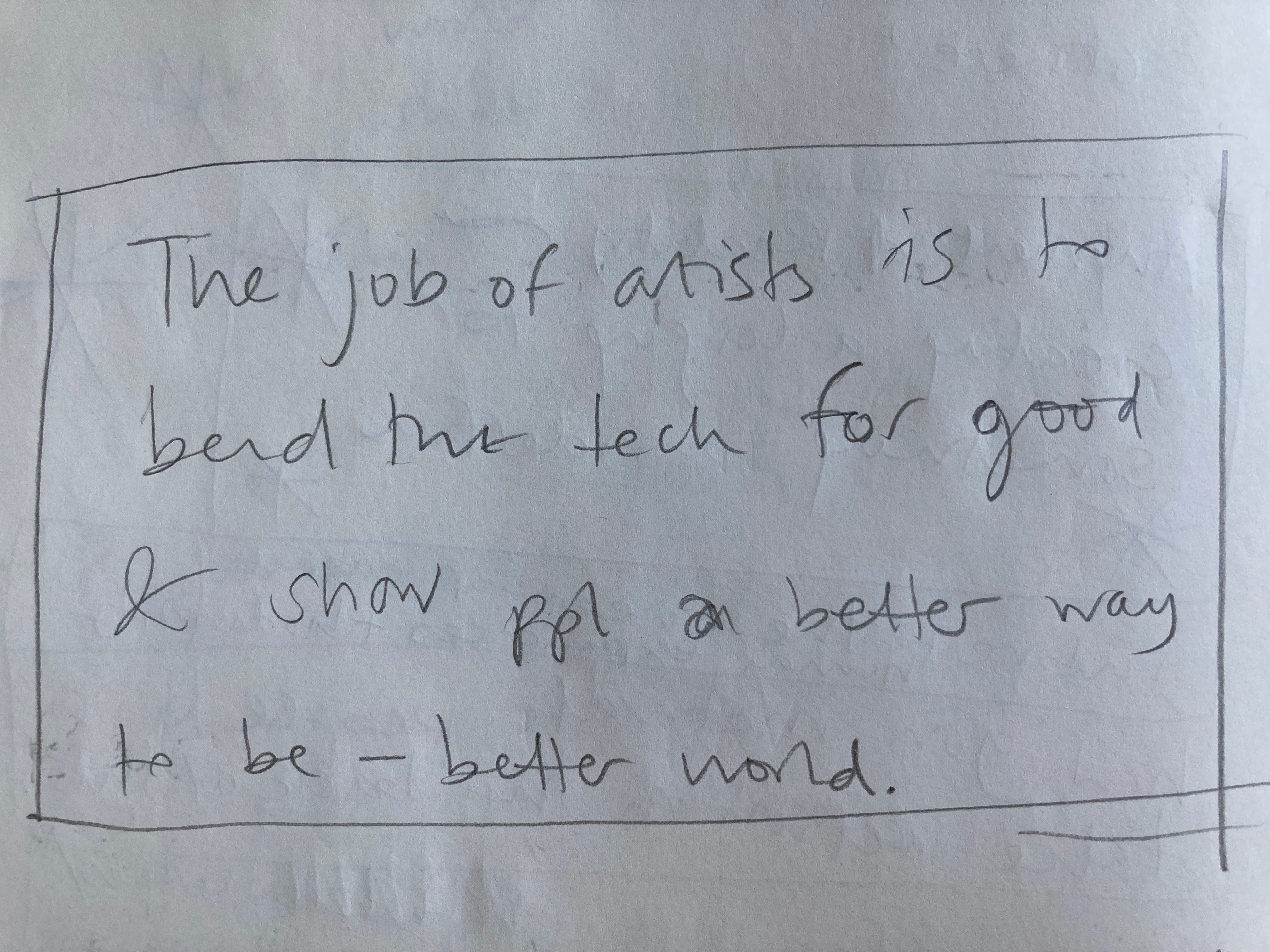
After the project design sprint, we now have ideas that are beginning to shape up. There is some synergy with our Citizens’ Assembly project, Art for the People, our interest in social democracy and in taking, and inspiring, action against the climate emergency. Can we pull something together from all of these strands that stays true to our values and has a fighting chance of ‘bend[ing] the tech for good and show[ing] people [there might be] a better way to be – [to collectively make a] better world’?
Well, we will certainly try – maybe watch this space…


One thought on “Bend the tech”