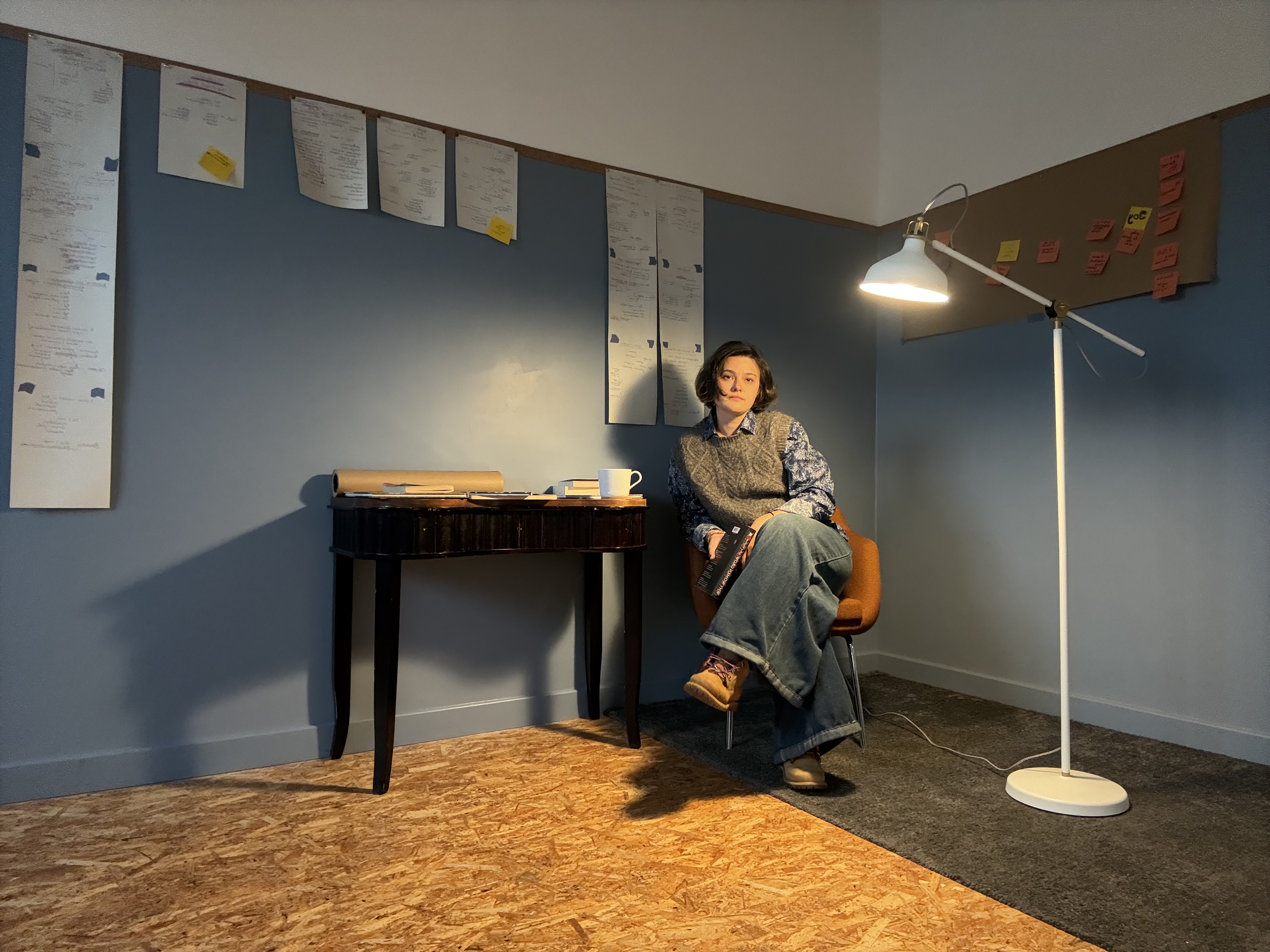
Veronika Khomiakova reflects on her recent Hatching Residency at The Nest
I was making some notes during the residency to be better prepared to write this blog. It helped, but still the experience felt so raw. Just as I did with what came out of the residency, I might do it here – accept what I have, it’s my own process, even when it’s unfinished, with no great idea yet (or may never be).
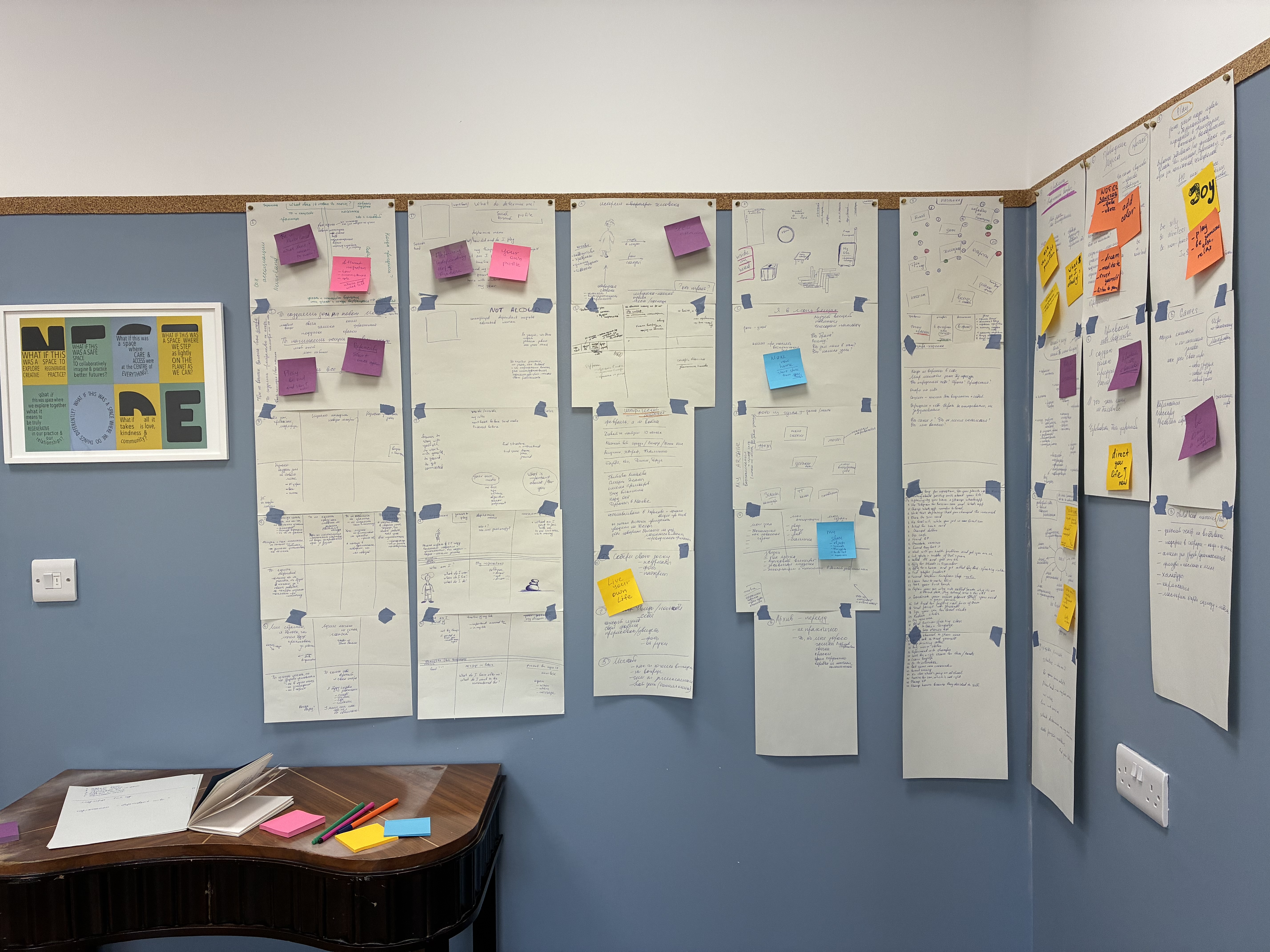
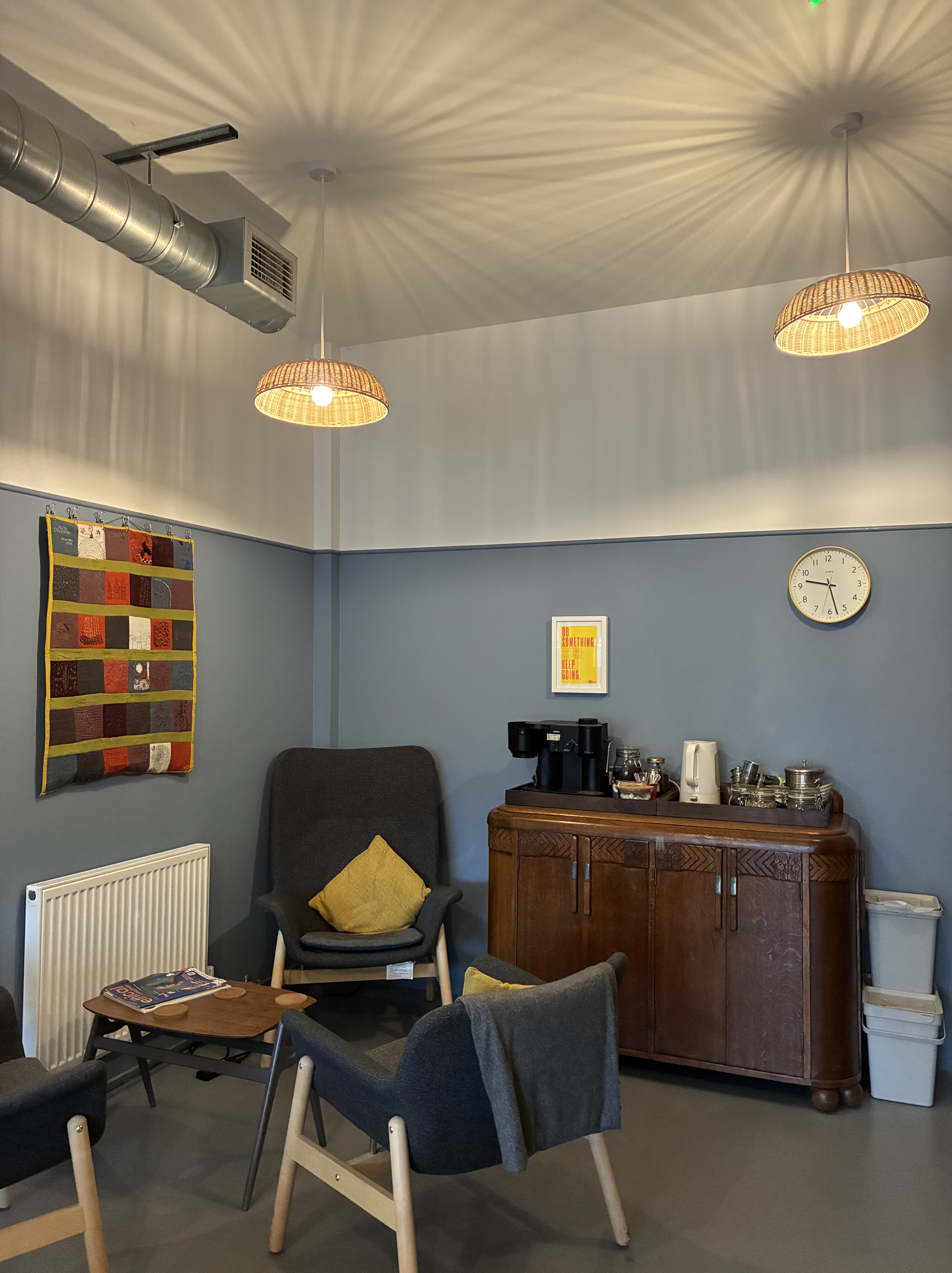
The Nest is a place with a thoughtful atmosphere and carefully chosen details in everything. From the different names of the studios, each with its own story behind it (mine was Hotel 104), to the lunch breaks when everyone could come to switch off and chat around the big table. And small things, like the personal set of keys on a wooden tag with the name of your studio on it, a welcome note on the door, pens and pencils on the table, a selection of tea and hot coffee in the morning. And I am not even talking about the studio itself with a gorgeous wall colour, cork strip around the perimeter, different tables to work at and even cushions and a pile of blankets. Everything makes you feel so welcome, even treasured. The final touch was the gorgeous card with a “we are not saying goodbye” vibe, which is just amazing.
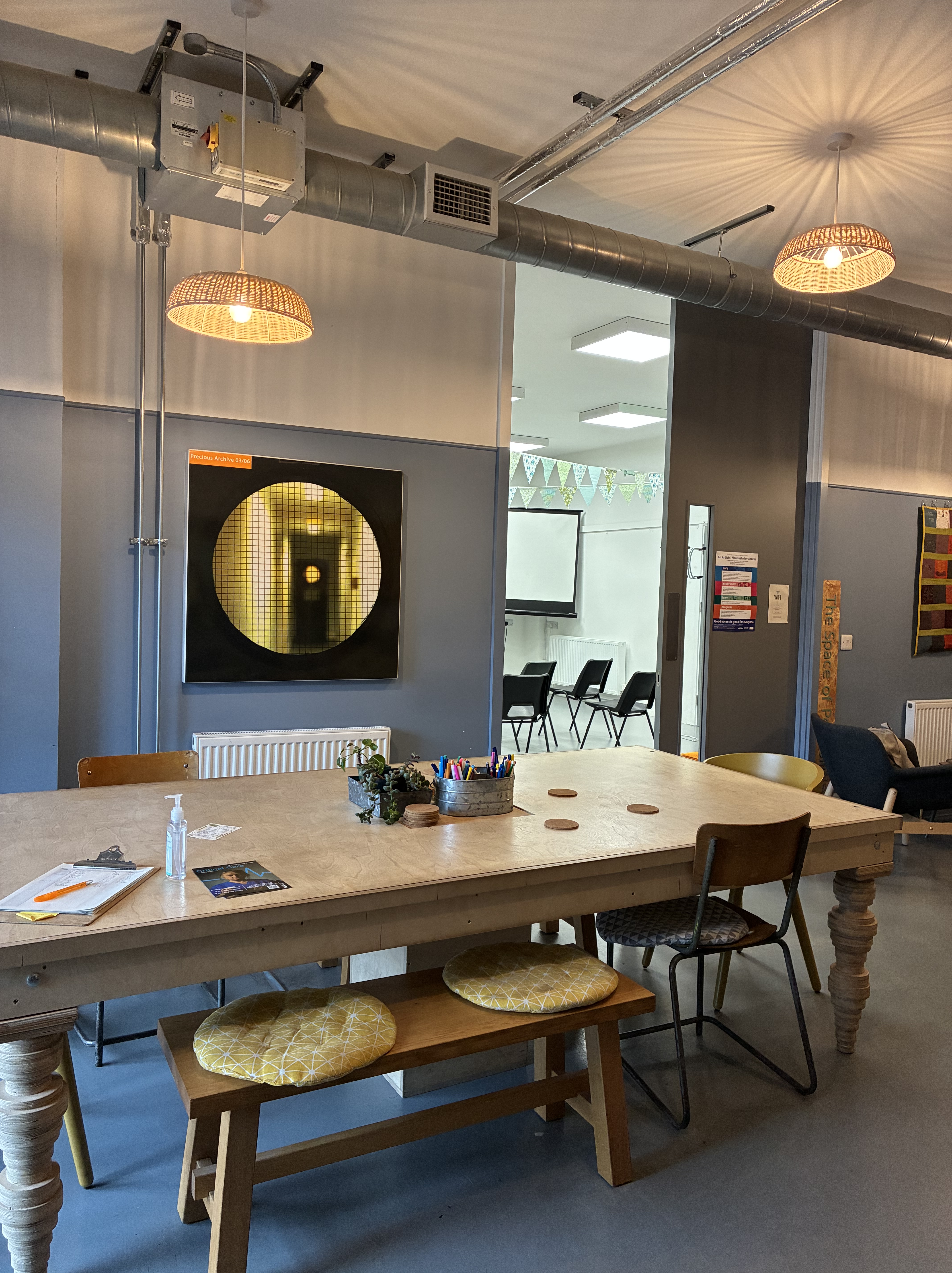
My six days at the Nest residency were an amazing journey to find myself and my artistic voice. I came to process my migration experience and see how social media can represent the life behind it at all. It was good to have quality time thinking about the roots of the problem I had planned to explore (and it took me in several unexpected directions).
I am very grateful to the Nest team for giving me my first independent identity here as an artist. Before I was only a ‘dependent’, a mother and a wife. Getting this definition and recognition from others is priceless, and I want to thank Charlie, Janet, Melissa and Derek for this gift.
I’ve never considered myself an artist. In all my professional experience the closest I came to art was as a producer and a project manager of art-related and place-making projects. I have done some things for myself but just never considered it something worth even talking about. But recently I realised that I have an experience I want to work with, to process my immigration experience, and words didn’t seem enough to express what I was feeling. I am very grateful to Mothers Who Make and especially Adele Mary Reed for introducing Talking Birds to me and also showing me how different artists could be.
This week marks three years since we moved to the UK, and during this time I realised that you can’t keep saying never. Being curious and open-minded helps you live in a world of constant change. You might not move countries, or even cities and houses, but life is changing fast, not only because of AI and technology, but your favorite shop might close, or your hairdresser might move to another city, or the city centre is being rebuilt, or your happy child moves up to the next swimming level. It’s not necessarily because of you or a decision you’ve made. It’s simply the world you’re living in. Maybe we are all in the Hotel – as was the name of my studio during the residency. Everything is temporary, isn’t it?
I decided to use my residency to experiment and do things differently from how I used to.
First, I wrote in my journal at the beginning and end of each day. I know that it’s a good practice, and here I wanted to be in full contact with myself and to record the moment of my current thoughts and feelings. Also, it helped me think things through by writing as if I were talking it through out loud.
Second, I didn’t use a laptop during this time. It would be great to do some research, work with my personal archive, but a laptop is my main working tool and I could work with it literally anywhere, even under the tree in the park. But I didn’t want to rely on it as much.
Third, I let myself not rush and took my time to just keep being. No goals to achieve, no milestones to make, no results to show. It was very liberating. For me at least.
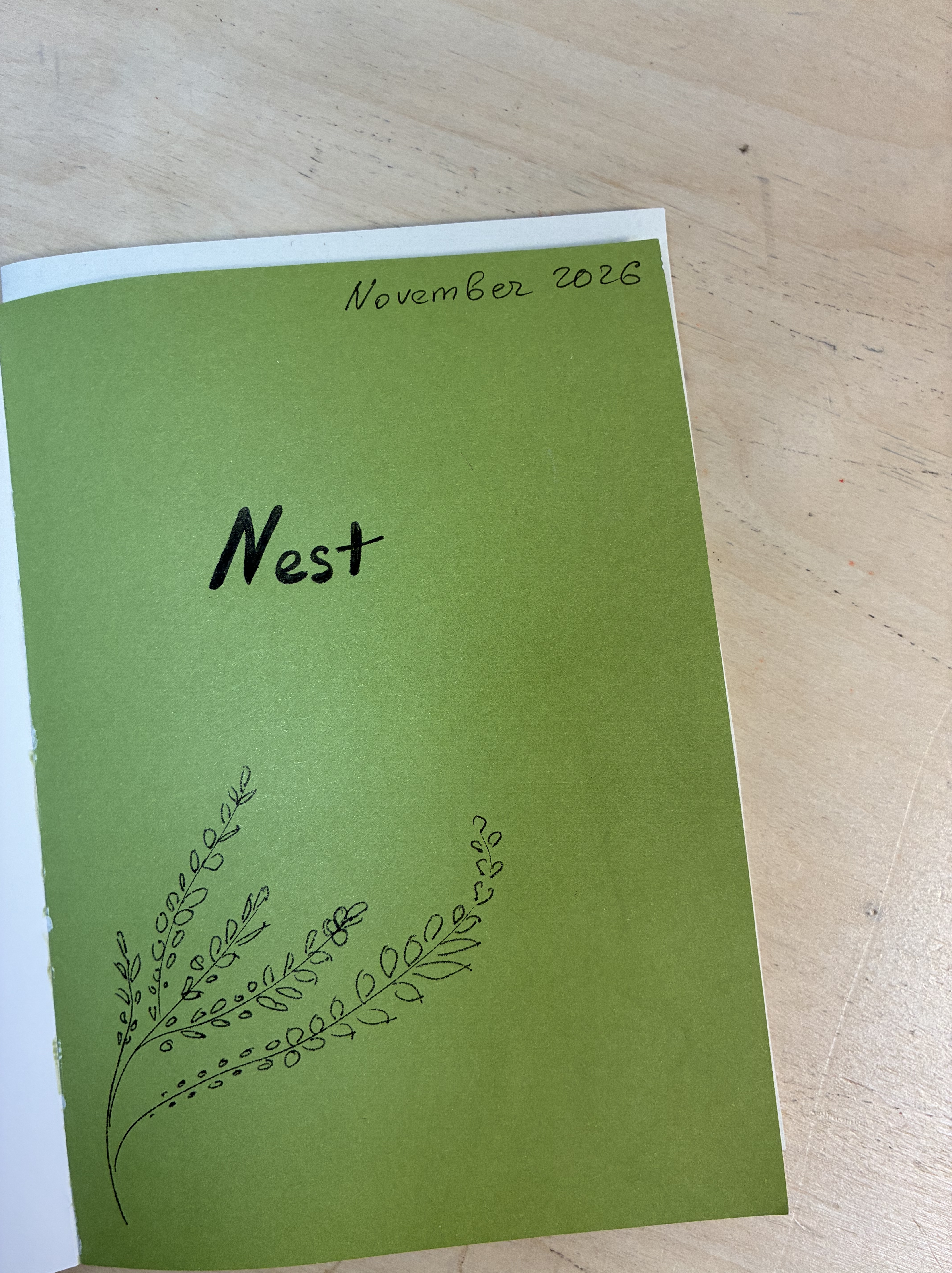
Finally, I used Russian as my main language during this experience, even in the English-speaking environment. It seems obvious, but I’m so used to switching to English out of home and even in some topics. I knew that I needed to write this reflection in English anyway and then be able to talk about my experience in English as well. So using my native language might be an obvious choice to some people, but was still a deliberate choice for me.
It was interesting then to look through my notes and see how languages were mixing, which was also an important observation. Could you even imagine what is happening in my head (and in every other migrant’s)!
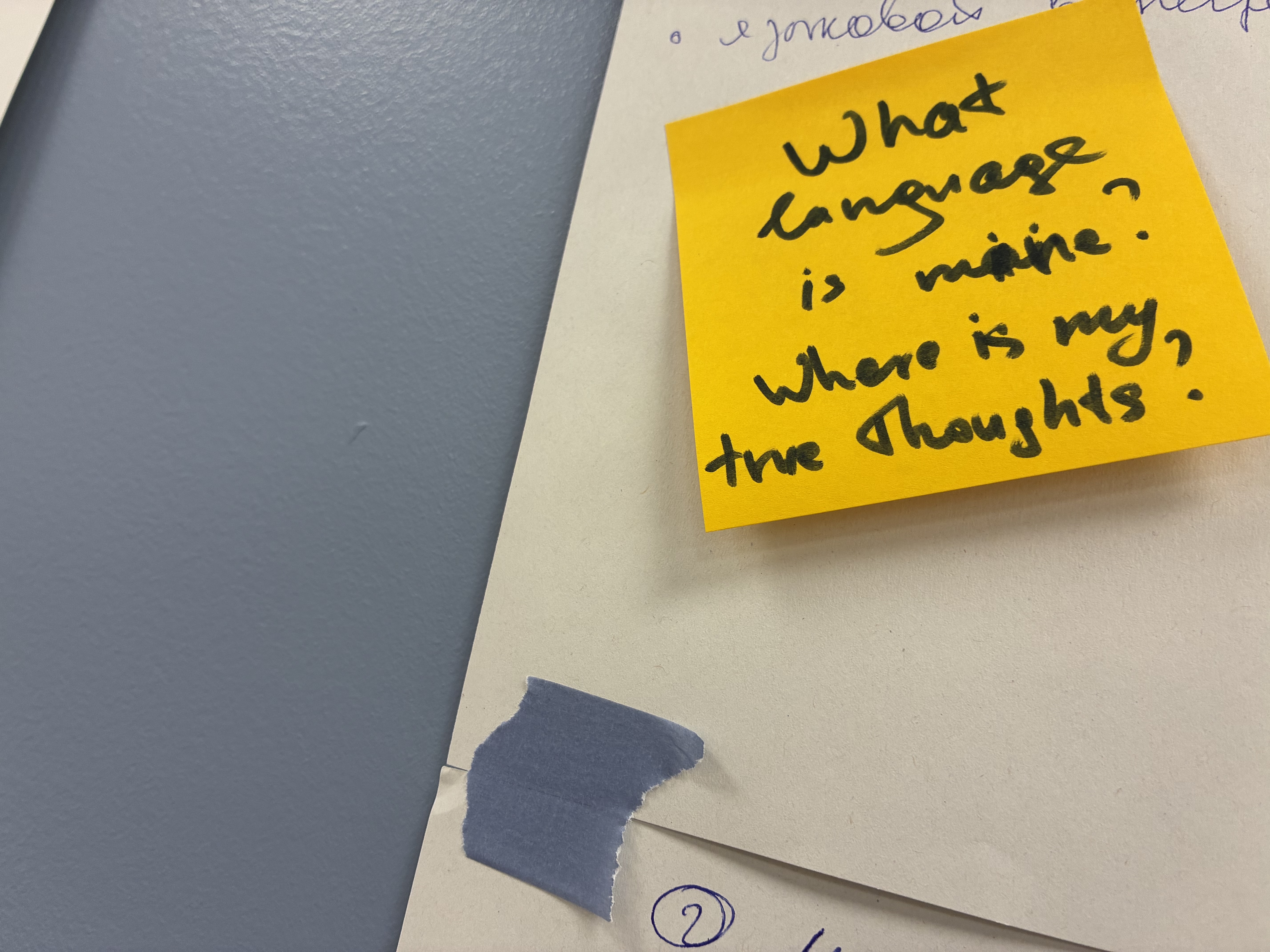
Working on this blog and reflecting on my experience, I realised that when I was trying to explore new things all my notes and journal entries were still about text, which remains my most familiar tool. Yes, I went much deeper, but after this experience I need to explore ways to include new techniques to my practice and also to spend some time with no words, capturing my feelings through images and other visual forms. It’s funny how it was not obvious back then, but it also shows how complex the process is and how strong some habits are.
DAY 1
The day started with the meeting with Charlie about the space and the whole working process. We had a great chat about my concerns and artistic approach. Then I met the other residents and Janet, and we all had our first lunch together.
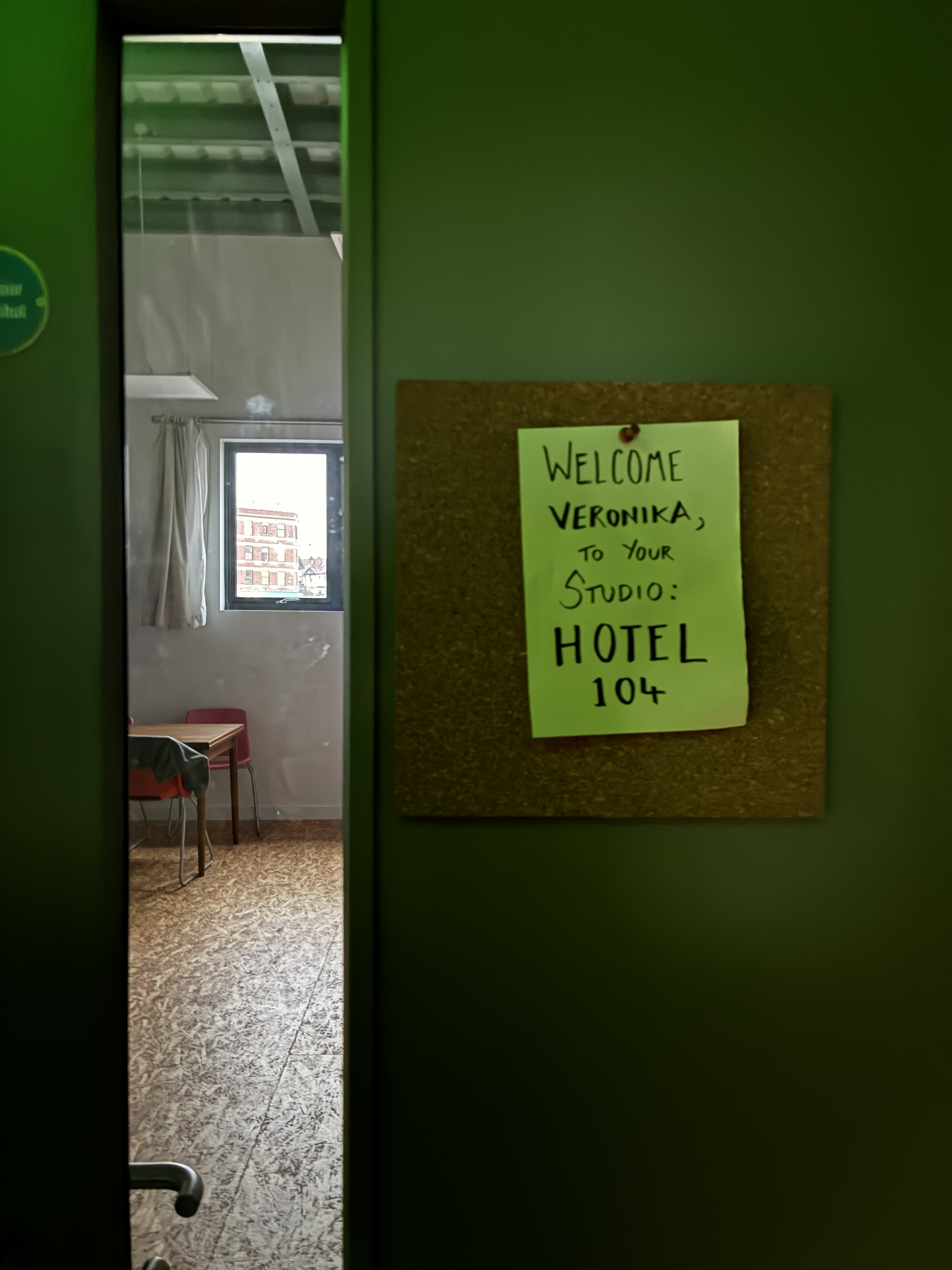
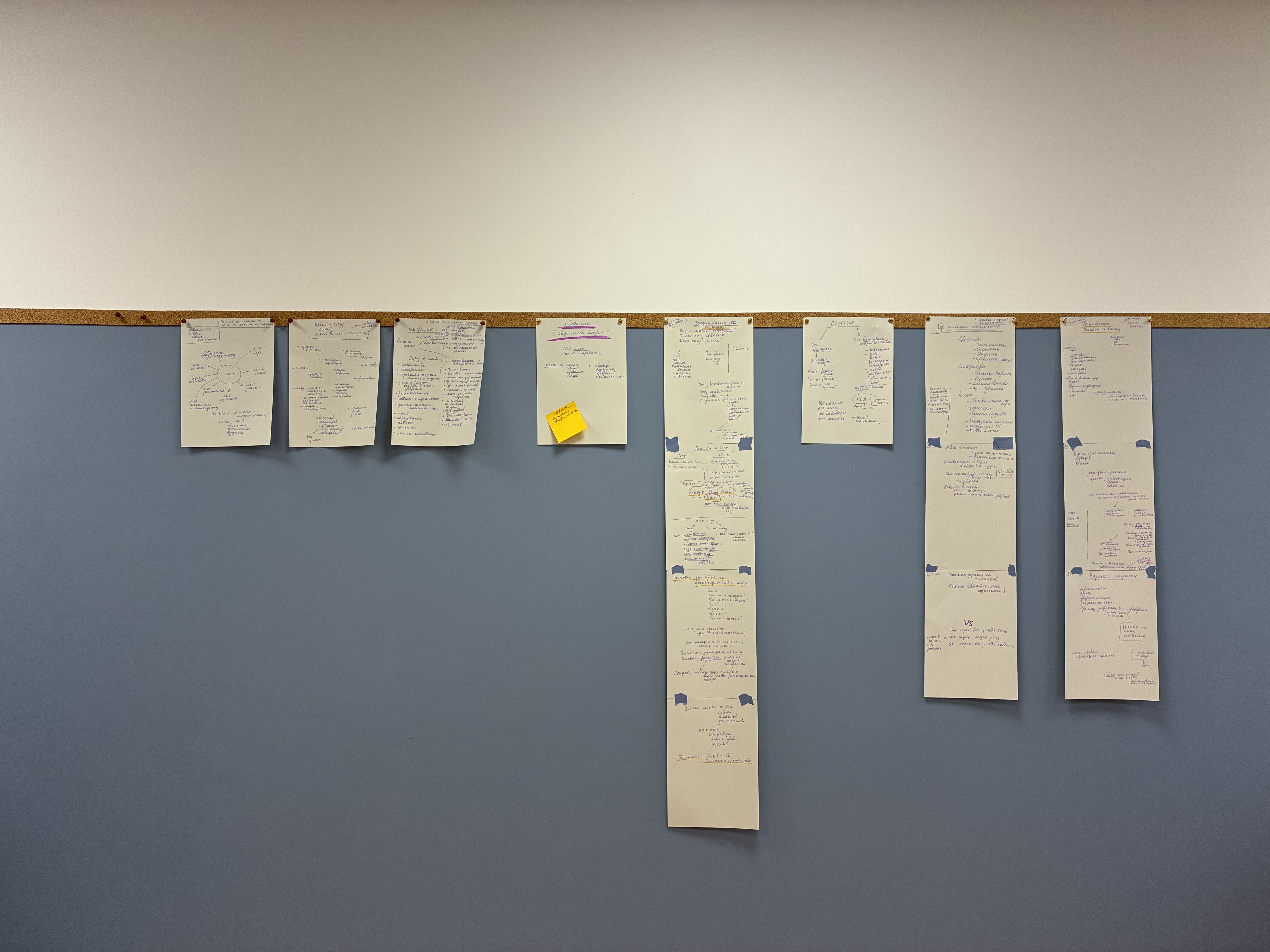
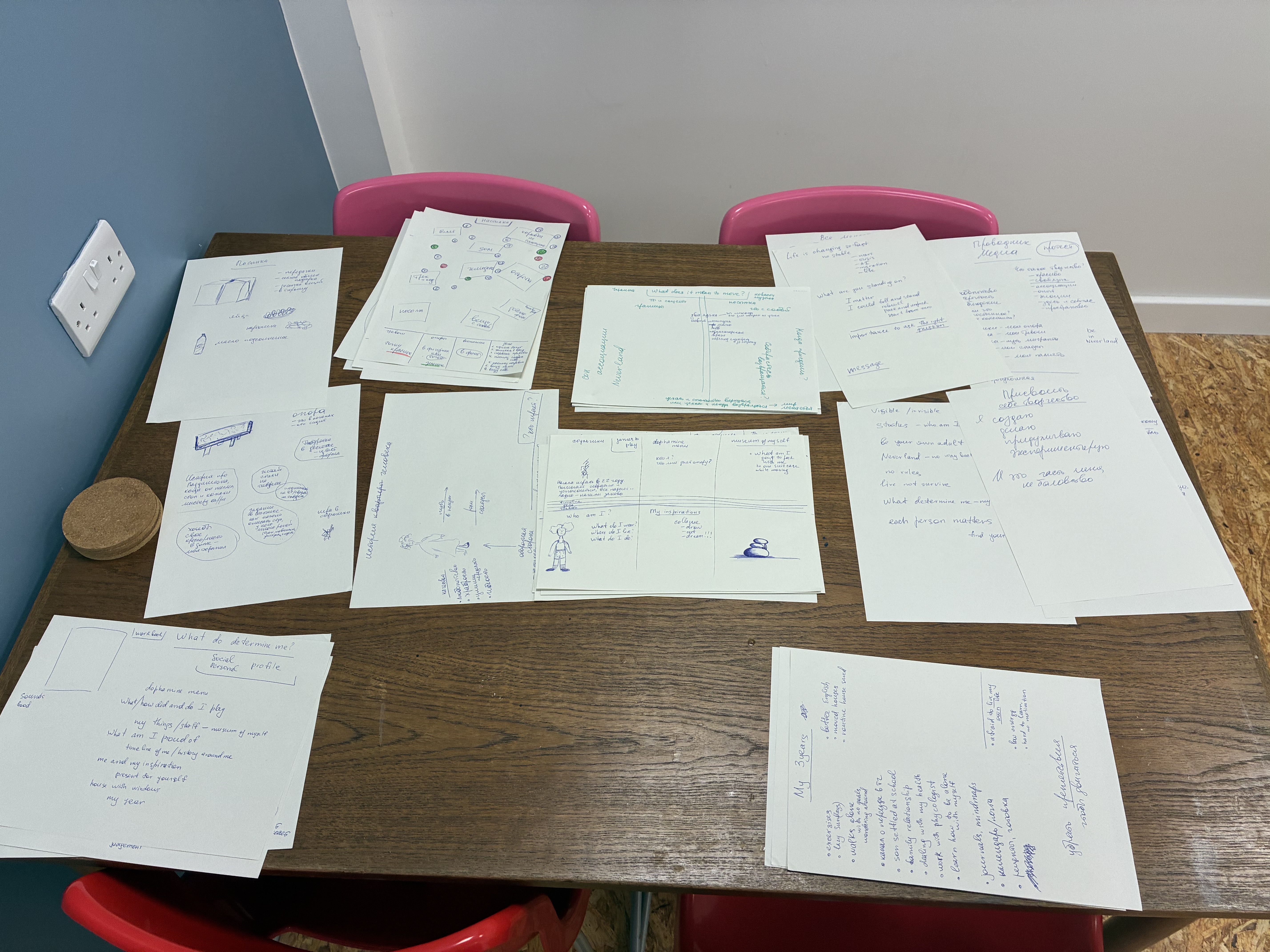
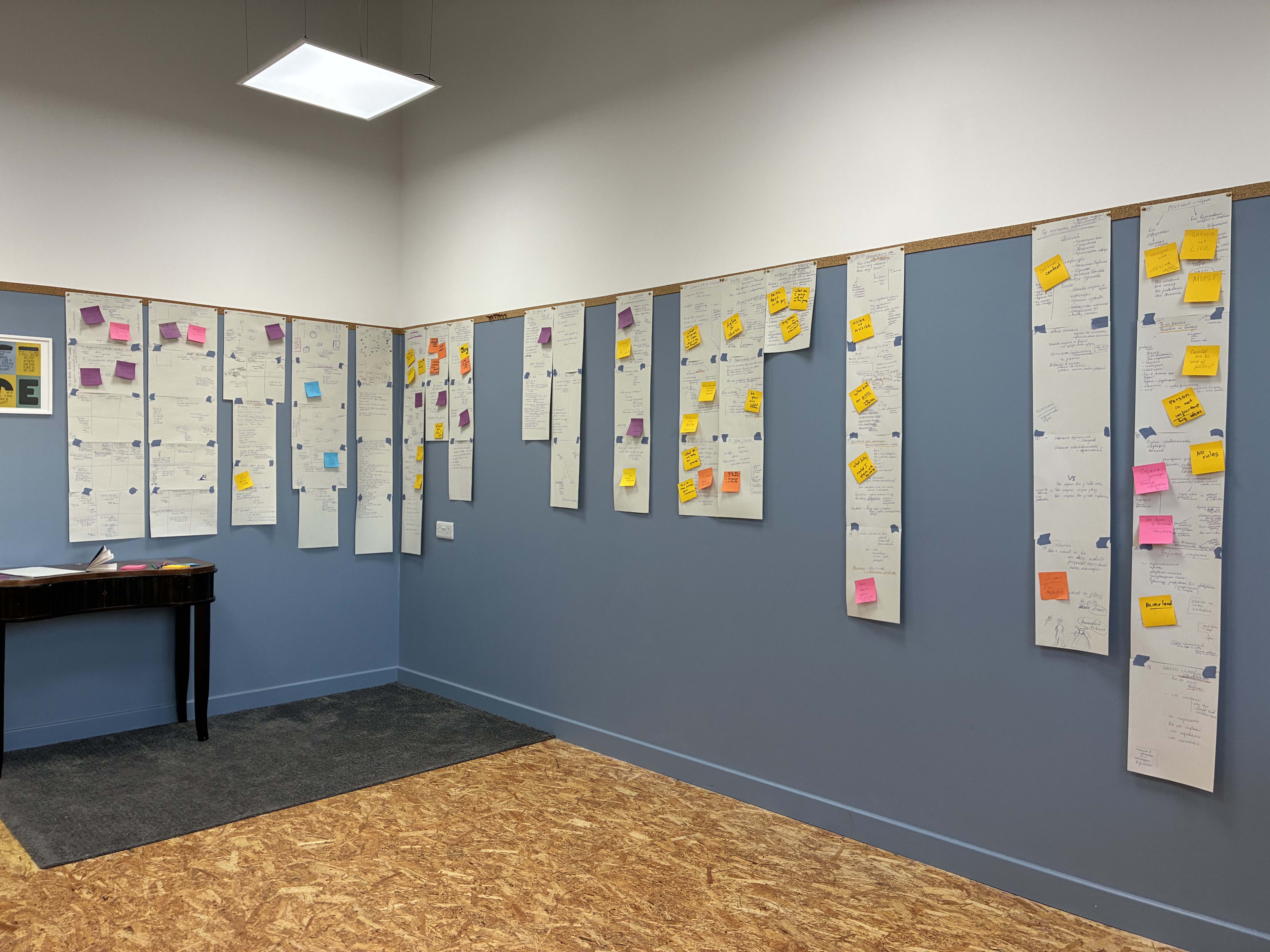
I started my work by putting all my thoughts on paper. It was impressive to see them not just in my head or in my A4 notebook but all spread at once on this gorgeous blue-grey wall.
I think I literally had ‘carsick’ (also known as migration fatigue, when you experience a lot in one moment, especially in foreign language) by the end of the day due to how intense it had been and how much inspiration, information and excitement I’d taken in.
DAY 2
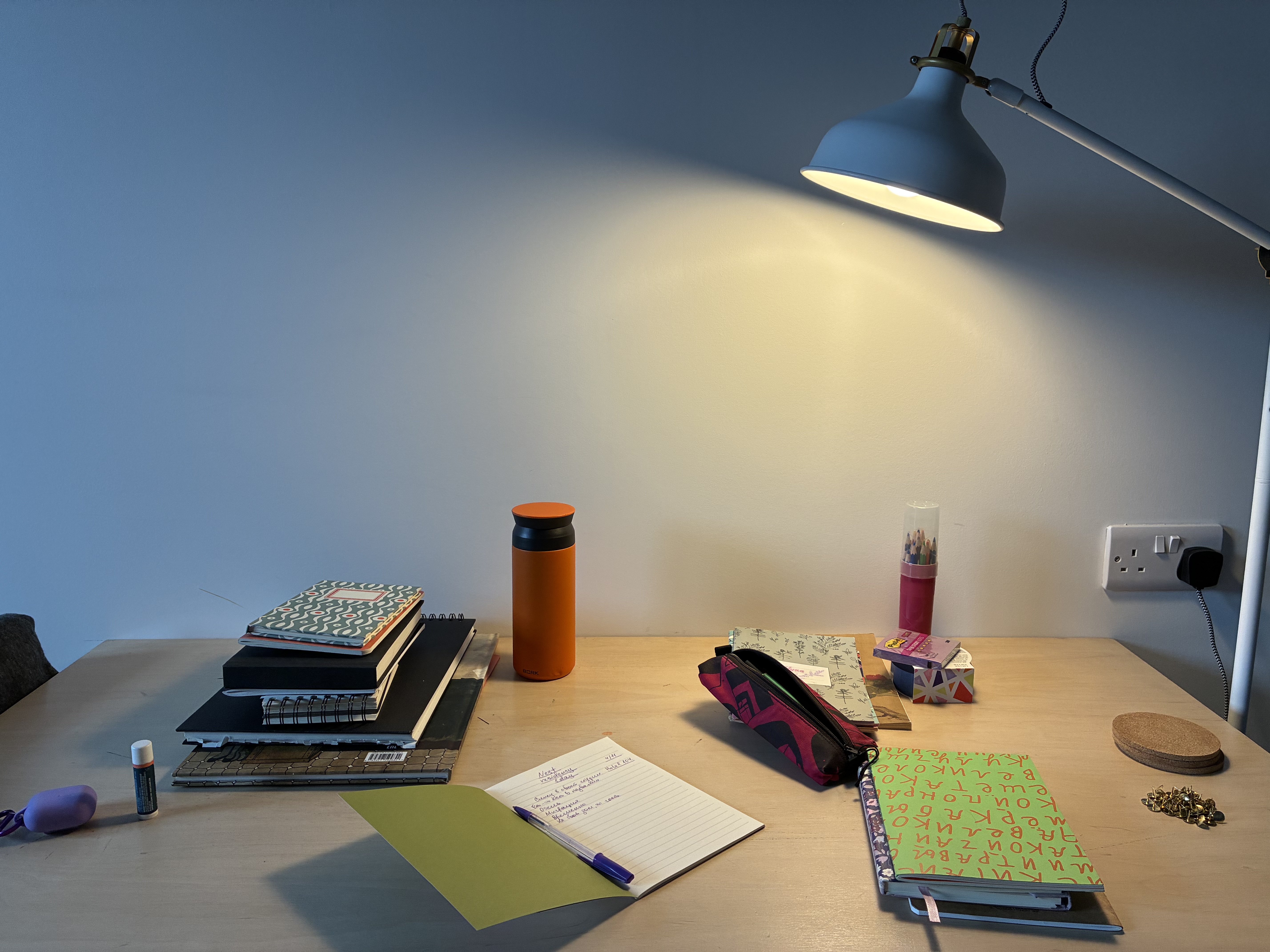
On the next day, I continued to work with what I had in my head and what was already somewhere on paper. I spent the day working with notebooks and sketchbooks which I’ve had since we moved to the UK.
I noticed how my notebooks changed because of the mood I was in. I also realised that the colours I used to organise them influenced my mood in return. So I started adding some colour to my old pages, and they began to look much more optimistic and vibrant.
DAY 3
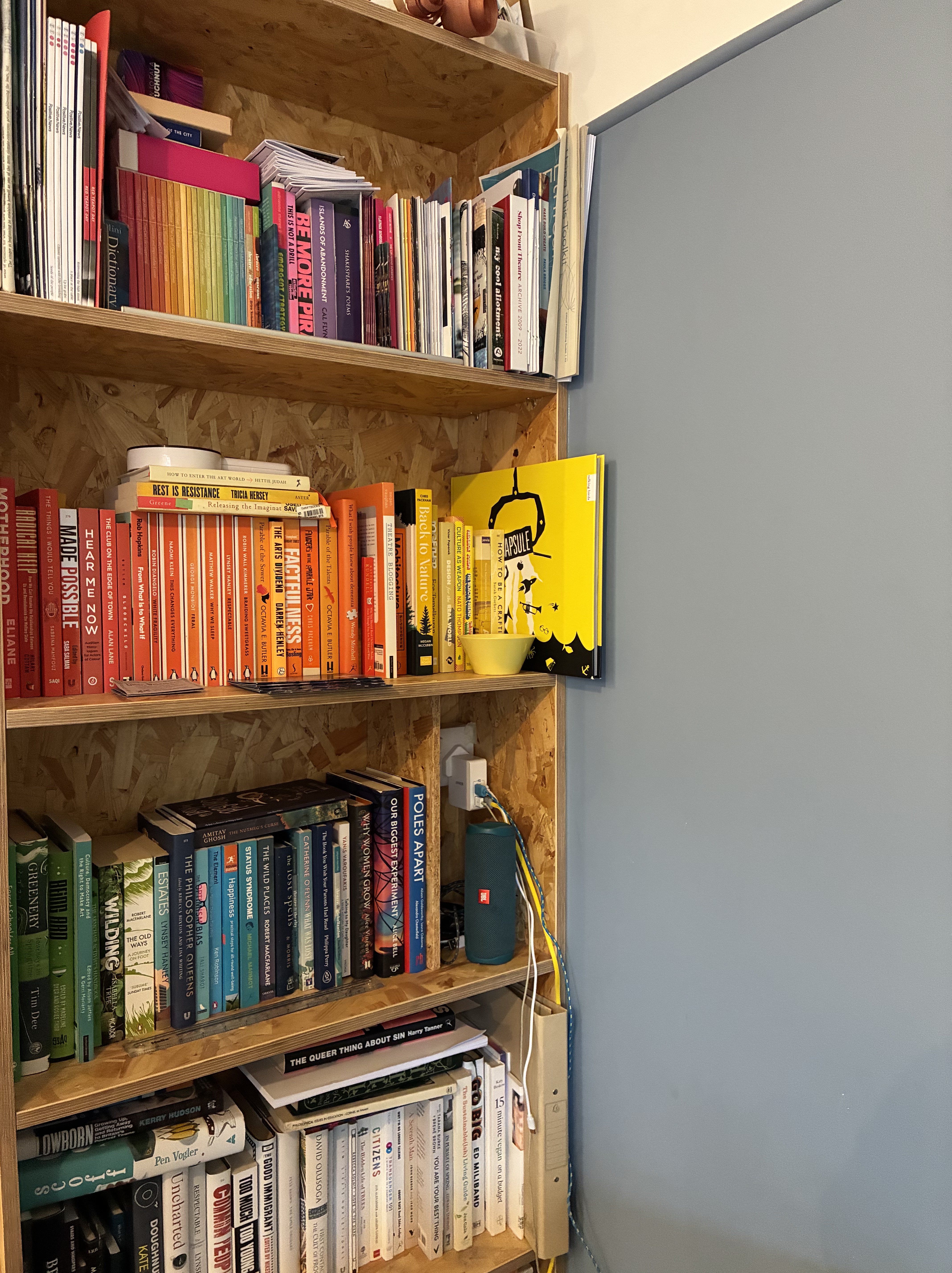
I had three days in one week and then another three the following week. After doing “inventory”, I decided to spend a day before the break exploring Nest’s library. I found books that bring together people’s stories like ‘The Good Immigrant’ by Nikesh Shukla and ‘Why Women Grow: Stories of Soil, Sisterhood and Survival’ by Alice Vincent. I also discovered craftivism through the book ‘Craftivism: The Art of Craft and Activism’ by Betsy Greer. And there are lots of children’s books and other inspirational publications which caught my attention.
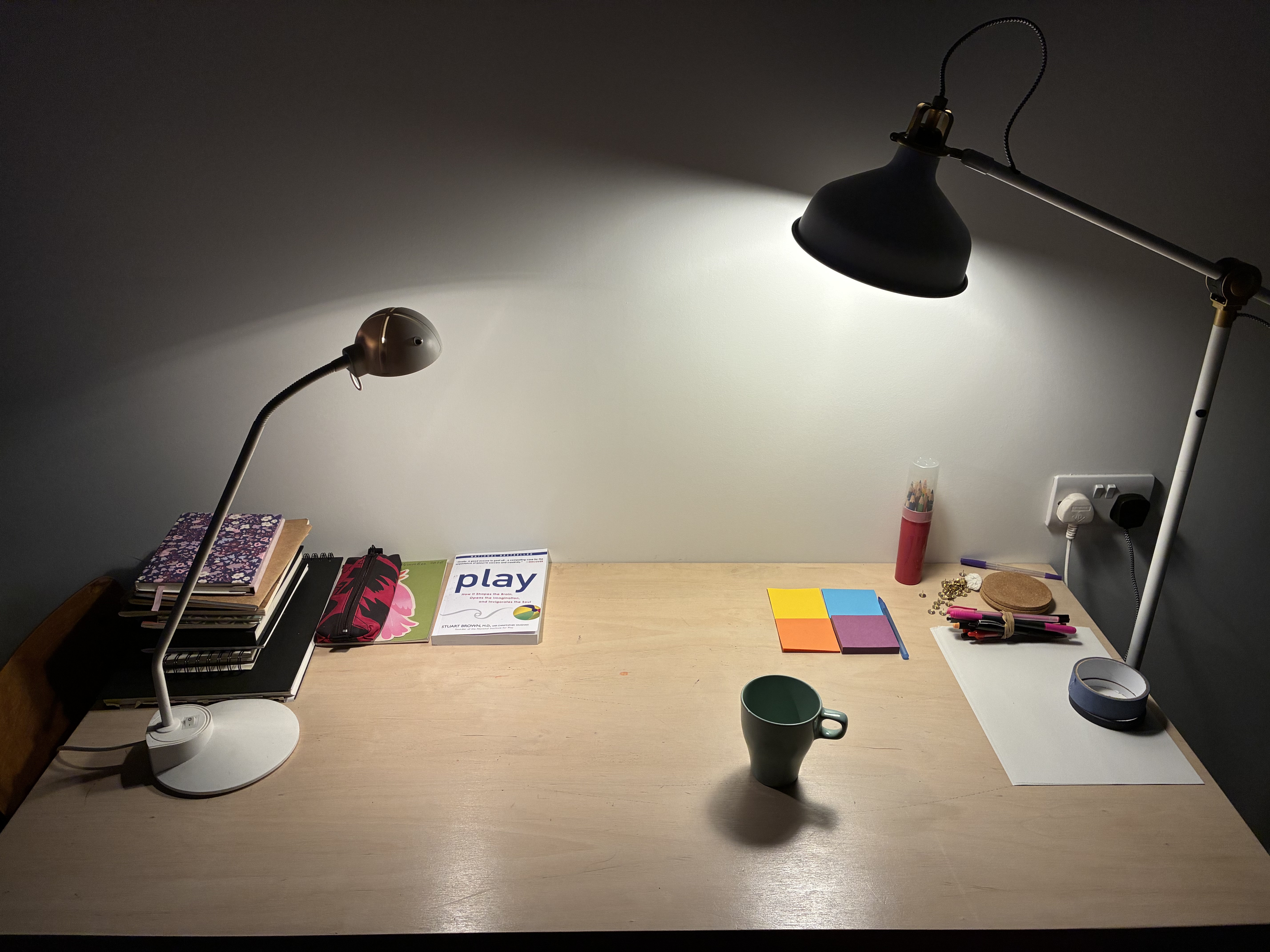
Changing the task also made me change where I was working. Having this opportunity was amazing, and I realised that it was also part of the creative process. I remembered how during the pandemic people were sharing their hacks of organising their homes to create spaces for resting, working, having fun, etc. I loved being able to play with this idea in the studio as well. Also one of the books recommended to me by another resident, Divya, was ‘Play: How it Shapes the Brain, Opens the Imagination, and Invigorates the Soul’ by Stuart Brown M.D., and it underlined the way I want to approach my topic: looking for light and joy.
DAY 4
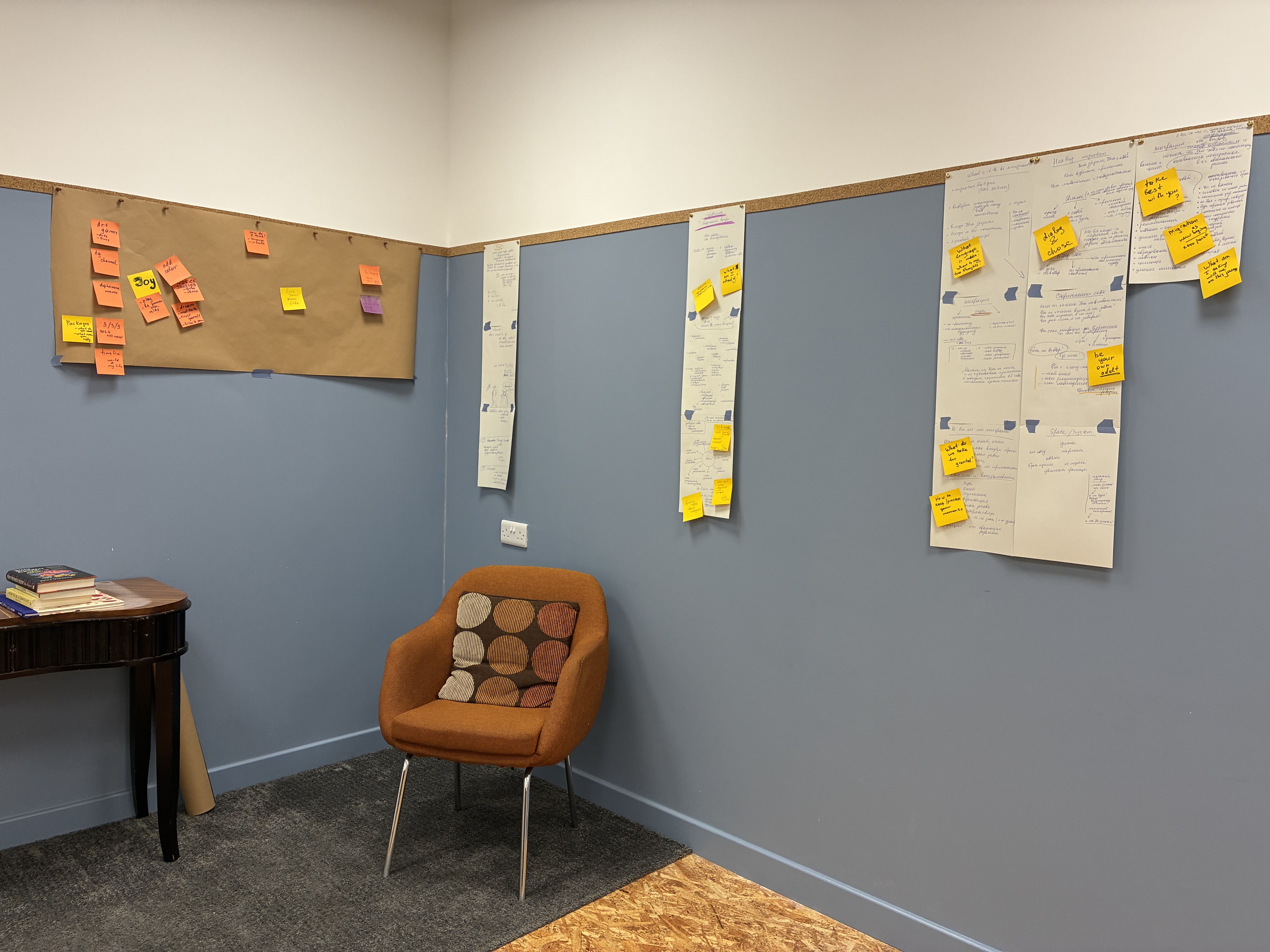
It was very hard to get back into the process after my four-day break. I felt as if my brain was literally boiling since the first days, all the information and emotions were slow-cooking (and it’s still going). As if all the feelings I hadn’t paid much attention to came to the surface.
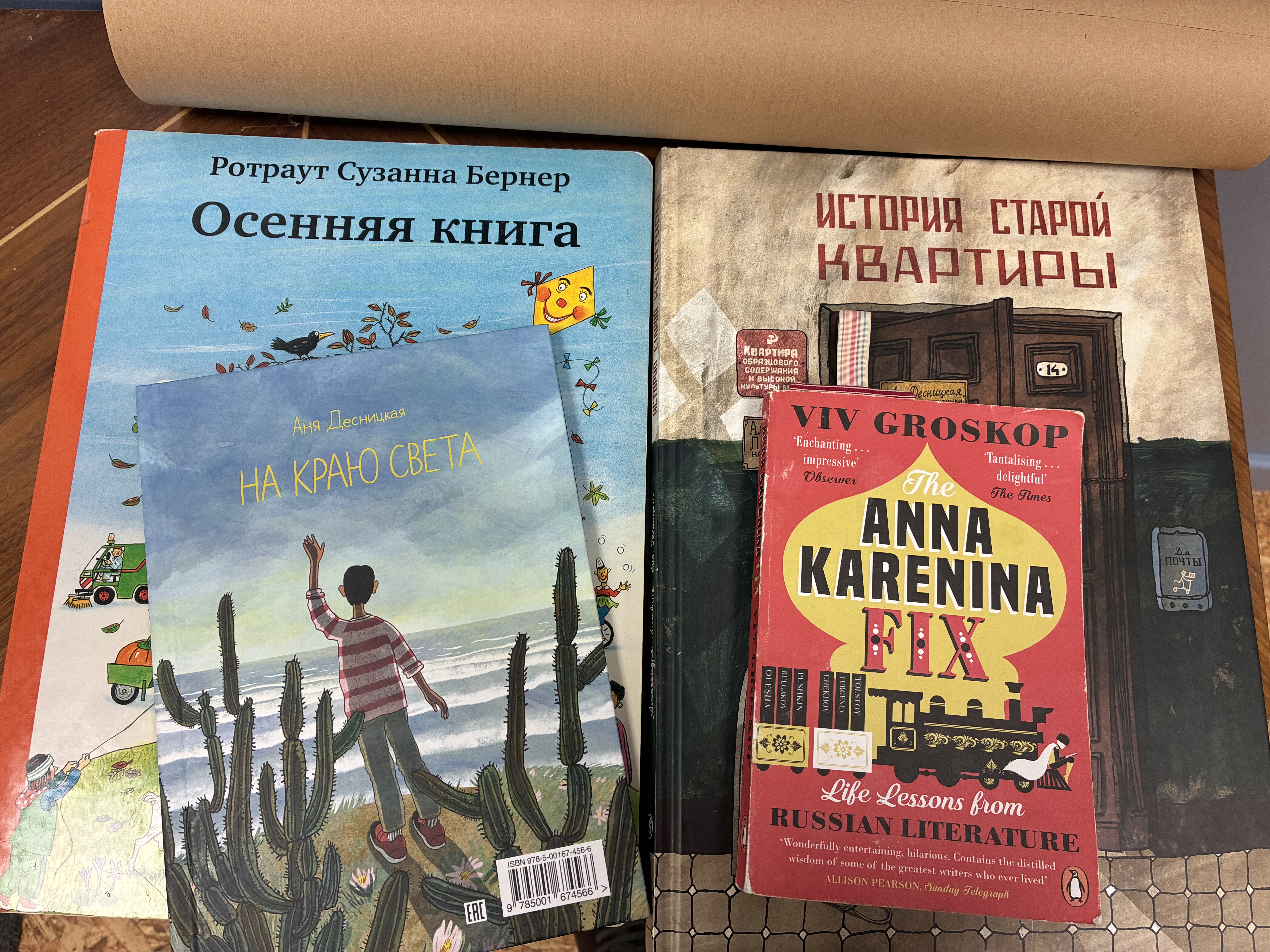
I started my day by calming myself down and looking through the books I had brought from home for inspiration – it’s ‘The Apartment: A Century of Russian History’ with illustrations by my favourite, Anna Desnitskaya. Also, I love the text-free All Around Bustletown series by Rotraut Susanne Berner. They were very popular in Russia, and I bought the first one, Autumn, even before my son was born. And I am currently reading ‘The Anna Karenina Fix: Life Lessons from Russian Literature’ by Viv Groskop which I found and bought quite unexpectedly in the Earlsdon library.
I was looking for my way to share my pain and struggles with other people, which I could hardly admit to myself. On that day I realized how being at the residency was similar to meditation when you stay focused but relaxed and let your mind wander.
DAY 5
To make my working process more complex, I decided on a whim to turn on some music which turned out to be a critical point.
I hadn’t listened to Noize MC for a long time, maybe not even since I moved to the UK. But then this song suddenly came to mind. I decided to play it, not expecting it to have such an impact on me. I started crying within seconds.
To be honest, it was good and even needed. Maybe until that exact moment there had been no time for tears. I know that tears can be healing, that you need to let yourself grieve and be vulnerable, but it’s easier said than done. And you can’t just turn it on. You have your life, your son’s life, and even without a job you are very busy. When could you sit and grieve? Not only sit and cry, but let yourself be in this moment, with yourself, with no other thoughts.
While the first day was full of tons of everything – the last day seemed empty. You are packing, you gather your thoughts and are ready to move on. (I was in a ‘Hotel’ after all.)
To be honest, it’s a great metaphor to work with considering my current migration status.
Now, we are renting a house, and we don’t know what to expect even a year from now. This is my new normal. We left our old home with all its familiar routes, connections and small things like favourite shampoo brand and walking path near the river. There is some hotel vibe, isn’t there?
Even having my own table and space at home is nothing compared with being in a space where things like cleaning and cooking don’t suddenly demand your attention (or whatever your brain wants from you).
I finished with no complete project but with a list of ideas and tons of structured notes. I am very grateful to the Nest team and everyone who makes this possible. It’s definitely a life-changing experience for me no matter what form it takes in the future.