When I think about the trail of events that led to this amazing opportunity at the Nest, I feel so grateful, and awed by the way the Universe works. After being one of many who lost nearly 2 years’ worth of self-employed work during the pandemic, I was steadily pulling myself out of the flunk, and the wheels were in motion again, though any creative spark or motivation had withered, as it tends to when you’re in survival mode. I’d pretty much abandoned all hopes or aspirations of pursuing my screenwriting. After everything that had happened, it seemed like a Peter Pan-ish dream, and any time I’d try to sit down and work on a project, I felt pangs of anxiety and disheartenment, and hear the voice inside telling me I, ‘ought to be doing something else, something useful, making money!’.
Whilst racing against the clocks as the last semester of my final year at university came to an end, I had this idea jumping around my mind. At first, I didn’t really know what to do with it but as time quickly went by this idea kept growing – as ideas often do.
‘Mom, I’m going to write a book’
It became too big of an idea in fact that I figured I had to get it out of my brain and place it somewhere else. A jar? Cake dough? Nope, that would make it grow even more…hmm a… book? A book! That’ll work!
Having a background in Illustration, the idea of illustrating a book had been planted during first year, but eventually whilst navigating my creative practice, that was something that was sort of left lingering inside, a possibility for the future.
A new routine
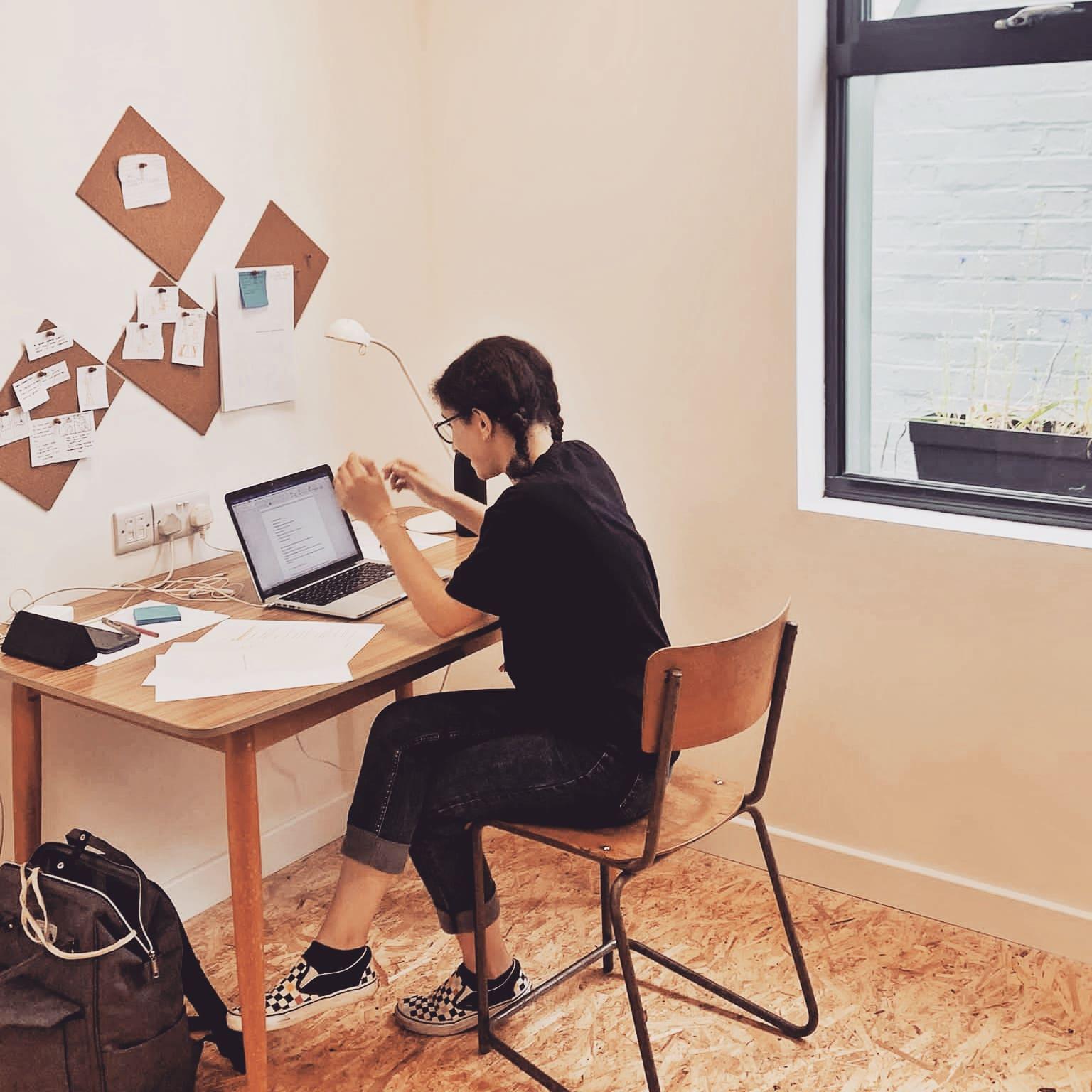
Applying for a residency came out of the necessity to establish a new routine as a recent graduate, the need to leave the house and work from another place. The need to focus on developing this idea. Going to the residency, was in a way a method to hold myself accountable and get started. Eventually, I’d go back and pick up the pace and further motivation as ideas started flowing onto the page.
Sticky notes and creative community
Being surrounded by fellow creatives was another key-element. Leaving university means in some ways parting with a creative community that one could often rely on for feedback, I knew that in order for this project to be further developed, I had to seek that source of feedback, the Nest was a great place for this.
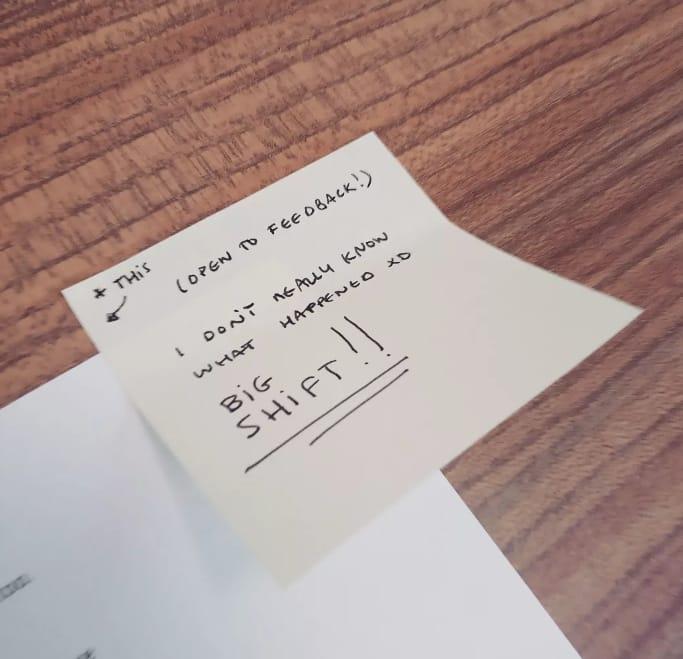
I shared the Solid Blue Studio with Sarah Owen and even though through the course of our residency we didn’t meet, we’d leave sticky notes around about our ideas. Being able to talk to fellow residents inspired me greatly in terms of taking things forward and look at different approaches or possibilities.
The F13 meeting was particularly important for this sense of community-building. It enabled me to reach out for feedback once again and present myself as a picture book maker for the first time.
Productivity and it’s absence
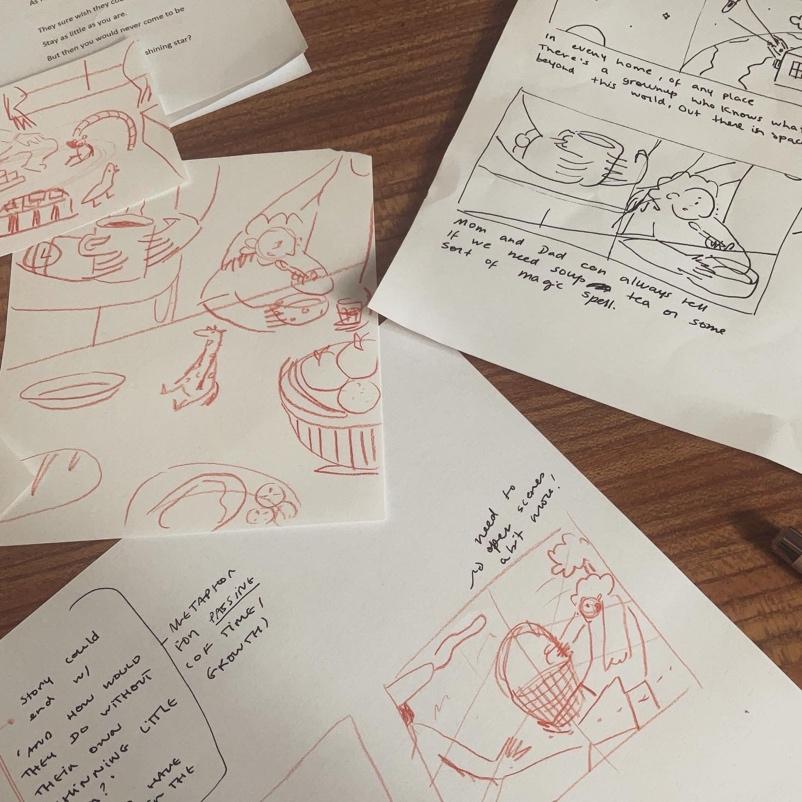
Writing the picture book has been an interesting journey. At first, I decided to just throw it all onto the page, evict it from my mind at once but, as creatives often do, I found myself using all kinds of different hats and this meant shifting from writer to editor to illustrator which, as one might imagine, made the whole process of passing the idea from mind to the page rather slow.
Something that this residency provided was the time to navigate my own creative practice in all its overthinking glory and in my own terms. During my time at university, I learned how to simplify instead of overcomplicating an illustration but when it came to writing a book, as I’ve come to understand during my time at the Nest, I’ve yet to learn how to efficiently tell a story. The Nest allowed me the time and safe space to go through this new challenge with lots of trial-and-error opportunities.
What’s my title?
4 script changes in, I still found myself in search of a title and, in a way, a sense of direction. I knew the message I was looking to convey, the audience, but struggled to simplify it, to narrow it down to a picture-book friendly type of format. Then I decided to distance myself from what I’d written, get more feedback, do some research, read and listen to other picture books – Oliver Jeffers and Christian Robbinson are having a great impact on the way I am approaching this project – and once I came back to my story, I started to notice a pattern, a sentence that kept repeating itself:
‘as little as you are’
Was this the title?
It sounded like it!
‘as little as you are’ conveyed perfectly the message I was trying to put across but still leaving enough room for the curious minds to wander – an invitation into picking up the book, I suppose.
Feedback feeds forward
Oh, the irony of having a title be ‘as little as you are’ and a story that still felt quite big! I was trying to narrow down the story to 1000 words and it wasn’t until I gave it a title that things started to fall into place…sort of. After some further research and analysis on other picture books and how they were narrated, I gathered I wanted this to both be an experience for the listener as for the storyteller – children and grownups. Feedback was key to this narrowing down and making sense of what would be the next steps for the picture book script.
I’m really grateful for everyone who took some time to help me tell this story, to all of you a big thank you, for all who read it this will make sense: A thank you as big as the grownups in my story!
A big shift
I decided to step away from what I had written once again.
Stared at a blank page for a while and then allowed myself to start over.
‘In any home, in any place…’
This time around, things seemed to flow a lot easier.
There was some sort of rhythm and direction that made it all flow a bit better. The story started to unveil through rhymes and short sentences rather than the traditional approach I was going for until this point.
This big shift for ‘as little as you are’ become what indeed made it as little as I’d initially hoped it to be. Moving forward I’m going to once again take in the feedback provided on my last day at Solid Blue and try to step away from the rhymes, but with this newly found sense of direction.
Thank you, Talking Birds, for enabling me to hatch this idea at The Nest!
It’s been a little while since I completed my two week Nest Residency at Talking Birds. Two weeks of support and freedom, where I got to switch off from the world and focus solely on the things I wanted to create.
As I was in a Nestival Residency, I already had a slightly fleshed out idea of what I wanted to do during these two weeks. I had a novel I’ve been wanting to write/and had been writing but wanted to really give structure and shape to. I always thought I could create wherever, whenever, that when it comes to writing all I need is something to write with and a head full of ideas but these two weeks slightly shifted my perspective.
I learned the importance of space. A space to create in. A space to get away from the world from. A space to be myself, without restrictions, with trust and a space where I could pop downstairs and talk to a supportive community. A group of fellow residents and the wonderful people at Talking Birds. We discussed ideas, why we were there, where we were on our journeys as artists and figuring it all out. It was so precious to me, especially as a recent graduate to have that community to bounce ideas off and be inspired by. In a way that was another type of space that I realised was important to me.
As for what I actually got done during those weeks, although I put pressure on myself to create something to make the most of the time I had there, everyone around me told me to just relax and take it at my own pace. I think I did this, recognising that letting go might actually be better for me and my art.
I wrote/rewrote the first chapter of the novel I was finally content with, although I’m still working up the nerve to share it to get feedback. I have a more carved out timeline for the events of the story to take place and a folder full of different plot points and their resolutions, as well as research that I need for background information.
I definitely made progress, and I got very comfortable in my little Space Odyssey office. So much so, I still miss it. I think it’s rare to get an incredible opportunity like this and I’m so grateful for everyone at Talking Birds, for supporting me and for my nestival residency that has taught me the importance of space, as I set off on my writing journey.
The nest is a wonderful, comfortable place to create ideas and develop theatre. It is environmentally friendly too, nothing is thrown away but recycled. I am a theatre maker and performer who is aiming to intergrate BSL into my devised theatre production by forming a new character. Name of the production is DDDivas, which is exploring gender, female impersonation and my lived experience of being a neurodivergeant woman with long term health conditions. Me and Pierce Starre, a solo performance artist whom is also neurodivergeant, were both placed in the Space of Possibilities, a bright airy space where the sun can shine through the glass entrance and windows. We were very close to the kitchen too which is always a plus.
It was a wonderful space to explore and develop a character (as in the role of Ben, the stage manager). I wish to make my devised piece of theatre accessible so that any disabled member of an audience can attend any evening rather than attending a designated evening where BSL interpretation is available and another evening where captions, and then audio description is available. Relaxed performances need to be available during a full length of a tour too.
Me and Pierce came up with some wonderful ideas regarding the inclusion of BSL within the production, which is going to be developed further in future. I did have a meltdown midweek as was very tired, which effected my blood sugar levels too. Scribing was wonderful from Charlie as well as videos provided, but I realised that me and Pierce had slightly different needs, so it may have been really helpful for me to have further support regards my disabilities, as I do require additional breaks which I take when needed. I sometimes forget to take them due to effects of my dyspraxia so often need reminding to take a break, often due to stressful situations I will carry on working.
A lot was learned during the week which has changed my perspective positively, I feel I can take ideas forward which will be great to share with rest of team and those within the arts that can offer assistance. I am developing other ideas too related to aspects of theatre and story telling, but I am placing focus on DDDivas currently, as due to covid and being on the shielding list, I had to hold back on this project for some time. All the staff and artists at Talking Birds were very interesting and supportive, and it was great to meet them in such a warm friendly space.
It’s so lovely that Talking Birds is placed near the canal, a pleasant, quiet walk which is useful for head clearing on the way to the space and back. So kind of Philippa and Charlie to give me a card before I left, saying thank you for using the space and spending time at Talking Birds. Me and Pierce were very appreciative and grateful. And like it says on the front of the card, I have met more of my flock. Thank you so much Talking Birds.
One morning in February, Lauren was doing her usual aimless morning scroll through instagram. As she was flicking past all of her cats with hats accounts and insta feminist quotes, she noticed that Talking Birds had made a call out for the Remix Residency at The Nest. She saw a huge variety of props in a picture and was drawn in immediately. There was something about that telephone, that explorers hat! The bucket and spade. It sparked off ideas which started to whirl through her brain, so she messaged Izzy and Ruth.
“I think we may have a shot at this!’
Fast forward to a week later in Gails Balham (a local haunt of ours) Ruth and Lauren discussed ideas that were stimulated from the picture. Coventry’s female and industrial history, the idea of legacy, what Coventry means to us. What would happen if we created a dystopian world filled with time travel, with women at the core? These were just a few topics that we indulged in. We knew we wanted movement at the heart, with small pieces of text to lead the story forwards. Pumped up from all of these tangible ideas, we set to work applying for it. Janet saw something in these mini moments we had created and would you believe it, we were accepted! Now the real work begins…
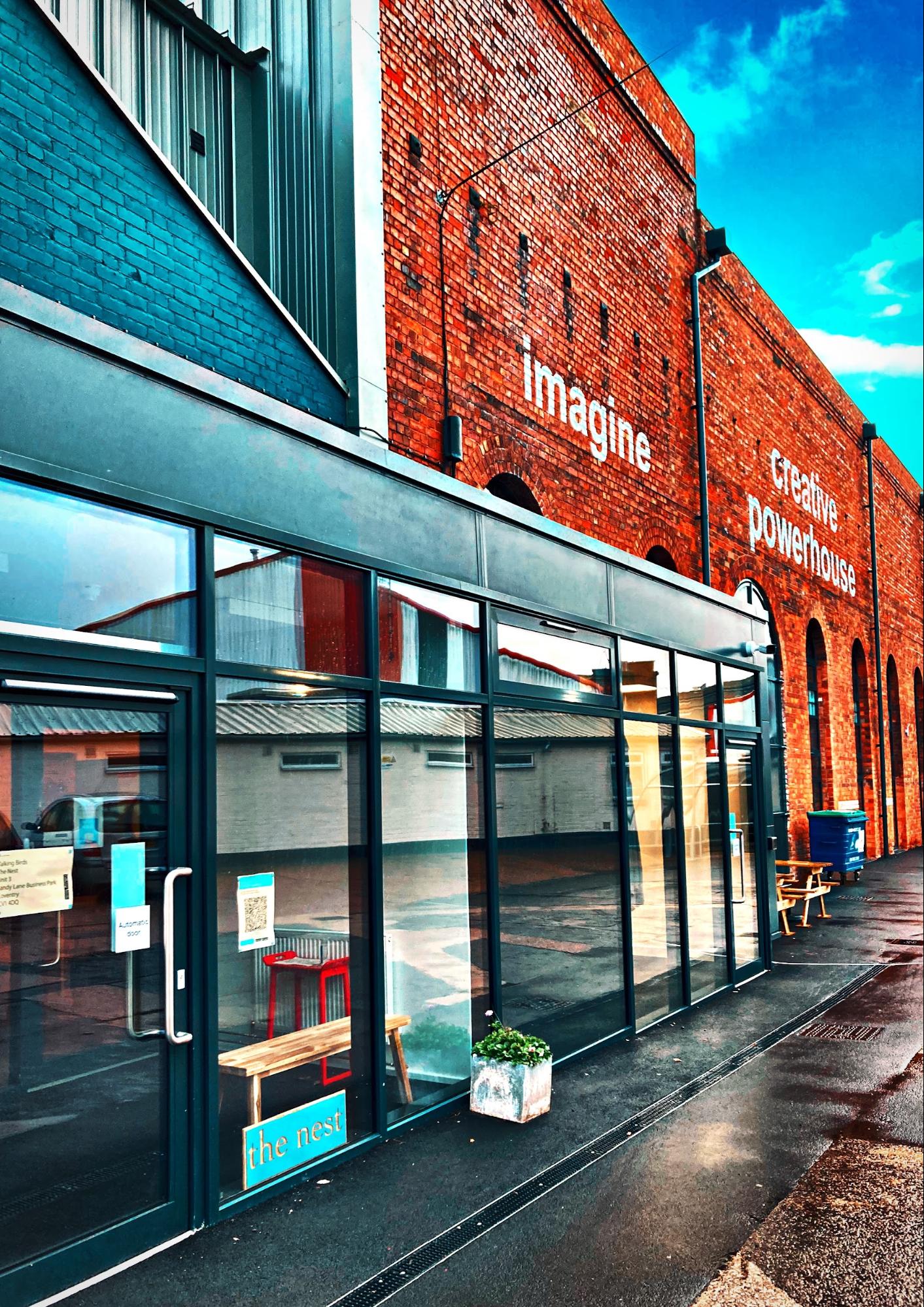
Before we knew it we arrived in Coventry for our first section of the Residency. It was a lovely sunny day in May. Lauren and Ruth entered the bright blue gates of Sandy Lane Business Park. We began our work in ‘The Space Of Possibilities’ room in The Nest. It was bright and spacious, with so much room for us to create. Within minutes we knew we would feel very comfortable in this space. It felt like our little home for the week.
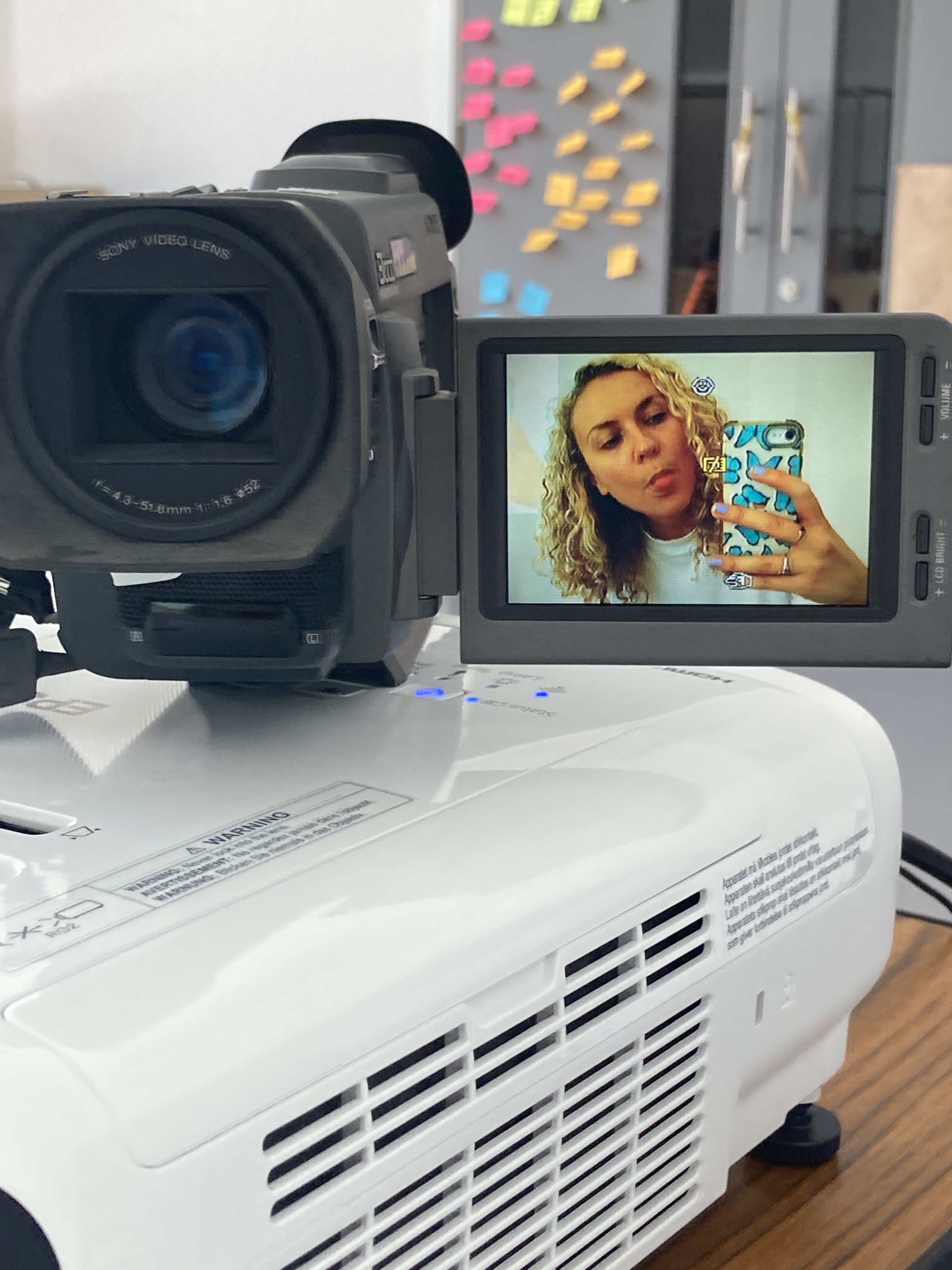
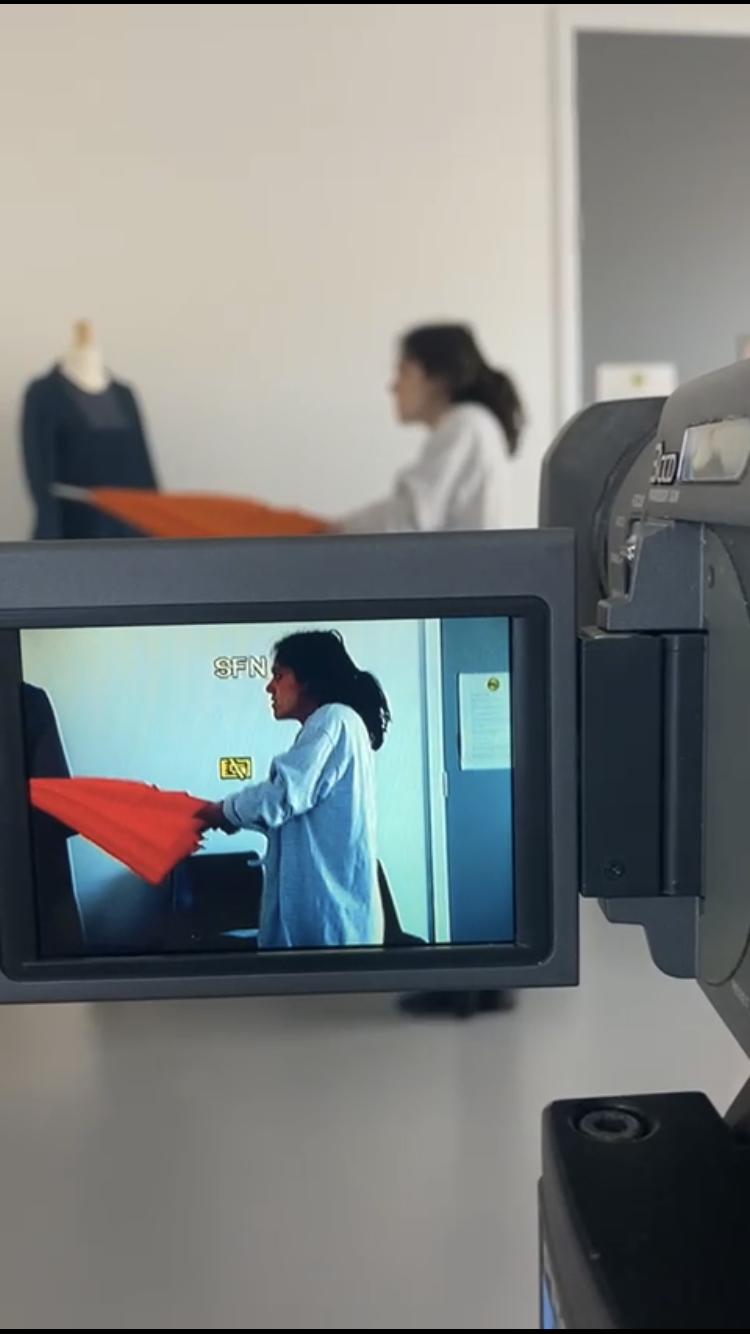
For the first week we just allowed ourselves to play (something which feels so rare in this industry!) The pressure was completely off, so we messed around with tech we’ve wanted to work with for years. Trying out different ways we can use projection, live camera feed and sound. It began to spark so many new ideas for what this project could be. We tested an idea (which came from the projection) about the audience’s perception. What would happen if we projected an image onto the umbrella, but behind it was something completely different? Or a different part of the story being told? We found a bit of magic in this idea, so we ran with it.
Our next stage was to figure out what story we wanted to create. We knew we wanted it to be about Women of Coventry and the stories that seem to be forgotten. We’ve all heard of Lady Godiva, but who else gets to be or should be just as iconic? And you know what, we just couldn’t think. We couldn’t think of any other woman who is allowed to be a figurehead like she is.
So we took to our laptops and began our research. Straight away a name popped up, a woman called Alice Arnold. The first ever female Mayor in England. We couldn’t believe it.
The more we researched her, the more we fell in love with her story. She felt so real to us. Even though she was born in 1880, Alice felt like a modern woman. With real hopes and dreams. Her progressive views and big dreams for gender equality, education and to end poverty just proves that she’s the kind of woman we’d love.
The next woman we researched was a little closer to home and more of a household name. Pauline Black. Visually recognised for her androgenous style, she was a woman we wanted to know more about. Hailed as the Queen of Ska, Pauline became an icon of her music genre. And of course, she is the lead singer of the band The Selecter. Black has also been an actress, with roles in films and television.
Our research came to an end when we found our third female story. Lisa Lashes. Known for being a hell raiser in the rave scene in the 90’s, Lisa was one of the first female DJ’s to break out of Coventry. We loved these women so much already.
We flung post-it notes on the walls of the room, scribbling down our findings and our ever growing questions. The room felt mighty. We were both fueled up with these stories. We played Lisa and Pauline’s music and filled the room with their words and beats. Messing around with movement and tech, we began to create a rough structure for the world we wanted to create.
In our second section of the residency, we introduced two ensemble members to the room. Julia and Sinéad. We wanted their role in this section to enhance our findings and embody some of our ideas further. Extra bodies in the room are always great for storytelling. Oh and for games. Grandma’s footsteps just doesn’t do itself justice with only two players. And we’re super competitive. (Ask Julia and Sinéad).
Over the next few days, we set to work discussing some themes we wanted to work with and some free writing tasks.
‘When I think of Coventry I think of…’ ‘A woman can be…’ ‘Home means to me…’ ‘To f*ck with form you have to…’
These were a few of our free writing starting points. From this, we began to create small pieces of movement involving the props given to us. We all chose two items from the prop box, a section of our writing and 8 movements to create mini pieces. We then watched and gave feedback on moments we’d love to push more. As Ruth is a Movement Director, she then cast her eye over the work we had made. Ruth pushed us for more ensemble moments and different ways Lauren, Julia and Sinéad could connect.
It was such an eye opening exercise. We really felt each other’s warmth in the room, as cliché as that is to say. Hearing different points of view on the city, on what it means to be a woman. It was lush.
Ruth and Lauren then put their heads together at the end of this phase to figure out how we wanted to tell this story. With some time in between, we allowed some dust to settle and to search for the core of it. Tuesday of our final week Ruth and Lauren looked back over bits of writing, videos and also came back to our key themes. And then a line from Sinéad’s free writing drifting into our memory.
“Dreaming alone isn’t enough”
By this point we had learnt so much about these women and we had celebrated their amazing triumphs. But it dawned on us, they’re the first women in their field. They’re singular.
To be honest we feel in history, and the systems that inform it, we often only allow one woman to be held up high and remembered. Like Lady Godiva on the horse “there is space for us all” so why do these women feel isolated? This pushed us to think about the arc of the show. What would happen if the camera and projection only showed one of the performers, not them all. Would it feel more invasive?
We had been playing with video and the camera throughout the process and we wanted to challenge ourselves as a company this week. To move past ‘it looks cool’ or it allows us to play with space. We always knew that the camera felt like it represented much more than just a piece of tech. So we decided to give it a role. We cast it as History.
These were pretty big ideas so we got stuck in practically, pulling together bits of our writing, research and improvisation to make a draft script that we worked on for the next day. Then, Izzy joined us! All of the ideas rattling around Ruth and Lauren’s brain finally had a fresh pair of eyes. Then it was about getting it up on its feet. Sculpting moments through improv, discussion, exercises and best of all collaboration.
On the last day of the residency, we shared our 20 minute piece with some of the Talking Birds team and community. We had a small Q&A at the end and got to hear what resonated, what people felt and thought.
This residency has allowed us to grow as a company. By meeting new people, involving collaborators and working with tech from the seed of an idea. But most of all, giving us the space and support to play. We have continued to learn about our methods as a company and as individual artists. All whilst keeping the core of SpeakUp shining bright at the centre of the work, amplifying untold stories.
We had such an absolute blast, thank you for having us, Talking Birds!
Co-Artistic Director Janet reflects on the 5G Explorer programme (2/2).
When Coventry University approached Talking Birds about taking part in the 5G Explorer project, we decided to open the opportunity out to some of our ‘freelance family’ to take part with us. We knew that both Steph Ridings (who has worked with us in both a writing and producing capacity) and film maker Rachel Bunce had been developing projects that might benefit from the use of this kind of technology and so the three of us worked together as ‘Team TBs’ for the duration of the project.
Co-Artistic Director Janet reflects on the 5G Explorer programme.
In 2005, I gave one of the ‘Hothaus Papers’ talks at Vivid. My talk was entitled ‘Are theatre-makers natural net artists?’ and explored some of the crossover techniques that Talking Birds and others were adapting from our experimental theatre practice to the – then relatively new – practice of making natively digital artworks that existed purely on the internet, arguing (spoiler alert) that it was a pretty good fit.
Sinéad Brady reflects on her recent Nest Residency
When I saw Talking Birds’ call out for Nest residents as studio space had recently become available, it felt like the perfect time to grab the books I’d wanted to read for a while, but not had the time or space, gather my old notes on the topic I wanted to explore and delve deeper into the texts I’d recently written. I was ready to jump back into an idea I’d been thinking about for a while, and I was excited about getting to work around other creative people.
My residency took place in Helloland, a super comfortable and compact studio space with a calming view of the canal.
It was a dream come true to have space to spread out and hang my research, thoughts and questions on the wall. I brought with me old research and ideas for plays I hadn’t been able to return to for a while and I spread out them out on the tables and walls. Suddenly they were tangible and seemed possible again.
For a few years I’ve been interested in exploring how healthy I can be as an individual in an unhealthy world. How much is my health and self-care my own responsibility? This interest has only grown since the start of the pandemic, as we’ve been called to practice, and reflect on the meaning of, collective care and since even more responsibility has fallen on us as individuals to make decisions regarding our health.
After several stimulating chats with the Talking Birds team and a really helpful, constructive call with Caroline Galvis, a Berlin based theatre maker and fellow co-founder of international Rule of Three Collective, where I talked through my ideas and the reasons why I wanted to explore the topic, I was getting closer to narrowing down my research to one urgent question: How much can we care for ourselves in an uncaring world?
When I applied to the Nest Residency, I had an idea of the scripts I wanted to develop, and potentially combine, but I ended up not only working on those scripts, but also digging out a poem I wrote in lockdown about how difficult I find processing the news. I started bringing things together I didn’t expect to, like combining this poem with movement exploring self-care.
After a week of delving into scripts, I felt it would be beneficial l to invite another theatre maker into the space as an outside eye on my ideas and my writing. Angela Mhlanga, a Coventry based actor, writer and director kindly came into the Nest and read my scripts out loud with me. It was invaluable to hear Angela read the plays out loud and the chats we had about them afterwards really helped me develop each idea – thank you Angela!
By the end of the week, I was able to start thinking about what mediums would work for each script and how they could all work together in a multimedia installation with live performance, audio and film.
The Nest Residency gave me the chance to revisit an idea without feeling like I was restarting. It gave me the space to realise how far I’d come with my research and script writing. By the end of my residency, I also felt so proud of how far I’ve come as an artist through such a politically and financially difficult time. I’m extremely grateful to Talking Birds for this opportunity and for all the interesting and supportive chats we had during my Nest Residency.
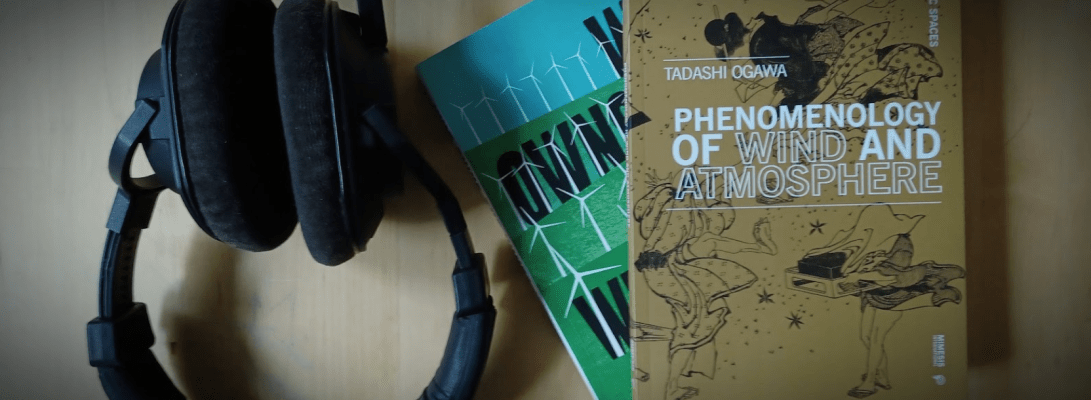
I applied for a NEST residency to revisit my personal archive of sound recordings, distributed across a number of drives in my studio. I was interested in collating and catalogue recordings which connected to the subject of the wind: some of these would be recordings made incidentally during the production of moving-image projects, others captured with the specific intention of recording the ambiental sounds of wind. In reality, this time spent cataloguing and editing during the residency formed part of a wider process of listening, reading and thinking about the connections between the medium of sound, and that of the wind.
The NEST residencies offer artists time and space to research and experiment without the pressure of producing an outcome. My last five years have been mainly dedicated to two experimental film projects produced collaboratively with composer Abul Mogard, Kimberlin (2019) and Phoenix City 2021 (2021). For me the residency was, first and foremost, an opportunity to step away from ‘projects’, and to instead return to thinking widely about the medium and nature of sound – my primary medium before transitioning to the field of artists’ moving-image. So, whilst researching future work around the subject of the wind, this residency was also an opportunity to think deeply about the medium which has driven my creative thinking in the visual arts.
Thinking through some analogies…
The wind is usually considered problematic for sound recordists, who look for ways to avoid its buffeting since it doesn’t play nicely with the delicate diaphragm of the microphone. The aggressive rumble of wind on the diaphragm tends to break with the transparency of the recording, and distracts from its intended subject. And yet to the naked ear, the sound of the wind can be beautiful, meditative, and even musical. Of course, the wind becomes sonorous only as it comes into contact with the surfaces of the earth, shaped by the contours of the landscape. The soughing of the wind give voice to the world, and bring its contours into relief, much like the rain in this famous passage from John Hull’s Touching the Rock: An Experience of Blindness:
“Rain has a way of bringing out the contours of everything; it throws a coloured blanket over previously invisible things; instead of an intermittent and thus fragmented world, the steadily falling rain creates continuity of acoustic experience… I feel as if the world, which is veiled until I touch it, has suddenly disclosed itself to me.”
Sound, like the wind, is shaped by the contours of the landscape, flowing through and around, colliding and reflecting off its relatively immovable surfaces. Land, vegetation and buildings shape airflow, and inside our buildings the walls and furniture likewise sculpt our experience of sound, and with it our perception of space.
Sound is also tactile in a way which directly corresponds to the materiality of the wind: the thudding bass of the sound system pounds the chest and the gut, and is felt through the sensitive soles of the feet. In the world external to us, the forms we perceive as sound (once interpreted through our nervous systems) are, like the wind, movements of air molecules provoked by changes of pressure. I have a particular memory, an epiphany with some parallels to that described in John Hull’s passage on the rain, in which I recall my attention being brought to the susurration of the wind through a group of trees in front of me, in an apparent ‘bringing to life’ of the world around me. Seconds later I felt the same air which I had just observed animating leaves of the trees a few yards away, now brushing against my cheek – a moment of synaesthesia through which a particular understanding of the physical world came into focus. An entire set of relations momentarily became ‘visible’ for me through this ‘medium-in-between’, which connects us to the world.
Thinking through this analogy, it is an unexpected outcome of this residency to find myself returned to one of my first sound works: my degree show piece Gunshot Corridor (1999). Installed in a 30-metre long corridor in the sculpture department at Kingston University, this early work has proved foundational to my understanding of sound as medium. It was an ephemeral work in which the negative space of the corridor was animated by the intermittent sound of gunshots, which rifled down the passageway, fleetingly breaking the inert quiet of the space. The movement of air of the gunshot, and that produced by the movement of the physical cones of the loudspeaker enter into an analogous relation, as the acoustic pressure wave is briefly made ‘visible’ in the negative space of the corridor. I pursued the expression of this set of relations through a number of installation works at the time, including a series of site-specific pieces which employed the sound of pigeon wings as metaphor for the movement of sound.
Bullet Shock Wave (1970), Harold E. Edgerton, courtesy Smithsonian American Art Museum
The respiration of the world
Amongst the sound recordings in my personal archive which I returned to during my NEST residency, I ended up spending a lot of time listening to recordings from a particular project The Creature in Between (2016). The Creature in Between was a pilot project initiated by Claudia Fontes, an experimental colaboratorio taking place in a Wichí community in the north of Argentina (with sculptor Elba Bairron, photographer Guadalupe Miles and hacker Mateo Carabajal). The project was conceived as an intermedia and intercultural exploration of what it means to be a person living in the world with other creatures, in which “artists, hackers, potters, writers and musicians will come together to collaborate in creative processes, finding novel ways of translating their perceptions across cultures, generations, languages and species”.
During the 10-day residence I worked closely with Mawó Mendoza, a member of the Wichí community who took me daily to sites in the savannah where he would attempt to share with me his deep understanding of the acoustic language of his natural environment – and where we would produce a series of over 25 collaborative field recordings. These recordings culminated – at least it felt like a culmination, I’m not sure this was merely my perception or whether Mawó had intended it this way – in two recordings of the sounding of a sacred object, which I now know to known in the English language as a bull-roarer, but which Mawó described to me as “the caller of the winds”. This delicately carved wooden object, shaped like a slightly twisted leaf attached to a long string, was traditionally used by the Wichí shaman to “call the four winds into conference” in times of drought. In Mawó’s understanding of the world, without the wind we cannot breathe and the plants shrivel (and of course, this is entirely true: it is the wind that moves clouds and brings moisture across great distances).
When I listen to these recordings now, they seem to synthesise a set of relations which trace a line from the analogy of sound to wind (the object which Mawó called “the caller of the winds”, known in the wichí language as Lhayialh, is effectively a sounding instrument which displaces air as it is swung in a circular motion), to interactions between Mawó and the birds around us via this instrument. Listening across other of our recordings, I hear other moments in which birds of varied species appear to be reacting – somehow animated but I can’t speculate as to what is really going on – to the changing intensities of the wind, in the exact same ways that they appear to react to Mawó’s bull-roarer.
Sounding clay vessels produced collaboratively during The Creature in Between (2016). The making of the vessels was undertaken at a communal table once the direction and speed of the wind was considered favourable for this act of creation. Image by Guadalupe Miles, courtesy of The Appreciation Society.
In Wichí tradition and thinking, the wind is understood as synonymous with breath – and I think it is principally this lesson from the Creature in Between which led me to be sat at the NEST revisiting these recordings, ideas and memories. The Wichí people and other of the ‘pueblos originarios’ (‘original communities’) do not deal with trivia, their folk tales tend to deal with the essential knowledge which is central not only to their own survival, but moreover to the harmony of the entire natural order.
Lhayiahl (2016), by Duncan Whitley and Mawó Mendoza. Audio track selected for The Slow Bird, curated by Claudia Fontes for Affective Affinities the 33rd São Paulo Biennial 2018.
I don’t yet feel able to draw together everything which I began to unpack during the two-week residency into a neat form (and I am a long way from these strands becoming reconfigured into the form of an artwork), but what the residency has enabled for me is to identify a number of threads from which I could plan out future research.. The residency went beyond a realisable process of identifying and collating recordings in my personal archive, to a far messier process of throwing onto the table a set of sounds, memories and concepts which have haunted me since my first visit to Argentina in 2016 (and perhaps since I first began to study contemporary art in the late 1990’s). The next phase of this work will be to take these strands of this residency research into a practice-based exploration through sound, perhaps piece by piece through further small residencies or commissions.
Sym Mendez reflects on their recent Nest Residency
STEP 1: You have absolutely nothing to prove to anyone. Here is your formal written permission to just exist within your lived experience.
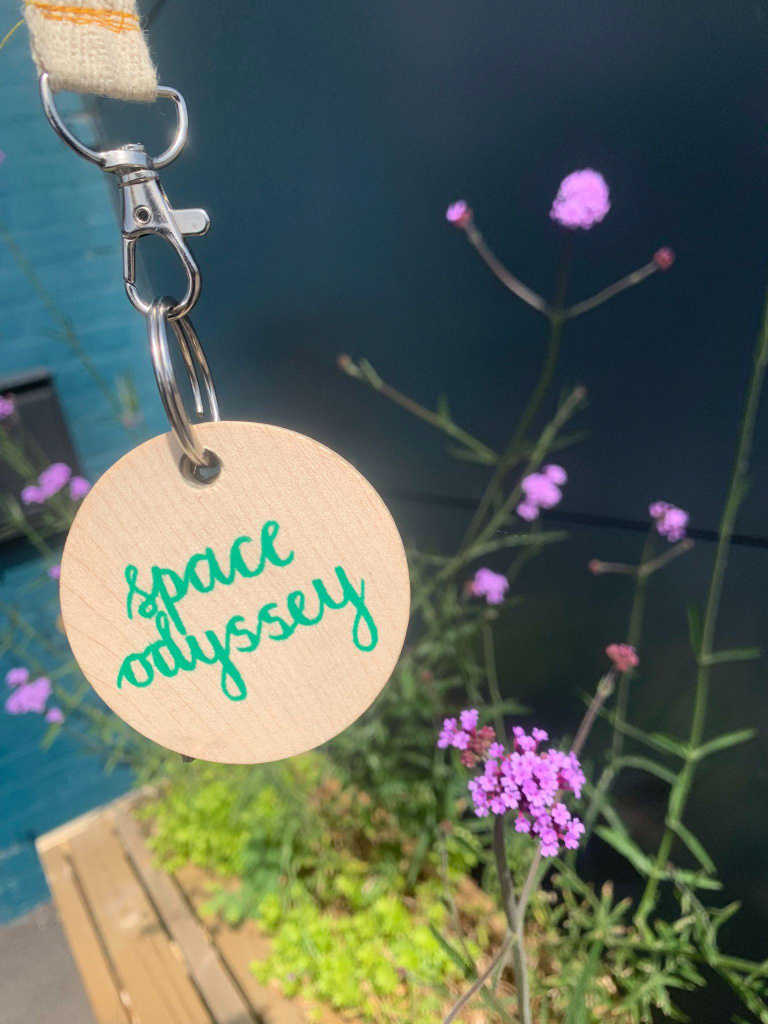
These were the words I wrote to myself on the very first day of my Hatching residency at The Nest. Choosing to explore something so intimate as chronic pain as a performer and movement artist is relatively new to me. So used to over or under explaining myself – I could never unpack this layered experience in a way that best suited me until having a studio, space, time and freedom to do so here at The Nest, within my Space Odyssey. Being at The Nest – a place with access rooted within its infrastructure – was the first time I didn’t have to think about doing anything other than simply exploring. When I removed the imposter syndrome, fear and guards around my artistry, pain and practise- there was suddenly enough space to stretch into the fullness of my creative potential.
My first step within this journey was to ask where my pain lies – what does it say? I worked my way through and down – slowly – acquainting myself with deep knots and aches, conversing with dormant corners of myself. I held my body with a level of compassion that I didn’t have the space to do previously.
I was accompanied by two books throughout my 10 days of residency: The Body Keeps The Score by Bessel A. van der Kolk and Sacred Pain by Ariel Glucklich. I used these texts to unearth a deeper understanding of my own pain, where it comes from and how I also use pain for transcendence. Do these things contradict one another – and have I internalised beliefs around my pain that exacerbate suffering? Once I could gauge for myself the different avenues of pain that make up my embodied existence – I was curious to speak with other artists and movers about their chronic pain too (which Talking Birds happily financed so that the conversations wouldn’t become extractive or exploitative).
Knowing where to start with questions, thoughts and prompts to present to other artists proved more difficult than expected – does speaking about my own spiritual beliefs and thoughts on transgenerational pain undermine the experiences of others? How do we speak honestly without re-traumatising each other? How do I speak without assuming our experiences are universal? – and it wasn’t until the end of my first week that I finally had some semblance of a structure.
Conversations with other artists really enabled me to formulate my own thoughts, and from thoughts into potential performance. Topics such as crip time, grief, shame, internalised belief systems and movement/ motion beyond the physical body helped me to simplify all of the questions buzzing around my mind and begin to create something that speaks to the depth of my experience.
Having the safety and support of Talking Birds and The Nest gave me the ‘permission’ to create without rigid expectations, to dive in whilst knowing I won’t drown, to hold a gentle and nurturing space where it is impossible to do anything other than play and create without restriction. Who knows when this piece will fully come to fruition. What I do know is that I can leave my residency with the understanding that I have the capacity to create something enriching. I have ideas I can persevere with when I’m afforded the privilege of resource.
Emily Tyler reflects on her Nest Residency earlier this year
Since I heard that Coventry was to hold the accolade of UK city of culture for 2022 I’ve been excited. I’ve found that other creatives have felt that it hasn’t been as positive as it could be. With the main events heavily weighted towards artists from the rest of the country, creatives have been feeling ignored. They have spoken loudly about this being a missed opportunity. I’m inclined to disagree on this subject, mainly because I haven’t stopped all year, and have not directly been employed by the official channels.
I have been a photographer longer then I’ve been a painter. And my dreadful film photographs did little to document my life or even be in focus. But with the invention of the digital camera, and later the camera phone, like many people I take photos of everything from food, to my child to times out with friends. But mostly I have found that it is a brilliant tool in which to share a unique view through your eyes that is easy to understand.
I created a map of Coventry to root this project to its geological routes. I used colour and texture to transport this image from a tool into a feeling and mood enhancer which reflects the cultural tapestry which I feel represents our city.
This project has been about how the general public are the important audience this year, those people who might not attend a gallery, events or a performance normally. For those that think arts are elitist and unrelated to their life. During these times where our current government is cutting arts funding left, right and centre, it shows that not only is it an important part of everyday life, but a way to build communities, bring money into the city, but something that can enhance your life.
As an artist I always start out taking my own photos, and editing them into the image that I want before I start to draw it paint. With this in mind, I decided I wanted to do a project which showed the peoples view of the City of Culture 2021 by collecting other peoples photos of events.
We are living in an age where language is becoming more visual then ever. People abbreviate words, use a sentence or two to describe a picture, and although I’m a bibliophile, I am first and foremost a visual learner and sharer.
Photo courtesy of Talking Birds
What I thought I needed to support the project when I began at my Talking Birds Nest Residency was space to work, and advice on how to reach the general population within the city.
But I quickly found that although a studio space is useful for creating a large canvas, as a part-time extrovert and general clutterbug, I didn’t actually enjoy being in an empty space on my own. I found that the loneliness was not something that worked well for me. This is possibly because of my dyslexia and my mental health problems.
As part of the residency deal, a mentor was found for me to help me with my social media coverage. Tara Rutledge is an artist and social media guru who currently works for Imagineers within the same building as Talking Birds (Daimler) and is currently working on a “up my street “ project with ArtSpace and embarking on her own art residency with Talking Birds.
The two issues are complicated. Firstly, I need to share more of my work in progress posts, and make it more personal so that people relate to me better. Next I need to post stories more often, to keep my work in peoples’ awareness. Also I need to make my posts more chatty so that they are more understandable and people get what I’m trying to do, and how easy it is to take part!
As part of the career progression part of my social media, the above will generally help, but using the right tags and hashtags will also pull in people who are looking for the type of work I offer. Simple planning of posts and posting at the right times also can help.
All this said, social media is not the only thing I needed to do to be able to promote myself and my project. Media coverage, including digital newsletters was recommended, as well as focusing on certain publications and media outlets locally.
Fingers crossed that all this will help me to complete this project and increase the positive view of the City of Culture. And I hope to get this project displayed in the City Centre in the next few months!
With my mental health problems, I find that I lack physical and mental energy most days, and that being around people and bouncing ideas often helps to lift my mood and productivity.
Once I had my large canvas painted, I decided the best use of my residency time was to pick the brains of the team at Talking Birds on how to get the word out about my project, and how to market myself as an artist.
For my social media, I needed to appeal to two different demographics. The places that might want to commission me and my work, and those people who will share their pictures with me to show the city as a cultural place open to everyone.
Keep an eye on my social media @emilytylerartist for updates and further projects!
Vimal reflects on his recent Remote Nest Residency, creating a walking tour documented via a diary.
BBC interviewing about the walk
Diary
This is my remit Highlighting the culture and diversity of Coventry enabling people to see, taste, smell and hear stories of the people in the area via a walking tour.
Aim To create a walking tour with real stories celebrating the culture and diversity of the area
Day 1 OMG where do I start what do I need to do???!!!! Thoughts of places to explore:
I’ve always liked Fargo village and the diversity around there so maybe a good place to start?
Hindu Temples, gurdwaras, mosques
Information on the internet regarding diversity of Coventry
Yes some historical aspects but if people want to know about buildings, architecture this is not the tour for them!
Collecting stories from family and friends in the Coventry area
Day 2 Cinemas Ritz/Palladium – historically Indian cinemas – lots of information on forums. Lots of history regarding Asian communities buying cinemas via self funding, hindi movies and Sundays became a day out to the cinema for the Asian community. Decades later there were disputes regarding ownership. Possible to investigate further but currently too far from the Foleshill rd
Temples/gurdwaras near Foleshill Road:
First gurdwara built in Coventry is nearer the town centre – could be too far. Need something closer
Mosque being built on the Foleshill rd, the oldest one is on Eagle street built in 1962 Jaima Mosque
Thoughts I need to physically explore Foleshill Road and the main road which serves Fargo Village and see which stores could possibly be up for interviews and use their locations to tell the stories
Day 3 Found a video on the internet about Foleshill which is a good reference point. Foleshill the people’s hill
Thoughts what do people want to know about Foleshill road or roads near Fargo village? what would people like to experience? visiting several places of worship – could it be boring? Maybe I should just go into one place of worship and highlight the others?
It’s stories people enjoy Need to celebrate diversity
Day 4 It’s raining – cancelled visit to Foleshill Rd Thought – do I still want to do Foleshill Road or the road near Fargo village?
Day 5 It’s Foleshill Rd General Wolfe has played a big role in Foleshill rd, Irish communities, Afro Caribbean Music – Specials, Selecta
Interesting fact First ‘coloured’ Licencee 1962 Mr Frances – The Wheatsheaf pub. A fact to share and terminology used at that time.
Day 6 Research internet – Coventry facts – historical forums Lady Godiva – reenacted down Foleshill rd Watch manufacturers Blue Ribbon Cashs lane – the building and significance – known as Topshops
I don’t want to go into too much historical facts
Day 7 Went to Foleshill Road to interview a few retailers Interview with Tahims – Clothing retailor Interview with Shan Paan – Indian fancy goods Interview with Standard Indian sweets Interview with Iranian fish Mongers
Retail store Shaan Paan
Day 8 Spoke to Mehru Fitter who worked at Coventry library – for some possible leads
Day 9 Spoke to Anita P whose grandfather arrived from India and settled in Coventry in the 1950s He was a cotton farmer in India with a thriving business but had to leave everything after the partition – he ended up working in Courtaulds in Coventry. Story collated.
Thought Joshi’s Story needs to be told outside Courtaulds
Day 10 I do the walk on the Foleshill Road and find there is a big gap from Courtaulds to Shaan Paan.
Thoughts Need to find out what most of the businesses were before they became hairdressers Currently 8 hairdressers all next to one another Maybe interview a hairdresser?
Day 11 I listen to the recorded interviews and turn them into script
Day 12 I Go through the Coventry history archives and find some interesting facts Prince Charles visited Foleshill Road and also opened the Bangladeshi community centre on George Eliot Rd. Clint Eastwood had a role in the film Lady Godiva Phillip Larkin was born in Coventry
Thought Little snippets of info that can be shared during walk without going into too much information
Day 13 Visit Talking Birds Nest (Phillippa, Dez, Janet) and share ideas/stories about the walk. They give their views as to what stories they’ve enjoyed
I go onto Foleshill Road and note through chatting with owners of businesses in the hairdressing area that most of the retail stores are operated by Kurds
Thought This is Little Kurdistan I will refer this area as Little Kurdistan during the walk and talk about how vital the Kurd community has been in the development of this area of the Foleshill Rd
I Interview Lookman who owns a hairdresser – he was sent to Coventry!
Day 14 I transcribe Lookman’s interview
At Lookman’s Hairdressers
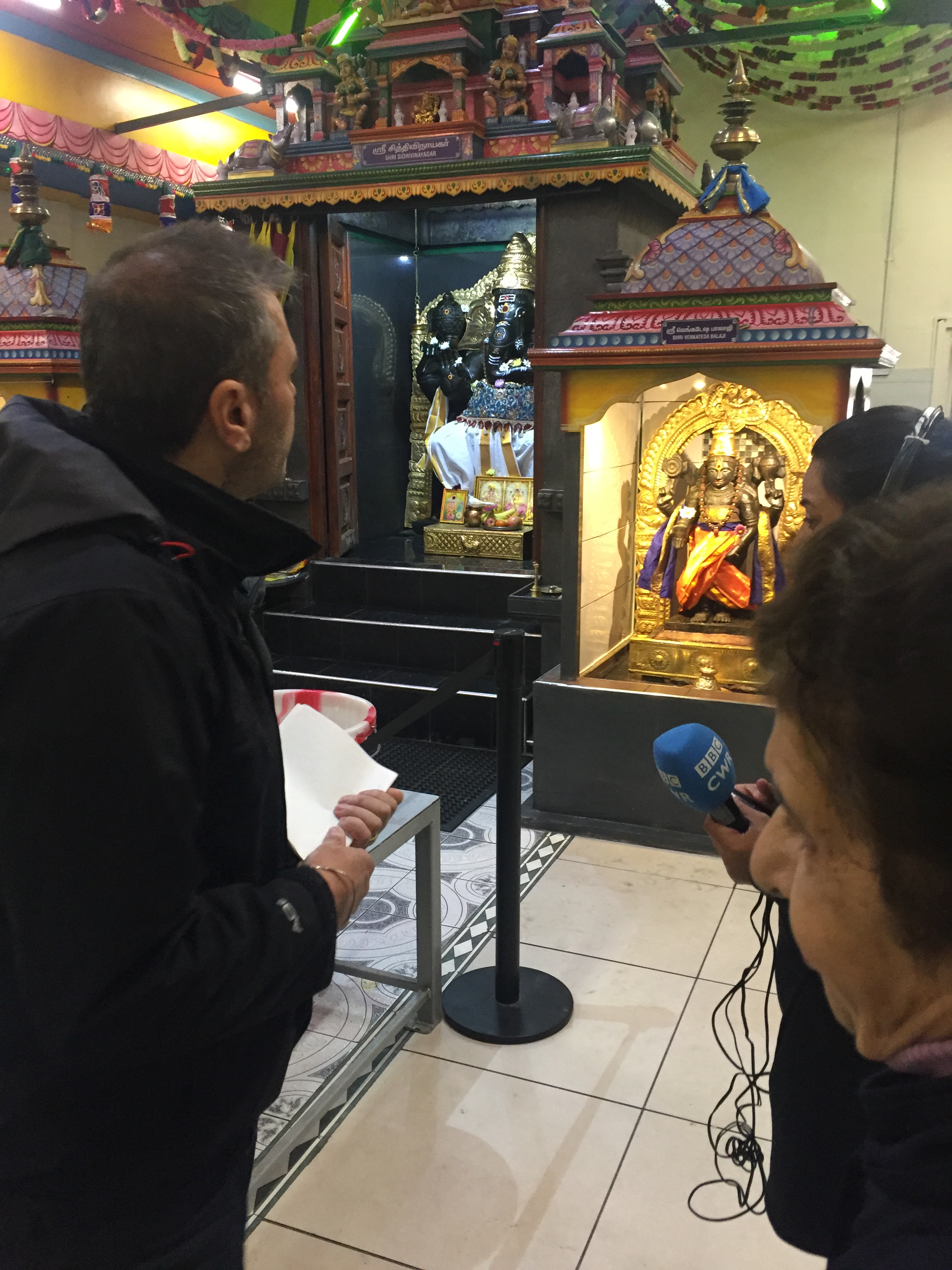
Day 15 I do research on temples, some are too far away from Foleshill Road, however I find there is one on George Eliot Road. A Hindu temple that serves mainly the Tamil community, with people originating from South India, Sri Lanka and Malaysia. I speak to the president about the idea of a walking tour, and he would be delighted if we brought people from other communities to pay the temple a visit. President of temple explains any rules that need to be observed. Photography and filming is fine.
Thought The temple has a wow factor I have knowledge of Hinduism so can share stories about gods and goddesses Significance of Ganesh This will be the starting point of the tour
Shri Sidhi Vinayagar Temple
I visit the Gurdwara on Foleshill Road, speak to one of the trustees who gives us permission to bring guests into Gurdwara as long as people respect the rules No cigarettes, no alcohol at any time. Filming and photography is fine Thoughts Share tenets of Sikhism 5 ks
Nanaksar Gurdwara Gursikh Temple
Day 16 Speak to Haroon from Active Inclusion regarding floating library on canal
Thoughts To include walk along canal side and share anecdote of Cash’s weavers
NP Aerospace is also on Foleshill Road Bespoke bomb disposal suits made – predominately by Asian community
Next to NP is a Gurdwara – different section of Sikh community – previously George Wilson gas meters
Interesting fact 4 air raid shelters on the Challenge cycles building on Foleshill Road
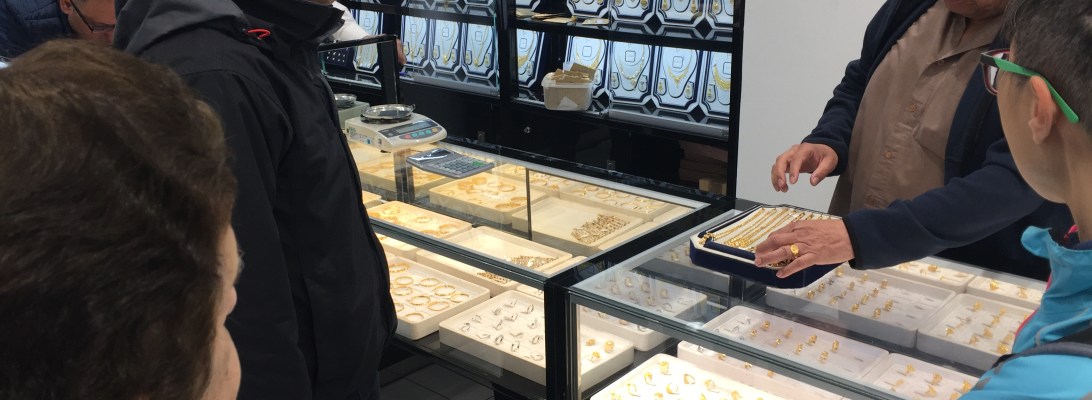
I visit Gem jewellers who have a wow factor with the Indian jewellery they sell. I explain walking tour and they will allow a visit.
Thoughts Stories regarding importance of gold in Asian community – dowry Mangle sutra – Given to wife by husband and significance of black beads in the gold chain
A short interview with Shanaz who has a material and clothing shop. Selling lengha, Salwar Kameez, dothis etc
Cash’s Weavers along canal side
Day 17 The walking tour is taking shape.
I decide on a route Hindu Temple George Eliot rd, Gurdwara Canal side Joshi’s story outside Courthaulds Walk to Little Kurdistan Lookmans story hairdressers – settlement Fishmongers – Aras story – Masgouf cooking NP Aeronautical – hand made bomb disposal Gem jewellers Shaan Paan – leaving Uganda Standard sweet centre – food stories with potato chapatti and mango lassi
Day 18 I take Dez to test walk
A success!!!!!! Market walk on social media
Day 19 I write a blurb and decide on a name for the Foleshill walking tour
Vimal’s Walks: Join Vimal for a multi-sensory walk celebrating the diverse and vibrant heritage of the Foleshill Road. Visiting temples and hearing the sacred stories of gods and goddesses, with a stroll along the canal side, a stop at an Indian fabric shop, a Kurdistani hairdresser, an Iraqi Fishmonger, A Ugandan fancy goods shop with anecdotes of settlement, food and success, finishing with a glass of cold mango lassi and a hot aloo porata. All experienced in a fun and relaxed way.
More bookings via Waterways weekend for the walking tour, interest from BBC Sounds
The walking tour over the two days is SOLD OUT!!
Big thanks to Talking Birds, Derek Nisbet, Janet Vaughan, Philippa Cross, Dom Watson, Frances Yeung
Developed during a Nest Residency with Talking Birds. Performances supported by Coventry 2021 Green Futures programme.
























 Words from the Birds