Shaniece Martin reflects on her recent Hatching Residency at The Nest
When I arrived at The Nest, I think I left ‘poet’ outside the studio door. Not intentionally at first. More as a quiet instinct, a need to enter the space without already knowing what I was supposed to create, or who I was supposed to be within it.
For a long time, I had understood myself primarily through language. Poetry sat at the centre of my creative identity, even while my practice moved through criticism, academia, and research. But during this residency, something shifted. Or perhaps something that had already been shifting finally had the room to surface properly.
I never thought of myself as a visual artist. And yet, almost everything I created during the residency was visual.
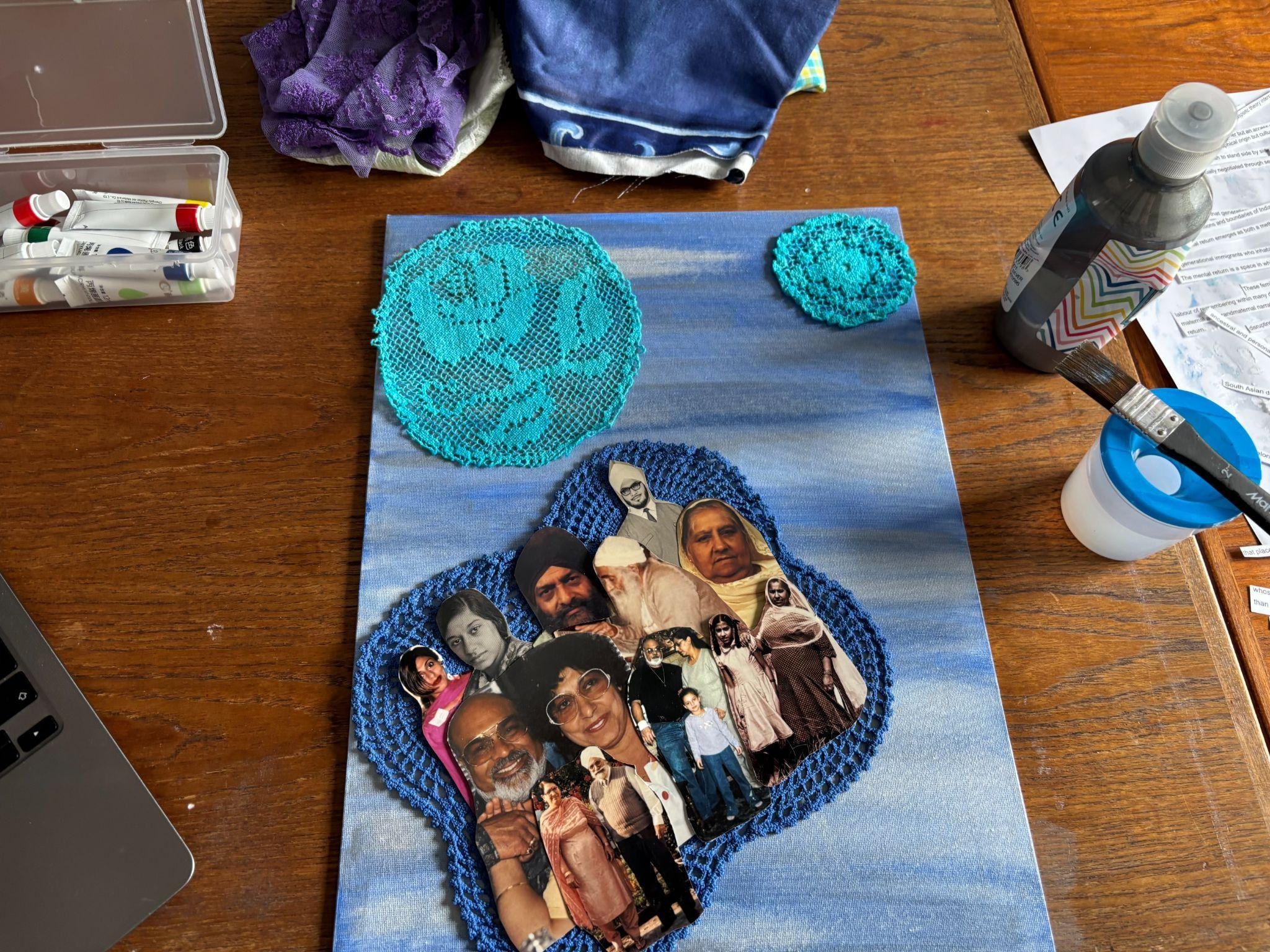
I worked with paint on canvas, mixed-material collage, and fragments layered over fragments, pieces of text cut apart and reconstructed. Materials were assembled instinctively. Words still appeared, but differently: not as finished poems, but as textures, interruptions, and echoes.What surprised me most was how natural this felt. As though the visual work had been waiting underneath the language all along.
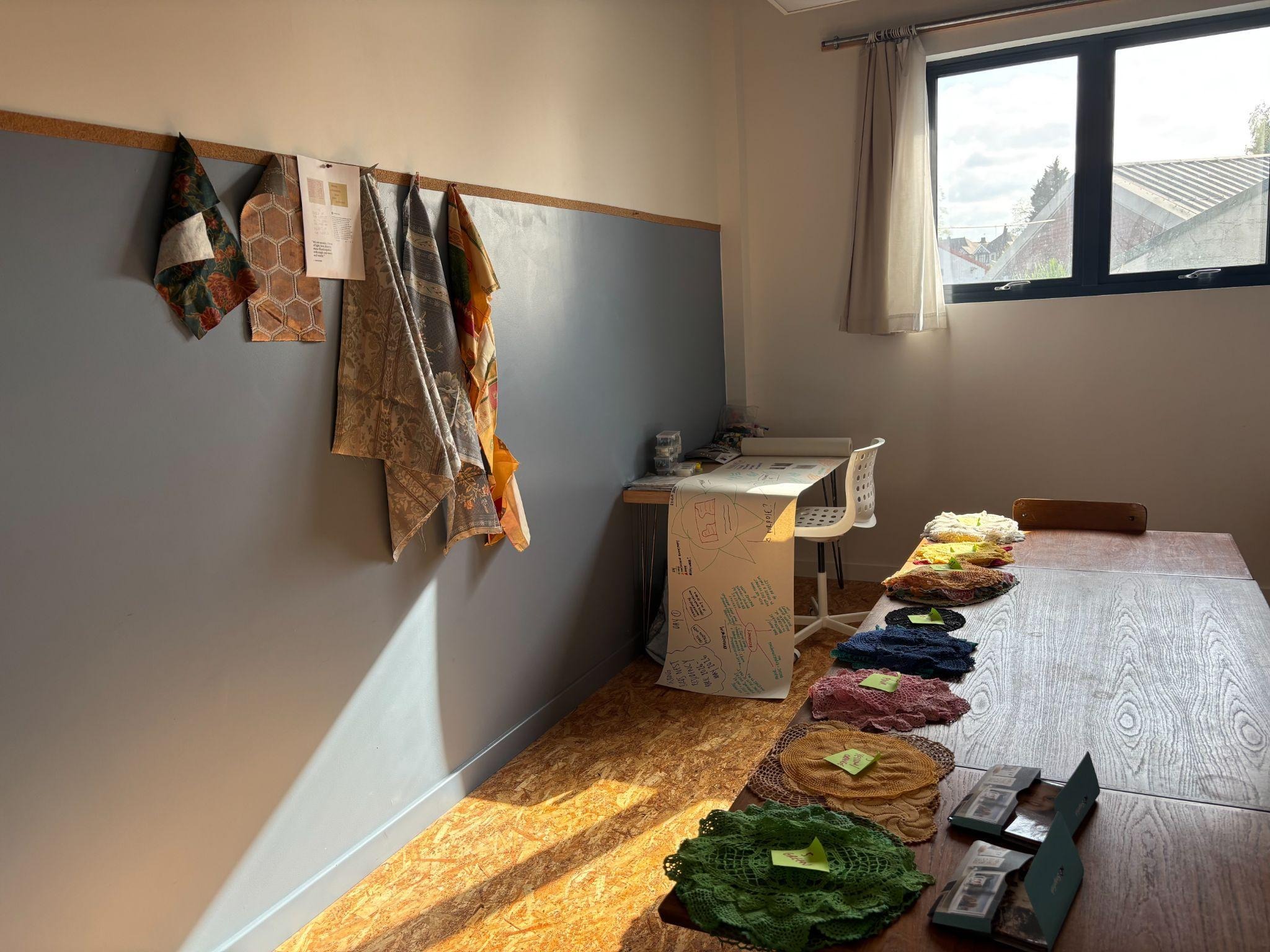
The studio itself became central to that discovery. No matter the kind of day I had outside of it, no matter the noise of the world or the heaviness I carried in with me, stepping into the studio changed something immediately. The space became a kind of freedom, a safe space, a happy place. Somewhere I could exist entirely within process, curiosity, and experimentation without needing to justify it.
Lately, I had been struggling to feel a sense of purpose within my creativity. I think I had started questioning my place within my own practice, becoming trapped inside fixed definitions of what I thought my work should look like and what counted as “my” medium. Having dedicated time and space at The Nest gave something back to me that I didn’t realise I had lost.
Purpose.
But more than that, it reinvented what I thought I knew about myself as a creative practitioner.
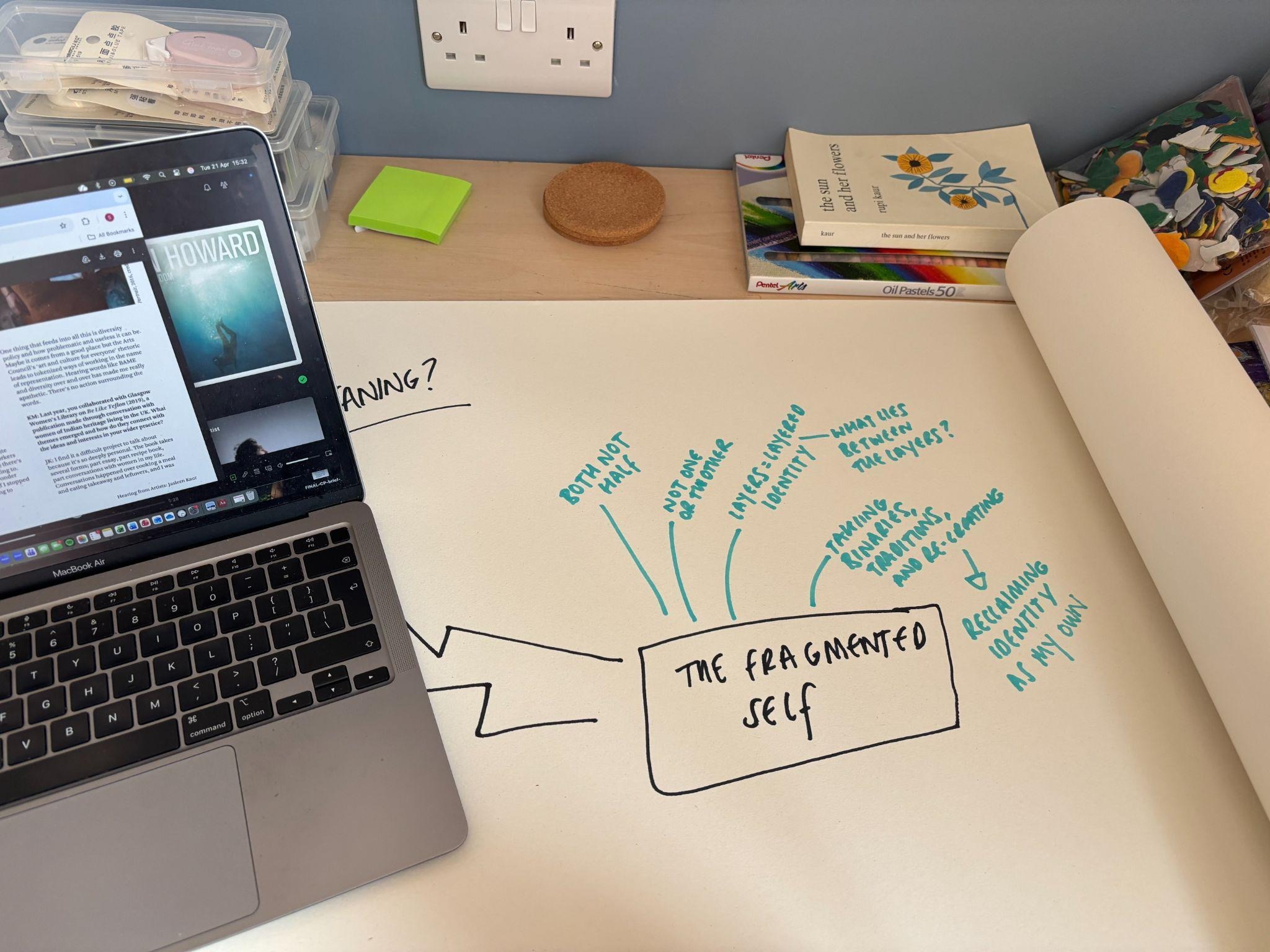
A large part of the work I created during the residency emerged through my PhD research and the concept of the ‘mental return’- the ways identity loops back on itself through memory, fragmentation, repetition, inheritance, and reconstruction. Until now, I had mostly explored those ideas through academic writing and poetry. At The Nest and during my residency, I began physically performing them through visual practice.
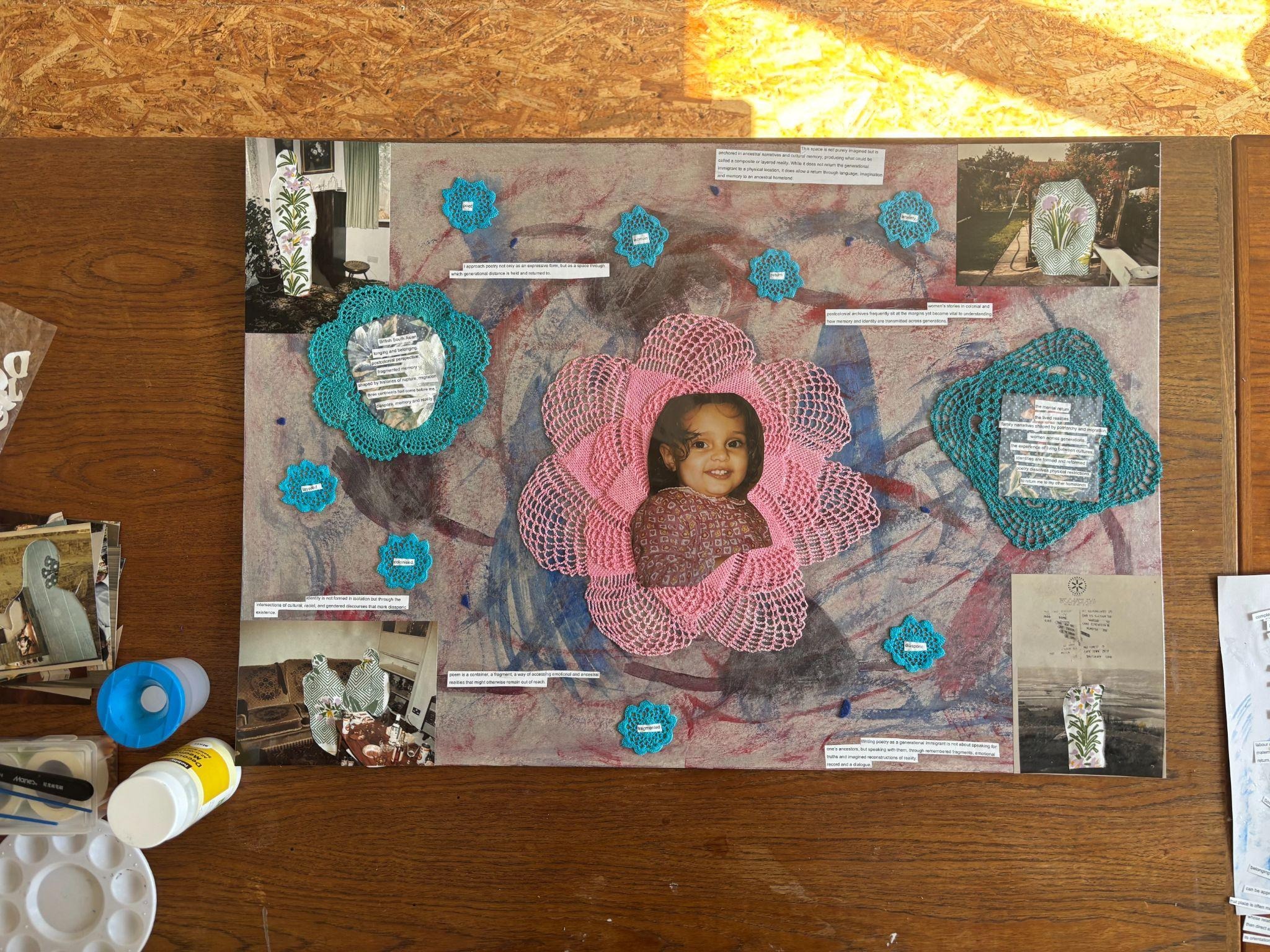
I worked directly with language from my PhD thesis, treating the thesis itself not as a finished academic document but as material. I printed sections, cut them apart, layered and rearranged them, allowing theory and emotion to occupy the same surface. In the process, the thesis stopped behaving like something fixed and coherent. It became fragmented, unstable, creative.
And unexpectedly, poetry emerged from that fragmentation.
Not poetry in the way I had previously defined it, but something visual, tactile, and unresolved, something existing between image, theory, memory, and feeling.
Alongside this, I found myself repeatedly returning to photographs of my ancestors. I began using the images less as documentation and more as material to work through. Sometimes I removed the people entirely and focused only on the backgrounds: the rooms, landscapes, textures, furniture, and spaces that once held them. Other times, I isolated only the figures themselves, separating them from their surroundings until they became fragmented presences scattered across the work.
I think I was trying to understand identity not as singular or complete, but as partial, inherited, interrupted, and continually reconstructed.
The process of cutting apart and rebuilding became a method of thinking.
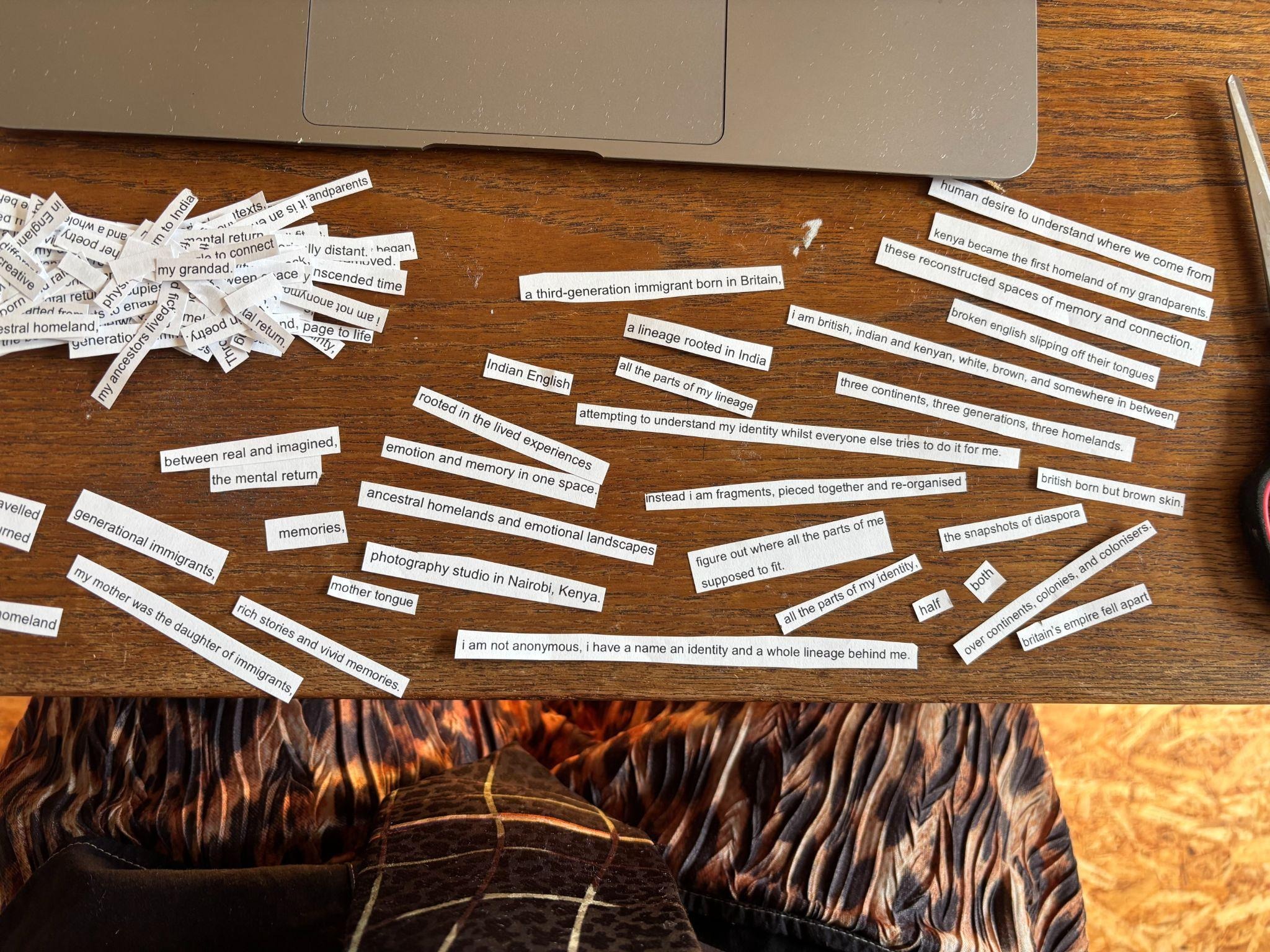
Layering and relayering materials mirrored the ‘mental return’ I write about in my thesis: returning to the same images, repeating gestures, rearranging fragments, and watching meaning shift depending on placement, texture, and proximity.
The residency allowed me to stop worrying about whether something ‘counted’ as poetry, visual art, research, or theory. For the first time in a long time, I simply made work instinctively. And I think that freedom changed me.
I arrived at The Nest believing I was a poet experimenting with visual forms.I’m leaving recognising that the boundaries I had placed around myself were never really there to begin with.